The Truth About Biodegradability: Are Latex Balloons an Eco-Friendly Choice for Your Business?
Struggling with the "eco-friendly" label on party supplies? The term "biodegradable1" can be confusing. Let me share the real story about latex balloons, so you can make confident sourcing decisions.
Latex balloons are technically biodegradable, but they are not a truly eco-friendly choice. They come from rubber tree sap but decompose very slowly. This slow process creates litter and poses a serious risk to wildlife that might mistake balloon fragments for food.

This is a complex topic for any business in the party supply industry2. For a procurement manager like you, the details are critical for managing risk, ensuring compliance, and meeting your customers' expectations. As someone who has spent over a decade in balloon manufacturing3, I want to give you the complete picture. Let's break down the facts, starting with the fundamental differences in balloon materials.
What is the difference between natural latex and synthetic party balloons?
You see countless balloons, but do you know the real material differences? Choosing the wrong type can impact your quality, costs, and environmental promises4. Understanding this distinction is the first step to smart sourcing.
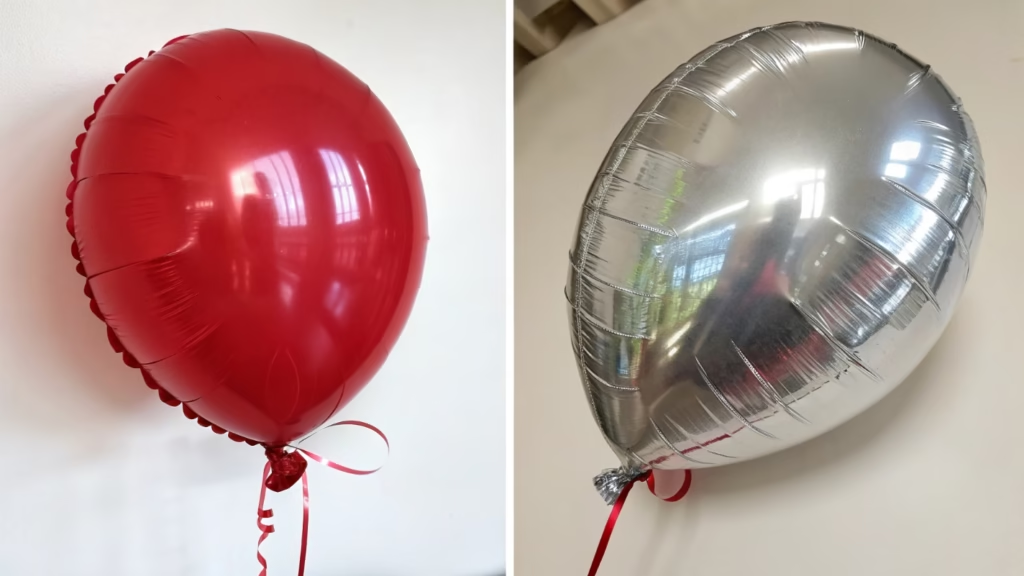
Natural latex balloons are made from the sap of rubber trees, a renewable resource5, which allows them to biodegrade. Synthetic balloons, like foil or mylar types, are made from plastic with metallic coatings. They are not biodegradable and must be handled differently after use.
In my experience, the push for sustainability6 has put a huge spotlight on material science. It’s no longer just about color and shape; it's about the entire lifecycle of the product. Let's go deeper into what sets these two main balloon types apart.
The Materials Behind the Fun
Natural latex comes from the Hevea brasiliensis tree. The process of tapping the tree for its milky sap is a lot like tapping a maple tree for syrup. It's a sustainable practice that doesn't harm the tree, which can produce latex for up to 30 years. This raw material is natural and renewable.
Synthetic balloons, often called foil or Mylar balloons, are entirely different. They are typically made from a nylon sheet coated with a thin layer of aluminum. This construction gives them their shiny appearance and allows them to hold helium for much longer than latex. However, it also means they are a form of plastic and are not biodegradable.
Here is a simple table to compare them. For a procurement manager, these details are key to building a balanced and responsible product portfolio.
| Feature | Natural Latex Balloons | Synthetic (Foil/Mylar) Balloons |
|---|---|---|
| Source Material | Sap from rubber trees (Hevea brasiliensis) | Nylon sheets coated with aluminum |
| Renewable? | Yes, a renewable resource5. | No, derived from petroleum. |
| Biodegradable? | Yes, under specific conditions. | No. |
| Helium Retention | Typically 8-12 hours. | Several days to weeks. |
| Environmental Risk | Ingestion by wildlife, slow decomposition. | Plastic pollution, requires proper disposal7. |
| Best For | Large quantities, air-filled decor, eco-conscious branding. | Long-lasting displays, detailed printing, reuse. |
Under what conditions do natural latex balloons actually biodegrade?
You have been told that latex balloons biodegrade, which is a key selling point. But what if they don't break down as promised, creating environmental problems and damaging your brand's reputation? Let's clarify the facts.
Natural latex balloons biodegrade best in warm, moist, and microbe-rich environments8, like a compost pile9. The process is very slow in water or dry conditions. It can take anywhere from six months to four years to fully decompose, which is too slow to prevent environmental harm.
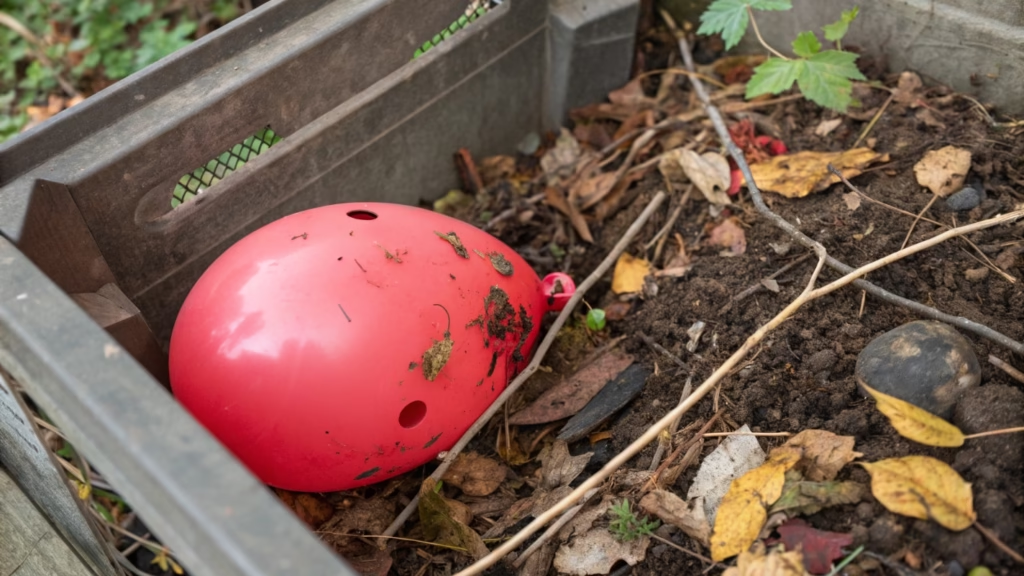
The claim "biodegrades at the same rate as an oak leaf" is something I've heard for years in this industry. While it has some truth, it's an oversimplification that can be very misleading. An oak leaf on a forest floor is in the perfect environment to decompose. A balloon floating in the ocean or lying on a dry sidewalk is not. The conditions are everything.
The Reality of Decomposition
For biodegradation to happen effectively, microorganisms like bacteria and fungi need to be present. They consume the latex as a food source. This process requires a specific set of environmental factors.
- Moisture: Water is essential for the microbes to thrive and break down the material.
- Heat: Warmer temperatures speed up microbial activity and decomposition.
- Oxygen: Aerobic decomposition (with oxygen) is generally faster.
- UV Light: Sunlight can help make the latex brittle, starting the breakdown process.
A balloon fragment in a commercial composting facility might break down in a few months. However, one that ends up in the ocean could last for over a year, and one in a dry, cool landfill could persist for many years. The chemical additives, plasticizers, and dyes used in manufacturing also impact how quickly the balloon decomposes. These additives are necessary for color, elasticity, and durability, but they can slow down the natural process.
So, while the base material is natural, a finished balloon is a manufactured product. Its end-of-life journey is much more complicated than that of a simple leaf.
Are there industry certifications for sourcing eco-friendly balloon supplies?
As a procurement manager, you need to verify supplier claims. Without official certifications, how can you trust that your balloon supplier meets quality and sustainability standards? This uncertainty creates risk for your business.
Yes, there are key industry certifications. Look for suppliers with ISO 900110 for quality management and a Sedex11 (SMETA) audit for ethical and responsible sourcing. While no specific "eco-friendly balloon" certificate exists, these show a manufacturer's commitment to high standards.

In my role at AIHUA BALLOON, securing these certifications wasn't just about getting a badge. It was about proving our commitment to our partners. For a buyer like Sarah, these certifications are a critical tool. They provide third-party validation that a factory operates professionally, ethically, and with a focus on quality control.
What to Look For in a Supplier
When you evaluate a new balloon manufacturer, these certifications act as a baseline for trust. Let's break down why they are so important for a procurement professional.
-
ISO 9001 (Quality Management): This certification proves that a supplier has a robust Quality Management System (QMS). It means they have documented processes for everything from raw material inspection to final product testing. For you, this translates to consistency, reliability, and fewer product defects. It shows they are serious about delivering what they promise, every single time.
-
Sedex (Supplier Ethical Data Exchange): Sedex is a platform for sharing ethical supply chain data. A SMETA (Sedex Members Ethical Trade Audit) report is the gold standard here. It covers four pillars: Labour Standards, Health & Safety, Environment, and Business Ethics. Reviewing a supplier’s SMETA report gives you a transparent look into their operations. It helps you ensure your supply chain is free from unethical practices and that your supplier takes environmental management12 seriously.
At AIHUA, our Sedex audit is something we are proud of. It shows our commitment not just to our products, but to our people and our planet. When sourcing, always ask for a recent SMETA report. It’s your best defense against supply chain risks.
How can offering biodegradable options impact my wholesale party supply business?
You want to grow your business, but the market is changing. Customers are demanding sustainable products. Ignoring this trend could mean losing market share to more forward-thinking competitors who meet this modern demand.
Offering responsibly marketed biodegradable options13 can attract eco-conscious customers, enhance your brand's reputation, and open new market segments. It positions your business as a leader, but it requires educating your customers on proper use and disposal to be truly effective.
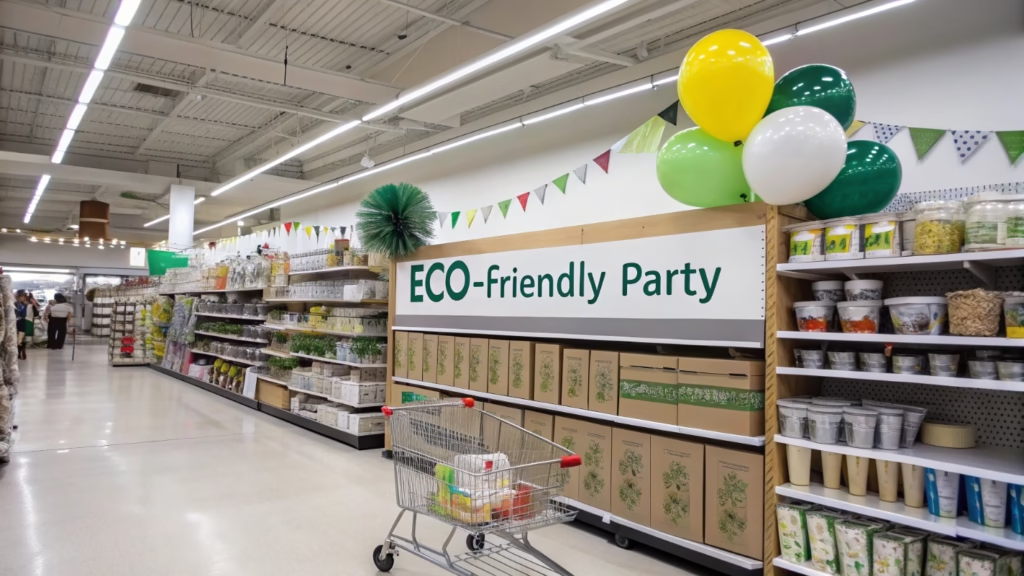
I've seen this shift firsthand. For years, the conversation was only about price and color. Now, sustainability is a key part of our discussions with major retailers. It’s no longer a niche interest; it's a core business requirement. However, success depends on responsible execution. Simply labeling a product "biodegradable" without context is not enough and can lead to greenwashing14 accusations.
Turning Sustainability into a Business Advantage
The opportunity is not just in the product itself, but in the story and education you provide with it. Here's how you can leverage this trend to your advantage:
-
Educate Your Customers: Your role extends beyond just selling a product. Use your packaging and marketing to inform customers about the truth of biodegradability. Add clear instructions: "Do Not Release," "Pop and Dispose of in Trash," and explain that "biodegradable" does not mean litter-free. This builds trust and positions you as a responsible authority.
-
Market Responsibly: Frame your latex balloons as a "more responsible choice" compared to foil, but avoid making absolute "eco-friendly" claims. Focus on the renewable resource aspect and the importance of proper disposal7. This honest approach will resonate with today’s savvy consumers and protect your brand from criticism.
-
Expand Your Portfolio: Add products that support responsible use. For example, offer balloon weights, hand pumps instead of helium tanks for air-filled designs, and reusable party decorations. This creates upselling opportunities and reinforces your commitment to sustainability.
By taking this educated and transparent approach, you can meet customer demand, reduce your business risk, and build a stronger, more modern brand.
Conclusion
Latex balloons are from a renewable source, but their slow decomposition makes them a risk. The key to responsible business is honesty, clear customer education15, and promoting proper disposal7 methods.
-
Understanding biodegradability is crucial for making informed eco-friendly choices. ↩
-
Stay informed about industry trends to better meet customer demands. ↩
-
Gain insights into the complexities of balloon production and its environmental impact. ↩
-
Explore strategies for ensuring accountability in sustainability claims. ↩
-
Learn about the importance of renewable resources in sustainable practices. ↩ ↩
-
Understanding sustainability can help you align your business with modern consumer values. ↩
-
Proper disposal methods can significantly reduce environmental harm. ↩ ↩ ↩
-
Learn about the role of microorganisms in breaking down materials. ↩
-
Learn how composting can enhance the breakdown of latex materials. ↩
-
This certification ensures quality management in manufacturing processes. ↩
-
Explore how Sedex audits promote ethical practices in supply chains. ↩
-
Explore best practices for minimizing environmental impact in production. ↩
-
Discover the benefits of offering biodegradable products to attract customers. ↩
-
Understanding greenwashing is essential for maintaining brand integrity. ↩
-
Effective education can enhance customer trust and brand loyalty. ↩