
How to Make Balloons Shiny and Prevent Oxidation
Your latex balloons looked perfect when new. Within days they turned dull and dusty-looking. Oxidation ruins even premium balloons. Here are proven methods to keep them shiny.
Balloons lose their shine due to oxidation, surface oxidation, and dust accumulation. Oxidation occurs when latex reacts with air and moisture, causing the surface to become chalky and dull. Preventing oxidation requires airtight storage and proper handling before and during events.
In this guide, I will walk you through exactly why balloons lose their shine, which restoration techniques actually work, and the professional prevention methods I use to keep balloon displays looking premium at every event.
Why Do Balloons Lose Their Shine and Start to Oxidize?
You inflate a batch of balloons and they look stunning. By the next day, the surface has turned matte and slightly gray. This is not a quality issue. It is a chemical process that affects all natural latex balloons.
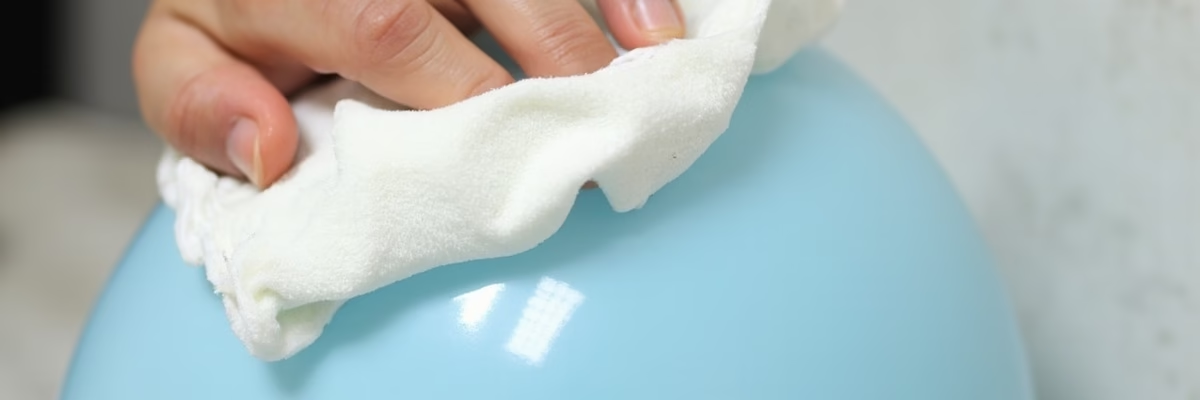
Natural latex balloons oxidize when exposed to oxygen and ultraviolet light. The rubber molecules at the surface react with air moisture and UV radiation, breaking down the surface polymer and creating a chalky layer that scatters light instead of reflecting it. This process begins within hours of inflation and accelerates in sunlight.
The science behind latex oxidation
Natural latex is a polymer made of polyisoprene chains. When these chains are exposed to oxygen, oxidation breaks the molecular bonds at the surface through a process called photodegradation. UV light provides the energy for this reaction, while atmospheric moisture acts as a catalyst. Wikipedia's natural rubber chemistry article explains that latex is susceptible to oxidation and aging when exposed to oxygen and heat1. The outermost layer of a latex balloon is most vulnerable because it receives the highest exposure to both UV and oxygen simultaneously.
Temperature plays a significant role as well. Balloons inflated in hot outdoor conditions oxidize faster than those in air-conditioned environments. The heat accelerates the chemical reaction rate, meaning a balloon left in direct summer sunlight can develop visible oxidation within two to three hours. Quora discussions among professional balloon decorators confirm that outdoor heat dramatically accelerates balloon surface degradation2.
Common myths about balloon oxidation
Many balloon suppliers claim their products are \"anti-oxidant treated\" or \"oxidation resistant.\" In practice, no natural latex balloon can permanently resist oxidation. Some manufacturers apply a thin surface coating that delays oxidation for an extra day or two, but this is a temporary solution, not a permanent fix. Wikipedia's balloon sizing and decoration guide covers the practical lifespan of latex balloons in different conditions3.
| Storage Condition | Time to Visible Oxidation |
|---|---|
| Direct sunlight, outdoor | 2-3 hours |
| Indoor, indirect light | 12-24 hours |
| Air-conditioned room, dark | 2-3 days |
| Airtight sealed bag, cool storage | 1-2 weeks (before inflation) |
How Can I Restore Shine to Dull Balloons?
You have a balloon display that has already started oxidizing. Throwing them away and starting over is expensive. There are professional techniques that can partially or fully restore the surface appearance of mildly oxidized latex balloons.
Light oxidation can be reversed by wiping balloon surfaces with a soft cloth dampened with water or a 50/50 water and glycerin mixture. For moderate oxidation, a commercial balloon shine spray applied with a microfiber cloth can restore up to 80% of the original gloss. Severe oxidation cannot be fully reversed.
The glycerin restoration method
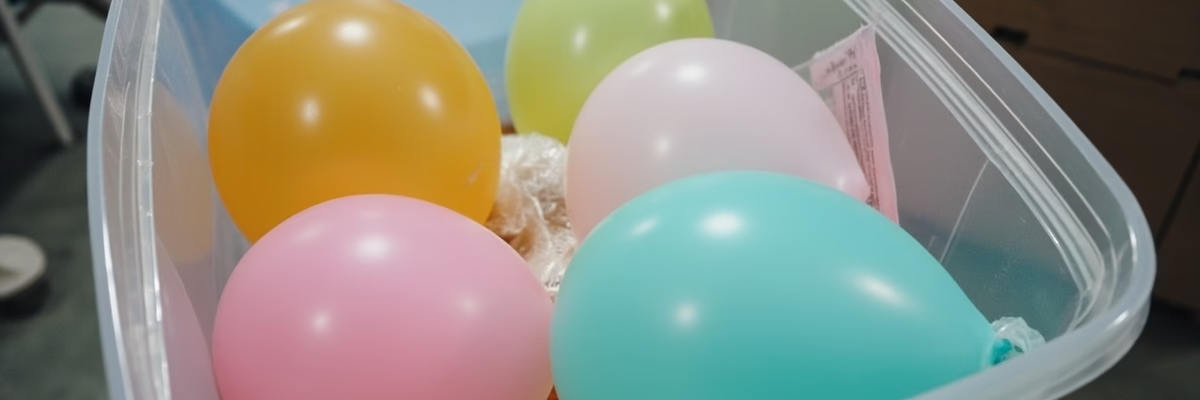
Glycerin is a humectant that penetrates the outer latex layer and temporarily restores flexibility and surface gloss. Mix one part glycerin with two parts distilled water in a small spray bottle. Lightly mist the balloon surface and wipe gently with a clean, soft cotton cloth using circular motions. Quora community discussions confirm that glycerin is widely used by professional balloon decorators for surface restoration4. The effect lasts approximately four to six hours before the glycerin evaporates, so this method is best used as a pre-event touch-up rather than a long-term solution.
Never use paper towels, tissues, or rough fabrics. These contain fibers and particles that create micro-scratches on the balloon surface, making the oxidation worse in the long run. A dedicated microfiber cloth or a soft cotton polishing cloth gives the best results without damaging the latex.
When restoration will not work
If a balloon surface has turned fully chalky gray with visible surface cracking, restoration will not bring back the shine. The oxidation has progressed past the point where surface treatments can penetrate. These balloons should be replaced rather than treated, as attempting restoration on severely oxidized latex can cause the balloon to pop due to weakened surface integrity.
What Are the Best Methods to Prevent Balloon Oxidation?
Restoration is reactive. Prevention is what separates professional decorators from amateurs. Learning the correct handling and storage procedures means your balloon displays stay glossy throughout the entire event without last-minute touch-ups.
The most effective prevention methods are: inflate balloons as close to the event time as possible, store uninflated balloons in airtight bags with silica gel, avoid outdoor display in direct sunlight, and use UV-protectant sealer sprays for extended outdoor events.
Timing your inflation for maximum shine
Professional decorators follow a simple rule: never inflate more than four hours before the event for outdoor displays, and no more than twelve hours before for indoor events. This window gives the balloons time to reach full equilibrium temperature while minimizing UV and air exposure. Wikipedia's balloon care guide confirms that latex balloons have a limited display lifespan that varies significantly with environmental conditions5. If you are preparing a display for a full-day outdoor event, budget for a refresh inflation during the event if the venue allows.
Pre-inflation storage for uninflated balloons
Before inflation, keep balloons in their original sealed packaging until you are ready to use them. Once removed from packaging, transfer them immediately to airtight freezer bags with silica gel desiccant packets. Press out as much air as possible before sealing. This method keeps uninflated balloons in pristine condition for up to two weeks of storage. Understanding how long latex balloons last helps you plan your inventory rotation and reduces waste from prematurely oxidized stock. Sourcing balloons in bulk from a wholesale supplier allows you to maintain a fresh inventory rotation rather than storing balloons for months, which significantly reduces oxidation-related waste.
What Commercial Products Keep Balloons Shiny?
There is a growing range of commercial products specifically formulated for balloon surface care. Understanding which products work and which are marketing gimmicks will save you money and prevent damage to your balloon inventory.
The most effective commercial products are balloon-specific shine sprays containing silicone or lanolin compounds. These create a thin protective barrier on the balloon surface that slows oxidation and adds immediate gloss. Avoid petroleum-based products which degrade natural latex.
Types of balloon shine products available
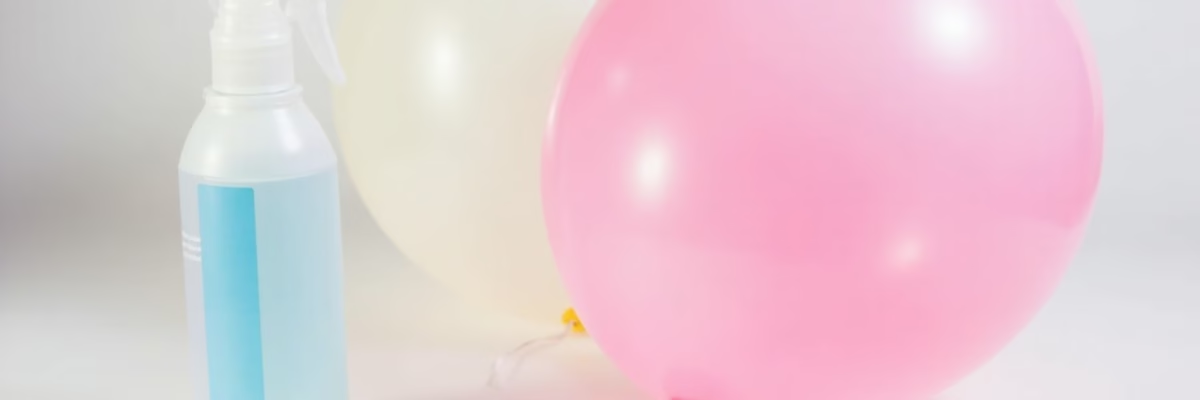
Balloon shine sprays are the most widely used professional product. They typically contain polydimethylsiloxane (silicone) or lanolin compounds suspended in a carrier solution. Apply a light, even coat from approximately twelve inches away. Too much spray creates a sticky surface that attracts dust rather than repelling it.
Lanolin-based creams are preferred by some decorators for their natural composition and gradual absorption rate. These creams provide longer-lasting protection than sprays but require more application time. They are particularly effective for high-end event displays where appearance quality is paramount.
Anti-static sprays serve a dual purpose: they reduce dust attraction while adding a subtle surface gloss. For events in dusty outdoor environments or venues with HVAC systems that circulate particulate matter, an anti-static spray is a practical addition to your preparation routine.
| Product Type | Active Ingredient | Best Use Case |
|---|---|---|
| Shine Spray | Silicone (PDMS) | Quick application, events |
| Lanolin Cream | Lanolin oil | Premium events, longer protection |
| Anti-Static Spray | Quaternary ammonium salts | Dusty environments |
| Glycerin Solution | Glycerin + water | Pre-event touch-up |
Conclusion
Balloons lose their shine through oxidation, but proper storage and timing keep them glossy. Inflate close to event time and use shine products for displays that stay perfect.
References:
| 1 | Understand the chemical composition of natural rubber and why it degrades when exposed to oxygen, UV light, and heat over time.Wikipedia: Natural Rubber.↩ |
| 2 | Learn practical techniques professional balloon decorators use to slow oxidation and extend the glossy appearance of latex balloons at events.Quora: How to keep balloons from oxidizing.↩ |
| 3 | Review standard balloon care guidelines including the practical lifespan of latex balloons and how environmental factors affect their appearance.Wikipedia: Party Decoration.↩ |
| 4 | Discover whether glycerin is effective for balloon surface restoration and how professional decorators apply it for best results.Quora: Does glycerine make balloons shiny.↩ |
| 5 | Understand how environmental factors like sunlight, heat, and air exposure determine how long latex balloons maintain their visual quality.Wikipedia: Balloon care and preparation.↩ |