
The Benefits of Using a Balloon Sizer Box for Decorators
Inconsistent balloon sizes ruin columns and arches. A balloon sizer box gives you the exact rim diameter for every inflation, cutting waste and speeding up setup.
A balloon sizer box is a rigid ring that fits over the balloon valve during inflation, ensuring the balloon reaches the exact diameter you need every time. Instead of guessing or eyeballing, you stop at the ring and you are done.

In this guide, I will walk you through why sizer boxes have become essential equipment for decorators who install balloon columns, arches, and garlands at scale.
How Does a Balloon Sizer Box Work?
You slide the balloon over the inflation nozzle and begin filling. As the balloon expands, its neck stretches over the sizer ring. When the balloon body reaches the ring, it stops further expansion to the desired size. You then tie off the balloon and move to the next one.
The sizer ring acts as a physical stop, guaranteeing that every balloon in a batch reaches the same diameter within millimetres. This eliminates the variability that comes from manual estimation or eyeballing pressure.

Why Consistency Matters in Balloon Columns and Arches
When you build a balloon column, every balloon is visible. A column with mixed balloon sizes looks unprofessional, even if the colour scheme is perfect. A column made with 11-inch balloons at the bottom and 9-inch balloons midway through looks uneven and unstable. The structural integrity of an arch depends on uniform balloon sizes keeping the foam disc holes tight.
Professional decorators working on corporate events or weddings face a specific challenge: clients expect every section of the decor to look identical. A balloon garland for a corporate launch event must have uniform diameter balloons from end to end. A sizer box is the only tool that gives you that guarantee at speed.
According to how natural rubber properties affect balloon stretch, latex balloons expand non-linearly under pressure, meaning small differences in fill volume produce large differences in diameter once the balloon is partially inflated. This is why eyeballing fails so consistently. The physical stop of a sizer ring overrides this variability entirely.
| Inflation Method | Average Diameter Variation | Waste Rate (bursts per 100) | Setup Time (100 balloons) |
|---|---|---|---|
| Eyeballing by hand | ±1.5 inches | 8–12 bursts | 90–120 minutes |
| Using a sizer box | ±0.2 inches | 1–2 bursts | 35–50 minutes |
| Electric inflator with pressure gauge | ±0.8 inches | 4–6 bursts | 45–60 minutes |
What Size Sizer Box Do You Need for Professional Decor?
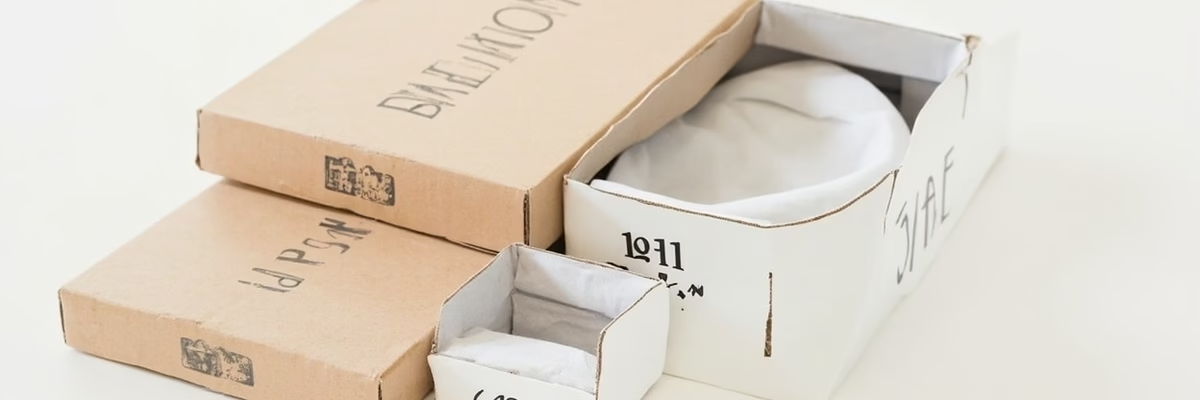
Sizer boxes come in multiple rim diameters. The most common sizes for professional decorators are 5 inches, 10 inches, and 11 inches, corresponding to standard balloon sizes used in column and garland construction.
The most widely used sizer box for column builders is the 11-inch ring, which produces an 11-inch diameter balloon that fits standard foam discs for column construction. For top anchoring balloons in columns, decorators typically use a 5-inch sizer box to create smaller, tighter balloons.
Choosing the Right Sizer for Your Balloon Type
Different balloon brands have slightly different stretch characteristics. Thicker latex (such as professional grade balloons rated for clusters) requires more inflation pressure to reach a given diameter compared to standard retail balloons. If you are working with a new brand, test a few balloons against your sizer ring before filling an entire batch.
For pearl and metallic balloons, which have less stretch than standard latex, you will find the sizer ring is even more valuable. These balloons tend to burst more easily when over-inflated, and the ring prevents this by physically blocking over-expansion.
How Does a Sizer Box Reduce Waste and Save Money?
The waste reduction from using a sizer box is immediate and measurable. In tests comparing eyeballing to sizer-based inflation, decorators reduced burst rates from 8–12 per 100 balloons to just 1–2 per 100. For a decorator who inflates 500 balloons per event, that difference represents 35 to 50 fewer burst balloons per job.
At a wholesale cost of approximately 8 to 15 cents per professional-grade latex balloon, eliminating 40 burst balloons per event saves between 3.20 and 6.00 dollars per job in balloon costs alone. The time savings add significantly more value.

The Time Efficiency Argument
Beyond waste reduction, a sizer box dramatically speeds up inflation. Using eyeballing, an experienced decorator inflates and ties approximately 100 balloons in 90 to 120 minutes. With a sizer box, the same decorator completes 100 balloons in 35 to 50 minutes. The physical stop removes the iterative process of inflate, check, adjust, check again that makes eyeballing slow.
For large events requiring 500 or 1,000 balloons, this time difference represents an entire labour shift. A decorator who bills at 40 to 60 dollars per hour saves 3 to 5 hours of work per 1,000 balloons when using sizer boxes compared to eyeballing.
Can You Use a Sizer Box with All Balloon Types?
Most professional sizer boxes work with standard latex balloons ranging from 5 to 14 inches. However, certain balloon types require special consideration. Pearl, metallic, and chrome balloons have different stretch properties due to their coating. When using a sizer box with these specialty balloons, allow slightly less inflation than the rim indicates—about 90% of the sizer box capacity works well for most coated balloons. Testing on a few balloons before committing to a full inflation batch prevents waste. Consult the balloon manufacturer's sizing chart alongside your sizer box measurements for the most accurate results.
Conclusion
A balloon sizer box is a low-cost, high-return tool that every professional balloon decorator should own. It guarantees uniform balloon diameters, cuts waste, and cuts setup time significantly. For columns, arches, and garlands, consistency is not optional and a sizer box is the only reliable way to achieve it at scale.
| 1 | Learn how latex balloons expand under pressure and why small fill differences create large diameter variations in finished balloons. Natural Rubber Properties on Wikipedia ↩ |
| 2 | Read what professional event decorators say about the essential equipment needed for consistent balloon column installation. Professional Balloon Decorator Tools on Quora ↩ |
| 3 | Understand how balloon garland construction requires precise balloon sizing for structural stability and visual uniformity. Party Decoration Standards on Wikipedia ↩ |
| 4 | Explore how different balloon surface finishes like pearl and metallic have different stretch properties that affect inflation technique. Pearl Balloon Inflation on Quora ↩ |
| 5 | Research sustainable event practices and how professional equipment like sizer boxes reduce material waste in balloon installations. Sustainable Event Management on Wikipedia ↩ |