A Question of Safety: Are Latex Balloons a Choking Hazard for Children and Pets?
Worried about party safety? Uninflated or broken balloons can be dangerous. You need to ensure every celebration is safe for everyone, especially the youngest guests and furry friends.
Yes, latex balloons are a significant choking hazard1 for children under eight and for pets. The U.S. CPSC2 identifies them as a leading cause of toy-related choking fatalities. Uninflated balloons or broken pieces can block airways, making adult supervision3 absolutely essential during any celebration.

As a balloon manufacturer for over 37 years, safety is the foundation of everything I do. I have seen the industry evolve, and our commitment to safety has only grown stronger. It's a serious topic, and for procurement managers like yourself, understanding the risks is the first step toward mitigating them. It's not just about selling a product; it's about delivering joy safely. Let's explore how we can work together to protect consumers. This involves understanding regulations, manufacturing processes, and available alternatives. So, let’s dig into the details to give you the confidence you need when sourcing your products.
What are the CPSC and EU mandatory warning label requirements for balloon packaging?
Confused by complex regulations? Non-compliant packaging can lead to costly recalls and damage your brand's reputation. You need clear guidance to ensure your products meet international standards every time.
The CPSC in the U.S. and the Toy Safety Directive4 in the EU both mandate clear choking hazard warnings on balloon packaging. These labels must state that balloons are a risk for children under eight and require adult supervision. This ensures consumers are aware of the potential dangers.
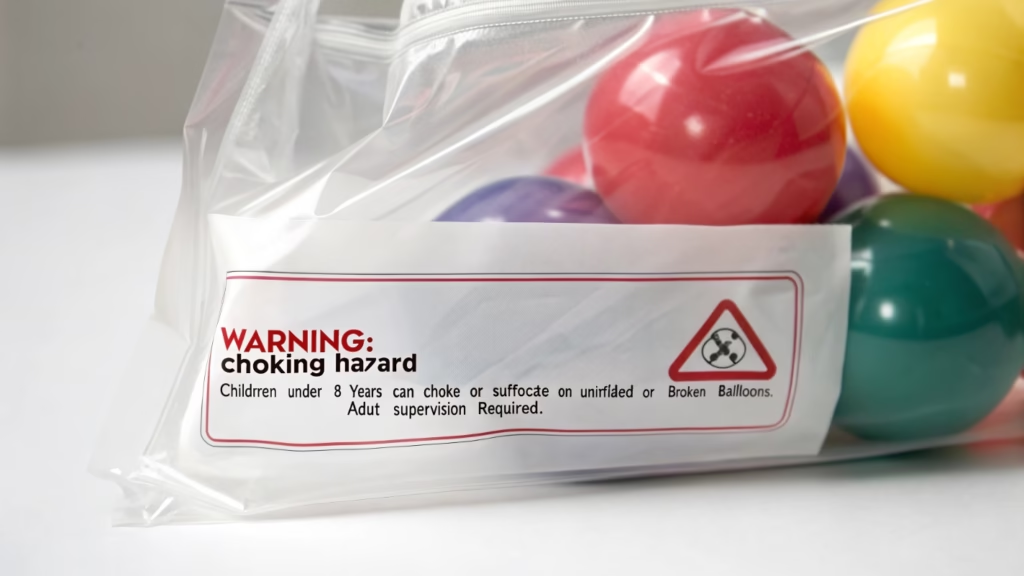
When I first started exporting to the U.S. and Europe, navigating these regulations was one of my biggest challenges. Getting it wrong isn't an option. For a procurement manager, these labels are your first line of defense in legal and safety compliance. They must be visible, legible, and precise.
CPSC vs. EU Toy Safety Directive
The core message of these regulations is the same: inform the end-user about the risk. However, the specific requirements can differ slightly. It is crucial to work with a manufacturer who understands these nuances. At AIHUA BALLOON, we have dedicated compliance experts who ensure every package that leaves our factory is ready for its target market.
Here is a simple breakdown of the key requirements:
| Regulation | Jurisdiction | Key Requirement |
|---|---|---|
| CPSC | United States | WARNING: CHOKING HAZARD – Children under 8 yrs. can choke or suffocate on uninflated or broken balloons. Adult supervision required. Keep uninflated balloons from children. Discard broken balloons at once. |
| Toy Safety Directive | European Union | Must include the name and address of the importer/manufacturer, CE mark, and a specific warning. The warning states that children under eight can choke on uninflated or broken balloons and requires adult supervision. |
How do manufacturers' quality control tests reduce the risk of balloon breakage?
Fearful of product defects? A balloon that pops unexpectedly can be a safety risk and ruin a party's atmosphere. You need a supplier whose quality control processes are reliable and thorough.
Reputable manufacturers perform multiple quality control tests5, including inflation tests6, tensile strength measurements7, and visual inspections. These procedures identify weak spots and defects. This greatly reduces the chance of balloons popping unexpectedly, which in turn lowers the choking risk from broken fragments.
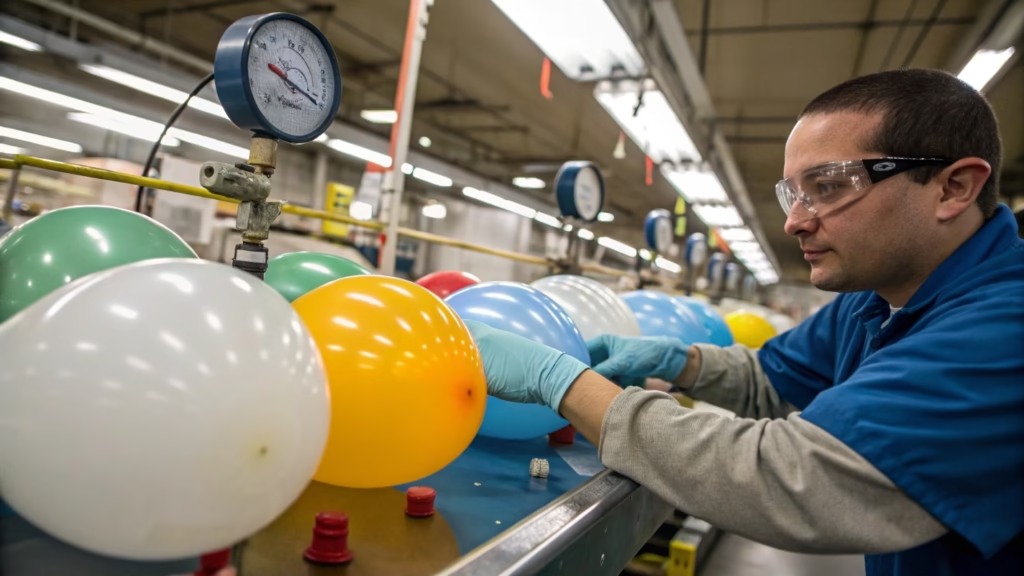
I’ve spent countless hours on our production floor, and I can tell you that quality control is more of an art than a science. It combines advanced machinery with the skilled eyes of experienced technicians. These tests are not just about meeting a standard; they are about our promise of safety and quality to our clients. When a balloon passes our tests, I know it will bring joy, not problems.
Inside Our Quality Control Process
We don't just test a few balloons from each batch. We implement a system of random and systematic checks throughout the entire production process. Here are the key tests we rely on:
- Inflation and Burst Testing: We inflate balloons to a specified size and pressure to ensure they can withstand normal use without bursting. We also test them to the breaking point to gather data on their ultimate durability. This helps us spot inconsistencies in the latex mix or dipping process.
- Tensile Strength Test: This test measures the balloon's elasticity and strength. It tells us how much the material can stretch before it tears. A high tensile strength means the balloon is less likely to break into small, dangerous pieces if it does pop.
- Aging Test: We simulate the effects of time and storage conditions on the balloons. This ensures they maintain their quality and safety from our factory to the final customer's party.
Are there safer, non-latex balloon alternatives for the children's party market?
Looking for options for sensitive customers? Latex allergies and choking concerns are valid issues for many parents. You need to know about alternatives to serve this market segment effectively.
Yes, foil (mylar) balloons are a popular and safer alternative. They are made from a non-stretchy nylon sheet and are much less likely to be a choking hazard. They do not break into small fragments when they deflate. However, they can pose a conductivity risk near power lines.
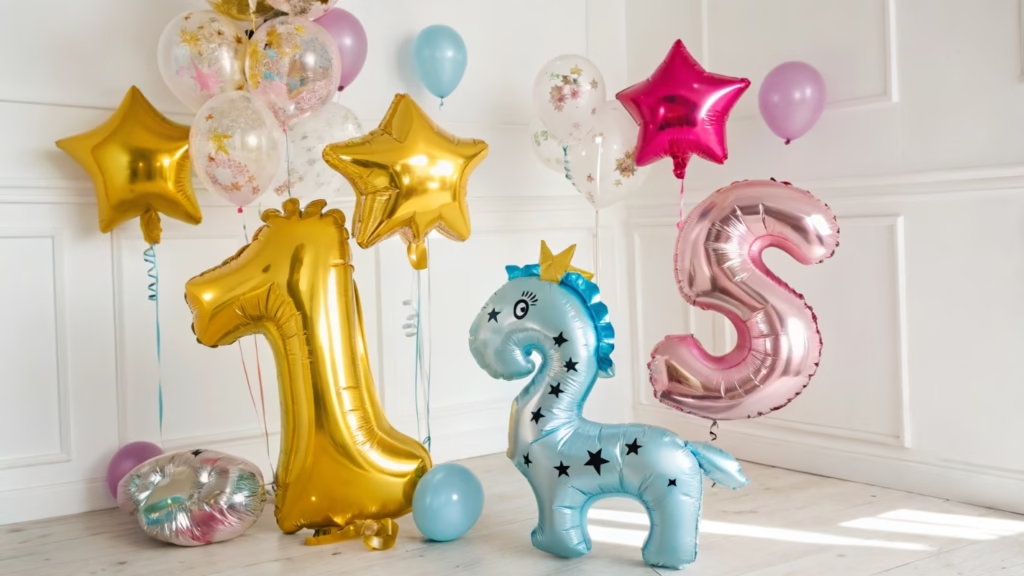
While we are proud of the quality of our latex balloons, I understand the need for variety and alternatives. Many years ago, a major retail partner asked us about non-latex options for their stores. This pushed us to expand our expertise into foil balloons. It's important to offer choices so that every family can celebrate safely, regardless of allergies or specific concerns.
Comparing Latex and Foil Balloons
Both latex and foil balloons have their place in the market. The best choice depends on the occasion, budget, and safety considerations. For parties with very young children, foil balloons are often the preferred choice for peace of mind.
| Feature | Latex Balloons | Foil (Mylar) Balloons |
|---|---|---|
| Material | Natural Rubber Latex | Nylon sheet coated with metallic finish |
| Choking Hazard | High (especially when broken or uninflated) | Low (does not break into small pieces) |
| Allergy Risk | Potential for latex allergies8 | Hypoallergenic |
| Float Time (Helium) | 8-12 hours | Several days to weeks |
| Biodegradability | Biodegradable | Not biodegradable |
| Cost | Lower | Higher |
This comparison shows why having both types in your inventory is a smart strategy. It allows you to cater to the full spectrum of customer needs and preferences.
What safety certifications should importers look for when sourcing wholesale balloons?
Feeling overwhelmed by paperwork? Sourcing from a new supplier can be risky without verifying their credentials. You need to know which certifications truly matter for ensuring product safety and quality.
Importers should prioritize suppliers with ISO90019 for quality management and a Sedex (SMETA) audit10 for ethical practices. Also, look for recent product test reports11 from accredited labs confirming compliance with CPSC, ASTM F963, and EN71 standards. These prove a commitment to safety.
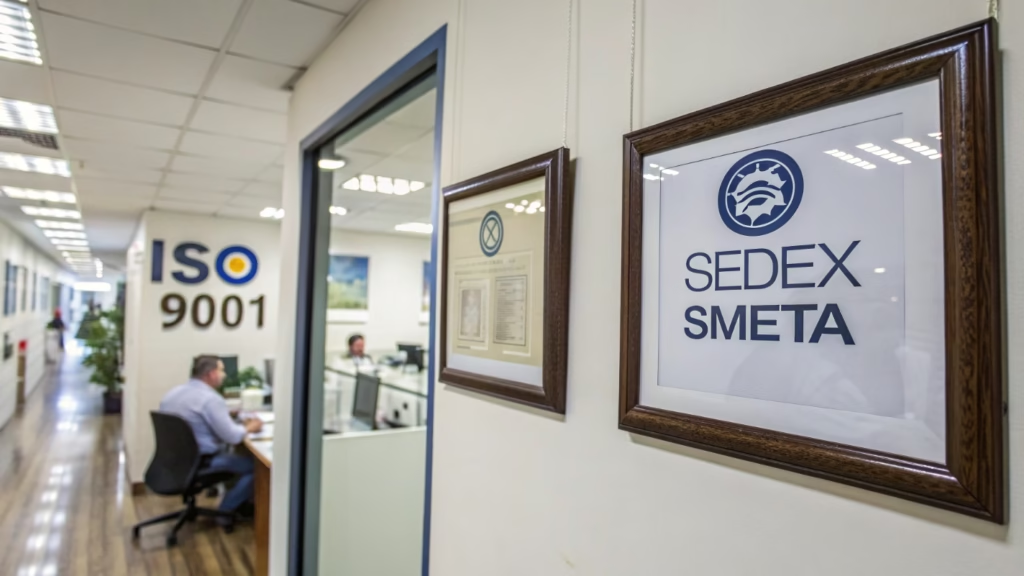
As a procurement manager, you know that a certificate is more than just a piece of paper. It's proof that a manufacturer has invested in their processes and is committed to international standards. When I lead tours of our facility for clients, I don't just show them our machines. I show them our quality management system in action and our framed certificates on the wall. These documents represent our promise of reliability.
Key Certifications Explained
Understanding what each certification means helps you vet potential suppliers more effectively. A manufacturer who openly shares these documents is confident in their operations.
- ISO 9001: This is the international standard for a Quality Management System (QMS). It shows that a manufacturer has well-defined, repeatable processes to ensure consistent product quality. It's a sign of professionalism and reliability.
- Sedex (SMETA Audit): The Supplier Ethical Data Exchange focuses on ethical and responsible business practices. A SMETA audit reviews labor standards, health & safety, environment, and business ethics. This is crucial for your brand's CSR (Corporate Social Responsibility) profile.
- Product Test Reports (e.g., from SGS, Intertek): These are the most direct proof of product safety. A supplier should be able to provide recent reports showing their balloons pass specific toy safety standards, such as EN71 in Europe or ASTM F963 in the US. Don't be afraid to ask for them.
Conclusion
Latex balloons require strict adult supervision due to choking risks. By understanding warning labels, quality tests, and safer alternatives, you can source responsibly and ensure celebrations remain safe and joyful.
-
Learn about choking hazards to better protect children during celebrations. ↩
-
Understand the CPSC's regulations to ensure compliance and safety in your products. ↩
-
Discover the importance of adult supervision to prevent choking incidents. ↩
-
Explore the EU's Toy Safety Directive to ensure your products meet international standards. ↩
-
Find out how quality control tests ensure the safety and reliability of balloons. ↩
-
Understand the inflation testing process to ensure balloon safety and quality. ↩
-
Learn how tensile strength measurements contribute to balloon durability and safety. ↩
-
Understand latex allergies to better cater to sensitive customers and ensure safety. ↩
-
Learn about ISO9001 certification to ensure quality management in your suppliers. ↩
-
Explore the significance of Sedex audits for ethical manufacturing practices. ↩
-
Understand the importance of product test reports for ensuring balloon safety. ↩