Are FSC balloons safe for children?
You see "FSC certified1" on a balloon package and assume it's a mark of total safety. But this label doesn't cover choking hazards2, leaving you potentially overlooking a major risk.
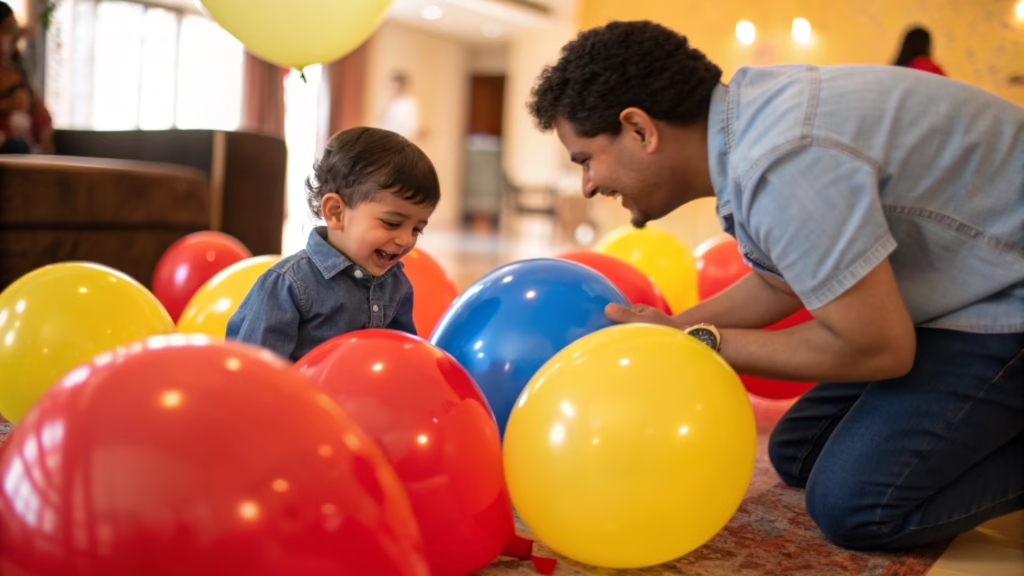
No, FSC certification does not make balloons safe for children. The Forest Stewardship Council (FSC) label is about environmental sustainability, confirming the latex comes from responsibly managed forests. It is not a child safety standard. All balloons, regardless of certification, pose a serious suffocation risk3 for young children.
It's a common misunderstanding. As a procurement manager, you're trained to look for certifications as a sign of quality and compliance. I've seen many clients make the same assumption. They believe an eco-friendly product is automatically a safer one for end-users, especially kids. But the truth is, safety and sustainability are two different things, governed by entirely different standards. So, if FSC isn't the safety guarantee you thought it was, what should you be looking for instead? Let's break down the certifications and standards that truly matter for child safety.
What safety certifications are required for importing FSC balloons?
You need to import balloons that meet strict safety laws. Getting this wrong can lead to recalled products, hefty fines, and damage to your brand’s reputation. Understanding the right certifications is crucial.
When importing balloons, you must have toy safety certifications4 like CE for Europe5 or ensure compliance with CPSIA for the USA6. These standards address chemical content, flammability, and physical hazards like choking, which FSC certification does not cover. They are non-negotiable for children's products.
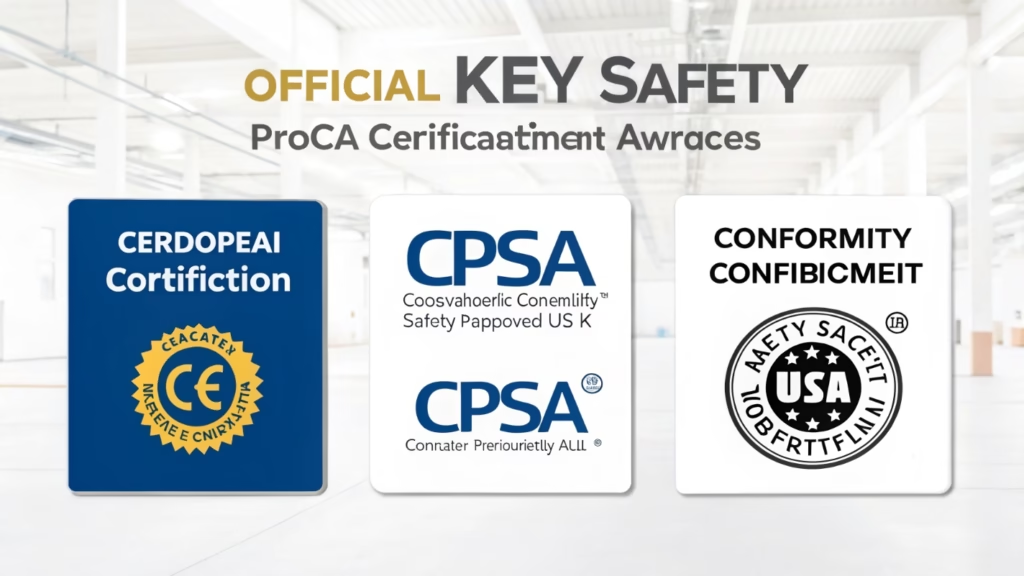
Over my 10+ years in this industry, I've helped countless partners navigate the complex web of international regulations. It’s one of the most critical parts of my job. While FSC is a great certification to have for your brand's environmental goals, it won't get your container of balloons through customs if you're missing the mandatory safety marks. For a client like Sarah at GlobalMart, who manages procurement for Europe and North America, this distinction is everything. You need to verify that your supplier provides documentation for both regions. At AIHUA BALLOON, we ensure our products meet these specific regional requirements, because we know that market access depends on it.
Key Safety Certifications by Region
| Certification | Region | Key Focus |
|---|---|---|
| CE Mark (EN-71) | European Union | Governs toy safety, including chemical properties, flammability, and choking hazards from small parts. |
| CPSIA Compliance | USA | Sets limits for lead and phthalates in children's products and mandates third-party testing. |
| UKCA Mark7 | United Kingdom | The post-Brexit equivalent of the CE mark, required for goods placed on the market in Great Britain. |
How does FSC certification affect balloon material and chemical safety?
You might think an eco-friendly FSC label means the balloon material is purer and safer. But the FSC process looks at the forest, not what happens in the factory.
FSC certification affects the source of the latex, not the final chemical composition of the balloon. It ensures the rubber is harvested sustainably but does not regulate the chemicals, dyes, or plasticizers used during manufacturing. Safety from harmful chemicals is governed by separate regulations like REACH8 or CPSIA.

Let me draw a clear line here. FSC is about forestry. Think of it as guaranteeing the tree was treated well. It says nothing about the journey from raw latex sap to the finished, colorful balloon in your hand. During that manufacturing process, various chemicals are used to turn liquid latex into a stable, elastic product. These can include vulcanizing agents, accelerators, and pigments. Whether these additives are safe for children is determined by regulations like Europe's REACH (Registration, Evaluation, Authorisation and Restriction of Chemicals) and the USA's CPSIA. As a manufacturer, we must manage two separate supply chain verifications: one for the raw material's origin (FSC) and another for the safety of all materials in the final product (CE/CPSIA). For a buyer, this means you must ask your supplier for separate proof of compliance.
FSC vs. Chemical Safety Standards
| Aspect | FSC Certification | Chemical Safety Standards (e.g., REACH, CPSIA) |
|---|---|---|
| Scope | Raw material sourcing (natural rubber latex) | Final product composition |
| Goal | Environmental and social responsibility in forestry | Consumer protection from harmful chemicals |
| Regulates | Forest management practices | Nitrosamines, heavy metals, phthalates, dyes |
| Assurance | The latex is from a sustainable source | The final balloon is safe for skin contact and mouthing |
What are the quality control standards for child-safe FSC balloons?
You assume a certified product meets all quality checks. But different certifications cover different things, and you might miss the checks that prevent a dangerous product from reaching a child.
For a balloon to be child-safe, its quality control must go beyond FSC and include tests for physical durability and choking hazards, as mandated by toy safety standards9 like EN-71. This involves testing for small parts, tensile strength, and clear warning labels10 about suffocation risk3s.
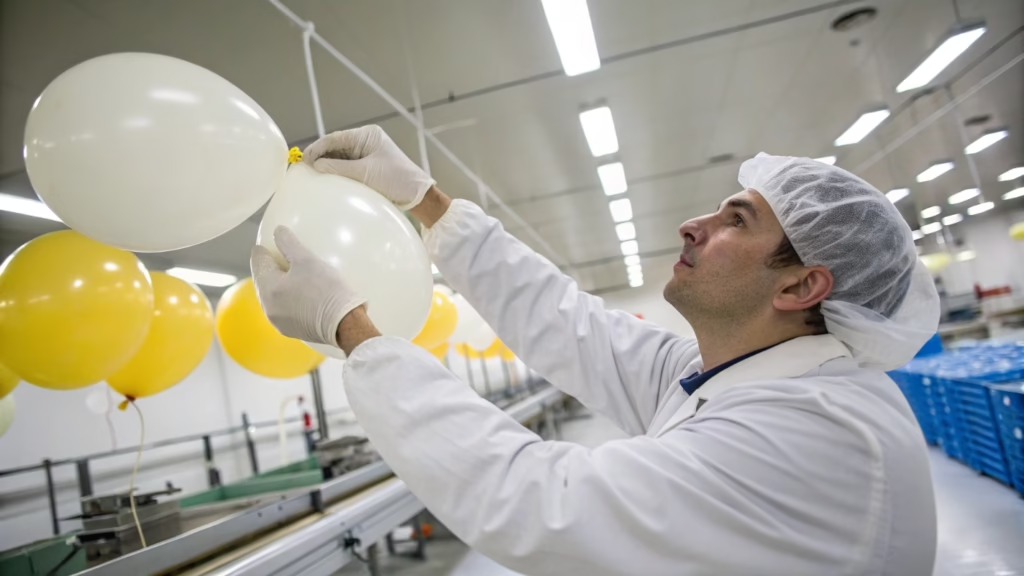
In our factory, quality control is a multi-step process. An FSC balloon and a non-FSC balloon go through the exact same rigorous safety testing. First, we inspect for physical defects like holes or weak spots. Then, we conduct tests based on EN-71 or ASTM F963 standards. A key test is the "small parts" test. An uninflated balloon is considered a small part and a choking hazard, which is why all packaging must carry a warning for children under eight. We also test the balloon's burst strength to ensure it doesn't pop too easily. A broken balloon creates fragments that are a major suffocation risk because they can stretch and conform to a child's throat. These physical tests are the core of what makes a balloon "safe," and they have nothing to do with FSC.
Essential QC Checks for Child-Safe Balloons
- Warning Label Verification: Check that packaging includes the mandatory suffocation hazard warning for children under 8, as required by law in the US and EU.
- Small Parts Cylinder Test: Confirm that any detached components or the uninflated balloon itself fits into a small parts cylinder, identifying it as a choking hazard.
- Tensile Strength Test: Ensure the balloon material does not break apart too easily, which would create dangerous small pieces.
- Chemical Migration Analysis: Test for the migration of heavy metals and other harmful substances, ensuring they are below the legal limits set by EN-71-3.
Are FSC latex balloons tested for allergens and choking hazards?
You see a natural FSC latex balloon and think it’s a safer choice for a kids' party. But you might be forgetting about latex allergies11 and the universal choking risk of all balloons.
FSC certification does not include testing for allergens or choking hazards. All latex balloons, FSC or not, can cause allergic reactions in sensitive individuals. More importantly, they are all considered a choking hazard by safety authorities, requiring strict adult supervision12 and clear warning labels10.
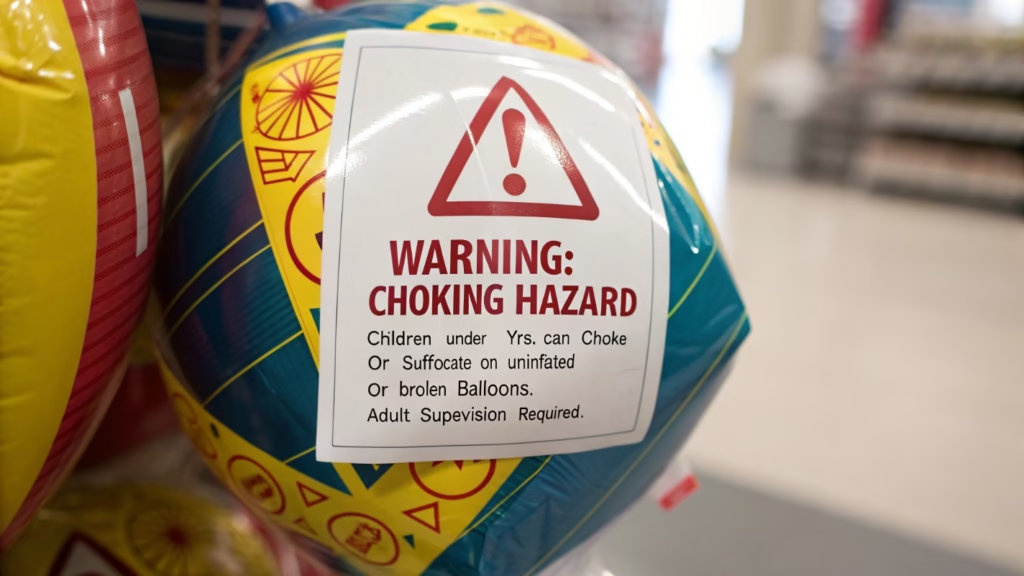
This is a point I always stress with my clients. The word "natural" can be misleading. Natural rubber latex contains proteins that can trigger allergies, which can be serious for some children. If you are a procurement manager for a large retailer, you must consider offering latex-free alternatives13 like foil (Mylar) balloons to serve customers with these concerns. But the bigger issue is choking. I remember a safety conference where a paramedic explained just how dangerous a broken balloon fragment is. It’s not like a small toy that might be coughed up; the thin, pliable latex can form an airtight seal in a child’s small airway. This is why safety standards globally are so unified and strict on this point. The danger is inherent to the product's form, regardless of where the material came from.
Safety Precautions for All Balloons
- Supervise Closely: Never leave a child under eight years old alone with balloons, inflated or not.
- Discard Broken Pieces: Immediately pick up and throw away any broken balloon fragments.
- Keep Uninflated Balloons Away: Store uninflated balloons out of reach of young children.
- Educate Consumers: Always include and highlight the warning: "WARNING: CHOKING HAZARD—Children under 8 yrs. can choke or suffocate on uninflated or broken balloons. Adult supervision required."
Conclusion
FSC certification is a mark of environmental responsibility, not child safety. To ensure safety, you must verify compliance with toy safety standards like CE and CPSIA, which address real choking hazards.
-
Understanding FSC certification helps clarify its focus on sustainability, not safety, which is crucial for informed purchasing. ↩
-
Learn about choking hazards to better protect children and make informed decisions regarding balloon safety. ↩
-
Explore the serious suffocation risks associated with balloons to ensure child safety during play. ↩ ↩
-
Discover the key toy safety certifications that ensure balloons are safe for children, beyond just eco-friendliness. ↩
-
Understanding CE certification is vital for ensuring compliance with European toy safety standards. ↩
-
Learn about CPSIA compliance to ensure children's products meet safety standards in the USA. ↩
-
Explore the UKCA Mark to understand its significance for product safety in the post-Brexit market. ↩
-
Learn about REACH regulations to ensure compliance with chemical safety in children's products. ↩
-
Understanding global safety standards is essential for ensuring the safety of balloons for children. ↩
-
Explore the required warning labels to ensure consumers are aware of choking hazards associated with balloons. ↩ ↩
-
Understanding latex allergies is crucial for ensuring the safety of children who may be sensitive to latex products. ↩
-
Learn about the importance of adult supervision to prevent choking and suffocation risks with balloons. ↩
-
Explore latex-free alternatives to provide safe options for children with latex allergies. ↩