
Are Latex or Mylar Balloons easier to dispose of sustainably?
Choosing sustainable products is a major challenge for procurement managers. It can be hard to know which choice is truly better for the environment and your brand's reputation.
Latex balloons are generally easier to dispose of sustainably. They are made from natural rubber1 and biodegrade over time. Mylar balloons are made from plastic and nylon; they don't biodegrade but can be recycled if facilities exist and consumers prepare them correctly.

This simple answer hides a lot of important details. As a procurement manager, you need to understand the full lifecycle of these products to make the best decision for your business. For over a decade in this industry, I've seen the conversation around sustainability grow. It's not just about a single feature like "biodegradable2" or "recyclable3." It’s about the entire journey from raw material to final disposal. Let's break down what this means for latex and mylar balloons, so you can confidently explain your sourcing choices.
How does the biodegradability of natural latex compare to the recyclability of mylar?
The terms "biodegradable" and "recyclable" sound great. But they can be misleading, causing confusion for both businesses and customers. This confusion can lead to improper disposal and environmental harm.
Natural latex biodegrades, breaking down into natural elements over months to years. Mylar is recyclable, meaning it can be processed into new materials. However, its recycling depends heavily on consumer action4 and the availability of specialized facilities, which are not common.
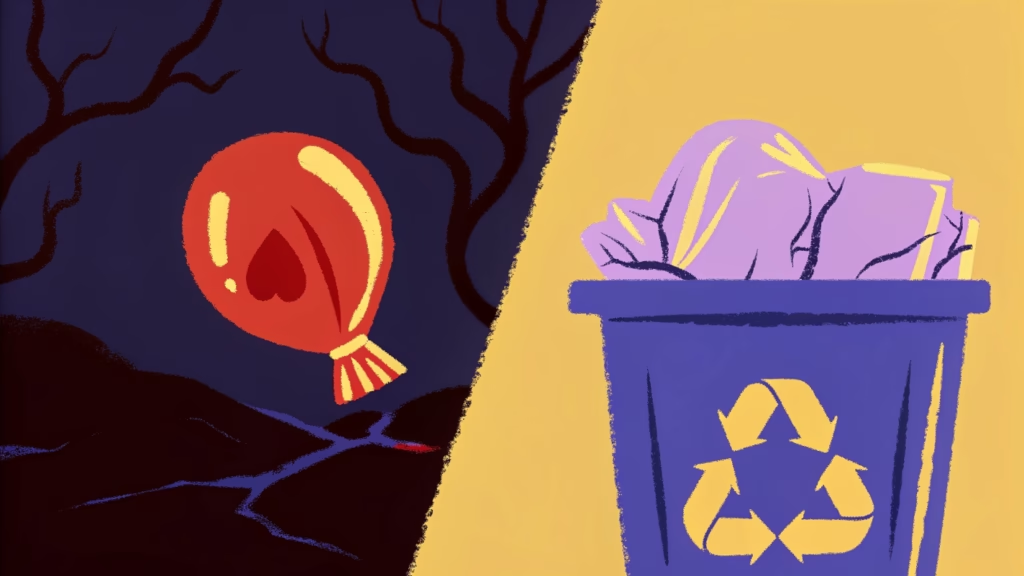
When we talk about sustainability, we must look at the real-world process. I always tell my partners that the label on the package is only the beginning of the story. The true impact is decided by what happens after the party is over. For latex, biodegradability is a natural process. But for mylar, recycling is an industrial process that requires many steps to go right. Understanding this difference is key to assessing the true environmental footprint5 of each balloon type.
A Tale of Two Materials
Let’s look at the two materials side by side. At AIHUA BALLOON, we handle both, and we believe in being transparent about their properties.
| Feature | Natural Latex Balloons | Mylar (Foil) Balloons |
|---|---|---|
| Source Material | Natural rubber from Hevea trees | Plastic (Nylon) with a metallic coating |
| Renewable? | Yes, it's a renewable resource6. | No, it's derived from petroleum. |
| End-of-Life Process | Biodegradation | Recycling (if possible) or Landfill |
| Time to Break Down | 6 months to 4 years, like an oak leaf. | 500+ years; does not biodegrade. |
Latex comes from a tree. It breaks down naturally. Think of it like a tough leaf or piece of wood. Mylar is plastic. It will sit in a landfill for centuries, potentially breaking into smaller microplastics. While mylar can be recycled, the reality is that most recycling centers don't accept it. Consumers must clean, flatten, and find a special drop-off point, which rarely happens. Therefore, from a disposal standpoint, latex has a more reliable and natural end-of-life path, as long as it's kept out of waterways and away from wildlife.
What are the local and international regulations on single-use balloon disposal for businesses?
Navigating regulations can be a headache for any global business. The rules for single-use products are constantly changing. Failing to comply can result in fines and damage to your brand.
Many regions are banning or restricting intentional balloon releases, not the balloons themselves. Regulations often hold businesses accountable for promoting responsible use. Key standards like California's laws and potential EU directives focus on preventing plastic litter, impacting both latex and mylar balloons.
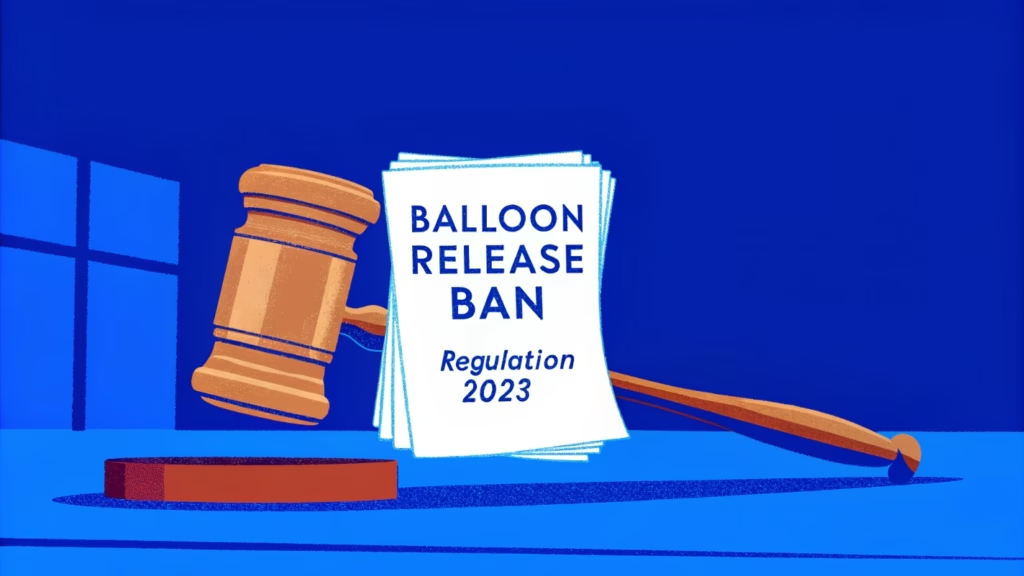
A few years ago, I was meeting with a large retail partner in the U.S. They were worried about new laws in states like California and Florida. They asked me, "Vincent, are they going to ban balloons?" I explained that the focus isn't on banning balloons for parties but on stopping mass releases. This shift is crucial. It puts the responsibility on us, the manufacturers, and on retailers to educate consumers. Our job is to provide products that can be used and disposed of responsibly.
Navigating the Regulatory Landscape
For a procurement manager like you, Sarah, staying ahead of these rules is vital. You're not just buying a product; you're managing risk. Here’s a simplified breakdown of the regulatory environment you should be aware of.
- Focus on Releases, Not Sales: Most laws target the act of intentionally releasing balloons into the atmosphere. This is because both deflated latex and mylar can harm wildlife and create litter. The legal trend is to classify releases as littering, which comes with penalties.
- Extended Producer Responsibility (EPR)7: This is a growing concept in Europe and some U.S. states. It means that producers and sellers (like you) may be financially responsible for the collection and recycling of their products. This makes the recyclability of mylar a bigger financial risk if the infrastructure isn't there to support it.
- Material-Specific Rules: Some regulations differentiate. For example, a law might specifically ban the sale of mylar balloons in certain areas due to their role in causing power outages when they hit power lines. Latex balloons typically do not face this specific issue.
Your best strategy is to partner with a supplier who understands and complies with these international standards. At AIHUA, we ensure our products meet requirements like those set by the EU and in strict U.S. states, and we provide clear disposal instructions to support responsible consumer behavior.
How do consumer environmental concerns affect the wholesale market for latex vs. mylar?
Today's consumers are smart and care about the planet. They are asking tough questions about the products they buy. This shift in awareness directly impacts your sales and inventory decisions.
Growing environmental awareness8 is driving demand for sustainable alternatives. Consumers often perceive "biodegradable" latex as more eco-friendly than "plastic" mylar. This perception directly influences wholesale purchasing, as retailers want products that align with customer values and avoid negative press.

I remember talking to a buyer for a large party supply chain. She told me her customer service team was getting more and more questions on social media about what their balloons were made of. "People want to celebrate," she said, "but they don't want to feel guilty about it." That conversation stuck with me. It’s no longer enough for a product to just look good. It has to feel good to buy, too. This feeling is now a powerful force in the wholesale market.
Meeting the "Green" Demand
As a procurement professional, your goal is to stock products that sell. The increasing consumer focus on sustainability has created clear trends in the wholesale balloon market.
- The Power of "Natural": Latex balloons benefit from being a plant-based product. We can market them as "made from natural rubber" and "biodegradable." This story is simple and appealing to an eco-conscious shopper. In contrast, mylar's plastic and metallic nature is harder to position as "green," even with its reusability and recycling potential.
- Demand for Information: Customers want clarity. They are looking for clear on-package messaging about how to dispose of products. As a wholesaler, you can gain a competitive edge by choosing suppliers who provide this. We design our packaging to include simple, icon-based instructions: "Pop and Bin" for latex, and "Reuse or Recycle" for mylar. This helps your customers make the right choice.
- Risk of "Greenwashing": The market is sensitive to false claims. Calling a mylar balloon "eco-friendly" without explaining the challenges of recycling can backfire. Similarly, advertising latex balloons as safe to release is now seen as irresponsible. Honest communication is the best policy. Focusing on the facts—latex is biodegradable, mylar is reusable—builds trust with the end consumer and protects your brand.
The trend is clear: the market is rewarding transparency and genuine efforts toward sustainability. Stocking products that align with this trend is a smart business move.
Which material offers a better return on investment considering its full environmental lifecycle cost?
A good investment is about more than the initial price. As a sharp procurement manager, you look at the total cost of ownership. The same logic applies to a product's environmental lifecycle.
Latex balloons often offer a better return on investment from a total lifecycle perspective9. Their production from a renewable resource and their ability to biodegrade naturally create fewer long-term environmental liabilities compared to petroleum-based, non-biodegradable mylar balloons, which risk becoming persistent pollution.

When I finished my MBA, the biggest lesson I brought into the balloon industry was the concept of lifecycle analysis. It's not just about the cost per unit. It's about the costs you don't see on the invoice: the risk of new regulations, the cost to your brand from negative environmental press, and the long-term waste management burden. These hidden costs10 can turn a cheap product into a very expensive problem.
Calculating the True ROI
To determine the better ROI, we must weigh several factors beyond the simple purchase price. It’s a balance of economic and environmental accounting.
- Upstream Costs (Production):
- Latex: Sourced from rubber trees, which are a renewable resource. These trees also help absorb CO2. The process is relatively straightforward.
- Mylar: Derived from petroleum, a non-renewable resource6 with a more carbon-intensive extraction and manufacturing process.
- Downstream Costs (Disposal & Risk):
- Latex: Breaks down naturally. The main risk is improper disposal (like releases), which can be managed with clear consumer education. The end-of-life cost is low.
- Mylar: Has a high downstream risk. It doesn't biodegrade, contributing to landfill waste11 and plastic pollution. If EPR regulations expand, businesses selling mylar may have to pay fees to fund recycling or cleanup programs. This potential future cost must be factored into your ROI calculation today.
- Brand Value and Market Access:
- Choosing materials perceived as more sustainable, like latex, can enhance your brand's reputation. It can be a positive marketing story. In contrast, relying heavily on plastic-based products like mylar could become a liability as consumer sentiment continues to shift. Some eco-focused retailers may even refuse to stock products they deem unsustainable, limiting your market access12.
When you add it all up, latex generally presents a lower long-term risk and a more stable ROI. Its natural origin and biodegradable properties align well with the future of consumer demand and regulation.
Conclusion
Ultimately, latex balloons are easier to dispose of sustainably because they biodegrade. Mylar requires recycling that is often unavailable. For any balloon, responsible handling is key to protecting our planet.
-
Discover the advantages of using natural rubber in sustainable product manufacturing. ↩
-
Get insights into the meaning and importance of biodegradable products for sustainability. ↩
-
Explore the complexities and challenges associated with recycling various materials. ↩
-
Understand the role of consumer behavior in improving recycling rates and sustainability. ↩
-
Learn methods to evaluate the environmental impact of different products. ↩
-
Discover the significance of renewable resources in sustainable product development. ↩ ↩
-
Learn how EPR impacts manufacturers and their responsibilities towards product disposal. ↩
-
Explore how growing environmental awareness influences consumer purchasing decisions. ↩
-
Understand the importance of evaluating products from a total lifecycle perspective. ↩
-
Explore the hidden costs associated with product lifecycle that impact overall value. ↩
-
Learn about the environmental consequences of landfill waste and its management. ↩
-
Understand how sustainability influences market access and consumer preferences. ↩