
Why Balloon Deflates Faster Outdoors and How to Fix It
You inflate a balloon, it looks perfect, you take it outside, and two hours later it's shrinking. If you've experienced this, you're not imagining it. Balloons do deflate faster outdoors, and the reasons are rooted in basic physics plus some balloon-specific factors most people don't think about.
Outdoor balloon deflation happens faster due to a combination of helium escape through latex pores, temperature-driven pressure changes, and UV exposure affecting the latex integrity. Understanding which factor is dominant in your situation helps you choose the right prevention approach.
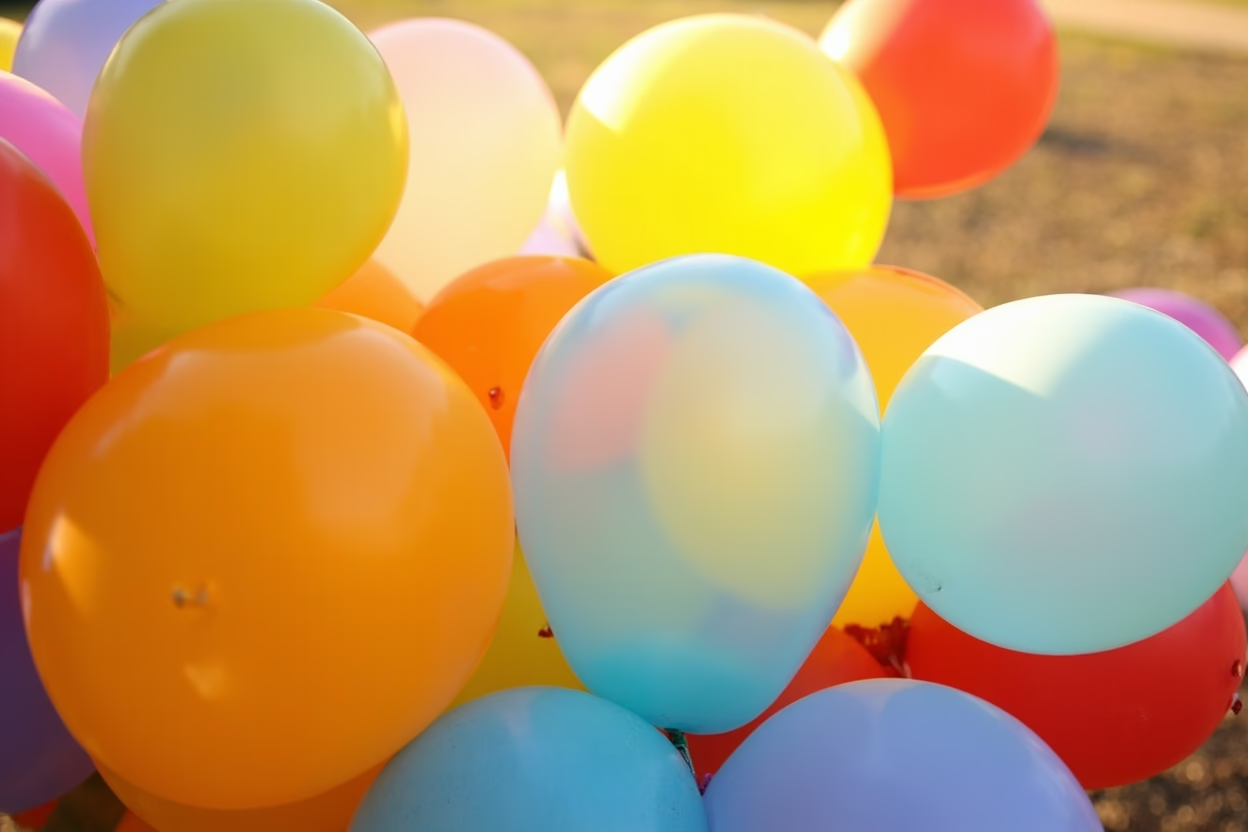
In this guide, I walk through the science behind outdoor balloon deflation, what's actually causing your balloons to shrink, and practical fixes that work based on our factory's experience testing balloons across different environments.
Why Do Balloons Deflate Faster Outdoors?
Three primary factors drive faster outdoor deflation. They interact, but each is worth understanding separately.
Temperature is the biggest single factor. Helium molecules are sensitive to heat. When a balloon sits in direct sun, the gas inside heats up, the molecules move faster, and helium escapes through the microscopic pores in latex more quickly. A balloon in 85°F shade might hold helium for 8-12 hours. The same balloon in direct July sun can lose half its lift in 3-4 hours.
At our factory, we test balloon float time using standardized conditions: room temperature, indirect light, 40% humidity. Outdoor results in direct sun consistently show 40-60% shorter float times compared to these baseline conditions. This isn't a defect in the balloon—it's physics.
UV Exposure and Latex Degradation
Ultraviolet light does more than heat the balloon. UV radiation causes photo-oxidation of the latex polymer, gradually weakening the material. Over time, this makes the latex more permeable—helium escapes faster, and the balloon itself becomes more likely to pop from minor stress.
For short outdoor events under 4 hours, UV degradation during the event is minimal. For all-day installations or outdoor displays running 8+ hours, UV becomes a significant factor. Clear balloons show the most visible degradation, while white and light pastel colors show less structural impact from UV exposure.
Barometric Pressure Changes
Weather systems moving through cause atmospheric pressure changes that affect float time. Low pressure systems (approaching storms) mean lower external air pressure, which causes the helium inside to expand and over-inflate the balloon—increasing stress on the latex seam. High pressure systems do the opposite: the balloon can appear slightly underinflated.
For outdoor events, checking the weather forecast for pressure trends matters as much as temperature. A sunny day with steady high pressure is actually better for outdoor balloons than an overcast day with a diving barometer.
Helium vs Air-Filled Balloons: Does It Matter?
Air-filled balloons don't have the float-time problem, but they still lose inflation faster outdoors for different reasons.
Air-filled outdoor balloons deflate mainly from temperature-driven expansion and contraction rather than gas escape. A balloon inflated indoors at 72°F and taken outside to 95°F direct sun will lose visible volume within an hour—not because air is escaping, but because the air inside heats up and expands the balloon past its elastic limit, stretching it permanently.
This is why air-filled outdoor balloons should be inflated to 80-85% of their maximum size rather than fully inflated. The extra latex stretch room lets them handle temperature expansion without damage or visible deflation.
Using Hi-Float for Outdoor helium balloons
Hi-Float gel is an effective solution for extending helium float time in outdoor conditions. It coats the interior of the balloon, creating a barrier that slows helium escape significantly—typically doubling or tripling float time.
For outdoor events, apply Hi-Float to the top half of the balloon interior (the area where helium collects due to buoyancy) and let it dry for several minutes before final inflation. Note that Hi-Float treated balloons require larger neck openings for inflation and may not work with all balloon sizes and shapes.
Our factory tests show Hi-Float treated 11" balloons extend outdoor float time from 4-6 hours to 10-18 hours depending on sun exposure level. It's an additional cost and step, but for client events where balloon presence matters, it's often worth it.
How to Fix Outdoor Balloon Deflation: Practical Solutions
Based on testing across our factory and event client feedback, here are the solutions that actually work:
The single most effective fix for outdoor helium balloons is shade. Even lightweight shade cloth or a patio umbrella reduces direct sun exposure and cuts float time loss by 40-60%. If your event has any outdoor component, prioritizing shade for balloon displays pays off immediately.
For locations where shade isn't available, use larger balloons. A 24" weather balloon holds significantly more helium and has a thicker latex wall, making it more resistant to UV degradation and temperature stress. The surface-to-volume ratio favors larger balloons for outdoor durability.
Quick Fixes for Same-Day Outdoor Events
- Inflate outdoor balloons in a shaded area and bring them out just before the event starts rather than the night before
- Use a balloon inflator with a sizing collar to avoid over-inflating—under-inflated by 10% handles heat expansion better
- Apply UV-protectant spray designed for latex to slow photo-oxidation for events longer than 6 hours
- For helium arches outdoors, use air-filled back columns with helium-filled front-facing balloons to balance visual impact with durability
- Keep spare balloons inflated and on standby to swap out any that show premature deflation
Long-Term Outdoor Installations
For outdoor displays running multiple days (retail displays, festival installations, permanent decor), air-filled balloons with regular reinflation schedules outperform helium balloons by a wide margin. Plan for daily inspection and reinflation, budgeting roughly 5-10% of the balloon count per day for replacement due to poppage and deflation.
Our factory recommends foil balloons as an alternative for outdoor multi-day installations—they're impermeable to helium and unaffected by UV at the same rate as latex. The tradeoff is cost and the different visual aesthetic.
What About water balloons Outdoors?
Water balloons serve a different purpose but face their own outdoor challenges. Our water balloons are engineered for elastic memory and impact resistance, not float time. If you're using water balloons for outdoor play, fill them as close to use time as possible—sun exposure on filled water balloons causes the water inside to heat up and weakens the latex over time.
For outdoor water balloon games, our factory's water balloon fill-and-tie speed matters: our machines fill and tie at rates that keep water balloon temperature stable during batch filling operations, which helps maintain product quality for outdoor use.
Conclusion
Outdoor balloon deflation is physics, not a product defect. Temperature, UV exposure, and barometric pressure all work against helium retention. The fix isn't a better balloon—it's better planning for the specific outdoor environment. Shade, right-sizing inflation, and Hi-Float gel for helium balloons cover 90% of outdoor balloon problems.
| 1 | Helium escape through latex is governed by Graham's law of diffusion—the small helium molecules pass through microscopic latex pores faster than air molecules. Wikipedia: Helium ↩ |
| 2 | Latex photo-oxidation from UV exposure causes chain scission in polyisoprene molecules, degrading mechanical properties. Wikipedia: Ultraviolet Radiation ↩ |
| 3 | Hi-Float gel is a polyvinyl alcohol based aqueous solution that forms a film inside latex balloons, reducing helium permeability. Wikipedia: Latex ↩ |
| 4 | Barometric pressure affects gas volume per Boyle's law—PV=nRT. Falling pressure causes gas expansion; rising pressure causes contraction. Wikipedia: Atmospheric Pressure ↩ |
| 5 | Natural rubber latex balloons are biodegradable; water balloon materials and fill practices affect outdoor environmental impact. Wikipedia: Biodegradable Balloons ↩ |