
Beyond Air and Helium: Can You Put Confetti, Feathers, or Glitter Inside Latex Balloons?
Struggling to make your balloon offerings stand out? Fillers like confetti can seem tricky to manage. I'll share professional techniques to easily create beautiful, filled balloons your customers will love.
Yes, you can absolutely fill latex balloons with confetti, feathers, or glitter. The key is using techniques like static electricity1 or a solution like Hi-Float to make the contents stick to the balloon's inner surface, creating that magical, floating effect.

Creating these eye-catching designs is a great way to add value to your product line. But as a procurement manager, I know you have practical questions about weight, safety, and efficiency. In my years in the balloon industry, I've seen these questions come up time and time again. Let's break down the details so you can source and sell these popular items with confidence. It's simpler than you might think, and the results are worth it.
How does the weight of fillers like feathers affect a balloon's float time with helium?
You want to offer beautiful feather-filled balloons. But you worry they won't float, leading to disappointed customers. I'll explain how to balance filler weight with helium's lift.
Any filler adds weight, which reduces a helium balloon's float time. Light fillers like small feathers or fine glitter have a minimal effect. Heavier items will significantly shorten float time or prevent the balloon from floating at all. Using larger balloons helps counteract the extra weight.

The core principle here is simple physics: helium provides lift, and the balloon plus its contents have weight. For a balloon to float, the lift must be greater than the total weight. I always advise my partners to think about this balance. A standard 11-inch latex balloon can lift about 10 grams. This is your "lift budget." You have to account for the weight of the balloon itself, the ribbon, and any fillers. Feathers are very popular, but their weight can vary. A small, delicate feather might weigh less than 0.1 grams, while a larger, denser one could be much heavier. Fine glitter is similar; a small amount adds negligible weight. The key is to test. Before a large production run, we always test a sample. Inflate a balloon with the intended amount of filler and see how long it floats. This gives you real-world data to provide to your customers.
Managing Float Time
To maximize float time, you have two main options: use less filler or use a bigger balloon.
| Balloon Size | Approximate Helium Lift | Recommended Filler |
|---|---|---|
| 11-inch | 10 grams | Fine glitter, a few small feathers |
| 16-inch | 30 grams | Small to medium feathers, chunky confetti |
| 36-inch | 220+ grams | Multiple feathers, larger confetti pieces |
This shows why larger balloons are often used for more dramatic filled designs. They simply have more lifting power to work with. Using a treatment like Hi-Float can also extend the life of the latex, keeping the helium in longer and maximizing the float time you have.
What types of glitter and confetti are safe to use and won't damage the latex?
You're worried that adding sharp confetti or chemical-laden glitter could pop the balloons. This is a valid concern that can lead to product defects and customer complaints. I'll clarify what to look for.
The best fillers are lightweight and made from materials that won't puncture latex. Look for plastic or mylar confetti and fine polyester glitter. Avoid paper confetti that can clump with moisture and sharp-edged metallic glitter that can cause tiny, slow-leaking punctures in the balloon.
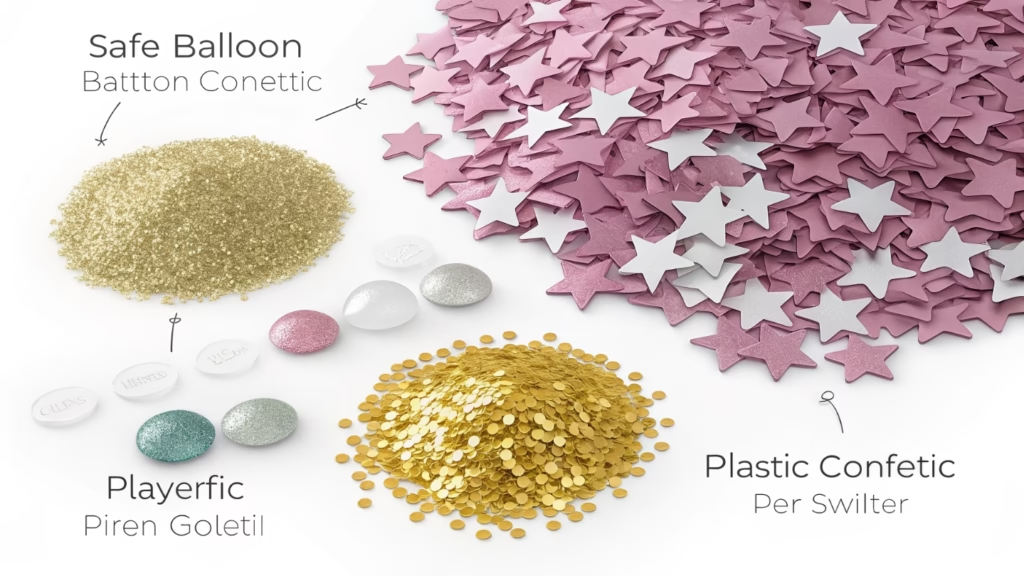
In my experience, material choice is everything. When we source materials at AIHUA BALLOON, we always prioritize safety and performance. The same applies to fillers. Latex is strong but it's not invincible. The biggest risk comes from sharp edges. Some craft glitters are made from metal shards that feel like fine sand but have microscopic sharp points. These can create pinholes in the latex wall. The balloon might not pop immediately, but it will deflate much faster than it should. This is why I strongly recommend using polyester glitter, which is plastic and cut into much smoother shapes. Mylar confetti is also an excellent choice. It's extremely lightweight and flexible, so it poses no risk to the balloon's integrity.
Filler Material Safety Checklist
I tell my clients to use this simple checklist when evaluating fillers.
- Material: Is it plastic, mylar, or paper? Plastic and mylar are best. Paper can work, but be aware it can get heavy and clumpy if you use a liquid like Hi-Float.
- Edges: Rub the material between your fingers. Does it feel sharp or abrasive? If so, avoid it. It should feel smooth.
- Weight: Is it lightweight? Heavier materials will not stick to the sides well and will reduce float time.
- Colorfastness: Will the color bleed if it gets wet? This is important if you use Hi-Float or water to make the confetti stick. Test a small amount first.
By choosing your fillers carefully, you protect the quality of your final product and ensure a great customer experience.
What equipment is needed to efficiently fill balloons with solids on a wholesale scale?
Manually filling thousands of balloons with confetti sounds like a nightmare. You need a process that is fast, consistent, and cost-effective for large orders. I'll outline the equipment you need.
For wholesale production2, you need a wide-mouth funnel or a specialized balloon stuffing machine3. A high-quality air or helium inflator is also essential. Using pre-weighed packets of filler for each balloon ensures consistency and speeds up the assembly line process significantly.
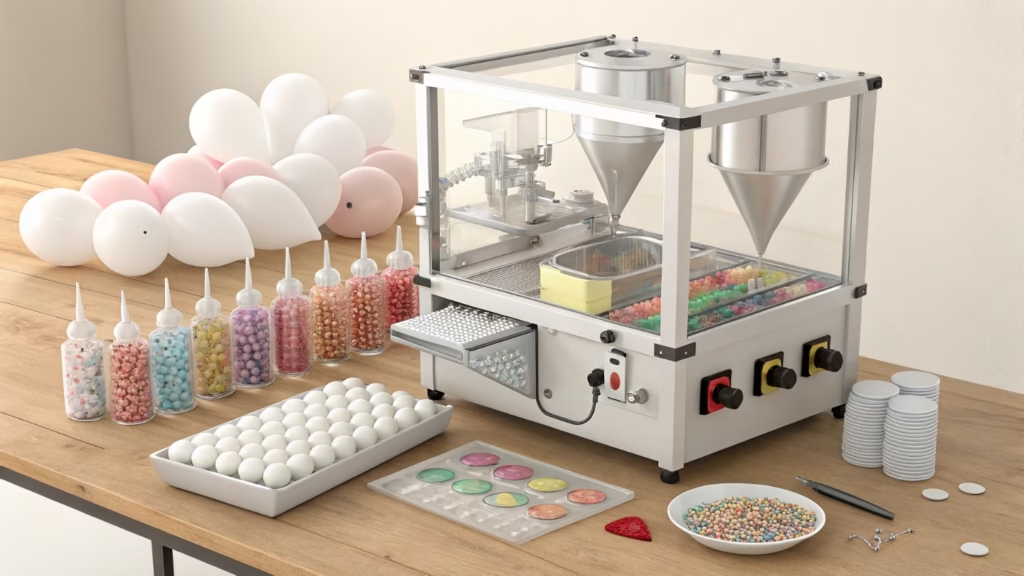
Efficiency in production is a topic I discuss often with my partners. Time is money, especially when dealing with large volumes. While a simple plastic funnel works for small batches, it's too slow for wholesale. A balloon stuffing machine is the professional standard. These machines have a large, clear chamber with a wide opening. You place the uninflated balloon over the opening, and a vacuum creates a seal and expands the balloon slightly, making it easy to drop in fillers. For confetti and glitter, an even simpler method that we've perfected is using a wide-neck plastic bottle. You can put the confetti in the bottle, stretch the balloon opening over the bottle neck, and then just tip and shake it in.
Streamlining Your Production Line
To build an efficient filling station, consistency is your goal.
- Pre-portion Fillers: Have your confetti, glitter, or feathers pre-measured into small containers or packets. This removes guesswork and ensures every balloon looks the same.
- Use an Assembly Line Approach: Have one person dedicated to adding the filler, and another person dedicated to inflating and tying the balloons.
- Invest in Good Tools: A high-quality inflator that can switch between air and helium is crucial. For static-cling confetti balloons, a powerful air pump is better than inflating by mouth.
Here’s a look at basic vs. professional setups:
| Task | Basic Method (Small Batches) | Professional Method (Wholesale) |
|---|---|---|
| Insertion | Small plastic funnel | Wide-neck bottle or balloon stuffer machine |
| Measurement | Eyeballing or small scoop | Pre-weighed packets |
| Inflation | Hand pump or small helium tank | Professional dual-air/helium inflator |
| Workspace | Any clean table | Dedicated assembly station |
Setting up the right process from the start will save you countless hours and improve the quality of your finished product.
Are there pre-filled wholesale balloon options available for import?
Finding a reliable supplier for pre-filled balloons4 can be difficult. You worry about quality control, shipping damage, and whether the product will meet your standards. I'll explain your options.
Yes, many manufacturers, including us at AIHUA BALLOON, offer pre-filled wholesale balloons. This option saves you labor and equipment costs. When importing, ensure the supplier uses high-quality latex and safe fillers, and ask for product samples and quality reports before placing a large order.
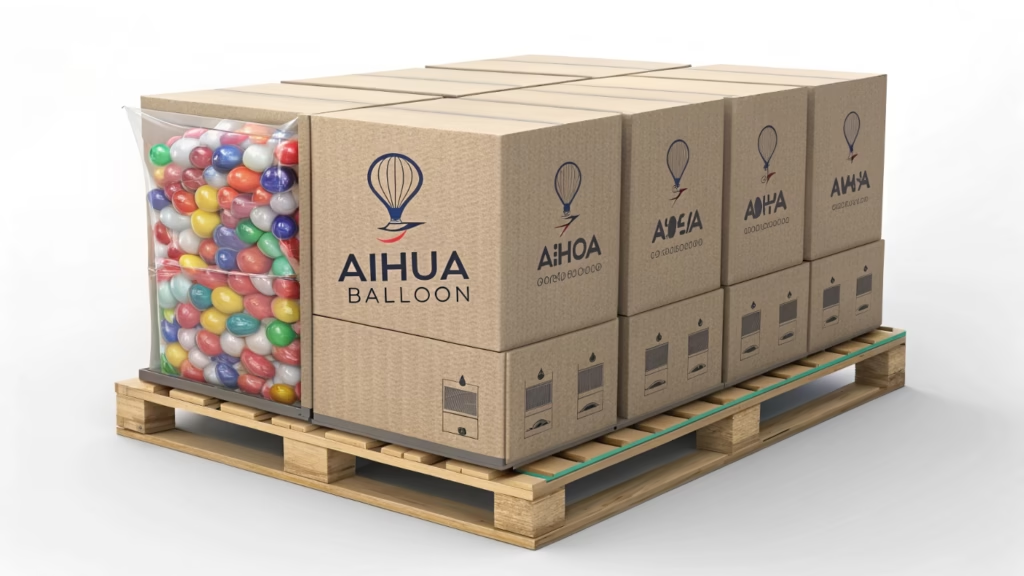
As a manufacturer, we understand the needs of procurement managers like you. Offering pre-filled balloons is a service we developed to solve this exact problem. It simplifies your supply chain dramatically. You receive a finished product ready for retail packaging, eliminating the need for in-house assembly. This is a huge advantage for companies that don't want to invest in the equipment and labor for filling balloons. However, the key to success with this model is choosing the right partner. I cannot stress this enough. Your reputation depends on the quality of the product you sell. You need to be sure that the balloons are made from durable latex and that the fillers are safe and visually appealing.
Vetting Your Supplier
When I work with a new retail partner, I encourage them to ask the tough questions. You should do the same with any potential supplier.
- Request Samples: Never commit to a large order without seeing and testing the product yourself. Inflate the samples to check for durability and float time.
- Ask About Materials: Inquire about the type of latex used, its thickness, and where it is sourced. Ask for specifics on the filler materials—are they plastic, mylar, colorfast?
- Verify Certifications: A reliable manufacturer will have certifications like ISO 9001 for quality management and pass audits like Sedex for ethical practices. We proudly share our certifications because they demonstrate our commitment to quality.
- Discuss Packaging: How will the pre-filled balloons be packaged for shipping to prevent damage? They should be packed uninflated, with the filler secured inside.
Importing pre-filled balloons can be a smart business decision, as long as you do your homework and partner with a manufacturer you can trust.
Conclusion
In short, adding fillers to balloons is an excellent way to enhance your product line. With the right techniques and materials, you can create beautiful, high-quality products efficiently and safely.
-
Discover how static electricity can help you create stunning filled balloons effortlessly. ↩
-
Discover essential equipment for streamlining your wholesale balloon production process. ↩
-
Explore the benefits of using a balloon stuffing machine for efficient production. ↩
-
Find trusted suppliers for pre-filled balloons to simplify your inventory management. ↩