Beyond Parties: What is the Surprising History and Diverse Applications of Balloons?
Many buyers think balloons are just for birthdays, missing huge opportunities. If you ignore their full potential and history, your product line becomes stagnant and uncompetitive in a growing market.
Balloons have evolved from ancient animal bladders to Michael Faraday's 1824 rubber invention. Today, beyond decoration, they serve critical roles in meteorology, medicine, and military defense, while utilizing advanced materials1 like latex and nylon to meet diverse global market demands.

You might think you know everything about this product, but the details will surprise you. Let me share what I have learned over my decade in the industry.
How has the evolution of balloon materials influenced modern wholesale manufacturing standards?
Poor material quality causes safety issues and customer complaints. You cannot afford to stock balloons that pop easily or fail safety tests like EN71.
Modern manufacturing has shifted from unstable early rubber to high-quality natural latex2 and durable nylon. This evolution ensures consistent thickness, longer float times, and strict compliance with safety standards3, which is crucial for large-scale retailers.
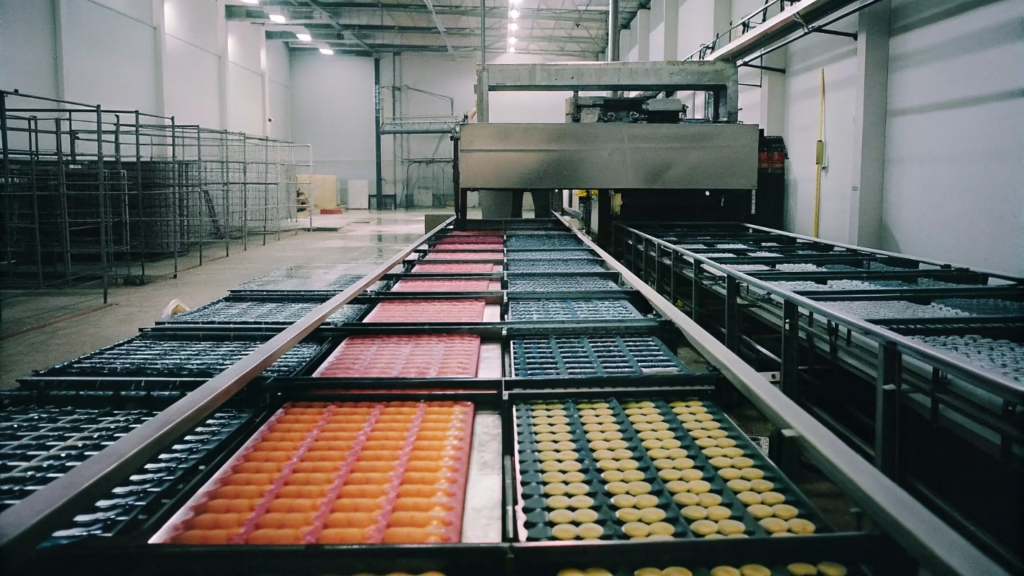
I have spent many years in the factory at AIHUA BALLOON, and I have seen how materials change everything. In the past, people used dried animal bladders for games. This was the start of the balloon history. Then, Michael Faraday created the first rubber balloon in 1824. He did this for science, not for play. But early rubber was sticky and weak. It did not last long in hot weather.
Today, we use advanced chemistry to make balloons better. We treat the latex to stop it from degrading too fast in storage. For a procurement manager like you, the material choice defines your success. If you buy cheap, synthetic rubber, the balloons will smell bad and break. If you buy high-quality natural latex, the colors are bright and the balloon is strong.
We also see a rise in nylon and foil materials. These hold helium for weeks, not just hours. This evolution allows you to sell products for different needs. Here is a breakdown of how materials affect your buying decisions:
| Material Era | Key Characteristic | Application | Procurement Risk |
|---|---|---|---|
| Ancient | Animal Bladder | Primitive Games | N/A |
| 19th Century | Raw Rubber | Scientific Testing | Low Durability |
| Modern | Treated Latex | Decor & Advertising | Shelf Life Management |
| Modern | Foil / Nylon | Long-lasting Displays | Higher Cost |
When you choose a supplier, you must ask about their raw material source. It is the foundation of a safe product.
What are the key industrial and scientific applications of balloons in today's global market?
Limiting your catalog to just party supplies ignores a profitable sector. You lose money when you overlook technical and industrial buyers who need specialized inflatable products.
Beyond parties, balloons are essential tools for meteorological observation4, medical surgeries using catheter balloons, and military reconnaissance. These high-performance applications require specialized manufacturing techniques that differ significantly from standard decorative balloon production.

Most people see a balloon and think of a celebration. But as someone with an MBA, I look at the functional value. Balloons are tools. They have low density and high flexibility. This makes them perfect for science. For example, meteorologists use large balloons to track weather. These balloons must go very high into the atmosphere. They cannot pop easily. The rubber must stretch a lot as the air pressure drops.
In medicine, the technology is even more impressive. Doctors use tiny balloons to open blocked arteries. This saves lives. The manufacturing standard for these is incredibly strict. While we focus on party balloons, the science behind them is similar. It is about holding gas under pressure.
The military also uses balloons. They use them for observation and dropping equipment. This has happened for over a hundred years. Even today, they use them for surveillance. This shows that the market for inflatables is huge. It is not just for kids.
When you understand these uses, you can see the value of quality control. A defect in a toy balloon is annoying. A defect in a weather balloon is a failed experiment. We apply strict quality checks to ensure our products meet high expectations, even if they are just for parties.
- Weather: Tracking atmospheric pressure and temperature.
- Medicine: Angioplasty and delivering stents.
- Transport: Hot air balloons for travel and sport.
- Military: Signals and aerial reconnaissance.
How can businesses effectively leverage custom advertising balloons for corporate branding?
Generic marketing fails to grab attention in a crowded market. Companies waste budget on ads that nobody notices or remembers, hurting their return on investment.
Custom advertising balloons offer high visibility and low cost per impression. By printing logos on high-quality latex or using large foil shapes, businesses create emotional connections and memorable visual impacts that static billboards cannot achieve.
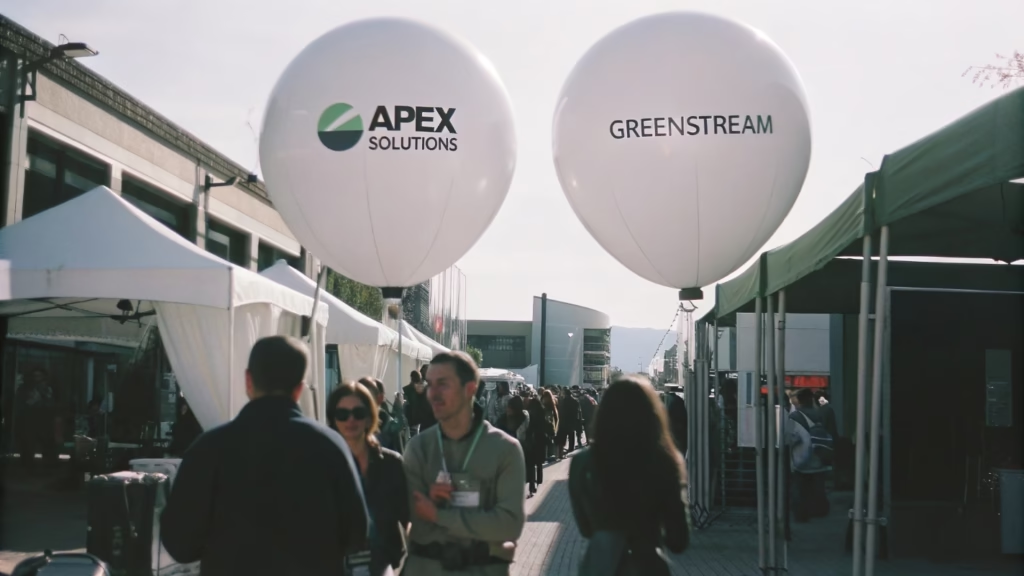
I often advise my clients on how to grow their brand. Advertising balloons are a powerful tool. They are big, colorful, and they move. Humans are designed to notice movement. A sign on a wall stands still. A balloon waves in the wind. This grabs attention immediately.
In my experience working with international retailers, branding is everything. Custom balloons are cheap compared to TV ads. But they create a happy feeling. We call this "emotional marketing5." When a person holds a balloon, they feel joy. They associate that joy with the brand logo on the balloon.
But the quality of the print matters. You need a supplier who uses good ink. The ink must not crack when the balloon expands. This is a technical challenge. At AIHUA, we focus on silk-screen printing to get sharp lines. If the logo looks bad, the brand looks bad.
Here is why corporate buyers should invest in this:
| Feature | Benefit | Business Result |
|---|---|---|
| Movement | Grabs eye contact | Higher brand awareness |
| Custom Shape | Unique visual | Viral social media photos |
| Low Cost | High volume distribution | Better ROI |
| Portability | Easy to transport | Great for trade shows |
Buying custom balloons is not just buying a product. It is buying a moving billboard.
What should import buyers know about the rising demand for biodegradable and eco-friendly balloons?
Environmental regulations are tightening rapidly across Europe and North America. If you ignore sustainability, your products might get banned from major retailers or rejected by eco-conscious consumers.
Buyers must prioritize natural latex balloons which are biodegradable, unlike plastic-based alternatives. Sourcing products with valid sustainability certifications6 helps major retailers meet corporate social responsibility goals while satisfying the growing consumer preference for eco-conscious party supplies.

I talk to buyers like Sarah Chen every day. The biggest topic right now is the environment. In the past, nobody asked about waste. Now, it is the first question. Plastic pollution is a big problem. But here is the good news: natural latex is not plastic. It comes from the rubber tree.
A natural latex balloon breaks down at the same speed as an oak leaf. This is a scientific fact. But you must be careful. Some factories mix in fillers or plastics to save money. These do not break down. As a buyer, you need to check the certificates. We rely on standards like Sedex and ISO9001 to prove our quality.
Consumers are smart. They will pay more for "green" products. If you sell cheap plastic balloons, you hurt your reputation. If you sell pure latex, you tell a good story. You say, "We care about the earth." This matches the mission of big companies like GlobalMart.
You also need to think about packaging. It makes no sense to put a biodegradable balloon in a plastic bag. We are seeing a shift to paper packaging. This is the future of our industry.
Steps for Sustainable Procurement:
- Verify Material: Ensure it is 100% natural latex.
- Check Additives: Ask if plasticizers are used.
- Review Packaging: Opt for paper or recycled materials.
- Educate Consumers: Use the product to teach about biodegradability.
Conclusion
Balloons have a rich history from Faraday's lab to modern eco-friendly manufacturing. Whether for science, surgery, or branding, choosing the right quality and material is essential for success.
-
Explore the innovative materials that enhance balloon performance and durability. ↩
-
Find out what makes natural latex superior for balloon production and consumer satisfaction. ↩
-
Understanding safety standards is crucial for ensuring product quality and consumer safety. ↩
-
Explore the importance of balloons in weather tracking and atmospheric research. ↩
-
Understand how balloons can evoke emotions and enhance brand connection. ↩
-
Learn about the certifications that ensure eco-friendly balloon production. ↩