Beyond the Basics: Can You Print Complex Logos and Designs on Latex Balloons?
Struggling to make your brand stand out with simple one-color prints? You want your balloons to be as vibrant as your campaign, but feel limited. The solution is advanced printing.
Yes, you can print complex, multi-color designs on latex balloons. Advanced techniques like multi-color screen printing1 and digital transfers2 make it possible to go beyond basic logos. However, the final result will differ from printing on a flat surface, so understanding the process is key.
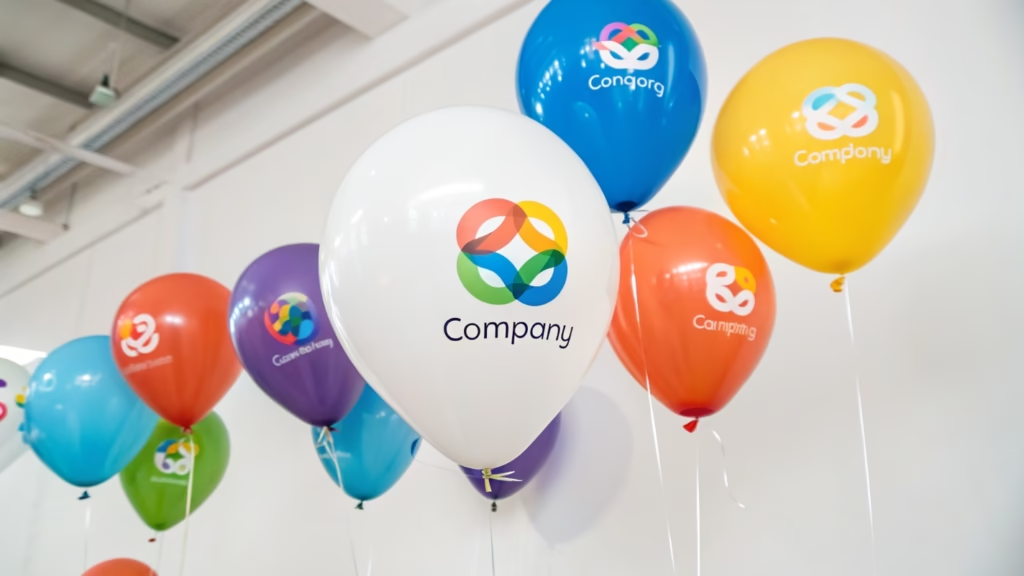
The simple answer is a relief, but it's not the whole story. As a procurement manager, you know that "possible" doesn't always mean "practical" or "high-quality." The success of your project depends entirely on choosing the right method, understanding its limits, and working with a supplier who can guide you through the process. Let’s explore how we turn a complex digital design3 into a beautiful, three-dimensional promotional tool that truly represents your brand. Getting this right is what separates a forgettable giveaway from a memorable brand moment.
What printing techniques are used for multi-color or high-detail graphics?
You have a stunning, intricate logo, but your usual supplier says it’s too complex for a balloon. This is frustrating. The good news is, specialized printing methods exist for this exact challenge.
For multi-color or high-detail graphics, we primarily use two techniques. Multi-color screen printing is perfect for bold, clear designs with a few specific colors. For photographic images, gradients, and full-color complexity, we turn to digital printing4 or specialized digital transfers for the best results.
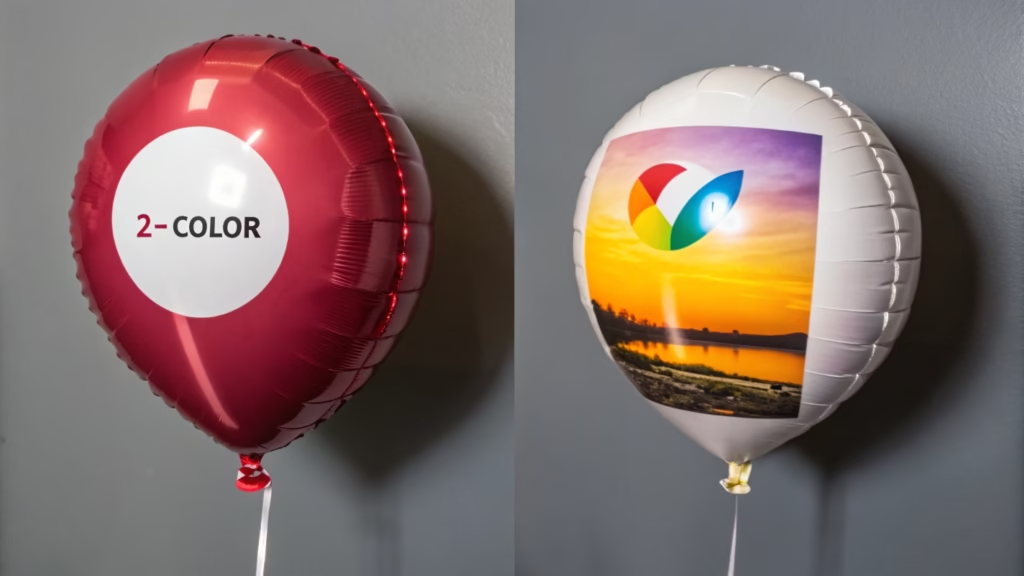
Choosing the right technique is the most critical decision you'll make. It affects the look, cost, and even the feel of the final product. Over my career, I've helped countless clients navigate this choice. Let me break down the two main paths we take.
Screen Printing: The Industry Standard
This is the most common method for a reason. It's reliable, cost-effective for larger quantities, and produces a durable print. For multi-color designs, we create a separate screen for each color. The balloon is then printed with each color in succession.
- Process: Each color is applied individually. Precise alignment, or "registration," is crucial to ensure the colors line up correctly.
- Best for: Bold logos, text, and graphics with solid, distinct colors (spot colors).
Digital Printing & Transfers: For Maximum Detail
When a design is too complex for screen printing, we use digital methods. This can involve printing a design onto a special transfer material that is then heat-applied to the balloon.
- Process: It handles a full CMYK color spectrum, allowing for gradients, shading, and even photographic reproduction.
- Best for: Full-color photos, intricate logos with many colors, and designs with smooth color transitions.
Here is a simple way to compare them:
| Feature | Screen Printing | Digital Printing / Transfers |
|---|---|---|
| Color Type | Spot Colors (Solid) | Full Color (CMYK) |
| Best For | 1-4 color bold logos | Photographic, complex images |
| Detail Level | Good to Very Good | Excellent |
| Durability | Excellent | Good to Very Good |
What are the limitations on color count and design intricacy for custom prints?
You’ve submitted a detailed design, only to be told it needs to be simplified. This disconnect is a common hurdle. Understanding the real-world limitations of balloon printing from the start prevents disappointment later.
The main limitations depend on the printing method. Screen printing is typically capped at 1-4 spot colors, and very fine lines can be lost. Digital printing offers unlimited colors but can face challenges with distortion on the balloon's curved surface and maintaining tiny details upon inflation.
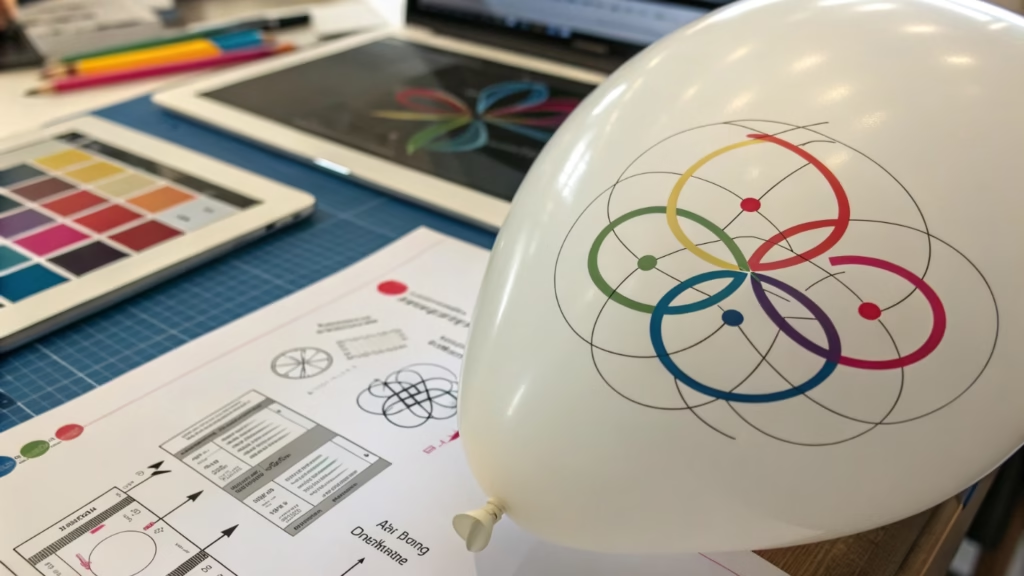
As a manufacturer, my goal is to manage expectations and deliver a product that you're proud of. Every printing method has trade-offs, especially when your canvas is a flexible, spherical object. Knowing these trade-offs helps us collaborate to create the best possible version of your design.
Screen Printing Limitations
I once worked with a client who wanted a historic coat of arms printed on balloons. It had incredibly fine lines and five colors. We had to explain that on a balloon, those fine lines could either bleed together or break when inflated.
- Color Count: Each color adds a layer of complexity and a potential point of failure for alignment. That's why most suppliers, including us at AIHUA BALLOON, recommend a maximum of four colors for the best quality and registration.
- Design Intricacy: Tiny text or thin, delicate lines are the biggest challenge. The ink needs enough surface area to adhere properly and stretch without breaking. We often advise clients to slightly thicken key lines in their artwork to ensure they remain crisp and clear.
Digital Printing Limitations
While digital opens the door to photographic quality, it's not without its own set of rules.
- Surface Distortion: The artwork is created flat but displayed on a sphere. This means designs can appear slightly distorted or "warped," especially near the top and bottom of the balloon. We design proofs to show how the art will curve.
- Print Area: The printable area is often limited to the front face of the balloon to avoid extreme distortion. A "wrap-around" print is extremely difficult to achieve with a complex digital image.
How do complex designs affect the cost and minimum order quantities for bulk orders?
You need a quote for balloons with your new, complex logo. The price comes back much higher than your last order for simple balloons. This sticker shock can disrupt your budget if you aren't prepared.
Complex designs increase costs and can raise minimum order quantities5 (MOQs). For screen printing, each additional color adds setup fees and run costs. Digital printing has a higher per-balloon cost but may offer lower MOQs for intricate, full-color designs, making it better for smaller, specialized orders.
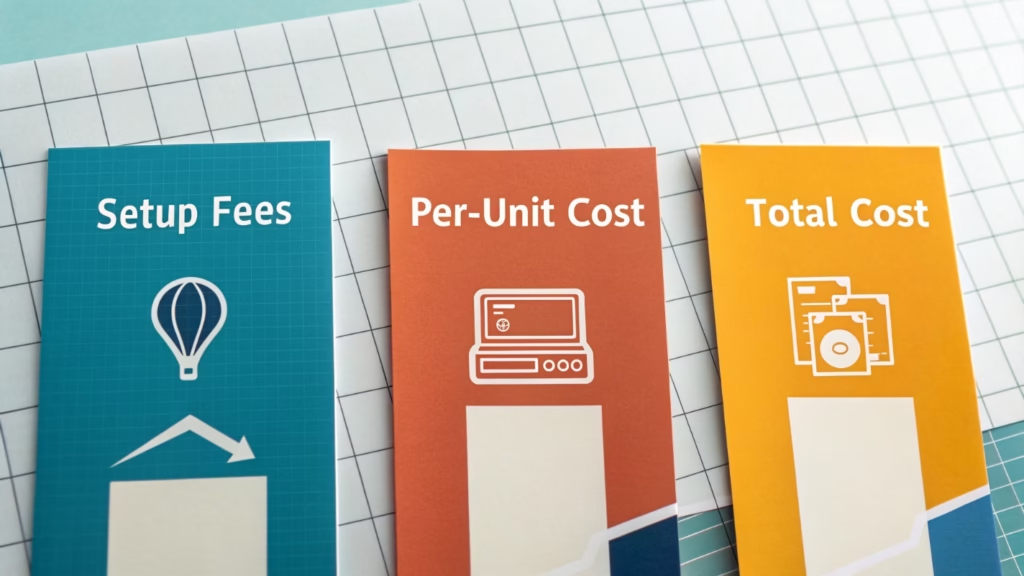
As a procurement manager, your job is to balance quality with cost-effectiveness. It's my job to be transparent about how your design choices affect the price. The more colors and complexity, the more labor, materials, and machine time are required. Let's look at the cost drivers for each method.
Cost Factors for Screen Printing
This method is all about economies of scale. The initial setup is where the main cost lies.
- Setup Fees: We must create a physical screen for each color in your design. A 4-color logo requires four separate screens and four machine setups. This is a one-time charge per design.
- Run Cost: The price per balloon also increases slightly with each color because the balloon has to go through the printing process multiple times.
- MOQs: To make the extensive setup for a 3- or 4-color job worthwhile, suppliers often require a higher MOQ compared to a 1-color job.
Cost Factors for Digital Printing
Digital printing flips the cost structure. The setup is simpler, but the materials and process are more expensive per piece.
- Per-Unit Cost: The cost of the special transfer materials and the slower application process results in a higher price for each balloon.
- Setup Fees: Because the process is digital, setup is much lower. There are no physical screens to create. This makes digital a viable option for smaller quantities of highly complex designs where screen printing setup costs would be too high.
Here’s a simplified example for a 5,000 balloon order:
| Design Type | Setup Cost | Per-Unit Cost | Total Cost Analysis |
|---|---|---|---|
| 1-Color Screen Print | Low | Very Low | Most cost-effective option. |
| 4-Color Screen Print | High | Low | High initial cost, but efficient for large runs. |
| Full-Color Digital | Very Low | High | Best for smaller, complex orders where setup costs are a barrier. |
How can buyers ensure print quality and durability on a spherical latex surface?
Your printed balloons have arrived, but the logo cracks when inflated or the colors don't match your brand guidelines. This is a worst-case scenario. Ensuring quality requires proactive steps before production begins.
To ensure quality, always request a digital proof showing the design on a balloon shape. For large orders, ask for a pre-production physical sample. Vet your supplier by checking their quality certifications like ISO9001 and asking about the ink they use—it must be flexible and durable.
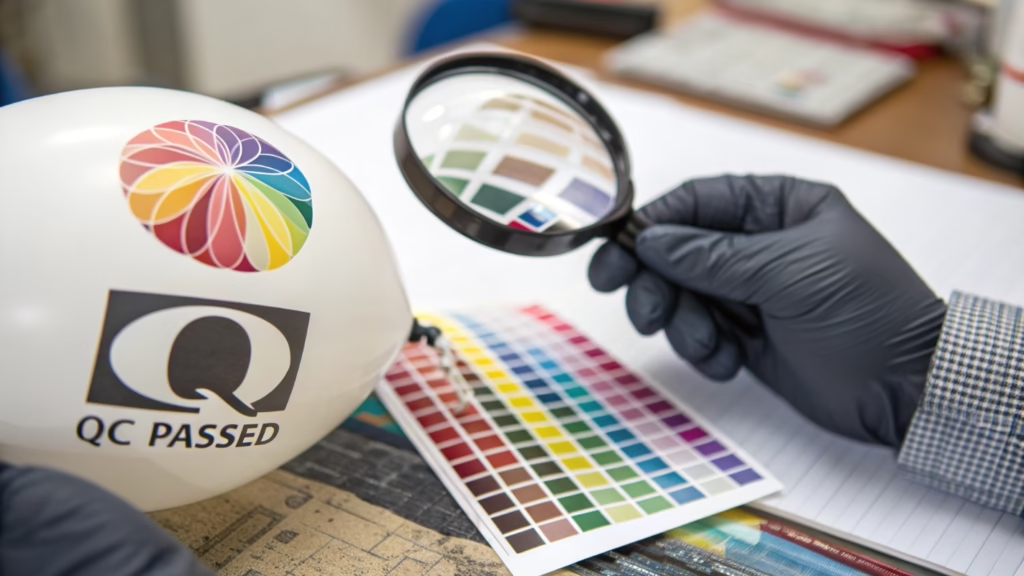
For over 37 years, quality has been the cornerstone of AIHUA BALLOON. For a procurement professional like you, quality isn't just about looks; it's about brand integrity6 and safety. A poorly printed balloon reflects badly on your company. Here are the practical steps I recommend to every client to guarantee a successful outcome.
Pre-Production Checks
This is where you prevent problems before they happen.
- Digital Proofs: Never sign off on an order without seeing a digital mock-up. It should show how your flat artwork will look on a curved surface. This is your first chance to spot potential distortion issues.
- Physical Samples: For any significant order, a physical sample is non-negotiable. It allows you to inflate the balloon and see exactly how the design stretches and if the colors are accurate. There may be a small cost for this, but it is an invaluable insurance policy. I always feel more confident when my clients have held the final product in their hands before we run thousands of them.
Supplier Vetting and Material Specifications
The quality of the final product is directly tied to the quality of your supplier and their materials.
- Ask About Ink: This is a detail many buyers overlook. We use specially formulated, flexible inks7 designed to stretch with the latex without cracking or flaking. Ask your supplier what kind of ink they use and about its durability.
- Check Certifications: Certifications like ISO9001 or Sedex aren't just paperwork. They are proof that the manufacturer has rigorous quality control systems in place. This ensures consistency from the first balloon to the last.
- Review Print Guidelines: A professional supplier should provide you with clear artwork guidelines8, specifying minimum line thickness, text size, and acceptable file formats. This shows they understand the limitations of their equipment and are setting you up for success.
Conclusion
Yes, you can print complex designs on balloons. By choosing the right technique and a knowledgeable supplier, you can create vibrant, detailed balloons that make your brand stand out memorably.
-
Explore this resource to understand the benefits and process of multi-color screen printing for balloons. ↩
-
Learn about digital transfers and how they can enhance the quality of your balloon designs. ↩
-
Discover tips and techniques for creating intricate digital designs that stand out. ↩
-
Explore the differences between digital and screen printing to make informed choices. ↩
-
Understand the concept of minimum order quantities and how they affect your orders. ↩
-
Explore the connection between print quality and maintaining your brand's reputation. ↩
-
Discover the importance of flexible inks in maintaining print quality on balloons. ↩
-
Learn about the importance of artwork guidelines in achieving successful print results. ↩