
Double-Stuffed and Custom Colors: How Do Decorators Create Those Stunning Balloon Hues?
Have you seen those beautiful, unique balloon colors on social media and wondered why you can't find them in any catalog? The perfect shade always seems just out of reach.
The secret is a technique called "double-stuffing1." Decorators create these custom colors2 by placing one balloon inside another before inflating them. This simple layering method blends the two colors to produce a completely new, rich, and opaque hue3 that you can't buy off the shelf.
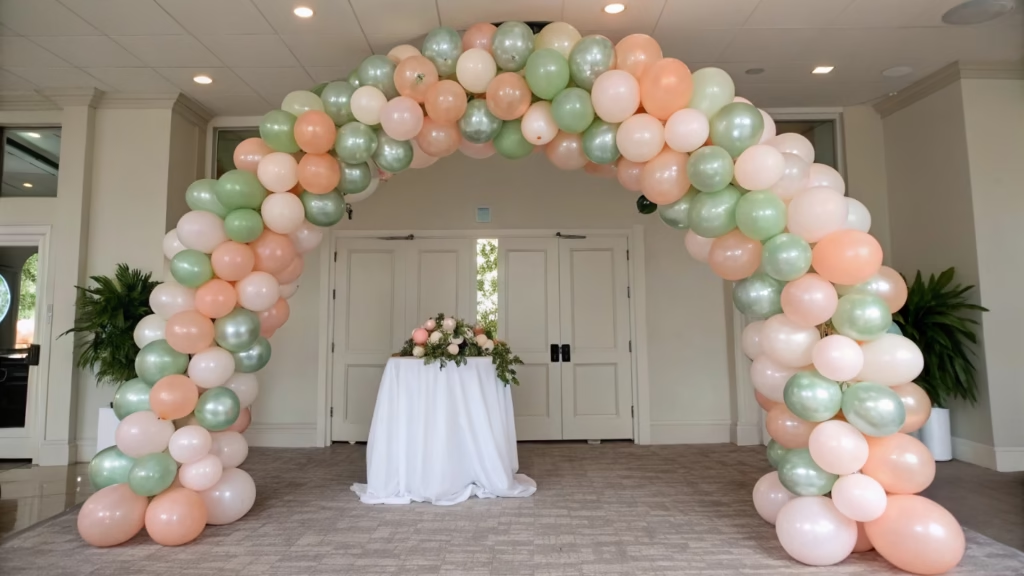
This technique has completely changed the world of balloon decor. It allows for incredible creativity and lets decorators match event themes with perfect precision. As a manufacturer, I've seen how this trend has shifted what professionals look for in balloons. It's not just about the individual color anymore; it's about how colors can work together. Let's explore how this process works and what it means for you.
Why is double-stuffing the key to achieving rich, opaque colors?
You're trying to create a deep, luxurious color palette4, but single balloons look thin and almost transparent when inflated. This makes your final design look less professional and vibrant.
Double-stuffing solves this by adding a second layer of latex. This layering blocks more light, which reduces transparency and makes the color appear much deeper and more solid. The combination of two colors also creates a brand-new, unique shade with incredible depth.
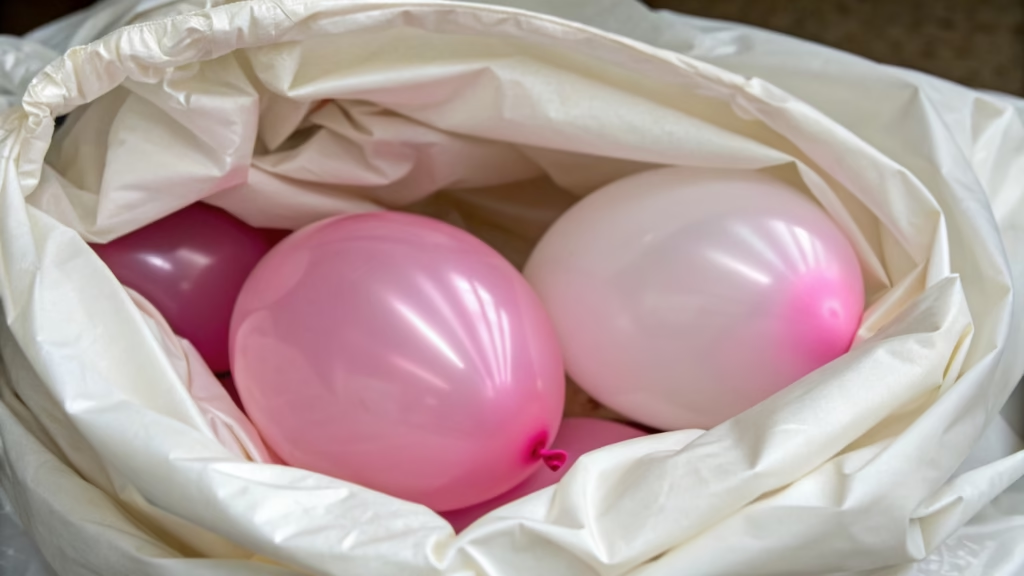
When you inflate a single balloon, the latex stretches. This stretching makes the material thinner and allows more light to pass through. The color naturally looks lighter and less saturated than it did when uninflated. By placing a second balloon inside, you are essentially creating a thicker wall. This double wall is much more opaque.
I've worked in balloon manufacturing for over a decade, and I understand the properties of latex well. Think of it like painting a wall. One coat might look streaky, but a second coat provides a solid, rich finish. Double-stuffing balloons works on the same principle. This technique is not just about creating new colors; it's about improving the quality of the color itself.
How Colors Interact
The final color depends on the two colors you choose. Here are some examples of how colors combine:
| Inner Balloon | Outer Balloon | Resulting Color |
|---|---|---|
| Black | White | Gray |
| Blush | White | Light Nude |
| Yellow | Pink | Peach |
| Blue | Yellow | Muted Green |
| Red | Black | Burgundy |
The possibilities are endless, and this is what makes the technique so powerful for creative professionals5.
Which balloon brands and finishes are best for color layering?
Using cheap, low-quality balloons for double-stuffing often leads to frustration. They pop easily under the extra pressure, and their inconsistent colors give you unpredictable results for your designs.
For best results, choose professional-grade latex balloons from a reliable manufacturer. Look for balloons with good elasticity and durability. At AIHUA BALLOON, we focus on producing high-quality latex that can handle the stress of double-stuffing, ensuring consistent and beautiful results every time.
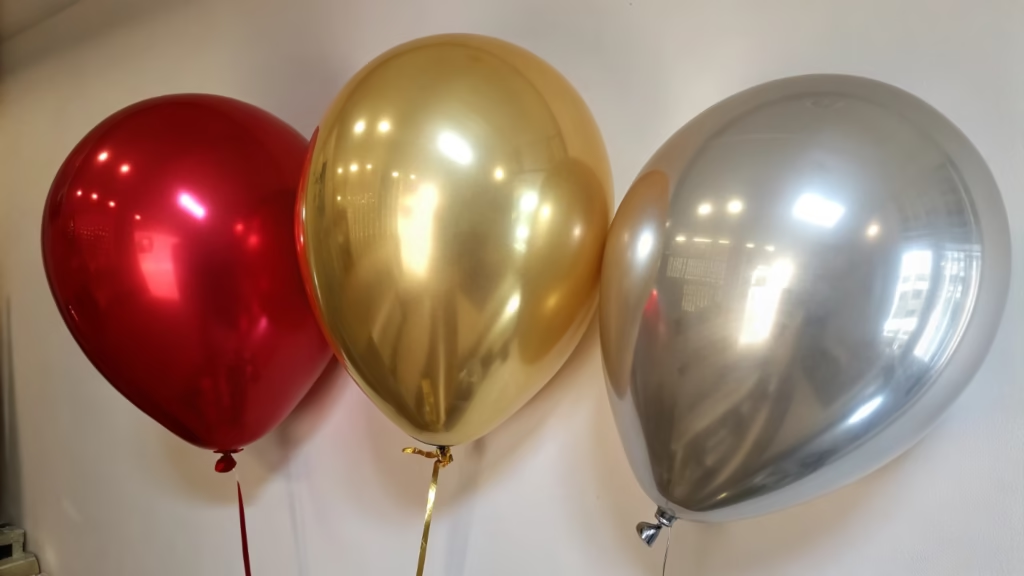
Not all balloons are created equal, especially when it comes to advanced techniques like this. The quality of the latex is the most important factor. A high-quality balloon will stretch evenly without becoming too thin. This is crucial because a weak spot can cause the balloon to pop, especially with two balloons creating tension.
In my experience, balloon artists6 prefer specific finishes for different effects.
Balloon Finishes and Their Uses
- Standard/Fashion Finish: These are the most common balloons with an opaque, matte-like finish. They are excellent for double-stuffing because their solid base colors blend predictably. They create rich, deep custom shades.
- Pearl/Metallic Finish: These have a shiny, pearlescent coating. Layering these can create beautiful, shimmering effects. However, the coating can sometimes make them slightly less stretchy, so quality is very important.
- Chrome Finish: Chrome balloons have a highly reflective, mirror-like surface. Stuffing a standard balloon inside a chrome one can subtly change the chrome's undertone, while putting a chrome balloon inside a standard one adds a unique inner glow.
Ultimately, the best brand is one that provides consistency. As a procurement manager, you need to know that the "Blush" you order today will be the exact same shade as the "Blush" you order in six months. At AIHUA, our ISO9001 certified processes ensure this level of color consistency7, which is vital for decorators who rely on predictable color mixing.
What should buyers look for when sourcing balloons for custom color work?
Sourcing balloons for artists who do custom color work can be tricky. If you just buy standard balloons, you might find they aren't suitable for double-stuffing, leading to complaints about quality.
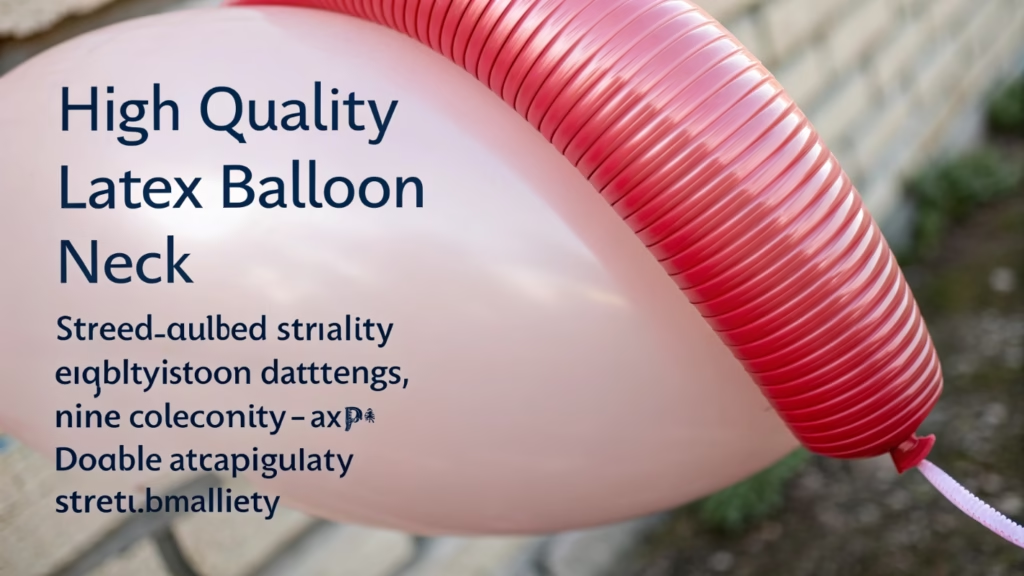
Buyers should prioritize three things: material quality, neck length8, and color consistency7. High-quality, durable latex prevents popping. A longer neck makes it easier to tie two balloons together. And consistent base colors ensure that custom color recipes9 are repeatable for every event.
As someone who oversees production, I know that small details in manufacturing make a big difference for the end user. When you're sourcing balloons for professional use, especially for double-stuffing, you need to think like a balloon artist.
Key Sourcing Criteria
-
Material Quality and Durability: The balloon must withstand the pressure of being inflated inside another. Ask potential suppliers about their latex quality and testing processes. For example, our balloons at AIHUA undergo rigorous inflation tests10 to ensure they meet high durability standards. This is where certifications like Sedex and BSCI also come into play, as they often reflect a commitment to overall production quality.
-
Neck Length and Shape: This is a surprisingly critical detail. After inflating a double-stuffed balloon, the artist has to tie two necks at once. A balloon with a short or very thick neck makes this process difficult and time-consuming. Look for balloons with longer, more pliable necks.
-
Color Consistency: For a procurement manager like Sarah at GlobalMart, this is paramount. If a decorator develops a custom color recipe (e.g., Brand X Mocha inside Brand Y White), they need to trust that the Mocha and White will be the same shade in every bag, from every batch. This is why working with a manufacturer with strong quality control systems, like our ISO9001-certified factory, is a huge advantage. It guarantees reliability across large orders.
Can manufacturers create custom Pantone colors for wholesale orders?
Decorators need a specific shade for a large corporate client, but double-stuffing isn't practical for thousands of balloons. You need a direct source for a unique, brand-specific color.
Yes, established manufacturers like AIHUA BALLOON can produce custom Pantone colors11 for large wholesale orders. This process involves a minimum order quantity (MOQ) but ensures perfect color matching for corporate branding, large-scale events, or creating an exclusive color line for your retail stores.
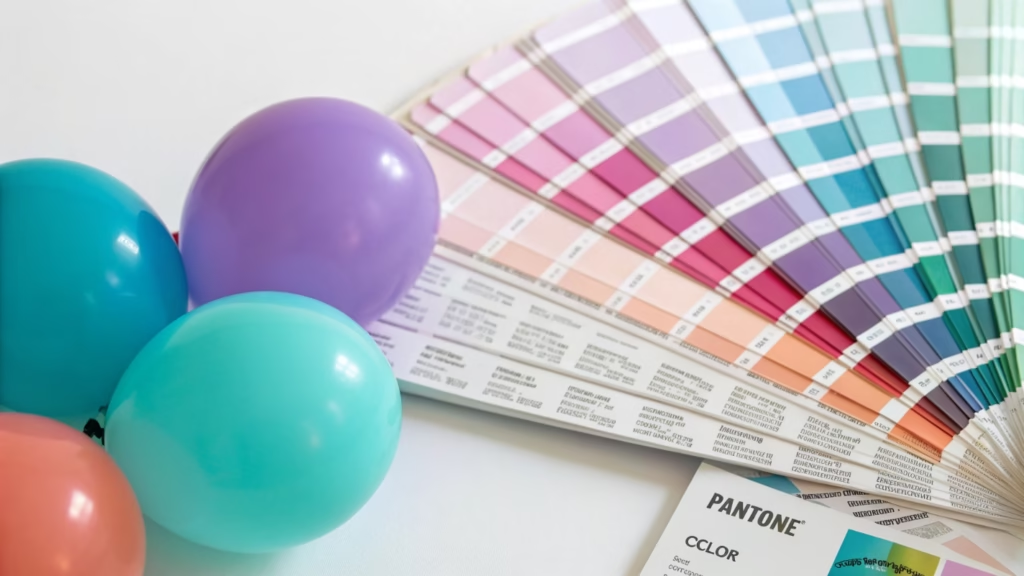
This is one of the services I'm most proud to offer our large-volume clients. While double-stuffing is a fantastic solution for decorators on a smaller scale, it's not efficient for mass production or large retail supply. When a company like GlobalMart needs 50,000 balloons in a specific "brand-approved" blue, they need a manufacturer who can deliver that exact color consistently.
The Custom Color Manufacturing Process
Here’s how it typically works when a client approaches us for a custom Pantone color:
- Consultation and Color Matching: You provide the Pantone Matching System (PMS) code. Our lab technicians then create a latex color formula to match it precisely.
- Sample Production: We produce a small batch of physical balloon samples. We send these to you for approval. Nothing moves forward until you are 100% satisfied with the color.
- Minimum Order Quantity (MOQ): Because creating a custom color requires cleaning the machines and mixing a unique batch of latex, there is an MOQ. This is usually in the tens of thousands of pieces per color, which is ideal for large retailers or distribution networks.
- Production and Quality Control: Once approved, we schedule the full production run. Our quality control team ensures the color remains consistent from the first balloon to the last, adhering to our ISO9001 standards.
This service transforms a supplier into a strategic partner, helping you meet the specific needs of high-value clients and giving you a competitive edge in the market.
Conclusion
Creating stunning custom balloon colors is an art, but it relies on the science of quality manufacturing. Double-stuffing offers endless creativity, while custom Pantone production provides scalable, brand-perfect solutions.
-
Explore this link to understand how double-stuffing can elevate your balloon decor with unique colors. ↩
-
Discover the process behind creating custom balloon colors and how it can enhance your events. ↩
-
Learn about opaque hues and how they can transform your balloon designs into stunning visuals. ↩
-
Find tips on creating a rich color palette that will make your balloon arrangements pop. ↩
-
Learn how creative professionals incorporate balloons into their event designs for maximum impact. ↩
-
Gain insights into what balloon artists prioritize when selecting balloons for their creations. ↩
-
Learn about the importance of color consistency for reliable balloon designs across events. ↩ ↩
-
Find out why neck length is crucial for tying balloons, especially in double-stuffing. ↩
-
Understand how color recipes are developed for consistent and beautiful balloon designs. ↩
-
Learn about the importance of inflation tests in ensuring balloon durability and performance. ↩
-
Explore how Pantone colors can be matched for custom balloon orders to meet branding needs. ↩