
From Faraday to Factories: How Did Balloon Manufacturing Develop?
Sourcing balloons might seem simple, but low-quality batches still cause headaches for supply chain1s. Understanding the history of manufacturing reveals why modern consistency is so hard to achieve.
Balloon manufacturing started with Michael Faraday in 1824 using raw rubber sheets. It evolved through Thomas Hancock's mold-dipping and Neil Tillotson's liquid latex2 invention in 1931. Today, factories use automated dipping lines3 with specialized curing agents to produce durable, consistent latex balloons for global retailers.
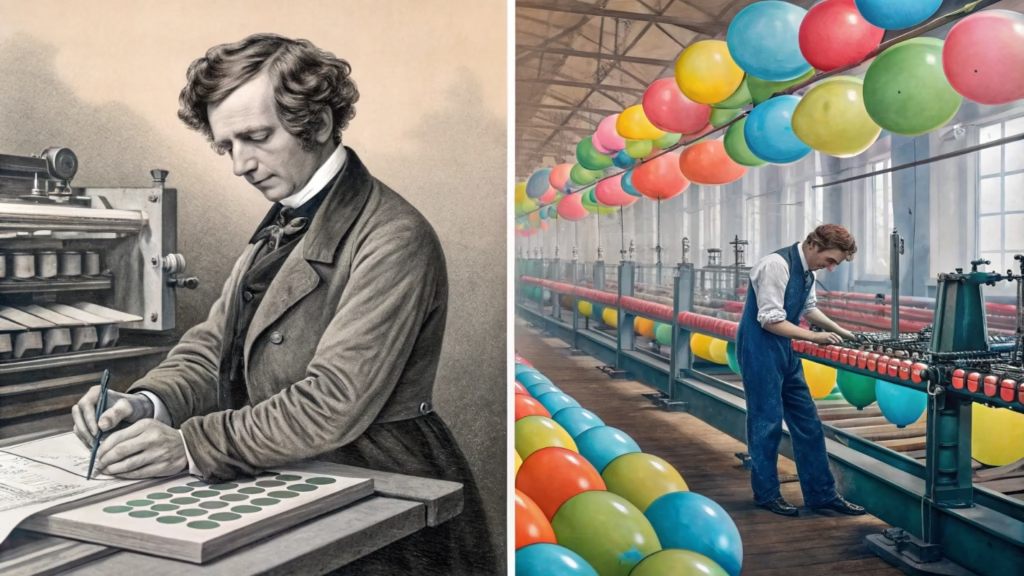
Many buyers think balloons have always been the same product we see on shelves today. However, the technology has changed drastically over the last two centuries. Let me explain why the technology behind them is fascinating and crucial for your business.
How Did the Invention of Rubber Latex Transform the Balloon Industry?
Early balloons were just scientific tools, not party supplies. Using them was messy and difficult. The shift to liquid latex changed everything for mass production.
Before latex, Michael Faraday pressed rubber sheets together in 1824. Neil Tillotson changed this in 1931 by using liquid latex from rubber trees. This allowed manufacturers to dip molds into sap, creating distinct shapes and lighter balloons that were cheaper and easier to produce in large volumes.
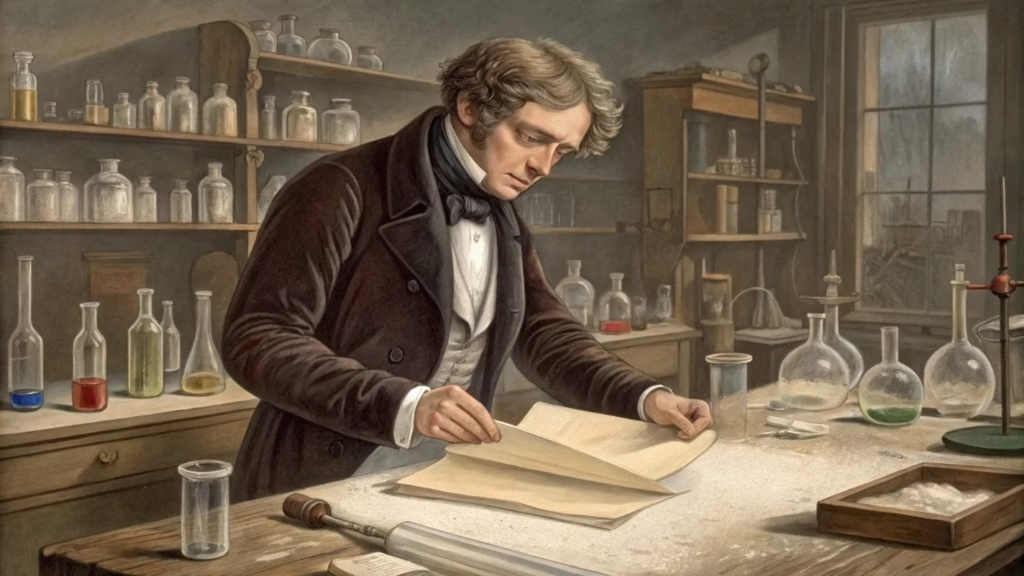
I often tell my team that we stand on the shoulders of giants. The journey from a science experiment to the products I ship to your warehouse is incredible. It started in labs, not factories. We need to look at the timeline to see how material science changed the game.
Here is how the early innovation happened:
- 1824 - Michael Faraday: He needed to hold hydrogen for his experiments. He took two sheets of raw rubber, pressed the edges together, and put flour inside so they would not stick. It was crude, but it worked.
- 1825 - Thomas Hancock: He saw an opportunity. He sold a "Do It Yourself" kit. It included a syringe and a rubber solution. You had to make the balloon yourself. As a procurement manager, you know this would be a safety nightmare today.
- 1931 - Neil Tillotson: This was the turning point. He used liquid latex directly from the rubber tree. He dipped a cardboard mold shaped like a cat's head into the sap. This created the "Tilly Cat."
This shift was massive. We moved from heavy, glued sheets to a seamless dip. Liquid latex allowed us to make complex shapes. It also allowed us to print on balloons. This invention created the modern party industry. At AIHUA BALLOON, we still use the core principles Tillotson discovered. We just do it faster and with better control. This history proves that the quality of the raw material is the most important part of the process.
What Are the Key Steps in the Modern Balloon Manufacturing Process?
Inconsistent wall thickness ruins a buyer's reputation. You cannot afford balloons that pop too easily. The modern dipping process is the only way to ensure reliability.
Modern manufacturing relies on a precise dipping method. Molds pass through acid baths, water washes, and coagulant tanks before entering liquid latex. The balloons are then cured in ovens, stripped from molds, and tumbled. This automated sequence ensures every balloon has uniform thickness and strength.
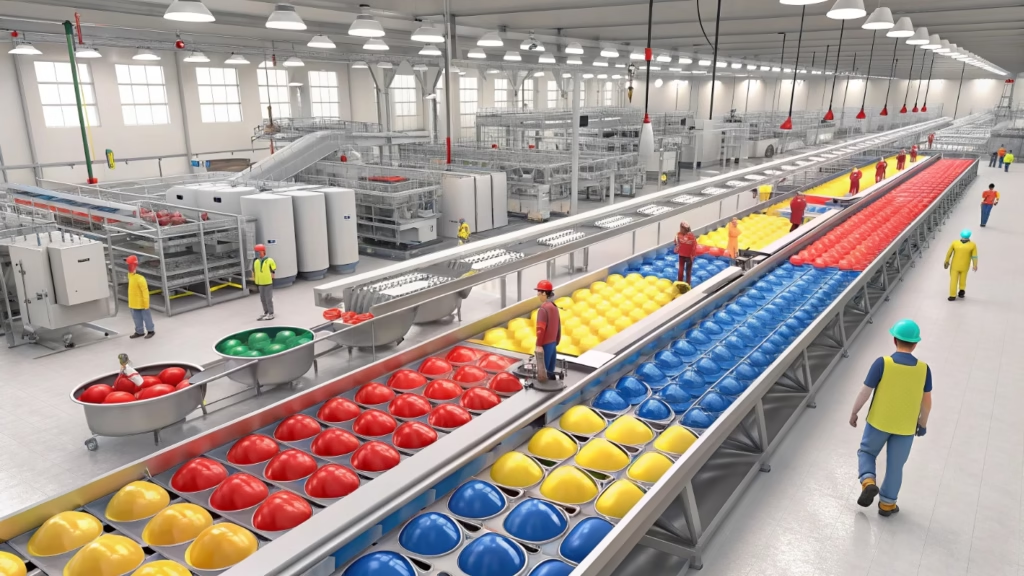
The process looks simple from the outside, but the chemistry is hard. I have spent years optimizing this at our factory to meet ISO9001 standards4. If one step is wrong, the whole batch fails. A reliable supplier must control every second of this line.
I have broken down the critical steps for you below:
| Step | Action | Why it matters to you |
|---|---|---|
| Cleaning | Molds go through acid and water baths. | Removes dust. Dirty molds cause holes in the balloon. |
| Coagulant | Molds are dipped in a calcium nitrate solution. | This acts like a magnet. It makes the latex stick to the mold evenly. |
| Dipping | The mold enters the liquid latex tank. | This forms the balloon. The speed must be perfect to avoid bubbles. |
| Curing | The latex is heated in an oven (Vulcanization). | This makes the rubber strong and elastic. Proper heat prevents popping. |
| Stripping | Air jets or rollers pull the balloon off the mold. | High-speed removal without tearing requires good material quality. |
The most important part is curing. We heat the latex to vulcanize it. This links the rubber molecules together. If we heat it too much, the balloon gets brittle and snaps. If we heat it too little, it is soft and sticky. Modern lines run thousands of these an hour. It is a balance of speed and chemistry. This is why I always check our temperature logs personally. I want to ensure that the product reaching your stores is safe and durable.
How Have Mass Production Technologies Improved Balloon Durability and Consistency?
Defective rates used to be much higher in the industry. This causes returns and complaints for retailers. Advanced technology has drastically reduced these risks for your stores.
Mass production technologies use automated temperature control and robotic dipping arms. These tools maintain constant speed and heat levels during vulcanization5. This consistency strengthens the cross-links in the rubber, reducing pinholes and weak spots that cause balloons to pop prematurely.
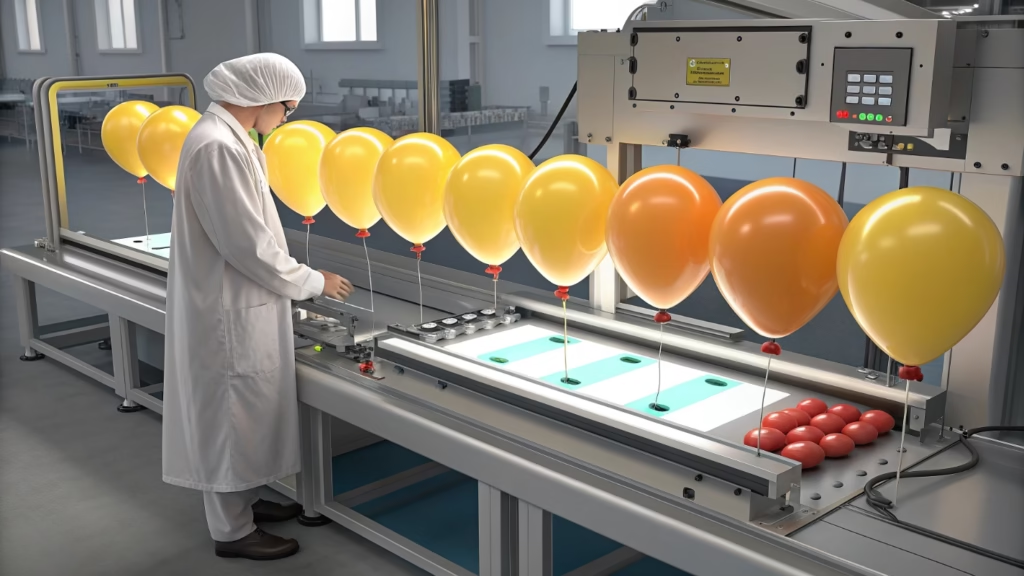
World War II changed everything for our industry. Rubber was diverted for tires and raincoats. Balloon production stopped. But after the war, people wanted to celebrate. Demand exploded. Manufacturers had to invent faster ways to make balloons. This push for speed actually helped improve quality over time.
We use advanced additives now. We add accelerators6 to help the rubber cure faster and more evenly. We add antioxidants to stop the rubber from rotting when it sits in your warehouse. This is why a balloon today lasts much longer than one from the 1950s.
Technology also improved consistency. In the past, hand-dipping meant every balloon was different. Now, machines control the dip.
- Uniform Thickness: The machine lifts the mold at a steady speed. This prevents the top from being too thin.
- Leak Testing: We can use automated sensors to spot pinholes before packaging.
- Batch Tracking: If a problem happens, we know exactly which chemical mix caused it.
For a large buyer like GlobalMart, this means reliability. You do not have to worry about one shipment being good and the next one being bad. The technology locks in the quality. We combine this tech with our experience to keep your defect rates near zero.
What Are the Emerging Trends in Sustainable and Biodegradable Balloon Manufacturing?
Plastic waste laws are getting stricter in Europe and the US. Retailers face pressure to sell green products. Natural latex is the solution to this growing environmental concern7.
The industry is returning to its roots with 100% natural rubber latex8. This material is biodegradable and breaks down at the same rate as an oak leaf. Manufacturers are now removing synthetic fillers and plasticizers to ensure balloons meet strict eco-friendly certifications like strict ISO standards.
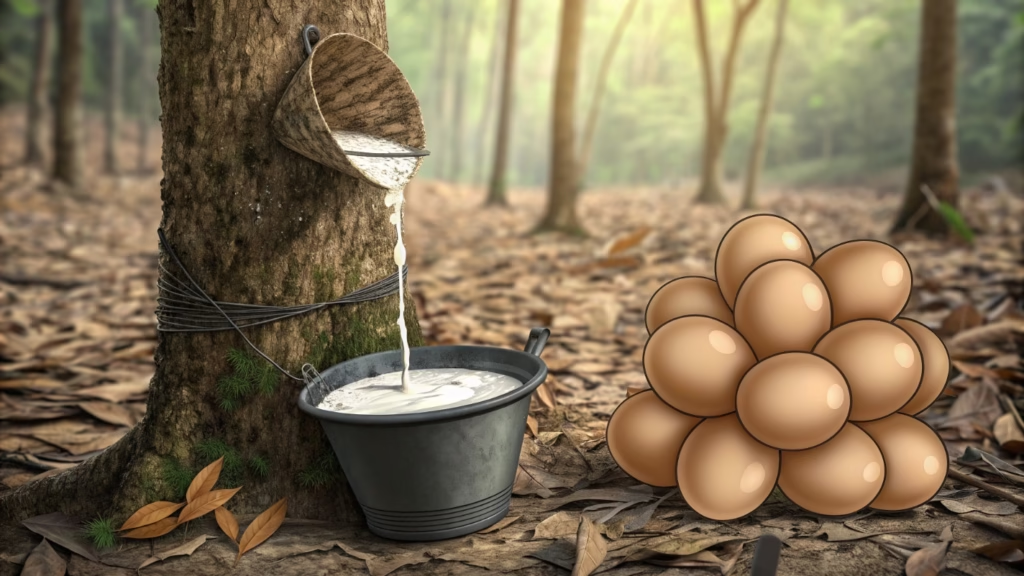
I know sustainability is a huge focus for you. I see the regulations coming from Europe and North America. The good news is that the balloon industry is uniquely positioned to help. We are not making plastic. We are using sap from the Hevea Brasiliensis9 tree.
We are seeing three major shifts in manufacturing to meet these green goals:
- Pure Formulations: We are removing fillers. Some cheap manufacturers add calcium carbonate to save money. This makes the balloon weak and less eco-friendly. We stick to pure latex.
- Safety Chemicals: We are reducing nitrosamines. These are byproducts of the curing process. Better washing cycles and safer chemicals make the balloons safer for children and better for the earth.
- Biodegradability: We test our products to prove they break down. A natural balloon degrades at the same speed as an oak leaf.
This matters for your compliance reports10. When you buy from a factory that respects the material, you get certifications like Sedex and ISO easier. It protects your brand image. We are committed to making moments colorful without harming the planet. This aligns with your need for safe, compliant, and high-quality products.
Conclusion
From Faraday’s experiments to our automated lines, balloon manufacturing has advanced to ensure safety and quality. We combine this history with modern standards to support your supply chain success.
-
Understand the critical role of balloon quality in maintaining a reliable supply chain. ↩
-
Learn how liquid latex revolutionized balloon production, making it more efficient and cost-effective. ↩
-
Discover how automated dipping lines enhance the consistency and quality of balloon production. ↩
-
Discover the importance of ISO9001 standards in ensuring quality in manufacturing processes. ↩
-
Understand the vulcanization process and its importance in creating durable balloons. ↩
-
Learn how accelerators improve the curing process in rubber manufacturing. ↩
-
Understand the environmental challenges faced by the balloon industry and solutions being implemented. ↩
-
Learn about the advantages of using natural rubber latex in balloon manufacturing. ↩
-
Discover the significance of Hevea Brasiliensis in producing eco-friendly balloons. ↩
-
Learn about the importance of compliance reports in maintaining industry standards. ↩