
Helium vs. Air-Filled Which Is the Right Choice for Your Latex Balloons, and How Long Will They Last?
Choosing between helium and air for your balloons can be confusing. Making the wrong choice impacts your budget and how long your decorations will last, affecting your event's success.
For long-lasting decorations, choose air-filled latex balloons1; they can last for weeks. For a classic floating effect, use helium, but expect standard latex balloons to float for only 8-12 hours. Air-filled is best for garlands and arches, while helium is perfect for bouquets and ceiling decor.

As someone who has been in the balloon industry for over a decade, this is one of the most common questions I get. The choice isn't just about float or no-float. It affects your budget, your setup time, and the overall look of your event or product offering. As a procurement manager, understanding these differences is key to making smart, cost-effective2 decisions that keep your customers happy. We will explore the key factors you need to consider, from wholesale profitability3 to the logistics of handling large orders. Let's break it down so you can choose with confidence every time.
How does the cost of helium impact the profitability of selling pre-inflated balloons wholesale?
Rising helium costs can be unpredictable. This volatility directly eats into your profit margins on pre-inflated balloons, making it hard to set stable prices for your customers.
Helium is a significant and fluctuating cost driver for pre-inflated balloons. This price instability directly impacts profitability. To protect your margins, consider focusing more on intricate air-filled designs4 or positioning helium-filled options5 as a premium service with a corresponding price point for your clients.
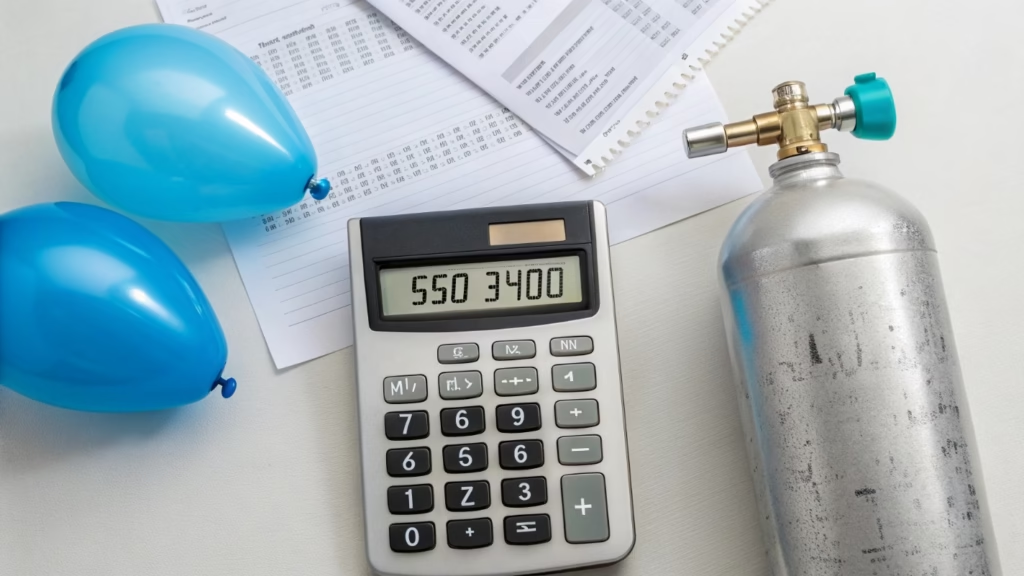
When my partners in retail ask about profitability, the conversation always turns to helium. It's a finite resource, and its price reflects that. Unlike air, which is free, helium comes with multiple costs: the gas itself, tank rental fees, and the specialized nozzles required for inflation. For a business selling thousands of pre-inflated balloons, these costs add up quickly and can turn a profitable item into a loss leader if not managed carefully.
Let's look at the numbers for a wholesale operation.
Cost Breakdown: Air vs. Helium
| Cost Factor | Air-Filled Balloons | Helium-Filled Balloons |
|---|---|---|
| Gas Cost | Negligible (free) | Significant & Variable |
| Equipment | One-time purchase of an electric inflator | Ongoing helium tank rental fees |
| Labor | Fast inflation with electric pumps | Slower; requires careful handling |
| Longevity | Weeks | 8-12 hours |
| Profit Margin | High | Lower; squeezed by gas costs |
To protect profitability, I advise our partners to adjust their strategy. Promote stunning air-filled creations like organic garlands and balloon mosaics. These designs are high-impact and carry much higher margins. You can then offer helium balloons as a premium choice, with pricing that reflects the true cost. This approach gives your customers options while safeguarding your bottom line from the volatile helium market.
What is the average float time difference between helium and air for bulk latex balloon orders?
You need your balloon decorations to look perfect for an entire event. Nothing looks more unprofessional than helium balloons drooping halfway through a party, disappointing your clients and reflecting poorly on your quality.
For bulk orders, standard helium-filled latex balloons will float for about 8-12 hours. Air-filled balloons do not float but will stay firm and inflated for several days, often even weeks indoors. For multi-day events, air-filled is the reliable choice for consistent presentation.
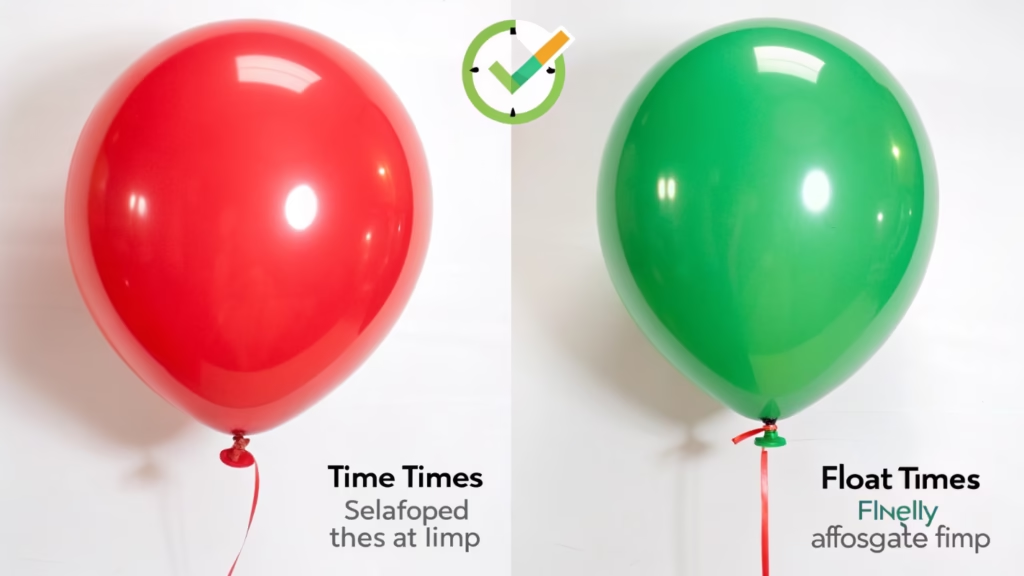
Understanding float time is crucial for managing expectations, especially with large orders for events. Latex is a porous material. The tiny helium atoms are much smaller than air molecules (nitrogen and oxygen), so they escape through the pores of the latex much faster. This is why a helium balloon droops overnight, while an air-filled one can look fresh for a week.
When a client needs decorations for a weekend-long convention or a week-long store promotion, I always steer them toward air-filled designs4. Here’s a deeper look at what to expect.
Factors Affecting Longevity
- Gas Type: As we've covered, air molecules are larger and escape more slowly than helium atoms. This is the single biggest factor in longevity.
- Balloon Size: Larger balloons have a smaller surface-area-to-volume ratio. A 36-inch helium balloon will float for several days, while a standard 11-inch one lasts less than a day.
- Environmental Conditions: Heat causes helium to expand and escape faster. Direct sunlight degrades latex, increasing porosity. For maximum float time, keep helium balloons in a cool, climate-controlled environment.
- Quality of Latex: High-quality latex, like we produce at AIHUA BALLOON, has a more consistent thickness, which helps slow gas leakage. Cheaper balloons often have thin spots that fail quickly.
For events where floating is a must, you can use a treatment like Hi-Float. It’s a liquid polymer that coats the inside of the balloon before inflation, effectively sealing the pores. This can double or even triple the float time, making it a valuable upsell for your clients.
For large-scale event decor, when is air-filling a more practical choice than helium?
Planning a massive installation can be overwhelming. Using helium for everything seems like a great idea until you face the immense cost and the logistical nightmare of handling dozens of helium tanks.
For large-scale event decor, air-filling is almost always more practical. It is significantly cheaper, the decorations last much longer, and it avoids the logistical challenges of managing helium. Air is ideal for structures like arches, walls, columns, and organic garlands that need to look perfect for days.

I remember working with an event planner for a major corporate product launch. They initially wanted thousands of helium balloons to fill a convention hall ceiling. After we walked through the costs and logistics, they quickly pivoted. The sheer number of helium tanks required, the inflation time, and the fact that the balloons would start drooping by day two of the three-day event made it impractical.
Instead, we designed breathtaking floor-to-ceiling air-filled columns and a massive branded balloon wall behind the main stage. The installation looked perfect from start to finish, and the client saved over 60% on their balloon budget.
When to Choose Air for Large Events
- When Longevity is Key: For multi-day conferences, trade shows, or retail promotions, air-filled decor remains pristine. You can set it up a day or two in advance without worrying about it deflating.
- For Structural Designs: Balloon arches, walls, sculptures, and columns rely on structure, not floating. Air-filling provides the firm, stable balloons needed to build these impressive creations.
- On a Tight Budget: Air is free. You can create a much larger, more impactful display with air-filled balloons for the same budget as a modest helium-filled one.
- For Outdoor Events: Wind is a major enemy of helium balloons. Air-filled structures are heavier and can be securely anchored, making them a much safer and more reliable choice for outdoor installations.
Helium still has its place for creating that magical, floating effect with bouquets or ceiling clusters, but for the foundational, large-scale elements of event decor, air is the practical, reliable, and cost-effective champion.
What are the logistical challenges of sourcing and storing helium tanks versus using air inflators?
Managing inventory for a large retail or event business is complex. Adding bulky, pressurized helium tanks to the mix introduces safety risks6, storage issues, and supply chain headaches you don't need.
Sourcing helium involves managing contracts with industrial gas suppliers and handling heavy, high-pressure tanks that require safety training and secure storage. In contrast, professional air inflators are a one-time purchase, are portable, and use a readily available resource—air—eliminating nearly all logistical complexity.
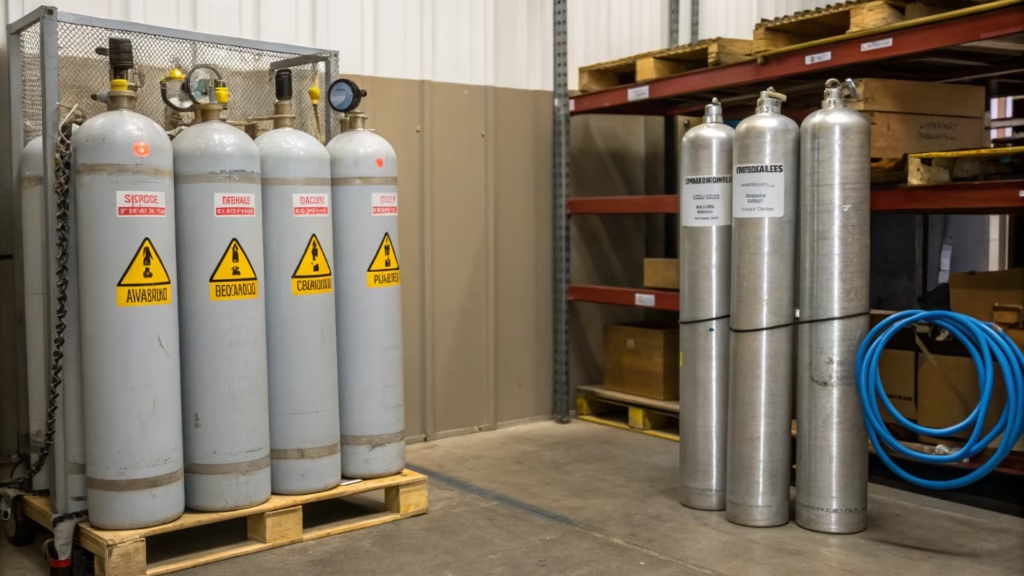
As a procurement manager, your job is to streamline the supply chain, not complicate it. From my experience, helium is one of the biggest logistical hurdles for our partners. It's not like ordering more balloons that you can just stack on a shelf. Helium is classified as a hazardous material for transport and storage, which brings a host of challenges that a simple air inflator avoids entirely. It’s a classic example of where a seemingly small choice has big operational consequences.
Let’s directly compare the logistical footprint.
Logistical Comparison: Helium vs. Air
| Logistic Factor | Helium Tanks | Electric Air Inflators |
|---|---|---|
| Sourcing | Requires contracts with specialized gas suppliers. Supply can be volatile. | One-time purchase from party goods or hardware suppliers. |
| Storage | Must be stored upright in a cool, dry, well-ventilated area, away from public access. Must be secured to prevent falling. | Small, portable devices that can be stored on any shelf. |
| Handling | Tanks are heavy and awkward. Requires proper training for safe transport and use. | Lightweight and easy to move and operate. Plug-and-play. |
| Safety | High-pressure cylinders pose a significant safety risk if damaged or mishandled. | Standard electrical safety precautions. No pressurized gas. |
| Compliance | Subject to transportation and workplace safety regulations (e.g., OSHA in the USA). | No special compliance requirements. |
For businesses like GlobalMart with hundreds of stores, managing helium tank inventory across all locations is a massive undertaking. It requires specialized training for staff, dedicated storage space, and a robust reverse logistics system to return empty tanks. An electric air inflator, however, can be shipped in a small box and used by any employee with minimal instruction. The operational efficiency and risk reduction gained by prioritizing air-filled decor are immense.
Conclusion
Ultimately, choosing air-filled balloons offers greater longevity and cost-effectiveness for structures, while helium provides the unique floating effect for shorter events. Understanding these differences empowers you to make strategic choices.
-
Explore the advantages of air-filled latex balloons for long-lasting decorations that enhance your event's aesthetic. ↩
-
Discover cost-effective balloon options that can help you stay within budget while impressing guests. ↩
-
Gain insights into how helium prices can impact your balloon business's profitability. ↩
-
Explore innovative air-filled balloon designs that can enhance your event decor. ↩ ↩
-
Find out when helium-filled balloons are the best choice for your event decor. ↩
-
Understand the safety risks of using helium tanks to ensure a safe working environment. ↩