How do I incorporate sustainable practices into my latex balloon sourcing?
Struggling with sustainable sourcing? Greenwashing claims can damage your brand's reputation. You can build a truly eco-friendly supply chain1 by focusing on certified materials2 and transparent manufacturing processes3.
To incorporate sustainable practices, prioritize suppliers using natural latex4 from responsibly managed forests5. Verify their commitment through certifications like FSC or EUDR. Also, request comprehensive reports on their production processes and waste management to ensure full transparency and compliance with your sustainability goals.
It sounds straightforward, but the details matter. As a procurement manager, you know every claim needs verification. During my ten years in this industry, I've seen many companies make big promises without the proof to back them up. This not only risks your brand's image but can lead to major compliance issues down the line. So, how do you cut through the noise and find what truly makes a balloon sustainable? Let's break down the key questions you should be asking your potential partners.
What qualifies latex balloons as biodegradable or eco-friendly?
Confused by terms like "biodegradable"? Misleading labels can lead to poor sourcing decisions. True eco-friendliness depends on the raw material and how it breaks down naturally.
Latex balloons qualify as eco-friendly when made from 100% natural rubber latex6, a renewable resource. They are biodegradable, breaking down at a rate similar to an oak leaf. However, this only applies to natural latex, not balloons made from synthetic materials or with plastic additives.

The Source Material Matters
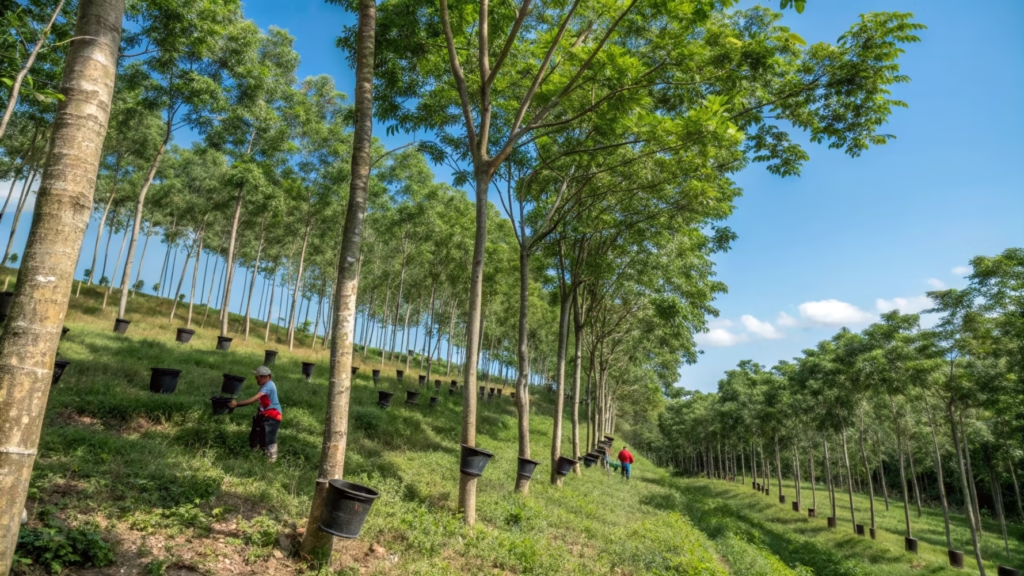
The term "eco-friendly" is used too often in marketing. For a balloon, it starts and ends with the material. True eco-friendly latex balloons must be made from natural rubber latex. This is the milky sap harvested from the Hevea brasiliensis tree. This harvesting process is sustainable because it does not require cutting down the trees. Good forest management ensures the trees continue to thrive and absorb carbon dioxide for decades. I have visited plantations where trees over 30 years old are still producing high-quality latex. This is a genuinely renewable cycle. Be cautious of balloons marketed as "eco-friendly" without specifying they are 100% natural latex. They might contain synthetic fillers7 that prevent them from biodegrading properly.
Understanding Biodegradation
Biodegradability means a material can be broken down by natural microorganisms. Scientific studies have shown that a natural latex balloon breaks down at about the same rate as an oak leaf. This is a key fact for any sustainability claim. However, this process can be hindered by chemicals or synthetic materials. A responsible manufacturer uses minimal, non-toxic additives. They ensure their final product remains as close to its natural state as possible.
Here is a simple table to spot the difference:
| Feature | Genuine Natural Latex Balloons | "Greenwashed" Balloons |
|---|---|---|
| Material Source | Renewable (Rubber Tree Sap) | Often undisclosed, may contain synthetic fillers |
| Biodegradability | Yes, comparable to an oak leaf | Unproven or extremely slow |
| Manufacturing | Minimal, non-toxic additives | May use harsh chemicals that hinder breakdown |
| Claims | Specific, e.g., "100% natural latex" | Vague terms like "earth-friendly" |
How can you identify and vet sustainable balloon manufacturers and suppliers?
Worried about finding a reliable, sustainable supplier? A poor choice risks your supply chain and brand integrity. You can secure a trustworthy partner with a clear vetting process.
Identify sustainable suppliers by reviewing their public commitments and transparency reports. Vet them by conducting factory audits8 and requesting samples. Ask direct questions about their raw material sourcing, waste management, and social compliance policies. A reliable partner will provide clear, verifiable answers.

Your Vetting Checklist
Finding the right partner goes beyond their website claims. You need a structured approach to verification. As a procurement manager for a large retailer, you need proof of compliance and quality. Start by asking for documentation. Don't just ask if they are sustainable; ask for their sustainability report, their water treatment policies9, and their waste reduction metrics. A serious supplier will have this information ready. I always ask potential partners for batch-specific quality reports. It shows me they have robust quality control systems in place, not just a general certificate. It proves they track performance from raw material to finished product, which is crucial for consistency across hundreds of stores.
Beyond the Paperwork: The Importance of Audits
Paperwork is important, but nothing replaces an on-site visit or a third-party audit. As someone with an MBA, I value data, but my decade of factory experience has taught me to trust what I can see. During an audit, you can observe their processes firsthand. You can see how they manage their chemical usage, how they treat their wastewater, and the working conditions of their employees. A clean, organized factory with happy workers speaks volumes. It shows a culture of quality and responsibility that no certificate can fully capture.
Use this checklist during your vetting process:
| Vetting Area | Key Questions to Ask |
|---|---|
| Raw Materials | Where do you source your natural latex? Can you provide chain of custody documents10? |
| Production | What are your water and energy consumption rates per unit? How do you manage production waste? |
| Social Compliance | Are you Sedex audited11? Can you share your latest SMETA report for review? |
| Quality Control | Can you provide a batch-specific Certificate of Analysis12 (COA)? What is your defect rate? |
What certifications should you request to verify responsible latex sourcing?
Overwhelmed by all the different certifications? Relying on the wrong one leaves you exposed. Focus on key certifications like FSC and EUDR to guarantee responsible latex sourcing.
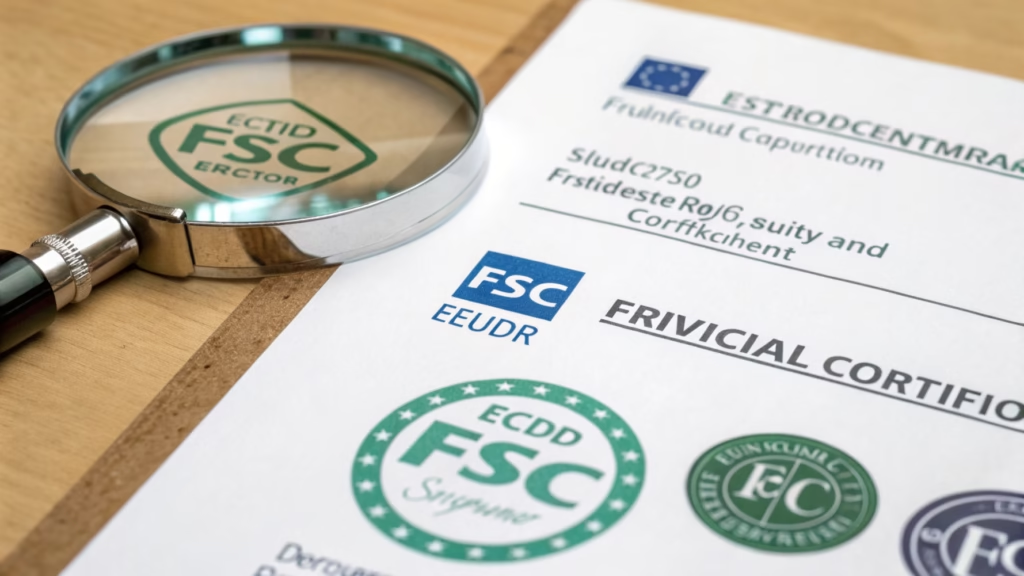
Prioritize suppliers with Forest Stewardship Council (FSC) certification. This confirms the latex comes from responsibly managed forests5. Also, look for compliance with the new EU Deforestation Regulation (EUDR). These two are the gold standard for verifying sustainable and ethical latex sourcing practices.
The Gold Standard: FSC Certification
For any product derived from a forest, including natural latex, the Forest Stewardship Council (FSC) certification is the most important mark to look for. FSC certification13 guarantees that the forest is being managed in a way that preserves biological diversity and benefits the lives of local people and workers. It provides a chain of custody from the forest to the final product. When we at AIHUA BALLOON decided to pursue a fully sustainable line, achieving FSC certification for our sourcing was non-negotiable. It is the clearest way to show our customers that our latex is sourced without causing harm to forests or communities. For a buyer like you, it is your best assurance against greenwashing.
The New Requirement: EUDR Compliance
The EU Deforestation Regulation (EUDR) is a new game-changer. It requires any company selling products like rubber in the EU to prove that their supply chain is not linked to deforestation. This is now a legal requirement, not just a voluntary standard. A supplier who is already EUDR compliant has done the hard work of mapping their entire supply chain and can provide the necessary due diligence. This significantly reduces your risk. Given that your company, GlobalMart, operates in Europe, partnering with an EUDR-ready supplier is essential for uninterrupted business.
These sustainability verifications work alongside other important certifications:
| Certification | Primary Focus | Why It Matters for Latex Sourcing |
|---|---|---|
| FSC | Responsible Forest Management | Ensures latex is harvested ethically and sustainably. |
| EUDR | Deforestation-Free Supply Chains | A legal requirement for EU market access, proving no new deforestation occurred. |
| ISO 9001 | Quality Management Systems | Guarantees consistent product quality and reliable manufacturing processes. |
| Sedex (SMETA) | Ethical and Social Performance | Verifies fair labor practices and safe working conditions in the factory. |
What are the key differences between natural rubber and synthetic materials in balloon production?
Unsure about the difference between natural and synthetic balloons? Choosing the wrong material can compromise your company's sustainability goals. Know the facts to make an informed decision.
The key difference is the source. Natural rubber latex is a renewable resource harvested from trees and is biodegradable. Synthetic materials, like chloroprene14, are petroleum-based, non-renewable, and do not biodegrade. Natural latex is the only genuinely sustainable choice for single-use balloons.
Origin and Renewability
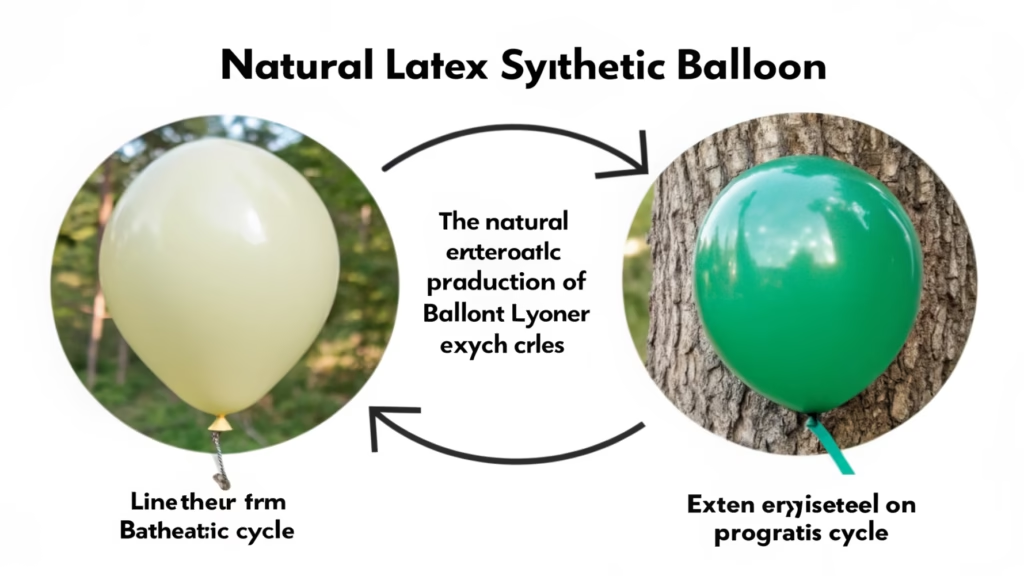
The most fundamental difference is where the materials come from. As I've mentioned, natural rubber latex is tapped from living trees, which are a renewable resource. It’s an agricultural product. In contrast, synthetic materials like chloroprene or nitrile are polymers derived from petroleum. They are created in a lab through chemical processes that rely on fossil fuels, a non-renewable resource. From an environmental standpoint, the choice is clear. Sourcing from a well-managed forest supports a living ecosystem, while sourcing from petroleum contributes to resource depletion and has a higher carbon footprint from extraction and processing.
Performance and Environmental Impact
In my experience, there are also performance differences. When I hold a balloon made from 100% natural latex, I can feel its superior elasticity and strength. It has a soft, natural texture. Synthetic balloons often feel more "plastic-like" and may not have the same stretch. However, the biggest difference is at the end of the balloon's life. A natural latex balloon will biodegrade. A synthetic balloon will not. It will persist in the environment for hundreds of years, breaking down into smaller microplastics15. For any company committed to reducing plastic pollution, using synthetic balloons is a step in the wrong direction.
This table summarizes the core differences:
| Aspect | Natural Rubber Latex | Synthetic Materials (e.g., Chloroprene) |
|---|---|---|
| Source | Sap from the Hevea brasiliensis tree | Petroleum byproducts |
| Renewability | Renewable | Non-renewable |
| Biodegradability | Yes | No |
| Performance | High elasticity, soft feel | Good, but often feels more rigid |
| Sustainability | High (with responsible sourcing) | Very Low |
Conclusion
To source latex balloons sustainably, demand transparency from your partners. Prioritize suppliers with FSC and EUDR certifications to ensure your supply chain is both eco-friendly and compliant for the future.
-
Understanding eco-friendly supply chain components helps ensure your procurement aligns with sustainability goals and avoids greenwashing pitfalls. ↩
-
Certified materials provide verified proof of sustainability, reducing risks and enhancing brand credibility in competitive markets. ↩
-
Transparent processes allow verification of environmental claims, ensuring compliance and building trust with conscious consumers. ↩
-
Natural latex is renewable and biodegradable, offering genuine environmental benefits compared to synthetic alternatives. ↩
-
Responsibly managed forests preserve ecosystems while providing renewable resources, supporting long-term environmental balance. ↩ ↩
-
Pure natural latex guarantees authentic biodegradability, unlike mixed materials that compromise environmental benefits. ↩
-
Synthetic additives hinder natural decomposition, undermining sustainability claims and increasing environmental persistence. ↩
-
Comprehensive audits verify operational standards beyond paperwork, ensuring real-world compliance and ethical practices. ↩
-
Effective water management demonstrates environmental stewardship and reduces ecological impact from production processes. ↩
-
These documents provide irrefutable proof of material origin, preventing fraudulent claims and ensuring supply chain integrity. ↩
-
Sedex audits verify social and ethical compliance, ensuring fair labor practices and safe working conditions. ↩
-
Batch-specific COAs guarantee product quality consistency and material traceability across all procurement orders. ↩
-
FSC certification ensures ethical harvesting practices and traceability, protecting forests and communities worldwide. ↩
-
Chloroprene's petroleum origin and non-biodegradability create long-term pollution issues contrary to sustainability goals. ↩
-
Synthetic balloons degrade into persistent microplastics that harm ecosystems and enter food chains worldwide. ↩