
Latex Balloons 101: Choosing the Right Type for Your Party, Event, or Promotion?
Sourcing balloons that lose air or pop too soon causes major headaches for procurement managers. You need reliable products that protect your reputation across hundreds of retail stores.
Choosing the right latex balloon depends on thickness, size, and finish. For professional events, always select decorator-grade1, 100% natural biodegradable latex balloons2 over retail-grade options. These ensure longer float times, vibrant colors, and safety compliance3, protecting your brand reputation and reducing waste.
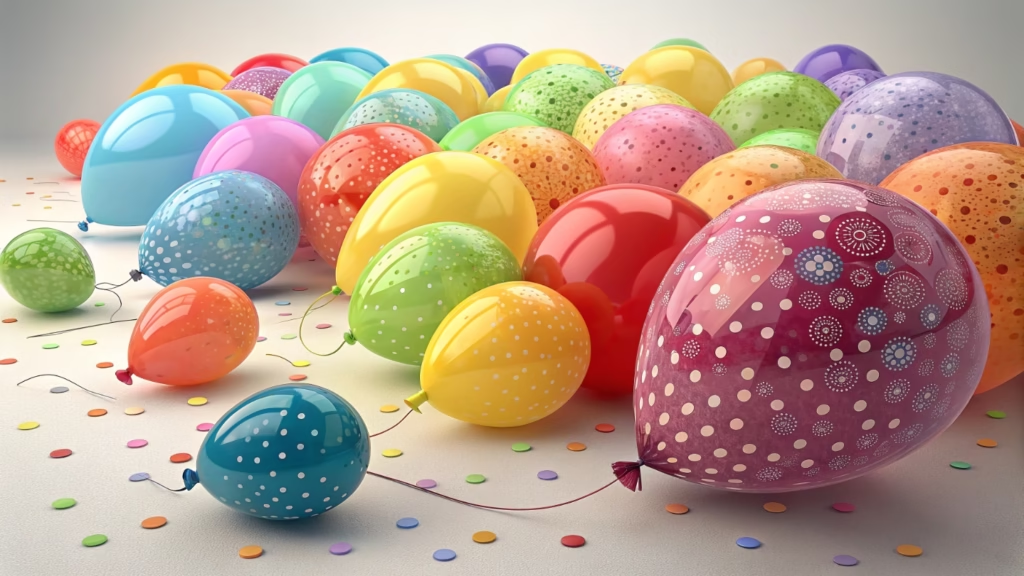
I have seen many buyers struggle with low-quality batches that damage their sales. Let me explain how to pick the best options for your inventory.
What Is the Difference Between Standard and Biodegradable Latex Balloons?
Environmental regulations are getting stricter in Europe and North America every year. Ignoring sustainability in your supply chain creates serious compliance risks for your company.
Standard cheap balloons often contain synthetic fillers that harm nature. Biodegradable latex balloons are made from 100% natural rubber sap4. They break down at the same rate as an oak leaf, satisfying eco-conscious consumers and meeting international safety standards like EN71.

At AIHUA BALLOON, we focus on material purity. I want to explain why this matters for your procurement strategy. Many people think all latex is the same, but that is not true. Standard "retail-grade" balloons often mix a small amount of latex with plastic fillers to cut costs. This makes the balloon weak. It also means the balloon will sit in a landfill for decades. This is bad for the planet and bad for your brand image.
True decorator-grade balloons use 100% natural rubber sap. We harvest this from Hevea Brasiliensis trees. It is an organic process. When you buy this type, you get a product that is soft and flexible. It resists popping during transport or setup. I have tested these materials in our factory for over ten years. I know that natural latex withstands temperature changes better than synthetic mixes.
Here is a simple breakdown of the differences I see in the factory:
| Feature | 100% Natural Biodegradable | Standard/Synthetic Mix |
|---|---|---|
| Material Source | Organic Rubber Tree Sap | Rubber mixed with fillers |
| Decomposition | 6 months to 4 years (like a leaf) | Decades or never |
| Strength | High elasticity, less popping | Brittle, pops easily |
| Safety | Meets EN71, ASTM standards | Often fails strict safety tests |
| Cost | Higher initial unit cost | Lower cost, higher waste rate |
For a buyer like you, the choice is clear. You need products that pass ISO90015 and Sedex audits6. Natural latex is the only way to ensure safety and compliance for your customers.
Which Latex Balloon Sizes Are Best Suited for Corporate Events and Arches?
Using the wrong size balloon makes a grand event look messy and unprofessional. Your clients will complain when their expensive displays lack visual impact7 or depth.
The best sizes for corporate events depend on the venue. Use 5-inch balloons for gap filling, 11-inch for standard arches, and 36-inch giants for entrances. Mixing sizes creates depth and visual interest while ensuring the installation looks professional and full.

I work with many event planners and retailers. They often ask me which sizes they should stock. You cannot just buy one size and expect it to work for everything. To build a great balloon supply chain, you must understand the function of each diameter.
First, you have the 5-inch balloons. These are tiny. You do not use them for helium because they do not hold enough gas to float for long. I recommend these for "gap filling." When a decorator builds an organic arch, they use these small balloons to hide the knots and sticks. They add texture.
Next is the 11 to 12-inch range. This is the standard size. If you walk into any of your 500 stores, this is what you see on the shelf. They are versatile. You can fill them with air or helium. They are perfect for bouquets and simple party styling.
Then we have the 16 to 24-inch balloons. I call these the "visual impact7" group. They are great for photo backdrops. They are large enough to print a clear company logo on, but not so big that they are hard to handle.
Finally, there are the 36-inch Giant balloons. These are heavy. They require a lot of helium. But they create a "wow" factor at grand entrances8.
Here is how I categorize them for my retail partners:
| Balloon Size | Primary Use Case | Venue Consideration |
|---|---|---|
| 5-inch | Detail work, garlands, centerpieces | Intimate settings, tables |
| 11-12 inch | Standard decor, bouquets, arches | Most versatile, fits all venues |
| 16-24 inch | Photo backdrops, floor arrangements | Medium to large spaces |
| 36-inch | Grand entrances, stage backdrops | High ceilings, open spaces |
Stocking a mix of these sizes helps your customers create professional looks. It creates a complete solution for them.
How Do Matte, Chrome, and Pearl Finishes Impact Promotional Branding?
Colors that look dull or reflective in photos hurt brand perception significantly. You want your client's logo to shine clearly, not fade into the background.
Matte finishes offer a modern, sophisticated look that is easy to read. Chrome balloons provide a metallic, high-end shine for luxury events. Pearl finishes add a soft elegance. Choose the finish that matches the brand voice and ensures the printed logo remains legible.
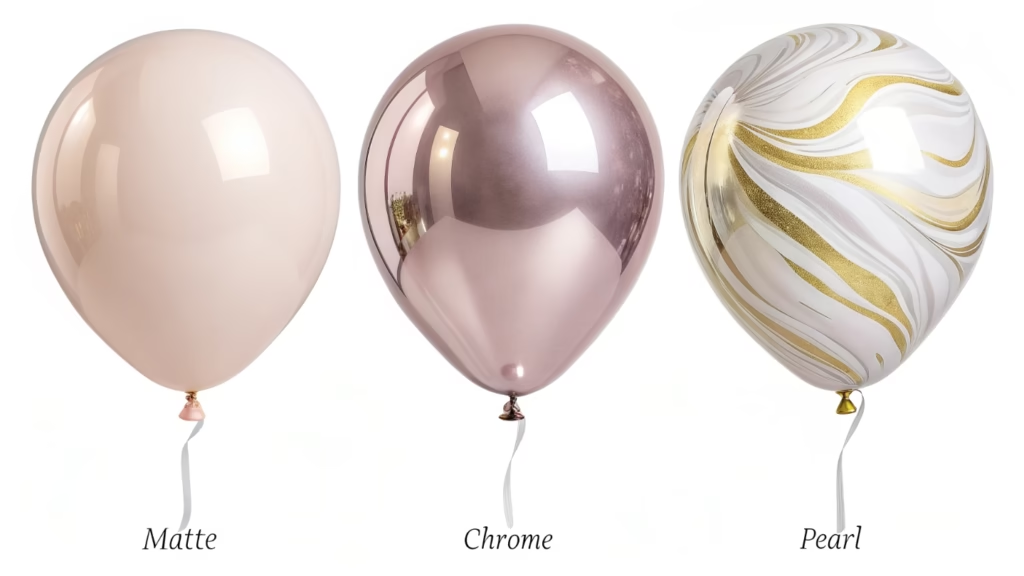
The finish of the balloon changes the entire mood of an event. In my experience with global retailers, the trend is shifting. Ten years ago, everyone wanted Pearl. Now, many people want Matte or Chrome. You need to know the difference to guide your purchasing decisions.
Matte (Pastel/Macaron): This is very popular right now. The surface absorbs light. It does not reflect flash photography. This is crucial for branding. If a company prints a QR code or a logo on a matte balloon, it is very easy to scan and read. I always suggest matte for corporate launches where information delivery is key. It looks modern and soft.
Chrome (Mirror): These balloons look like liquid metal. They are shiny and reflective. They scream "luxury." However, they are thicker and heavier. They are more expensive to produce. If your client is a high-end jewelry store or a luxury car brand, Chrome is the right choice. But, printing on them can be tricky because the glare can hide the text.
Pearl (Metallic/Standard): This is the classic shiny balloon. It has a slight sparkle. It is great for weddings and birthday parties. It is usually cheaper than Chrome. But sometimes, the color can look a bit transparent when you inflate it fully.
When we manufacture these at AIHUA, we change the formula slightly for each finish.
- Matte requires a specific curing process to remove shine.
- Chrome uses a double-layer technique or special metallic pigments to get that solid coverage.
Understanding these finishes helps you offer the right product for the right occasion. It adds value to your catalog.
What Quality Indicators Should Wholesalers Look for in Helium-Grade Balloons?
Helium is expensive, and balloons that leak waste money and ruin events. A high deflation rate ruins your profit margins and frustrates your end customers.
Wholesalers must look for uniform thickness and a long neck for tying9. High-quality helium balloons have no pinholes and feel soft, not brittle. They must hold helium for at least 18 hours. Check for certifications like ASTM or EN71 to ensure the material strength.
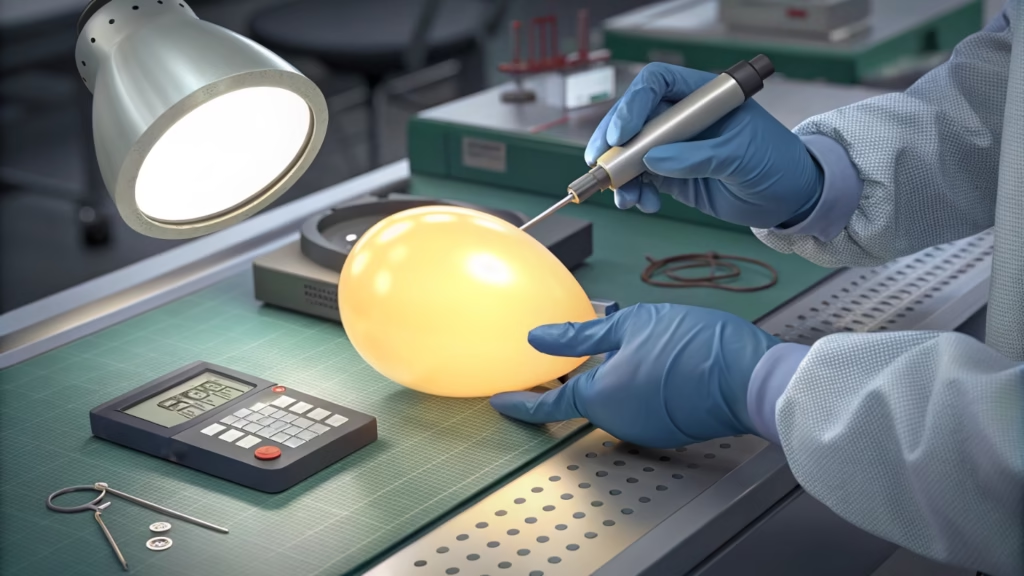
As a procurement manager, you cannot test every single balloon. But you can check for specific quality indicators10. I use these checks in our factory, and you should use them when inspecting samples.
1. The Pinhole Test:
This is the most common defect in cheap balloons. Inflate a random sample. Hold it up to a strong light. If you see tiny dots of light coming through, that is a pinhole. Helium atoms are very small. They will escape through these holes instantly. A decorator-grade balloon will block the light evenly.
2. Weight Consistency:
I always weigh my balloons. A standard 12-inch helium-grade balloon should weigh roughly 2.8 to 3.2 grams. If it weighs only 2.2 grams, the walls are too thin. Thin walls cannot hold the pressure of helium for long. They will float for maybe 6 hours, then drop. Your customers need them to float for at least 12 to 18 hours.
3. The Neck and Lip:
Look at the opening of the balloon. A good balloon has a long, stretchy neck. This makes it easy for the decorator to tie a knot. If the neck is short, it hurts the fingers to tie hundreds of them. Also, the "rolled lip" at the end should be thick. This prevents tearing when you put the balloon on the helium nozzle.
4. Uniform Shape:
When you inflate it, does it look like a tear-drop? Or does it look like a lumpy pear? Poor dipping processes cause lumpy shapes. This looks bad in a bouquet.
Here is a checklist for your next inspection:
- Smell: Strong chemical smell = bad synthetic fillers.
- Touch: Soft and powdery = good. Sticky = bad (aging or heat damage).
- Color: Uniform color when expanded. No streaks at the top.
By enforcing these standards, you ensure that GlobalMart only sells the best. This reduces returns and complaints.
Conclusion
To select the right latex balloons, you must prioritize decorator-grade quality, appropriate sizes, and the correct finish. Focusing on natural materials and rigorous quality checks ensures safety and customer satisfaction.
-
Find out why decorator-grade balloons are essential for professional events and how they outperform retail-grade options. ↩
-
Learn about the benefits of biodegradable latex balloons and how they can enhance your brand's eco-friendly image. ↩
-
Understand the safety compliance standards like EN71 and ASTM that ensure balloon quality and safety. ↩
-
Discover the advantages of using natural rubber sap in balloon manufacturing for better quality and sustainability. ↩
-
Discover the importance of ISO9001 certification in ensuring quality and safety in balloon production. ↩
-
Find out how Sedex audits can help ensure ethical practices in your balloon supply chain. ↩
-
Learn about the types of balloons that provide the best visual impact for memorable events. ↩ ↩
-
Discover the ideal balloons for creating stunning grand entrances that leave a lasting impression. ↩
-
Explore why a long neck is crucial for easy tying and handling of balloons during events. ↩
-
Get a comprehensive list of quality indicators to ensure you select the best balloons for your events. ↩