
Latex vs Mylar Balloons: How Do They Affect Your Inventory Turnover Rate?
Dead stock hurts your bottom line, and choosing between balloon types is tricky. I will explain exactly how latex and Mylar materials impact your inventory turnover speed1 today.
Latex balloons drive high-volume turnover2 because they are cheap and sell fast for events. Mylar balloons offer slower but higher-value turnover due to longer shelf life3 and reusability. Balancing both materials allows you to maximize sales cycles while minimizing spoilage risks in your warehouse.
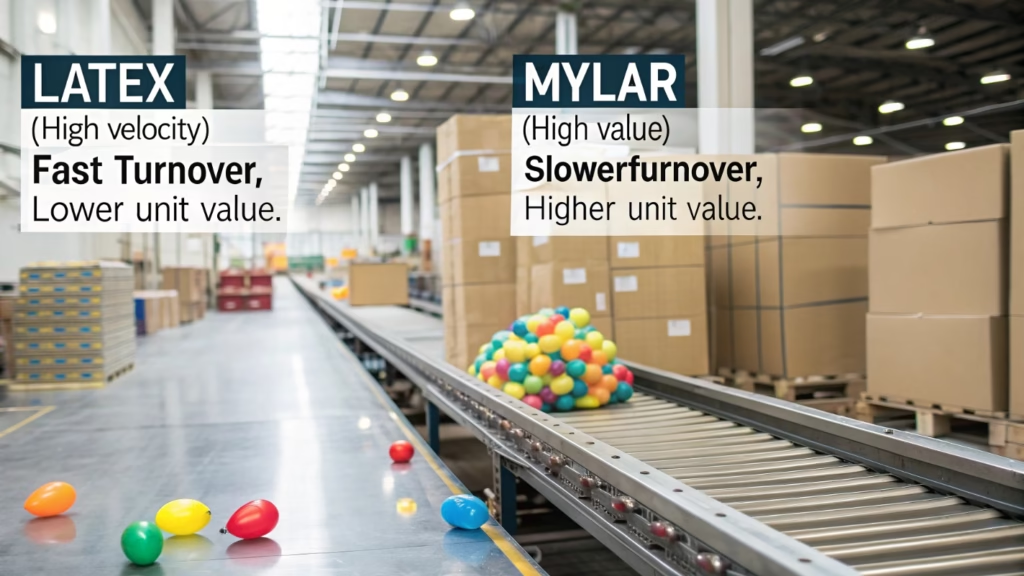
Many procurement managers struggle with this balance every day. Let's look closely at the details so you can make the right buying decision for your stores.
What are the differences in shelf life between latex and Mylar balloons?
Expired inventory is a total loss for your budget. You need to know how long stock lasts before it becomes unsellable waste.
Latex balloons are organic and degrade over time, lasting about 6 months to 2 years if stored well. Mylar balloons are synthetic and non-porous, often lasting indefinitely on the shelf. Mylar reduces the risk of spoilage if your sales volume fluctuates unpredictably.
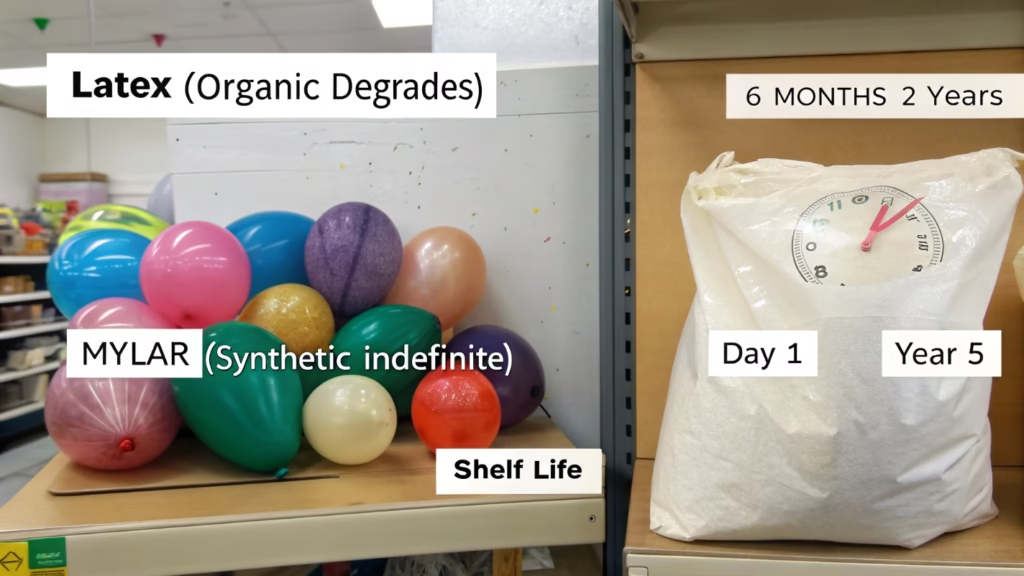
I have worked in the balloon industry for over ten years, and I see a common mistake. Buyers order huge amounts of latex balloons to get a discount, but they do not sell them fast enough. This is dangerous for your inventory health. Latex is made from natural rubber. It is an organic material. Like food, it has an expiration date.
When latex sits in your warehouse for a long time, it changes. The material reacts with the air. We call this oxidation4. The balloons might become brittle. They might stick together in the bag. If a customer buys old latex balloons, they will pop immediately. This hurts your brand reputation.
Mylar (foil) balloons are different. They are made of plastic and metal. They do not breathe. You can keep Mylar balloons on your shelf for years. They will still look new. They will still float perfectly. This means Mylar is a safer investment for slow-moving inventory. You do not need to worry about the "expiration clock" ticking.
Here is a simple breakdown of how the material changes your planning:
| Feature | Latex Balloons | Mylar (Foil) Balloons |
|---|---|---|
| Material Base | Natural Rubber (Organic) | Nylon with Metallic coating (Synthetic) |
| Shelf Life | 6 months to 2 years | Indefinite (Years) |
| Main Risk | Oxidation, heat damage, brittleness | Crushing, punctures |
| Buying Strategy | Buy frequently in smaller batches | Buy in bulk for long-term storage |
For latex, you need a fast turnover. You need to sell the stock within a year. For Mylar, you can hold the stock longer without losing value. This helps you manage your risk.
Which balloon material offers a higher profit margin for bulk buyers?
Low margins make it hard to reach your quarterly financial targets. You want products that give the best return on your investment capital.
Latex balloons offer lower margins per unit but generate profit through high sales volume. Mylar balloons command a higher retail price and profit margin5 per unit. While Mylar costs more upfront, the higher markup helps offset the slower sales frequency compared to latex packs.
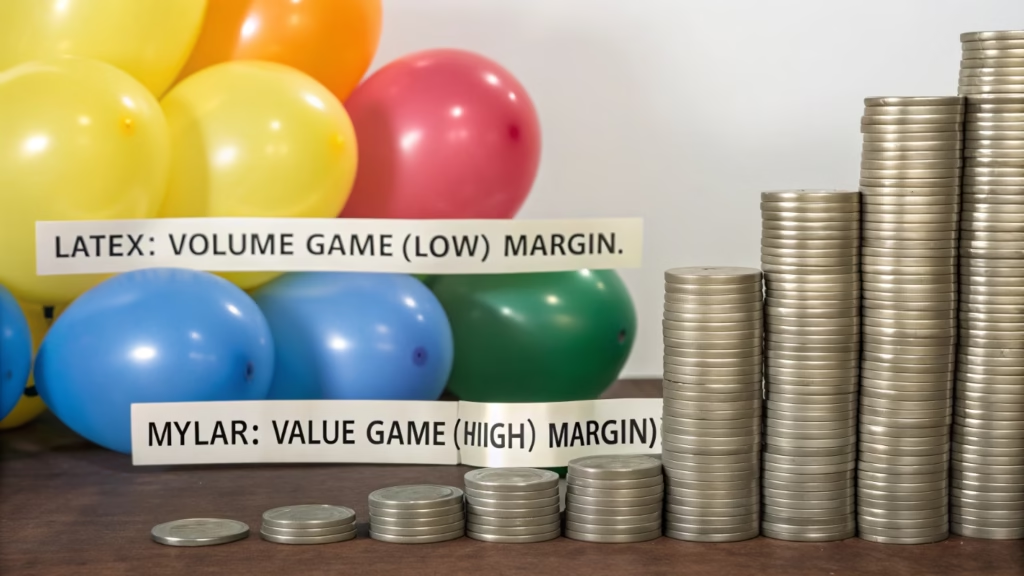
With my MBA background, I like to look at the unit economics of our products. It is important to see where the real profit comes from. Latex balloons are a volume game. The cost per unit is very low. You sell them in bags of 10, 50, or 100. The profit on a single bag is small. You need to sell thousands of bags to make a big impact on your financial report.
Mylar balloons are a value game. The cost to buy one Mylar balloon is much higher than one latex balloon. But the selling price is much higher too. A customer might pay $5 or even $10 for a single large number balloon or a character balloon. The margin on that single sale is significant.
Also, we must look at the hidden costs. Latex balloons are single-use. They float for less than a day usually. Mylar balloons can float for weeks. They are reusable. You can deflate them and inflate them again. This creates a higher perceived value for your customer. They are willing to pay more because the product lasts longer.
Consider these factors for your profit model:
- Initial Cost: Latex is cheap; Mylar is expensive.
- Capital Efficiency: Mylar ties up more cash on the shelf, but latex releases cash faster.
- Mark-up Potential: Mylar supports higher mark-ups due to designs and licensing (like Disney characters).
- Waste Cost: Latex has higher waste (popping during inflation), which eats into margins. Mylar is stronger.
If you want fast cash flow, latex is good. If you want higher profit per sale, Mylar is better. A good inventory mix uses the cash flow from latex to fund the high-margin Mylar stock.
How do storage requirements impact the longevity of your balloon inventory?
Damaged stock in the warehouse destroys your inventory accuracy. Improper storage conditions can ruin thousands of dollars of product before it reaches the shelf.
Latex balloons require strict climate control6, avoiding heat and sunlight to prevent degradation. Mylar balloons are robust and tolerate wider temperature ranges without damage. Choosing Mylar reduces the need for expensive climate-controlled warehousing, while latex demands careful environmental management to maintain quality.
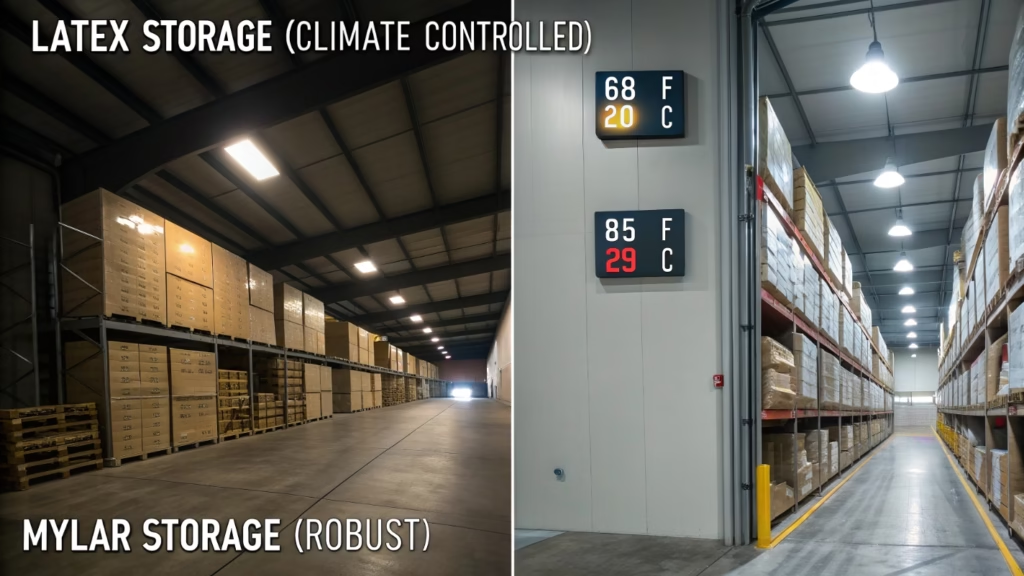
At AIHUA BALLOON, we operate a large factory, so I know how storage affects quality. Storage conditions are the silent killer of inventory turnover. If you store your products wrong, they die before you can sell them.
Latex is very sensitive. It hates three things: heat, light, and air. If your warehouse gets hot in the summer, the latex cures. It becomes hard. When you blow it up, it explodes. If you have skylights in your warehouse, the UV light will rot the rubber. You must store latex in a cool, dark place. This might cost you more money for air conditioning or specialized storage zones.
Mylar is tough. It is essentially a plastic sheet. It can handle heat much better than latex. It can handle cold. It does not care about sunlight as much, as long as the packaging is good. This makes Mylar easier to handle in a large supply chain7. You can ship it in standard trucks without worrying about temperature spikes as much.
Also, think about the physical space. Mylar balloons pack very flat. They are heavy but compact. You can fit thousands of dollars of inventory on one pallet. Latex bags are puffy. They take up more space for less value.
Here is a checklist for your warehouse team:
- Temperature: Keep latex below 25°C (77°F). Mylar is safe up to higher temps.
- Light: Keep latex away from windows and doors. Mylar is okay in standard lighting.
- Pressure: Do not stack heavy boxes on Mylar; it can crease the foil. Latex is flexible but can deform under too much weight.
- Rotation: Use First-In-First-Out (FIFO)8 strictly for latex. It is critical. For Mylar, it is less urgent.
If your supply chain has long shipping times or hot warehouses, Mylar is the safer choice for inventory longevity.
Should you prioritize latex or foil balloons for faster stock rotation?
Slow stock rotation ties up cash that you could use elsewhere. You need a strategy to keep goods moving out the door constantly.
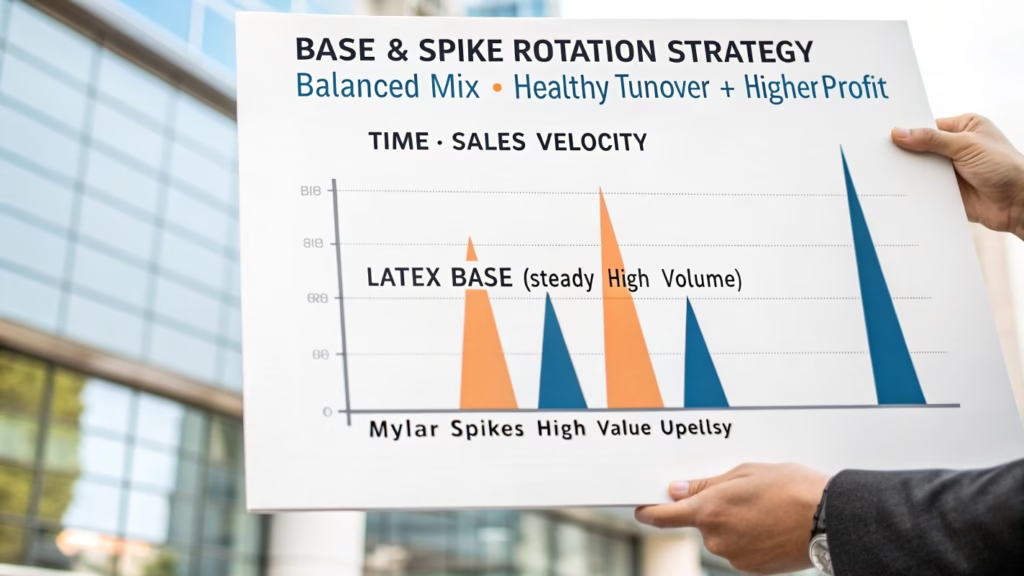
You should prioritize latex balloons for fast stock rotation9 strategies due to their lower price point and high consumption rate for parties. However, incorporate foil balloons to boost average transaction value. A balanced mix ensures steady cash flow from latex and high-profit spikes from Mylar.
So, what should you buy? If you want to see your inventory turn over fast, latex is the winner. People buy latex balloons for everything. They buy them for small birthday parties, for water balloon fights, and for big arches at weddings. The consumption rate is huge. A bag of latex balloons does not stay on the shelf for long if the price is right. This is good for your "inventory turnover ratio." It shows your bosses that product is moving.
However, if you only sell latex, you miss the big money. Mylar balloons are the "centerpiece." They turn over slower. A customer only needs one or two huge balloons, but they need 50 latex balloons. The sales cycle for Mylar is longer. But, the value of that turnover is higher.
I recommend a "Base and Spike" strategy.
- The Base (Latex): This is your daily bread. It brings customers into the store. It keeps the cash register moving. It proves you have stock.
- The Spike (Mylar): This is the upsell. When the customer buys the latex, they see the shiny foil balloon. They add it to the cart. It increases the basket size.
You cannot rely on just one. If you prioritize latex 100%, you have a lot of work for low profit. You move many boxes for pennies. If you prioritize Mylar 100%, your cash might get stuck in inventory for months waiting for the right buyer.
I suggest to my clients a ratio based on their space. Dedicate 60% of your space to latex for speed. Dedicate 40% to Mylar for profit. Use the fast rotation of latex to hide the slower rotation of Mylar in your reports. This keeps your overall turnover rate healthy while protecting your margins.
Conclusion
Latex drives speed and volume, while Mylar provides value and durability. A smart procurement strategy mixes both to optimize turnover rates and maximize total profitability for your retail chain.
-
Learn effective strategies to boost your inventory turnover and maximize profits. ↩
-
Discover the factors that contribute to high-volume turnover in your retail business. ↩
-
Understand the differences in shelf life to make informed purchasing decisions. ↩
-
Find out how oxidation impacts the quality of Latex balloons and how to prevent it. ↩
-
Get insights into the profit potential of each balloon type to optimize your sales. ↩
-
Explore the significance of proper storage conditions to maintain balloon quality. ↩
-
Understand the impact of supply chain efficiency on your balloon inventory. ↩
-
Learn about the FIFO method and its importance in managing perishable inventory. ↩
-
Understand stock rotation strategies to keep your inventory fresh and profitable. ↩