
Latex vs Mylar Balloons What are the common quality control issues?
Finding defective balloons1 in a bulk order is a procurement manager's nightmare. A single batch of popping latex or leaking foil balloons can ruin your reputation and profit margins instantly.
Latex balloons often suffer from porosity2, brittle material3 due to fast drying, and surface defects4 causing bursts. Mylar balloons typically face issues with poor valve seals, microscopic pinholes, and inconsistent printing. Knowing these specific failure points allows you to inspect potential suppliers more effectively.
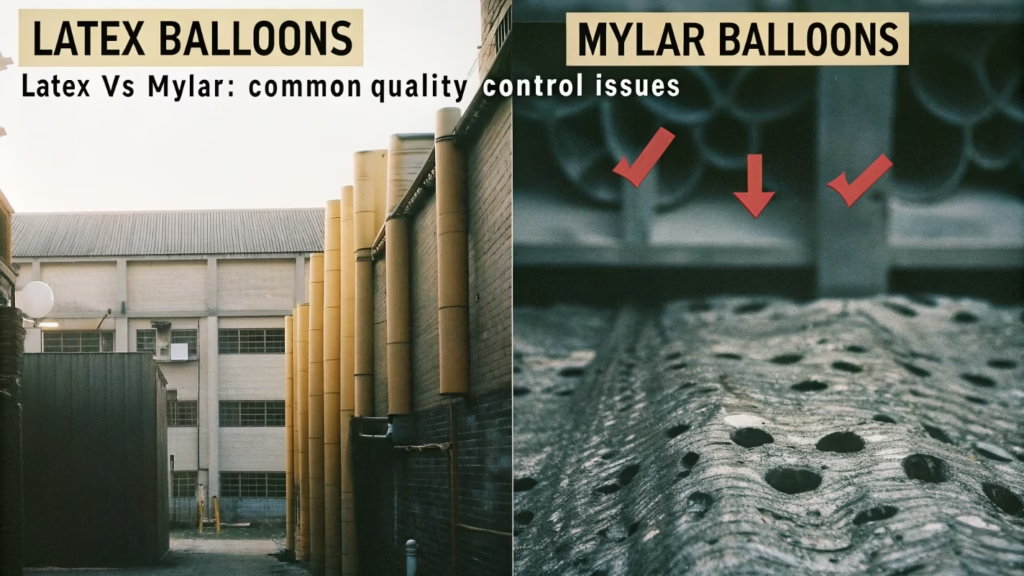
I have visited countless factories over the last decade. I see the same mistakes happen repeatedly on the production line. Sometimes, it is the raw material, and sometimes it is the machine calibration. It is frustrating to watch. You need to know these details before signing your next contract.
What are the most frequent manufacturing defects found in mass-produced latex balloons?
You expect consistency, but latex is a natural product that behaves unpredictably if the factory does not control the environment.
The most common defects include microscopic porosity causing helium loss, brittle texture from rapid drying, and visual flaws like air bubbles or thin spots that lead to immediate bursting.
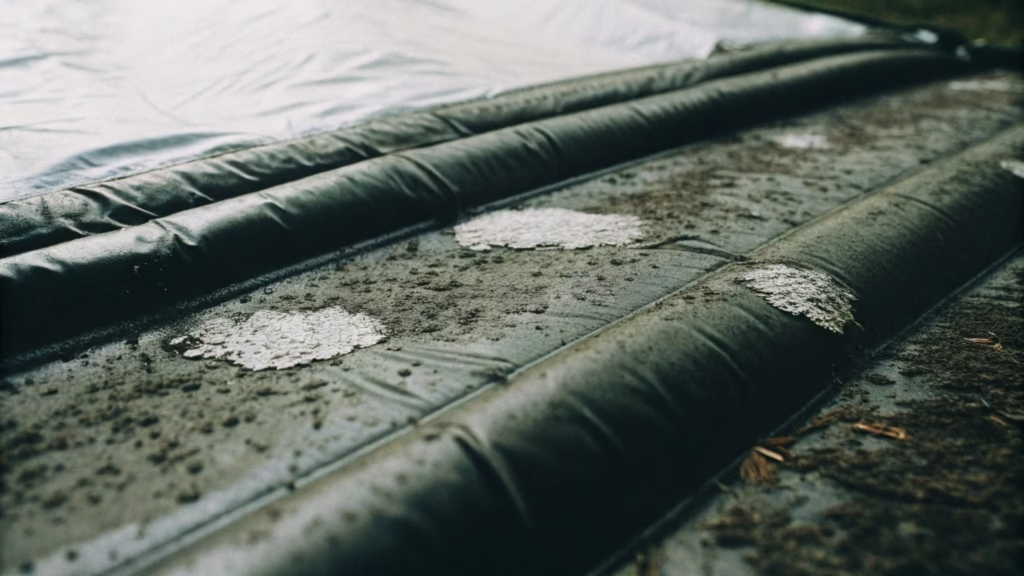
In my experience at AIHUA BALLOON, I have learned that latex quality is not just about how the balloon looks. It is about chemistry and timing. There are four main areas where mass production often fails.
First, there is porosity. Natural latex is porous. It has tiny holes that you cannot see. However, cheap latex uses fillers to save money. These fillers make the microscopic holes bigger. This means the helium escapes much faster. Your customers will complain that the balloons sink after only a few hours.
Second, we see material inconsistencies. This usually happens in the drying oven. If the factory runs the line too fast to make more money, the latex dries too quickly. This makes the rubber brittle. When you inflate a brittle balloon, it does not stretch. It pops. This is a huge safety risk for children.
Third, look for surface defects. You might see small air bubbles trapped in the rubber or visible seam lines that are too thick. These are weak spots. Pressure builds up here, and the balloon explodes.
Finally, you must consider chemical safety5. Lower-grade latex often contains high levels of allergenic proteins. Even worse, some bad factories use cheap curing agents. These release Volatile Organic Compounds (VOCs) like benzene. This smells bad and is very dangerous for health. You must check for these chemical reports.
How do valve failures and seam integrity impact the quality of Mylar foil balloons?
Mylar balloons look stronger than latex, but their construction makes them very fragile during the production process.
Valve failures occur when the self-sealing mechanism is misaligned or weakly bonded. Seam integrity issues happen when heat sealing is uneven, creating leak paths that drain helium within hours.
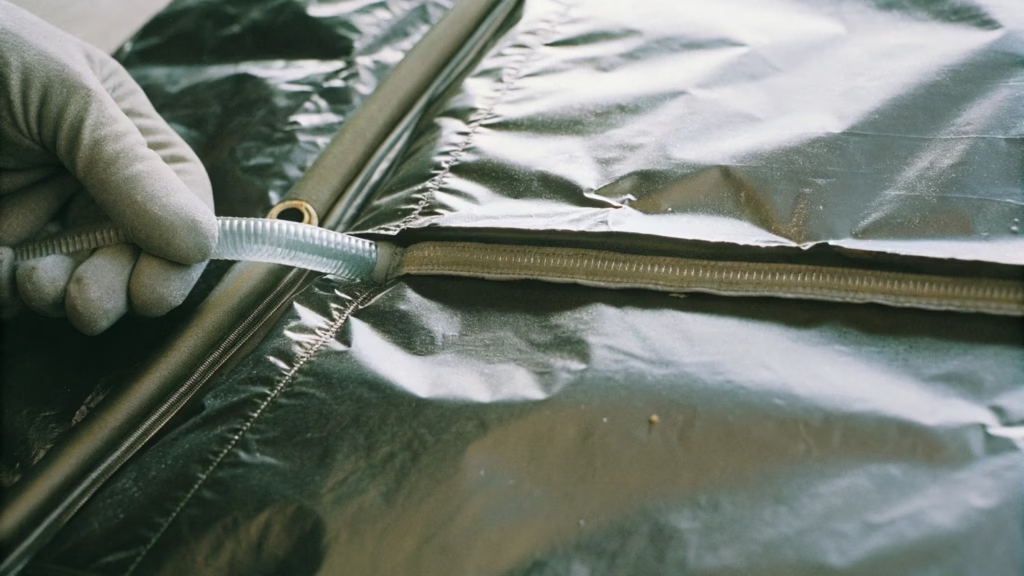
Mylar, or foil balloons, are made of plastic sheets coated with metal. They do not stretch like latex. This means the engineering must be perfect. The two biggest headaches for a procurement manager are the seals and the material quality.
The seal is the most critical part. The factory joins two sheets of foil together using heat. If the machine is too hot, it melts the material too much and makes it weak. If it is too cool, the sheets do not stick together. This creates a "slow leak." The balloon looks fine at first. But the next day, it is soft and falling down. The neck seal is also very tricky. If the internal valve is not placed perfectly straight, the self-sealing glue will not work. The helium will just rush back out.
Then there is the issue of pinholes. Cheap Mylar material is very thin. During manufacturing, tiny dust particles or rough rollers can punch microscopic holes in the foil. You cannot see them with your eyes. But they defeat the purpose of an airtight balloon. This leads to very short float times.
We also need to talk about safety, even if it is not a "defect" in the factory sense. Mylar conducts electricity. If a child lets one go outside and it hits a power line, it can cause a blackout. Also, unlike latex, Mylar is not biodegradable. It hurts wildlife. Good quality control means ensuring the warnings are printed clearly on the balloon to prevent these accidents.
Which specific testing protocols are best for detecting helium leakage in bulk balloon orders?
You cannot inflate every single balloon in a container, so you need a smart sampling strategy to catch bad batches.
The best protocols involve AQL (Acceptable Quality Limit) sampling where a percentage of balloons are inflated and monitored for 24 to 48 hours to measure diameter reduction and lift loss.
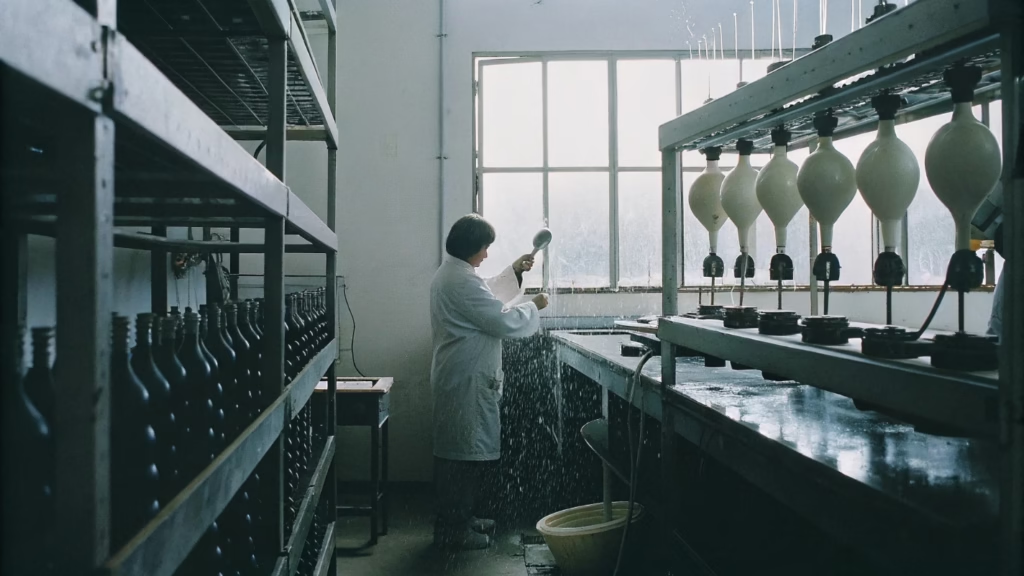
When I manage quality checks, I do not rely on guesses. We need data. There are specific ways to test for leaks that you should demand from your suppliers.
For latex balloons, we use a size retention test. We inflate a sample group of balloons to their full size. We measure the diameter immediately. Then, we leave them in a temperature-controlled room for 24 hours. After that time, we measure them again. If the diameter shrinks by more than a certain percentage (usually around 10-15% for standard latex), the porosity is too high. This means the batch is bad.
For Mylar balloons, the test is different because they do not shrink the same way. We inflate them and check the firmness. We also use a "soap water test" on the seams for random samples. We brush soapy water over the heat seals. If we see bubbles forming, there is a leak.
I also recommend a weight test for Mylar. We weigh the balloon with a precise scale before inflation. Then we inflate it and measure the lift force. If the lift force drops too fast over 24 hours, the gas is escaping.
Here is a simple table to help your inspection team:
| Test Type | Latex Target | Mylar Target |
|---|---|---|
| Inflation Test | 24 Hours | 72 Hours |
| Failure Sign | Diameter reduction | Softness / Wrinkles |
| Leak Location | Surface (pores) | Seams / Valve |
| Sample Size | AQL 2.5 | AQL 1.5 |
How should importers conduct pre-shipment inspections to ensure consistency in balloon color and printing?
Your logo and brand colors must look perfect, or the marketing campaign fails completely before it starts.
Inspectors must use Pantone color matching6 cards under standardized lighting to check consistency. They should also perform tape tests to ensure ink adhesion7 does not peel off the balloon surface.
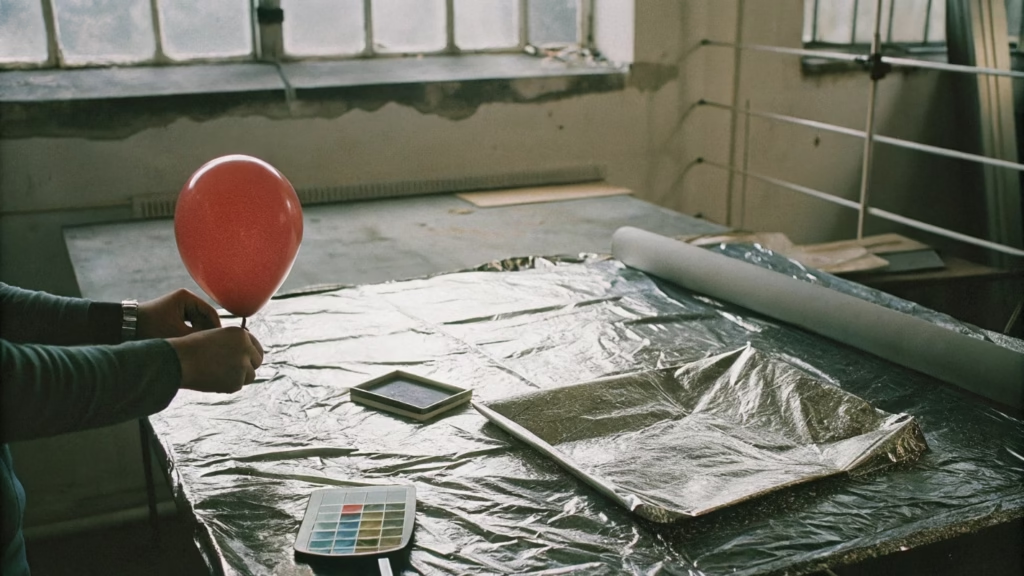
Visual quality is just as important as performance. When you order printed balloons, you are selling an image. There are two main problems we see: color shifting and poor ink adhesion.
First, let's talk about color. Latex absorbs ink differently than Mylar. On latex, the balloon expands. The ink spreads out and looks lighter. A common mistake is checking the color on an uninflated balloon. It looks dark and rich. But when you blow it up, the color fades and looks cheap. Your inspectors must inflate the balloon before comparing it to the Pantone card.
For Mylar balloons, the problem is often adhesion. The surface is slippery plastic. If the ink is low quality, it will rub off. I always tell my clients to use the "Scotch Tape Test." You take a piece of clear tape and press it firmly over the printed logo. Then, you rip it off quickly. If the ink comes off on the tape, the batch fails. The print will not survive shipping or handling.
Also, check for registration errors8. This happens when the different colors of a logo do not line up. It makes the text look blurry. In Mylar printing (gravure), this shouldn't happen, but in Latex (screen print), it is very common if the machine shakes.
The environment matters too. Colors look different under yellow warehouse lights compared to sunlight. Make sure your inspection team uses a light box9 with a standard D65 light source. This ensures that the blue you see is the blue you ordered.
Conclusion
To secure your supply chain, inspect latex for porosity and chemical safety, and check Mylar for valve seals and pinholes. Strict testing ensures safety and profit.
-
Understanding the common issues with defective balloons can help you avoid costly mistakes in procurement. ↩
-
Discovering how porosity impacts latex balloon quality can help you make informed purchasing decisions. ↩
-
Understanding the causes of brittleness in latex balloons can prevent safety risks and product failures. ↩
-
Identifying common surface defects can help you maintain high quality in your balloon products. ↩
-
Learning about chemical safety in latex balloons can help you protect your customers and brand. ↩
-
Learning about Pantone color matching can help ensure your branding is consistent and accurate. ↩
-
Exploring ink adhesion practices can prevent costly printing errors in your balloon orders. ↩
-
Understanding registration errors can help you maintain high-quality printed balloons. ↩
-
Using a light box can ensure accurate color matching, enhancing the visual quality of your balloons. ↩