
Latex vs Mylar Balloons: What are the differences in customization options?
Struggling to choose between latex and mylar for your custom designs1? The wrong choice can mean a failed campaign. Let’s explore which material best suits your unique branding needs2.
Mylar balloons3 are superior for detailed, full-color photographic printing4 and unique shapes. Latex balloons are cost-effective for simpler logos and text, offering a wider range of solid colors. The material's surface and printing process5 determine the best choice for your design's complexity and budget6.
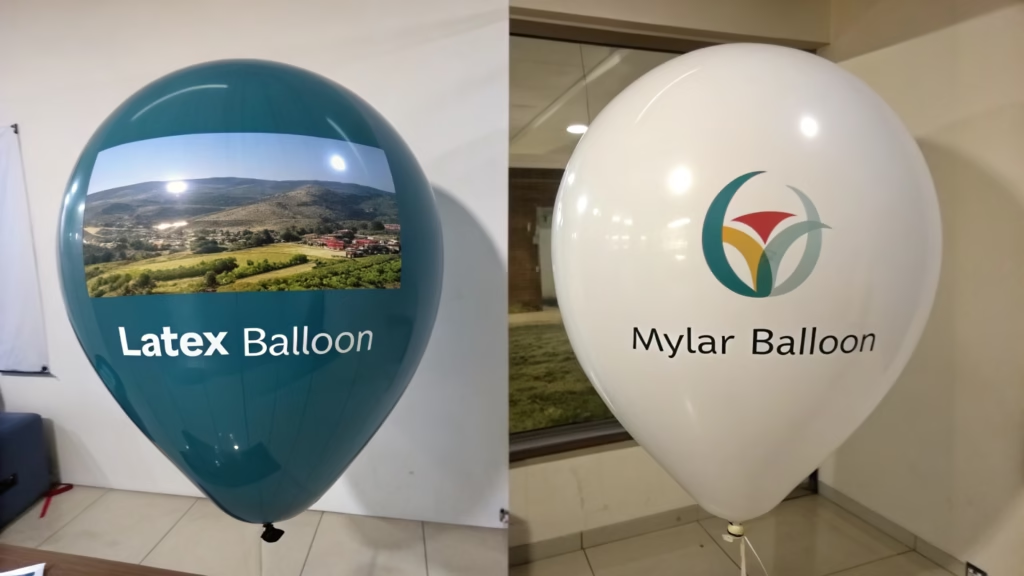
The choice between latex and mylar isn't just about looks. It affects your budget, order size, and even how long your message floats. As someone who has guided countless procurement managers7 through this decision, I know the details matter. Let's break down exactly what you can expect from each type, so you can make the most informed decision for your brand.
Which balloon type supports full-color and photographic printing?
Want to print a complex photo or logo on a balloon? Standard options can look blurry. Mylar balloons provide the crisp, vibrant solution you need for high-quality photographic prints.
Mylar balloons are the ideal choice for full-color and photographic printing. Their non-porous, metallic surface holds ink exceptionally well. This allows for detailed, multi-color designs like gradients and photos, which are difficult to achieve on the more porous, flexible surface of latex balloons.
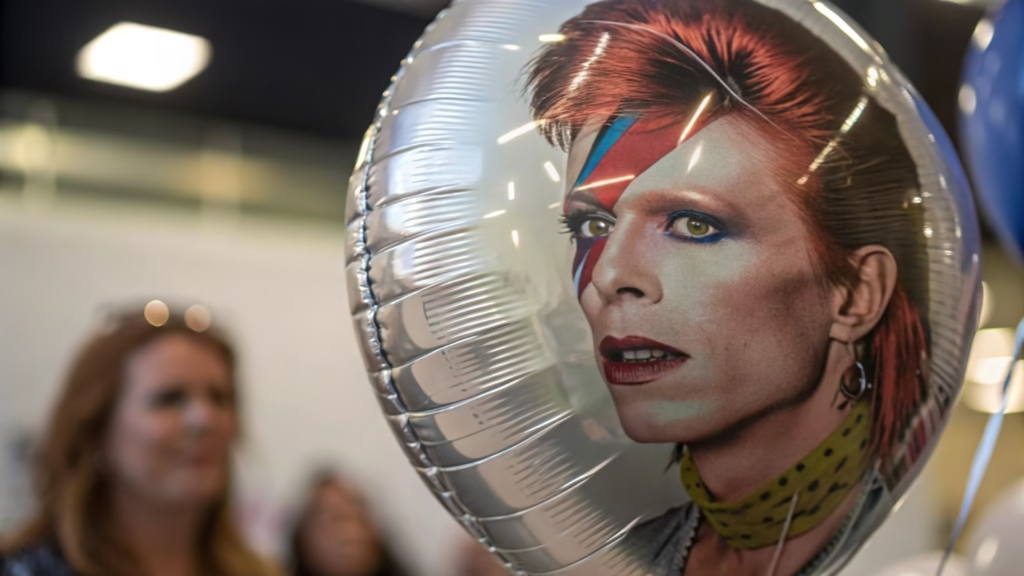
In my experience, the surface of the balloon is the most critical factor for print quality. Think of it like printing on different types of paper. A latex balloon is like trying to print a high-resolution photo on a soft, stretchy fabric. A mylar balloon is like printing on glossy photo paper.
Printing Surface Comparison
The core difference lies in the material itself. Latex is a natural, porous material that stretches. When we print on it, we use screen printing8, which applies one layer of ink at a time. This is perfect for solid colors and simple graphics9. Mylar, or foil, is a non-porous nylon sheet with a metallic coating. This smooth, stable surface is perfect for more advanced digital or rotogravure printing10, which can layer many colors to create a single, detailed image.
Application Differences
| Feature | Latex Balloons | Mylar (Foil) Balloons |
|---|---|---|
| Best For | Logos, text, simple graphics9 | Photos, complex logos11, gradients |
| Print Method | Screen Printing | Digital / Rotogravure Printing |
| Color Capability | Limited solid colors per print | Full-color CMYK process |
| Surface | Porous, stretchable | Non-porous, stable |
For a retail campaign requiring a celebrity's face on a balloon12, mylar is the only way to go. For a corporate event with a two-color logo, latex is a very efficient and classic choice.
How do minimum order quantities (MOQs) differ for custom printing on each material?
Concerned about ordering too many or too few custom balloons? MOQs can vary greatly between materials, impacting both your budget and your inventory management, especially for large retail chains.
Generally, custom-printed latex balloons have much lower MOQs, sometimes starting at just a few hundred units. Mylar balloons, due to their more complex printing setup, often require significantly higher MOQs, typically starting in the thousands. This makes latex more accessible for smaller events or tests.
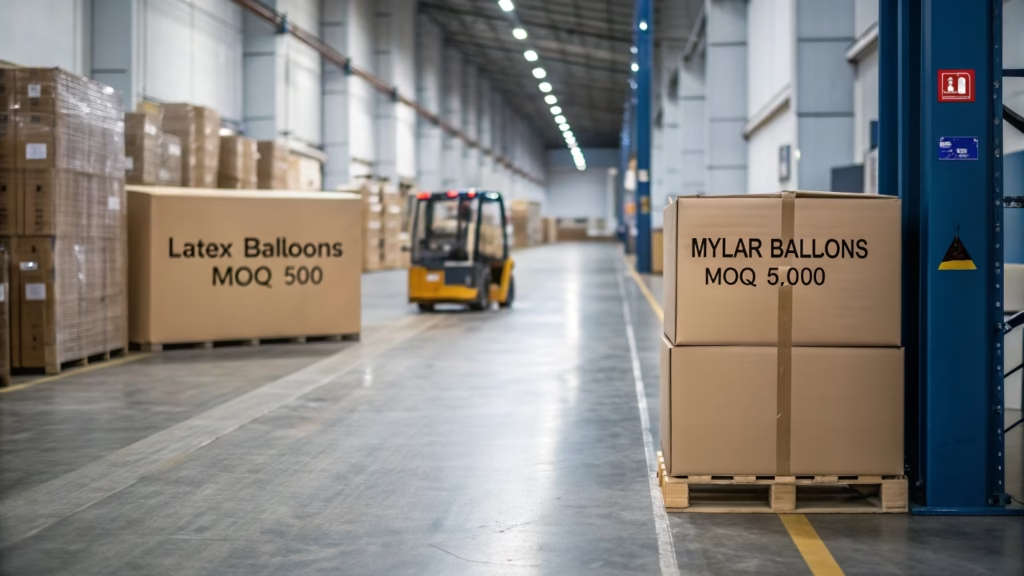
The difference in minimum order quantities (MOQs)13 comes down to the manufacturing and printing process5es. Setting up a print run for balloons isn't as simple as hitting "print" on a computer. Each process involves specific machinery, setup times, and material preparation that influence the minimum viable order. As a manufacturer, we have to balance these setup costs with the final price per unit.
Breakdown of MOQ Factors
For latex balloons, the screen printing8 setup is relatively quick and simple. We create screens for each color in your design. Because the setup is less intensive, we can profitably produce smaller batches. This is why you might see MOQs for custom latex balloons starting around 500 or 1,000 pieces.
Mylar balloons are a different story. The rotogravure or digital printing14 process used for high-quality images involves significant preparation. Creating the printing plates or calibrating the digital printers for a new design is time-consuming and costly. To make the run economically feasible, a larger quantity must be produced. This is why MOQs for mylar often start at 5,000 or even 10,000 units per design.
Strategic Sourcing Considerations
| Balloon Type | Typical MOQ Range | Best For |
|---|---|---|
| Latex | 500 - 5,000 units | Smaller events, test runs, frequent design changes |
| Mylar | 5,000 - 25,000+ units | Large-scale promotions, retail stock, long-term campaigns |
For a procurement manager like Sarah, this is a key strategic point. If she needs balloons for a nationwide, one-time promotion across 500 stores, the high MOQ for mylar is easily met. But for a regional test campaign, custom latex offers the flexibility she needs without over-committing her budget.
Does the printing process affect the durability and float life of each balloon type?
Worried that your custom logo might cause a balloon to pop or deflate early? The printing process can impact a balloon's integrity, but the effect varies greatly by material.
No, the printing process generally does not significantly affect the durability or float life of either balloon type when done correctly. Mylar's print is on the surface, while latex printing ink is designed to stretch with the balloon, preserving its structural integrity and float time.
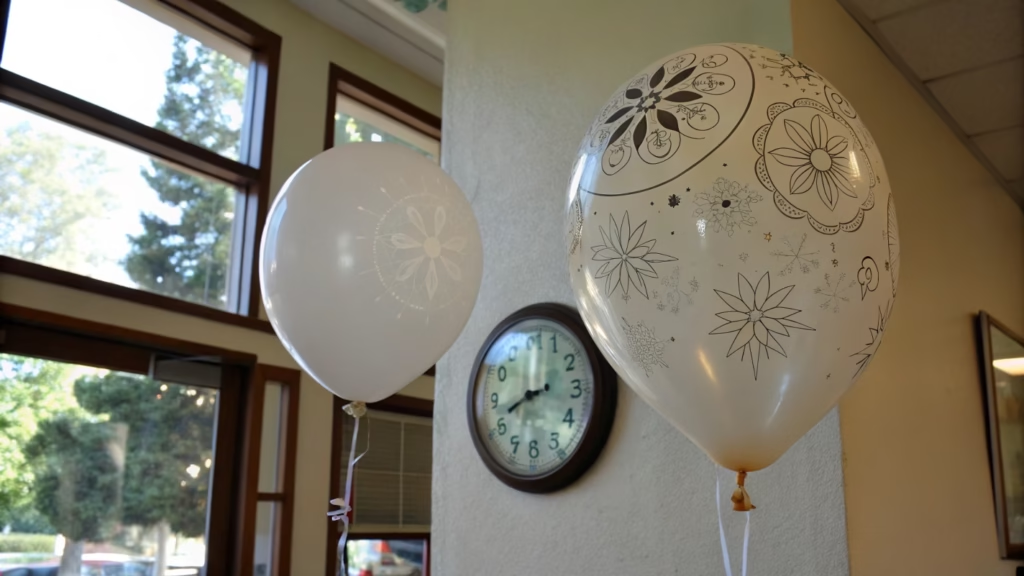
This is a common concern I hear from clients. They invest in a custom design and worry the extra ink will weaken the balloon. In my 37 years in this industry, I can assure you that modern printing techniques are designed specifically to work with the material, not against it. Our quality control processes at AIHUA BALLOON include testing printed balloons to ensure they meet the same rigorous standards as our unprinted products.
Ink and Material Interaction
The key is using the right ink for the right material. For latex balloons, we use a specialized, flexible ink. As the balloon inflates, the ink stretches along with the latex. It doesn't crack or create weak points. The ink layer is incredibly thin and adds negligible weight, so it doesn't impact the balloon's ability to float with helium.
For mylar balloons, the ink is printed onto the non-porous nylon surface before the balloon is sealed. The print is essentially part of the outer layer. It doesn't stretch and has no impact on the balloon's seams or self-sealing valve, which are the main factors determining its float life. The durability remains unchanged because the print does not compromise the balloon's material structure.
Float Life Expectancy of Printed Balloons
| Balloon Type | Helium Float Life (Unprinted) | Helium Float Life (Printed) | Reason for Consistency |
|---|---|---|---|
| Latex (11") | 12-20 hours | 12-20 hours | Flexible ink stretches with the material. |
| Mylar (18") | 3-5 days or more | 3-5 days or more | Ink is part of the surface, no structural impact. |
So, you can be confident that your custom-printed message will last just as long as a standard balloon. The focus should be on the quality of the balloon itself, not whether it has a print on it. A high-quality printed balloon from a certified manufacturer will always outperform a low-quality unprinted one.
What are the cost implications for multi-color designs on latex versus mylar balloons?
Trying to fit a colorful logo into your budget? Adding colors can dramatically change the cost, but how it works is very different for latex and mylar balloons.
On latex balloons, each additional color adds a significant cost because it requires a separate screen and print run. For mylar balloons, the cost difference between a one-color and a full-color photographic design is often minimal, as they typically use a full-color printing process by default.
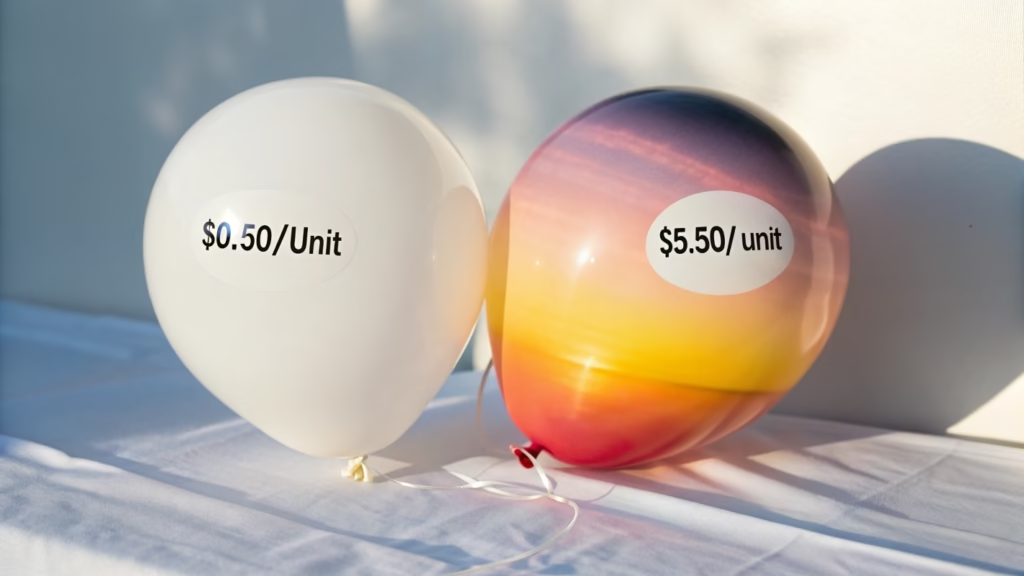
When I'm helping a client with their budget, this is one of the most important distinctions to make. The cost structure for printing on these two materials is fundamentally different. Understanding this helps procurement managers optimize their spend and avoid unexpected costs.
Cost Structure Breakdown
With latex, the screen printing process is additive. The base cost includes a one-color print on one side.
- Each new color requires a new screen to be made and a separate pass on the printing machine.
- Printing on a second side also adds cost, nearly doubling the print fee.
This makes latex very cost-effective for one or two-color designs but increasingly expensive as more colors are added.
With mylar, printing is typically done using a CMYK (Cyan, Magenta, Yellow, Black) process, similar to a standard office printer.
- The setup cost is high, but it's designed to print all colors at once.
- Whether your design uses two colors or two hundred, the printing process is the same. The cost difference is negligible.
This makes mylar the go-to choice for complex, colorful graphics, as you get much more design freedom for a predictable price.
Example Cost Scenario
| Design Details | Latex Balloon Cost | Mylar Balloon Cost | Analysis |
|---|---|---|---|
| 1-Color Logo | Low | High (due to high MOQ) | Latex is more cost-effective for simple, small runs. |
| 3-Color Logo | Medium-High | High | The cost gap narrows. Latex is still cheaper per unit if the MOQ is met. |
| Full-Color Photo | Not Possible | High | Mylar is the only option and the cost is justified by the capability. |
For a large retailer, if the design is simple, latex offers a lower per-unit cost. But if the branding requires a vibrant, multi-color logo to be displayed in hundreds of stores, mylar provides that premium look without a per-color cost penalty, making it a better value overall.
Conclusion
Mylar excels at complex photo printing, while latex is best for simple logos. Your choice depends on design complexity, order quantity, and budget, not on durability concerns.
-
Explore the best materials for creating unique and custom balloon designs. ↩
-
Learn how to select the right balloons that align with your branding strategy. ↩
-
Explore the benefits of Mylar balloons for vibrant, detailed designs that stand out. ↩
-
Learn about the printing techniques that make full-color designs possible on balloons. ↩
-
Learn how the printing process influences the overall quality of balloons. ↩ ↩
-
Get tips on managing your budget effectively for custom balloon orders. ↩
-
Get insights tailored for procurement managers on ordering balloons effectively. ↩
-
Get insights into the screen printing process and its application on balloons. ↩ ↩
-
Learn how to effectively print simple graphics on balloons for events. ↩ ↩
-
Learn about rotogravure printing and its advantages for high-quality balloon designs. ↩
-
Find out which balloon materials are ideal for intricate logo designs. ↩
-
Discover the best practices for printing detailed images like celebrity faces on balloons. ↩
-
Understand how MOQs can impact your budget and inventory for balloon orders. ↩
-
Explore the differences between digital and screen printing for balloon designs. ↩