
Latex vs Mylar Balloons: What are the latest trends in designs and shapes?
Are you struggling to decide between latex and Mylar balloons for your inventory? The market is changing fast. Keeping up with the latest trends can feel like a full-time job.
The biggest trends now combine both latex and Mylar balloons. Latex is popular for organic shapes1 in earthy, custom colors2. Mylar excels in creating bold, personalized shapes like characters and logos. The most modern designs use both to create stunning, large-scale arrangements3 with a high-end feel.
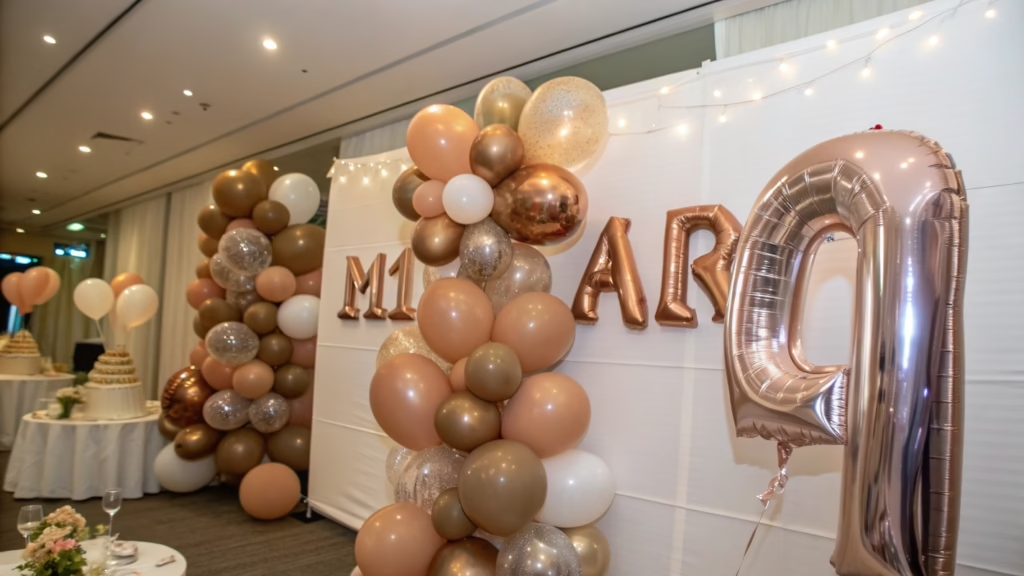
As someone who has been in the balloon industry for over a decade, I've seen trends come and go. But the current focus on combining materials is more than just a passing fad. It represents a shift in how we think about event decor4. It's about creating texture, depth, and a personalized experience for the end customer. Procurement managers who understand how to leverage both materials can offer their clients a significant competitive advantage. This approach allows for greater creativity and meets a wider range of customer demands5, from corporate events to personal celebrations. Let's dive deeper into how you can make the best choice for your business.
Which material offers a better return on investment for bulk orders?
You need to maximize your profit on every order. But calculating the true return on investment6 (ROI) is complex. It involves more than just the initial unit cost from the supplier.
Latex balloons generally offer a lower cost per unit, making them attractive for high-volume orders7 and creating large-scale decor. However, Mylar balloons often have a higher perceived value8 and can be reused, potentially leading to a better long-term ROI depending on your market and customer base.
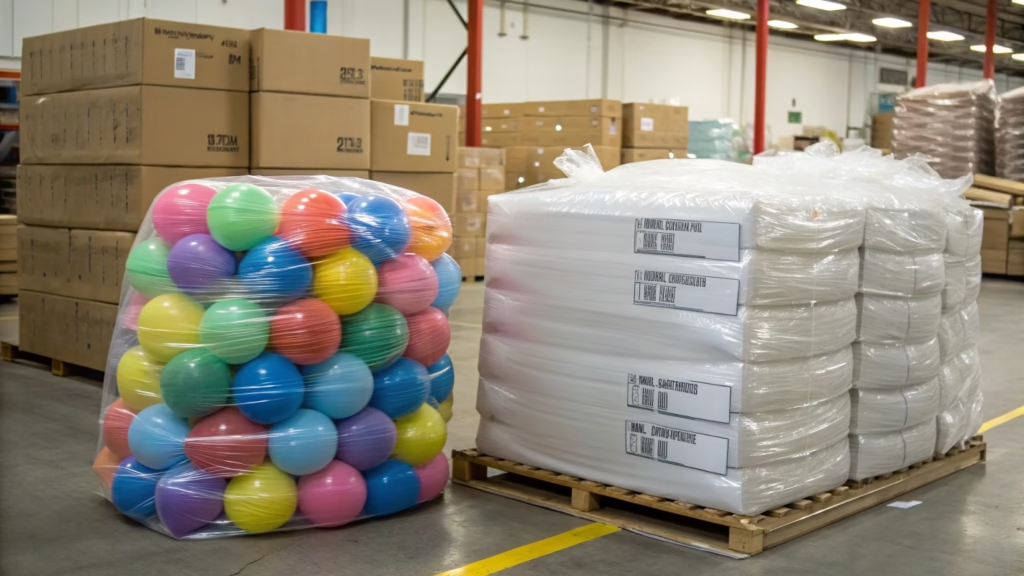
When I work with procurement managers like Sarah, the conversation about ROI always goes beyond the price tag. We need to look at the complete picture. Latex balloons are the workhorse for decorators. They are essential for creating the popular organic arches and garlands. Their low cost allows for volume, which creates a big visual impact. On the other hand, Mylar balloons are the stars. A single, custom-printed Mylar balloon with a company logo or a child's favorite character can command a much higher retail price. It's a specialty item. So, the best strategy is often a blended one. You need the volume of latex for the foundation and the high-value Mylar for the focal points.
Here’s a simple breakdown I use to help clients decide:
| Factor | Latex Balloons | Mylar (Foil) Balloons |
|---|---|---|
| Initial Cost | Lower per unit | Higher per unit |
| Perceived Value | Moderate; value comes from the arrangement | High; seen as a premium, durable product |
| Usage | Volume decor, fillers, organic designs | Centerpieces, custom branding, licensed characters |
| Retail Markup | Lower per balloon, higher for the full design | Higher per balloon |
| Reusability | Single-use (biodegradable9) | Can be deflated and reused |
Ultimately, the best ROI comes from understanding your customers. Do they need large, impressive decor for a one-time event? Latex is your answer. Or are they looking for a memorable, personalized gift that lasts? Mylar is the way to go. Your inventory should reflect both needs.
How do their durability and shelf-life compare for international shipping?
You are managing a global supply chain. You can't afford to have products arrive damaged or degraded. The material's resilience during shipping and storage is a critical factor for your business.
Mylar balloons are more durable and less sensitive to temperature changes during shipping, offering a longer shelf-life of a year or more. Latex balloons are more sensitive to heat and UV light, so they require climate-controlled storage and have a typical shelf-life of around 6-12 months.
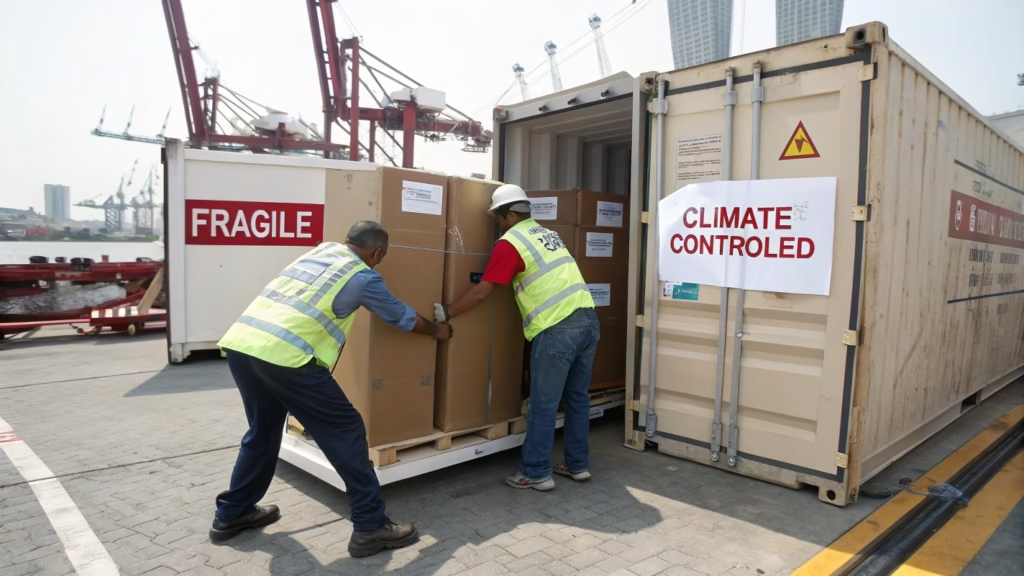
I've seen firsthand how important proper handling is, especially for international shipments. At AIHUA BALLOON, we've developed specific packaging protocols to protect our products on their long journey. For latex balloons, we use packaging that limits exposure to UV light and air. We also advise our partners on ideal warehouse conditions—cool, dark, and dry. Mylar balloons are much more forgiving. They are made from a non-porous nylon sheet coated with metallic polyester. This makes them tough. They can handle the temperature fluctuations in a shipping container much better than latex can. They also don't oxidize or break down in the same way. This durability is a major reason why Mylar is so popular for high-value printed balloons that might sit in a warehouse for a while before a specific seasonal event. A small puncture will ruin a latex balloon, but Mylar is much more resistant to minor damage. It's a key consideration for reducing loss and ensuring consistent quality upon arrival.
Here's a comparison:
| Feature | Latex Balloons | Mylar (Foil) Balloons |
|---|---|---|
| Material | Natural Rubber Latex | Nylon sheet with metallic coating |
| Shelf-Life | 6-12 months (requires proper storage) | 1+ year |
| Shipping Resilience | Sensitive to heat, UV, and pressure changes | Very resilient, less prone to damage |
| Helium Retention | 8-12 hours (standard size) | 1-2 weeks or more |
| Storage Needs | Cool, dark, dry environment | Standard warehouse conditions are fine |
For any large-scale buyer, this means Mylar offers more flexibility in your supply chain, while latex requires stricter inventory management to ensure freshness and quality.
What are the custom printing capabilities for each material at a wholesale level?
Your business needs to meet the growing demand for personalized products. From corporate logos to custom birthday messages, printing capabilities are essential. You need to know what is possible for each material.
Mylar balloons offer superior, photo-quality custom printing with multiple colors and intricate details using processes like rotogravure. Latex balloons can be screen-printed with simpler logos and text, usually in one or two solid colors, making them better for basic branding and promotional giveaways.
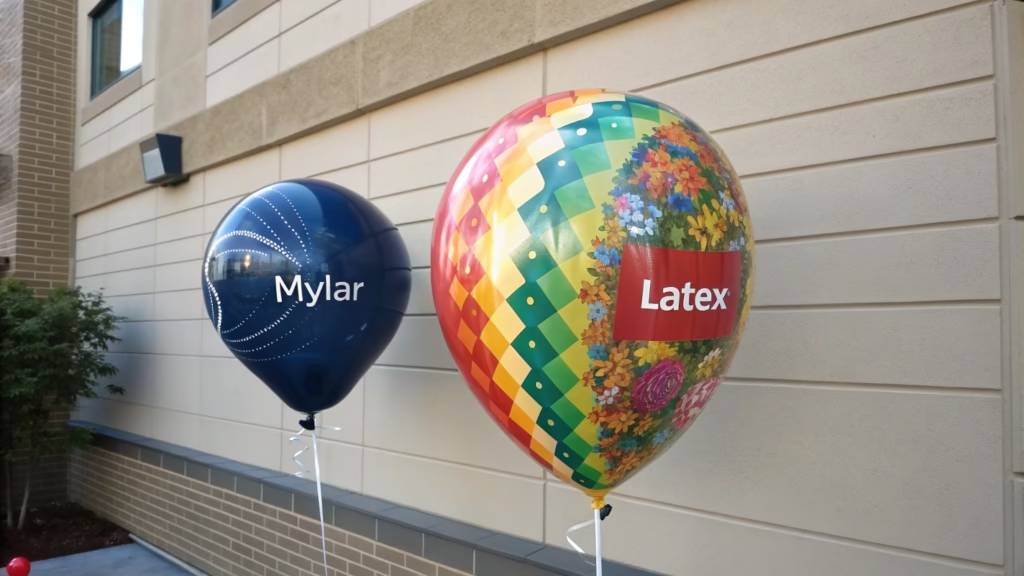
This is an area where the two materials are truly different. I often explain it to clients this way: latex printing is like using a stamp, while Mylar printing is like using a high-definition printer. With latex, we use a screen-printing process. We can print a solid, clean logo on the surface, which is perfect for mass giveaways at events. It's fast and cost-effective for simple designs. However, the balloon's surface stretches when inflated, which can slightly distort the image. For Mylar, the possibilities are almost endless. The printing happens when the material is still a flat sheet, before it's cut and sealed into a balloon shape. This allows for incredibly detailed, full-color printing that covers the entire surface, edge to edge. We can print complex photographs, gradients, and intricate patterns. This capability is why Mylar is the go-to choice for licensed characters, branded marketing campaigns, and photo balloons. The minimum order quantities for custom Mylar are typically higher due to the complex setup, but the final impact is unmatched.
| Printing Aspect | Latex Balloons | Mylar (Foil) Balloons |
|---|---|---|
| Process | Screen Printing | Rotogravure or Flexographic Printing |
| Color Capability | 1-2 solid colors are standard; more is complex | Full color, photo-quality, gradients |
| Detail Level | Best for bold text and simple logos | High-resolution, intricate details, edge-to-edge designs |
| Best Use Case | Promotional giveaways, simple branding | Retail products, corporate marketing, photo gifts |
| MOQ | Generally lower | Generally higher due to setup costs |
So, when planning a custom order, your choice depends entirely on the desired outcome. For simple, high-volume branding, latex is a great choice. For a premium, high-impact retail product, Mylar is the only way to go.
What are the sourcing considerations for biodegradable vs. reusable options?
Sustainability is no longer a niche concern. Your customers care about the environmental impact of their purchases. You need to source products responsibly and communicate their benefits clearly.
Latex balloons are a biodegradable option, as they are made from the sap of rubber trees, a natural material. Mylar balloons are not biodegradable but are reusable, offering an eco-friendly angle through multiple uses. Sourcing decisions should prioritize suppliers with certifications like Sedex to ensure ethical practices.
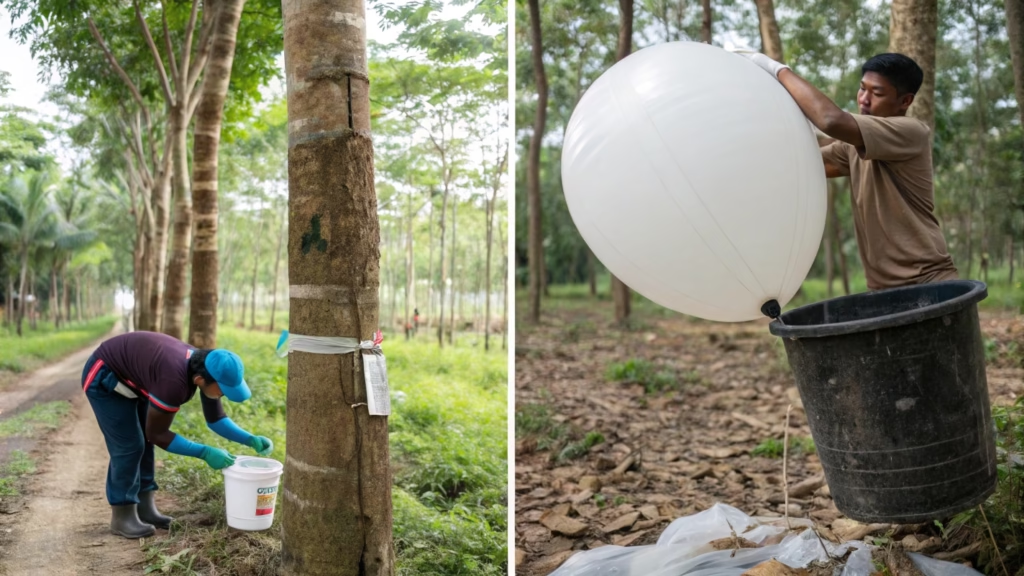
As a manufacturer, this is a topic I'm very passionate about. We take our responsibility seriously. We source our latex from sustainable rubber tree farms. The process of tapping a rubber tree is similar to tapping a maple tree for syrup and doesn't harm the tree. When a latex balloon is disposed of properly, it biodegrades at about the same rate as an oak leaf. This is a powerful selling point for environmentally conscious consumers and event planners10. Mylar, on the other hand, is essentially a type of plastic. It won't biodegrade. However, its value lies in reusability. We educate our partners on how to properly deflate and store Mylar balloons so they can be used again and again. This message of "reduce and reuse" resonates with a different segment of the market. When sourcing, I always tell buyers to look beyond the product itself. Ask about the manufacturer's credentials. Are they Sedex audited? Do they have ISO certifications? These things show a commitment to ethical and responsible manufacturing, which is just as important as the material's environmental profile. It's about partnering with suppliers who share your company's values.
| Consideration | Latex Balloons | Mylar (Foil) Balloons |
|---|---|---|
| Source Material | Natural Rubber Tree Sap | Nylon, Polyester (Plastic) |
| End-of-Life | Biodegradable | Landfill (Not biodegradable) |
| Eco-Friendly Angle | "Natural and Biodegradable" | "Durable and Reusable" |
| Consumer Message | Dispose of responsibly like other organic waste. | Deflate, store, and reuse for another event. |
| Supplier Vetting | Look for sustainable sourcing practices. | Look for quality that ensures reusability. |
The key is to offer both options and to educate your customers. Let them choose the solution that best fits their values.
Conclusion
The best strategy is not about choosing one material over the other. It's about using the unique strengths of both latex and Mylar to meet modern design trends and customer demands.
-
Learn techniques for crafting stunning organic shapes using balloons for your event designs. ↩
-
Find out how to choose and create custom colors for your balloon arrangements. ↩
-
Get tips on creating impressive large-scale balloon displays for events. ↩
-
Stay updated on the latest trends in balloon decor for events to enhance your offerings. ↩
-
Learn strategies to effectively meet diverse customer demands in the balloon market. ↩
-
Understand the factors that influence ROI in the balloon industry for better inventory decisions. ↩
-
Learn strategies for managing high-volume balloon orders effectively. ↩
-
Discover how perceived value impacts pricing and customer choices in the balloon market. ↩
-
Learn about the biodegradability of latex balloons and their environmental impact. ↩
-
Gain insights into how event planners select balloons to create memorable experiences. ↩