
Maximizing Your Investment: How Should You Properly Store Your Unused Latex Balloons?
Have you invested in premium latex balloons1, only to find them degraded? Improper storage wastes money and inventory. But simple changes can protect your stock and ensure quality every time.
To properly store unused latex balloons, keep them in a cool, dry, and dark place. Use airtight containers2 like sealed bins3 or ziplock bags to shield them from heat, sunlight, and moisture. This maintains their elasticity and vibrant color, ensuring they are ready for use.
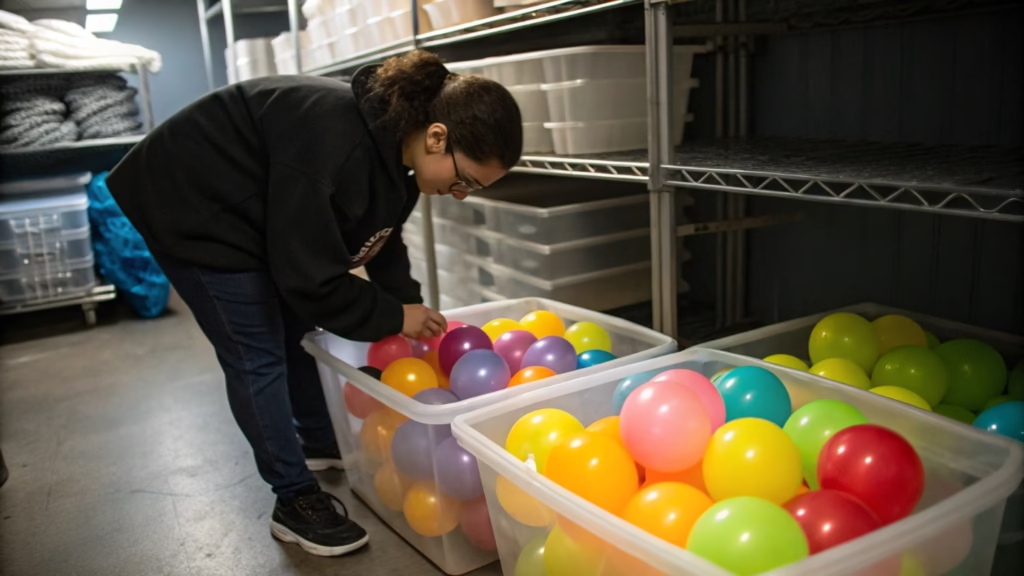
As a procurement manager, you handle massive inventories. A single bad batch of balloons isn't just a loss; it's a risk to your company's reputation. The quality of your products depends on how they are cared for long before they reach the customer. In my 10+ years in the balloon industry, I've seen firsthand how a few simple storage rules can make or break inventory quality. Protecting your investment is about more than just buying good products; it’s about maintaining their integrity. Let's look at the specific steps you can take to ensure every balloon performs as expected.
What are the ideal temperature and humidity levels for balloon storage?
Unstable room conditions are a silent threat to your balloon inventory4. Guessing the right environment can lead to brittle or sticky balloons, a costly mistake for your business.
The ideal storage temperature for latex balloons is between 65-75°F (18-24°C). Keep humidity low by storing them in a climate-controlled room. Airtight containers are excellent for blocking moisture, which can cause the latex to break down and become sticky over time.
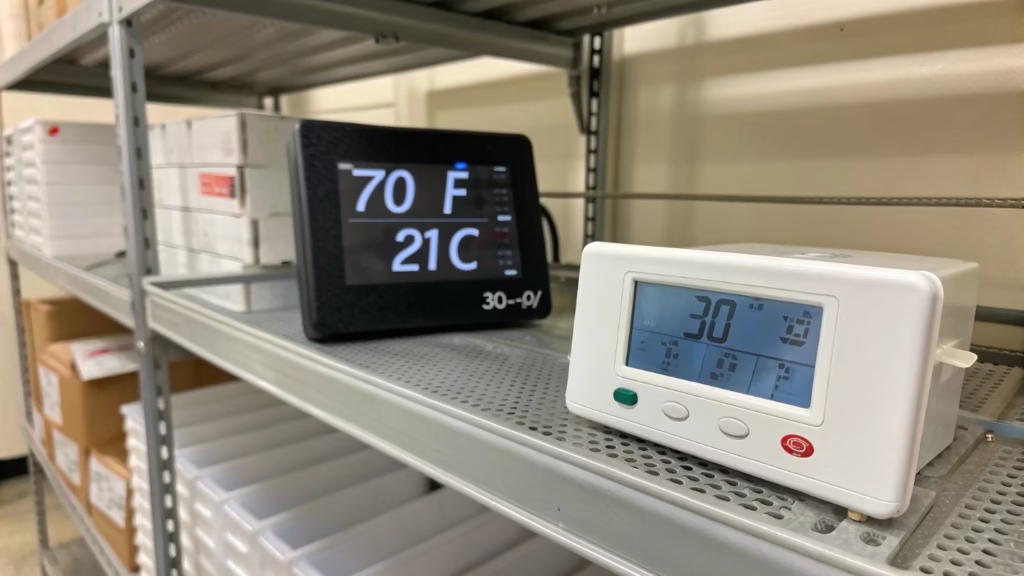
Latex is a natural material5, and like any natural product, it is sensitive to its environment. Temperature and humidity are the two most critical factors. Think of it this way: high temperatures speed up the oxidation process6, which is the primary reason latex becomes brittle and loses its stretch. Storing balloons in a hot warehouse is like leaving them out in the sun; the material degrades much faster. On the other hand, extremely cold temperatures, like in a freezer, can also make the latex brittle and prone to shattering when you try to inflate them.
Humidity is just as damaging. Moisture in the air can cause the latex to soften and break down. It can also make the balloons stick together, which is a nightmare to deal with when you're preparing for a large event or order. To prevent this, adding a silica gel packet7 to each airtight container is a great professional tip. It absorbs any excess moisture, creating a perfect micro-environment for your stock. Consistency is key for large-scale operations. Ensuring all your storage facilities maintain these conditions prevents unpleasant surprises and guarantees uniform quality across your entire supply chain.
Temperature and Humidity Impact on Latex Balloons
| Condition | Temperature | Humidity | Effect on Balloons |
|---|---|---|---|
| Ideal | 65-75°F (18-24°C) | Low | Preserves elasticity and color. |
| Too Hot | Above 80°F (27°C) | Any | Accelerates oxidation, makes latex brittle. |
| Too Cold | Below 50°F (10°C) | Any | Can make latex brittle and prone to popping. |
| Too Humid | High | High | Causes latex to degrade and stick together. |
How does exposure to light and heat affect the shelf life of latex balloons?
You might think storing balloons indoors is enough, but hidden threats like sunlight and heat sources can ruin your stock. This invisible damage leads to faded colors and higher breakage rates.
Light and heat severely shorten a balloon's shelf life8. Sunlight's UV rays break down the latex, causing fading and brittleness. Heat accelerates this degradation. The best practice is to store balloons in dark, cool places away from windows and heat sources to preserve their quality.
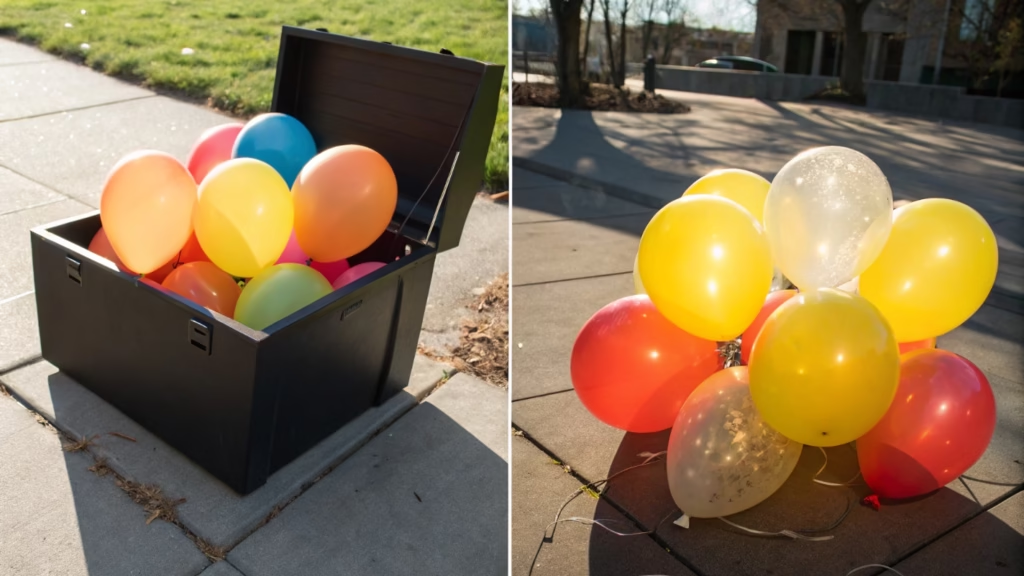
Sunlight is one of the biggest enemies of latex balloons. The ultraviolet (UV) radiation in sunlight attacks the molecular structure of the latex. It breaks down the polymer chains that give the balloon its strength and elasticity. The first sign of UV damage is fading color, but the more serious problem is the loss of structural integrity. A balloon exposed to sunlight will become brittle and pop much more easily. This isn't just limited to direct sunlight; even prolonged exposure to indoor fluorescent lighting can have a similar, albeit slower, effect.
Heat works in a similar way by accelerating the chemical reactions that degrade the latex. This includes not only heat from the sun but also from indoor sources like radiators, vents, or simply being stored in a hot attic or garage. I once visited a warehouse where a client stored their balloons on shelves next to a large, south-facing window. The boxes closest to the window contained balloons that were noticeably faded and weak. We tested a few, and they popped at a much lower inflation point than the ones stored in a darker corner of the same room. This experience highlighted just how crucial it is to control the storage environment9.
Light and Heat Exposure Effects
| Exposure Type | Effect on Color | Effect on Elasticity | Impact on Shelf Life |
|---|---|---|---|
| Dark, Cool Room | Color remains vibrant | Elasticity is maintained | Maximized |
| Indoor Lighting | Slow, gradual fading over time | Minor loss over a long period | Reduced |
| Direct Sunlight | Rapid fading and discoloration | Becomes brittle and weak quickly | Severely shortened |
| Near Heat Source | Can cause discoloration | Rapid loss of elasticity | Severely shortened |
Should balloons be kept in original packaging or moved to airtight containers?
You have your balloon inventory, but is the original packaging enough? Leaving them in their bags might seem convenient, but it exposes them to elements that degrade quality over time.
For optimal protection, move balloons from their original packaging to airtight containers. While manufacturer bags offer some defense, sealed bins or ziplock bags provide superior protection from air, dust, and humidity, which are the main causes of latex degradation and brittleness.
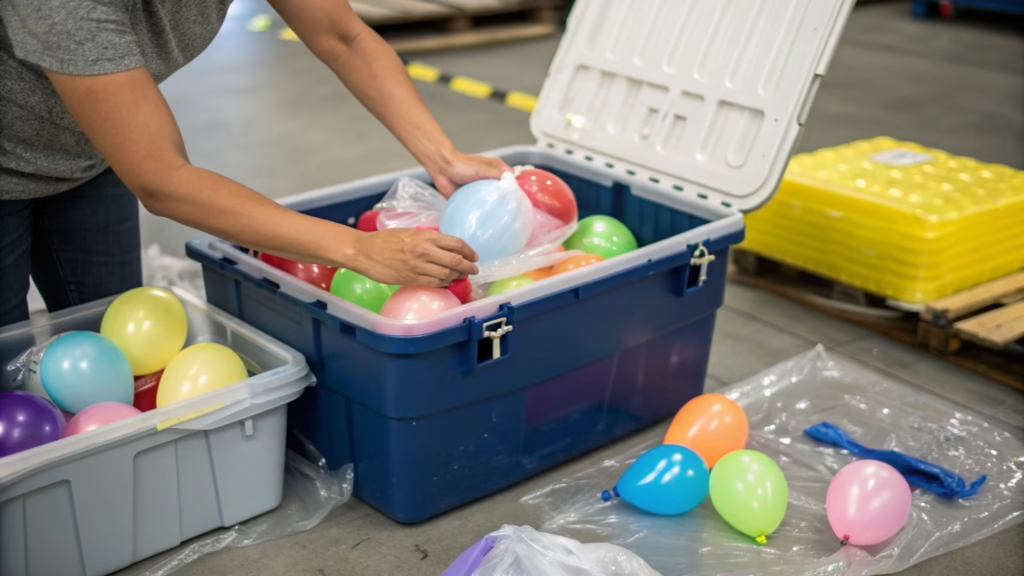
The original packaging from the manufacturer is designed for shipping and initial sale, not for long-term storage10. These bags are often not completely sealed and can let in air, dust, and moisture over time. Air exposure leads to oxidation, which, as we've discussed, is a primary cause of latex breakdown. Dust can settle on the balloons, making them difficult to clean and potentially affecting their appearance. That's why I always advise my clients to invest in secondary storage solutions.
Airtight containers, like plastic storage bins with secure lids or large ziplock bags, are a game-changer. They create a stable environment that shields your inventory from the outside world. I recommend sorting balloons by color and size into separate bags or compartments within a larger bin. This not only protects them but also makes finding what you need incredibly efficient. Imagine preparing for a huge order and knowing exactly where every single color and size is located. It saves time and prevents unnecessary handling of the other stock. For very long-term storage, some businesses even use vacuum-sealed bags11 to remove all air, offering the ultimate protection against oxidation. This simple step of re-homing your balloons is a small effort for a huge return in quality and longevity.
Storage Method Comparison
| Storage Method | Air/Dust Protection | Moisture Protection | Ease of Organization | Best For |
|---|---|---|---|---|
| Original Packaging | Minimal | Minimal | Poor | Short-term storage (weeks) |
| Ziplock Bags | Good | Good | Good | Medium-term storage; sorting |
| Airtight Bins | Excellent | Excellent | Excellent | Long-term, bulk storage |
| Vacuum-Sealed Bags | Ultimate | Ultimate | Fair | Archival/very long-term |
What is the expected shelf life of properly stored latex balloons before they degrade?
You follow all the storage rules, but how long will your balloon stock actually last? Not knowing the shelf life can lead to ordering too much or using degraded products.
Properly stored latex balloons can have a shelf life of one to two years. When kept in a cool, dark, dry place inside airtight containers, they will retain their color and elasticity12. However, always use the "First-In, First-Out13" method to ensure optimal performance.

Even under ideal conditions, latex is a natural product and will eventually degrade. However, by controlling the environment, you can significantly extend its usable life. From our experience at AIHUA BALLOON, we've found that high-quality latex balloons, when stored correctly, remain in excellent condition for at least a year, and often up to two years. After this period, you may start to see a gradual decline in quality. The latex might feel a little stiffer, or the colors might not be as vibrant. The balloons may still be usable, but their performance might not be as reliable, with a slightly higher chance of popping during inflation.
This is why implementing a "First-In, First-Out" (FIFO) inventory system is so important for any business managing a large stock of balloons. Label your storage containers with the date you received the inventory. When you need to pull stock, always use the oldest inventory first. This rotation ensures that you are always using your balloons while they are at their peak quality and minimizes waste from expired products. For a procurement manager like Sarah, this system is not just about quality control; it's a smart financial strategy that maximizes the return on her inventory investment and prevents losses from expired stock.
Conclusion
Properly storing your latex balloons in a cool, dark, dry, and airtight environment is a simple, low-cost way to protect your investment, maintain quality, and ensure reliability for every event.
-
Explore the advantages of premium latex balloons for durability and vibrant colors. ↩
-
Discover how airtight containers can protect your balloons from environmental damage. ↩
-
Find out why sealed bins are a great choice for protecting your balloon inventory. ↩
-
Get tips on managing your balloon inventory for optimal performance. ↩
-
Learn about the characteristics of latex and how they affect balloon storage. ↩
-
Understand the oxidation process and its impact on the longevity of latex balloons. ↩
-
Learn how silica gel packets can absorb moisture and protect your balloons. ↩
-
Get insights on how long latex balloons can last when stored correctly. ↩
-
Explore how different storage conditions can impact the quality of your balloons. ↩
-
Explore effective strategies for ensuring the longevity of your balloon stock. ↩
-
Learn how vacuum-sealed bags can provide ultimate protection for your balloons. ↩
-
Discover how to maintain the color and elasticity of your balloons. ↩
-
Explore the FIFO method to optimize your balloon inventory management. ↩