Planning an Inclusive Celebration: What Do You Need to Know About Latex Allergies and Balloons?
Planning a celebration can be complex. When a guest has a latex allergy1, a simple balloon can pose a serious risk, turning a happy event into a medical emergency2.
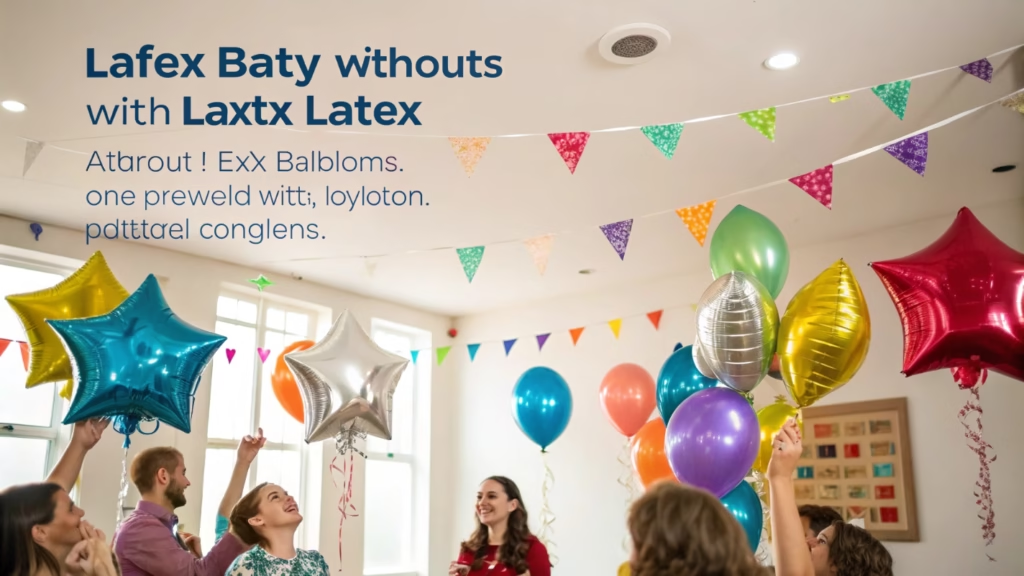
To host a truly inclusive celebration, you must avoid traditional latex balloons. Instead, choose latex-free alternatives3 like Mylar (foil) or plastic balloons4. Also ensure vendors and staff do not use latex gloves, as airborne particles can trigger severe allergic reactions5 even without direct contact.
It’s easy to overlook something as common as a balloon. I’ve seen it happen countless times in my 37 years in this industry. But for businesses, especially those in retail or event services, this small detail can have big consequences. A customer’s safety and your company's reputation are on the line. It's crucial to understand these risks to protect everyone involved. Let's look deeper into what this means for your business operations and how you can make safer choices.
What are the safety and liability concerns for businesses using latex balloons?
You might use latex balloons for events and promotions, seeing them as harmless fun. But an allergic reaction on your premises could lead to a medical emergency and legal trouble.
Businesses face safety risks from allergic reactions, ranging from skin rashes to life-threatening anaphylaxis. Liability concerns include potential lawsuits, reputational damage6, and non-compliance with safety regulations7. Implementing a clear allergy-aware policy8 is essential to mitigate these risks and protect your brand and customers.
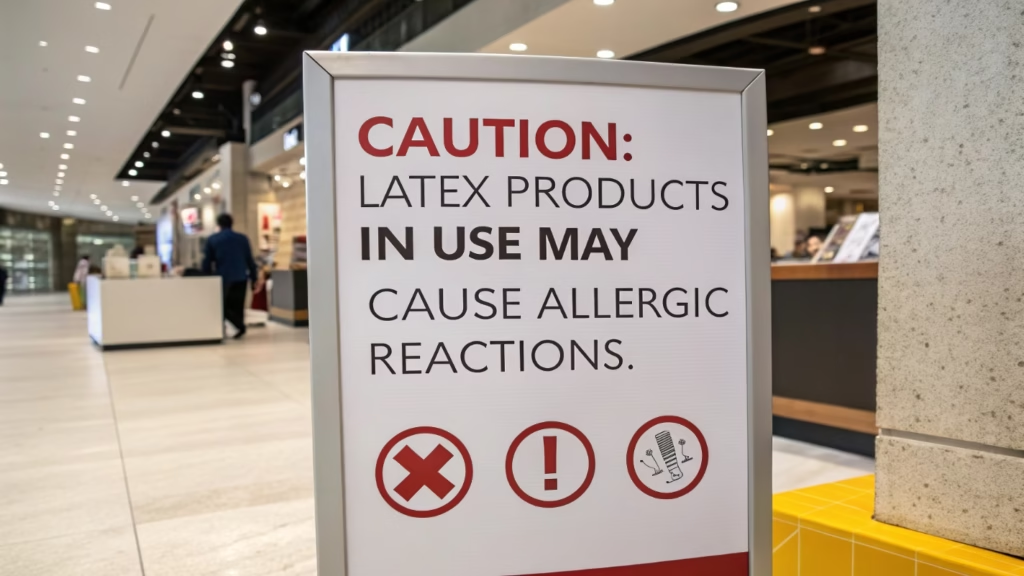
As a business owner or manager, you have a "duty of care9" to provide a safe environment for your customers and staff. This isn't just a moral obligation; it's a legal one. When you use latex products, you introduce a potential hazard. If a customer has a severe allergic reaction, your business could be held liable for negligence, especially if you failed to provide warnings or safer alternatives. From my experience working with large retailers, I know that legal and reputational risks are taken very seriously. A single incident reported on social media can undo years of brand building. It paints your company as careless and non-inclusive. The financial and reputational costs can be staggering. To safeguard your business, it’s vital to understand and address these concerns head-on.
| Concern Type | Description | Business Impact |
|---|---|---|
| Safety Risks | Allergic reactions can range from mild skin irritation to severe, life-threatening anaphylactic shock. | Potential for medical emergencies on-site; harm to customers. |
| Legal Liability | Failure to provide a safe environment can lead to negligence claims10 and lawsuits. | High legal fees; costly settlements; increased insurance premiums. |
| Reputational Risk | An incident can lead to negative press and social media backlash11, damaging brand image. | Loss of customer trust; decline in sales; perception as non-inclusive. |
Which non-latex balloon alternatives are commercially available for bulk purchase?
You need to source decorations in large volumes but must avoid latex for safety reasons. Finding reliable, high-quality, and cost-effective alternatives can feel like an overwhelming task.
For bulk purchasing12, Mylar (foil) balloons are the most popular and widely available latex-free alternative. Specialized plastic balloons, often made from materials like polyethylene, are another excellent option. These alternatives are durable, come in various designs, and are completely safe for individuals with latex allergies.
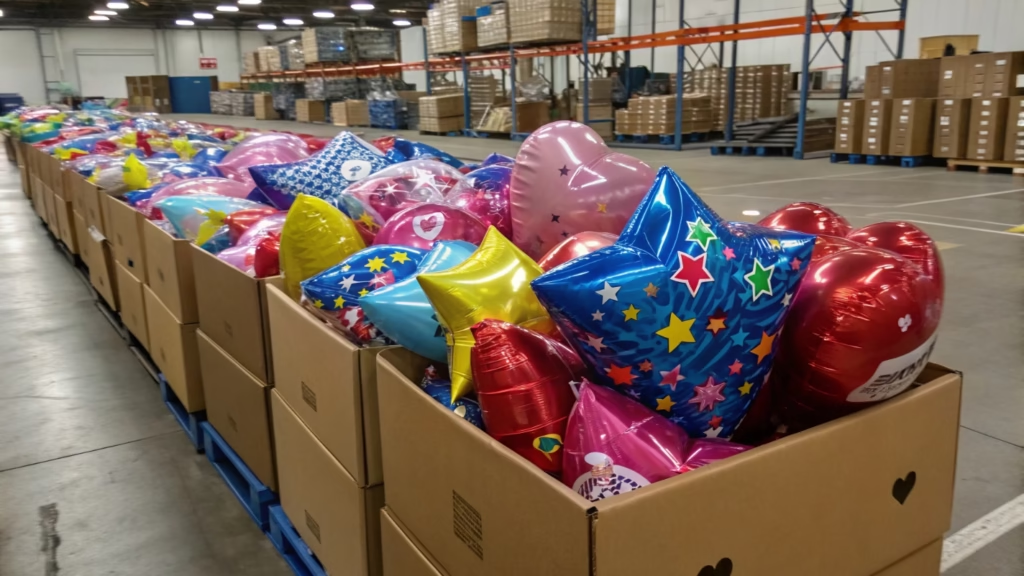
In my role at AIHUA BALLOON, I frequently advise procurement managers like Sarah Chen on sourcing the right products. When latex is off the table, the conversation immediately turns to two primary alternatives: Mylar and plastic balloons. Mylar, which is actually a brand name for a type of metallized polyester film, is the market leader. These balloons are what most people know as "foil" balloons. They are fantastic because they hold helium for weeks, come in thousands of designs, and can be printed with custom logos, making them perfect for corporate branding and large-scale events. Then you have plastic balloons. These are often made from a stretchy, durable plastic that allows them to be inflated to a near-perfect sphere. They are crystal clear or can be colored, and they also have a long float time. Both are excellent choices for creating a vibrant, festive, and most importantly, safe atmosphere for everyone.
| Balloon Type | Material | Key Features for Bulk Buyers |
|---|---|---|
| Mylar (Foil) | Nylon sheet coated with aluminum | Long float time, highly customizable, wide variety of shapes/sizes. |
| Plastic (Bubble) | Stretchy, transparent plastic (e.g., PVC) | Very durable, wrinkle-free, long-lasting, often spherical. |
| Vinyl Balloons | Polyvinyl chloride (PVC) | Extremely large sizes available, durable for outdoor use. |
How can you source and verify reliable suppliers of hypoallergenic balloons?
You know you need hypoallergenic balloons, but the global supply chain is complex. Partnering with the wrong supplier could lead to quality issues, delivery delays, or even mislabeled products.
Source reliable suppliers by attending industry trade shows, using B2B platforms like Alibaba, and seeking referrals. Verify them by requesting key certifications like ISO 9001, SEDEX, and BSCI, and ask for comprehensive product testing reports that confirm materials are latex-free and meet safety standards.

Finding a trustworthy supplier is the most critical step for any procurement manager. I’ve built my career on forging these partnerships. Your first step should be to look for established manufacturers with a proven track record. Ask potential suppliers for their credentials upfront. At AIHUA BALLOON, we proudly provide our ISO 9001 and SEDEX reports because they demonstrate our commitment to quality and ethical practices. Don't just take their word for it; ask for product specification sheets and material safety data sheets13 (MSDS) to confirm the materials used are genuinely latex-free. A reliable supplier will have no issue providing this documentation. I also recommend ordering samples to personally inspect the quality before placing a large order. A good partner will be transparent and eager to prove their products meet your high standards for safety and quality. This diligence protects your customers and your company's bottom line.
Key Verification Steps
- Request Certifications: Ask for copies of internationally recognized certifications like ISO 9001 (quality management) and SEDEX or BSCI (ethical sourcing).
- Demand Product Reports: Require material safety data sheets and third-party lab test results confirming the balloons are hypoallergenic and compliant with safety standards like EN71.
- Conduct a Factory Audit: If possible, arrange a visit or a third-party audit of the manufacturing facility to assess their production processes and quality control measures firsthand.
How can promoting an allergy-aware policy enhance your venue or event service's brand?
You're already focused on customer service. But you might not realize how an allergy-aware policy can become a powerful marketing tool, setting you apart from competitors.
Promoting an allergy-aware policy8 demonstrates a commitment to customer well-being and inclusivity. This builds trust and loyalty, attracting a wider customer base, including the millions of families managing allergies. It enhances your brand's reputation as a safe, caring, and responsible business leader.

In today's market, customers choose brands that align with their values. Safety and inclusivity are at the top of that list. When you actively promote your venue as "allergy-aware," you are sending a powerful message: "We care about you and your family's safety." This isn't just good ethics; it's smart business. I have worked with event planners who made this their unique selling proposition, and their business grew significantly. They attracted not only customers with allergies but also those who appreciated the extra level of care. You can showcase this commitment on your website, in marketing materials, and through staff training. By making inclusivity a core part of your brand identity, you build a reputation that money can't buy. You become known as the go-to choice for anyone who wants to plan a celebration without worry, creating a loyal customer base that champions your brand.
Conclusion
By understanding latex allergies, choosing safe Mylar or plastic alternatives, and partnering with verified suppliers, you can create inclusive celebrations14 that protect your customers and enhance your brand's reputation.
-
Understanding latex allergy symptoms is crucial for ensuring safety at events and protecting guests. ↩
-
Knowing how to respond to medical emergencies can save lives and protect your reputation. ↩
-
Explore various latex-free balloon options to ensure a safe and inclusive celebration. ↩
-
Learn about the safety of plastic balloons as an alternative for latex-sensitive individuals. ↩
-
Understanding allergic reactions helps in planning safer events and protecting guests. ↩
-
Explore strategies to safeguard your brand's reputation in case of allergy-related incidents. ↩
-
Staying compliant with safety regulations is vital for protecting customers and your business. ↩
-
Implementing an allergy-aware policy can enhance customer trust and loyalty. ↩ ↩
-
Understanding your legal obligations can help you create a safer environment for customers. ↩
-
Learn about the legal implications of negligence claims to better protect your business. ↩
-
Understanding how to handle backlash can protect your brand's reputation. ↩
-
Discover effective strategies for sourcing safe decorations in large quantities. ↩
-
MSDS provide crucial information about product safety and compliance. ↩
-
Inclusive celebrations attract a wider audience and enhance brand reputation. ↩