
Sun, Heat, and Outdoor Parties: How Can You Keep Your Latex Balloons from Popping?
You've planned the perfect outdoor event, but the sun is turning your beautiful balloon decorations into a popping disaster. It's frustrating, but there are simple ways to protect them.
To keep latex balloons from popping in the sun, under-inflate1 them to allow for heat expansion2. Place them in shaded areas away from direct sunlight and hot surfaces. Using lighter-colored balloons and inflating them right before your event also significantly increases their survival rate.
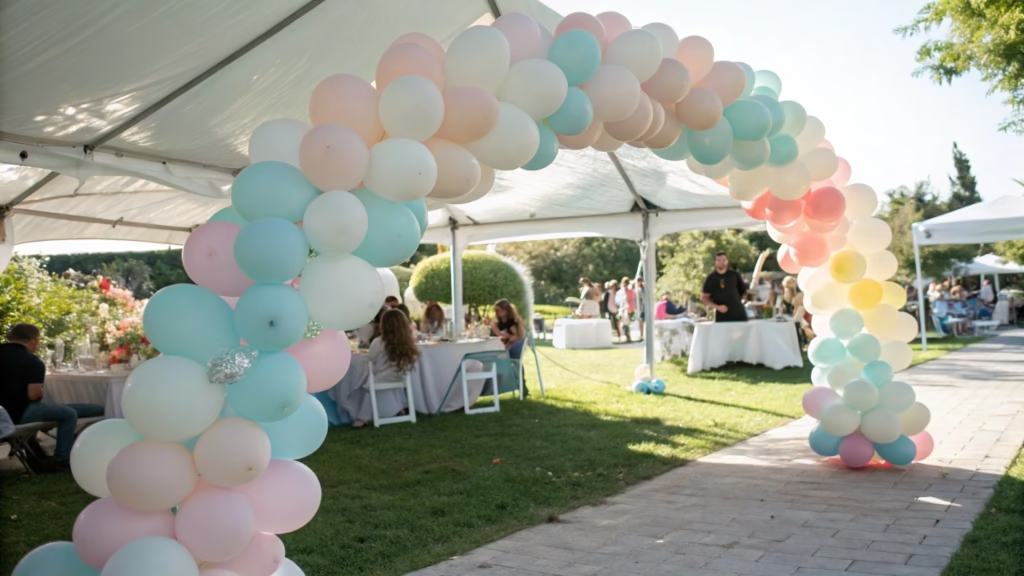
I've been in the balloon business for a long time, and I've seen countless outdoor setups face the challenge of a hot, sunny day. It's a common problem for event planners3 and procurement managers alike. We all want our decorations to look perfect from start to finish. Over the years, I've learned that success isn't about fighting the sun; it's about understanding how to work with it. The good news is that with a few key insights and preparation steps, you can ensure your balloons look vibrant and stay inflated throughout your entire event. Let's explore the science and the strategies to make your next outdoor party a success.
What makes latex balloons so vulnerable to heat and UV rays?
Your latex balloons seem to self-destruct in the sun, and you don't know why. It feels unpredictable, but it's not. Understanding the science helps you prevent the pops.
Heat makes the gas inside a balloon expand, increasing pressure. At the same time, UV rays4 from the sun break down the latex, making it brittle. This combination of increased internal pressure and a weakened balloon wall is what causes them to pop so easily outdoors.
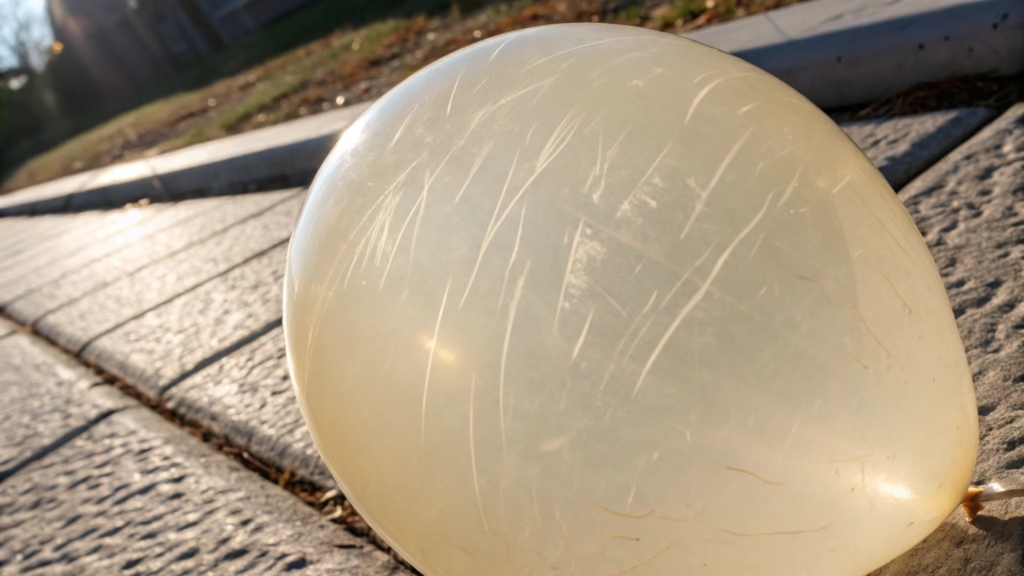
Let's dive deeper into these two factors. I remember one of my first big outdoor jobs was for a summer fair. We set up a magnificent arch in the morning, but by noon, we were hearing pops every few minutes. It was a stressful lesson in balloon science. The issue comes down to two main enemies: thermal expansion5 and UV degradation.
The Science of Expansion
Think about basic physics. When gas gets hot, it expands and needs more space. This is a scientific principle known as Charles's Law. Your balloon is a closed container filled with air or helium. As the sun beats down, the gas particles inside start moving faster and pushing harder against the balloon's inner wall. This increases the internal pressure significantly. A balloon that was perfectly inflated indoors can become over-inflated and strained very quickly when exposed to heat. This pressure alone can be enough to cause a pop, especially if the balloon was already filled to its maximum capacity.
The Impact of UV Degradation
The second enemy is the sun's invisible ultraviolet (UV) radiation. UV rays trigger a chemical process called photo-oxidation, which breaks down the polymer chains that give latex its elasticity. You've seen this happen with old rubber bands that get brittle and snap easily. The same thing happens to your balloon. The sun is literally weakening its structure, making it less flexible and more prone to tearing. When you combine the intense internal pressure from heat with a balloon wall that's been made brittle by UV rays, you have a recipe for disaster. The weakened latex simply can't handle the strain and gives way.
Are there professional-grade balloons designed for better heat resistance?
You might wonder if you are just using the wrong type of balloons for outdoor events6. Maybe a better product exists, but you don't know what to look for. Quality really matters here.
Yes, professional-grade balloons7 use higher-quality latex and have a more consistent wall thickness, making them more durable. While not heat-proof, they handle heat and UV exposure better. Brands that emphasize quality control, like us at AIHUA BALLOON, offer a more reliable choice for outdoor use.
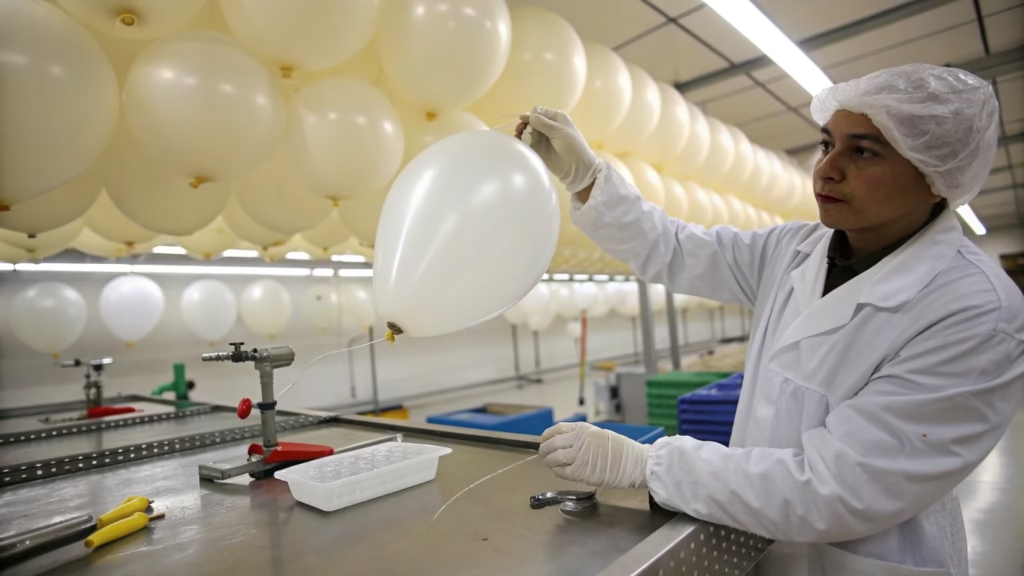
As a manufacturer, I can tell you that not all balloons are created equal. For a procurement manager like Sarah Chen, distinguishing between standard retail balloons and professional-grade ones is key to ensuring event success8 and client satisfaction. The difference lies in the raw materials and the manufacturing process.
What Defines a "Professional-Grade" Balloon?
A professional-grade balloon starts with superior raw materials—in this case, a higher quality of natural latex. At AIHUA BALLOON, we source latex that has better elasticity and durability. The manufacturing process is also critical. We use advanced dipping technology to ensure a uniform wall thickness across the entire balloon. Cheaper balloons often have weak spots where the latex is thinner, and these are the first points to fail under pressure. Consistent thickness means the balloon expands evenly, distributing the stress from heat more effectively. Our adherence to certifications like ISO90019 is a testament to our commitment to this level of quality control. A balloon that passes these rigorous checks is fundamentally stronger and more resilient.
The "Jewel" vs. "Opaque" Debate
The type and color of the balloon also play a role. Here is a simple breakdown:
| Balloon Type | Heat Reflection | UV Resistance | Outdoor Recommendation |
|---|---|---|---|
| Light Opaque Colors | High | Good | Excellent. Reflects sunlight, stays cooler. |
| Dark Opaque Colors | Low | Good | Good. Absorbs more heat, use with caution. |
| Jewel/Crystal Tones | Low | Poor | Not Recommended. Acts like a magnifying glass, heats up fast. |
| Metallic/Pearl | Medium | Fair | Fair. Better than jewel tones but still absorbs heat. |
Lighter, opaque colors are always the best choice for hot, sunny days because they reflect the most sunlight. Dark colors absorb heat, increasing internal pressure. Transparent "jewel" or "crystal" balloons are the worst offenders. They act like tiny greenhouses, trapping heat and UV rays, which accelerates degradation and expansion. For outdoor events, I always advise my clients to stick with high-quality, opaque balloons in lighter shades.
What are the best practices for inflating and treating balloons for outdoor events?
You know you need to be careful, but what are the exact steps to take? It's frustrating when you try your best, and they still pop. A clear, actionable plan is the solution.
For outdoor events, under-inflate balloons to 80-90% of their size to allow for heat expansion2. Use a treatment like Hi-Float10 to strengthen the latex, and always inflate them as close to the event start time as possible to minimize their exposure to the elements.
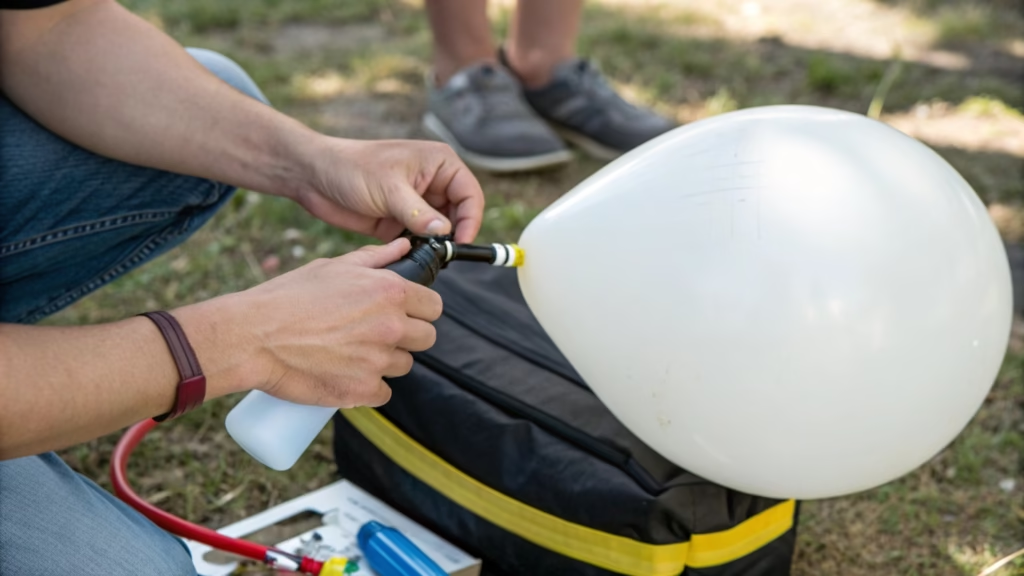
Over my 37 years in this industry, I've developed a clear set of rules for preparing balloons for outdoor warfare. It’s a battle against the elements, and your preparation is your best weapon. As a procurement manager, implementing these best practices as standard procedure for your teams can dramatically reduce product loss and improve the visual quality of events. The strategy is divided into what you do before the party and what you do during it.
Pre-Party Preparation
Your success starts long before the first guest arrives. These steps are crucial.
- Under-inflate: This is the most important rule. Never inflate a balloon to its full size for outdoor use. I recommend inflating to about 80-90% of the maximum diameter. This leaves room for the air or helium inside to expand in the heat without immediately bursting the balloon.
- Use Balloon Sealant: Products like Hi-Float are not just for extending float time. When applied inside a latex balloon, it creates a coating that not only slows gas loss but also adds a protective layer against oxidation from UV rays, effectively strengthening the balloon.
- Choose Light Colors: As we discussed, lighter colors reflect sunlight and heat. Choosing white, ivory, light pink, or baby blue balloons over black, dark blue, or purple can make a huge difference in how hot they get.
- Inflate Just in Time: The less time a balloon spends in the sun, the better. Inflate your balloons on-site and as close to the event start time as possible. Inflating them the day before and leaving them outside is a recipe for failure.
On-Site Management During the Party
Once the event begins, your job is to manage the environment.
- Provide Shade: This is non-negotiable. Position your balloon arrangements11 under tents, canopies, umbrellas, or in the natural shade of trees and buildings. Direct sunlight is the primary enemy.
- Avoid Hot Surfaces: Never let balloons touch hot asphalt, dark-colored vehicles, metal railings, or brick walls. These surfaces absorb immense heat and will transfer it directly to the balloon, causing it to pop almost instantly.
- Monitor Sun Movement: The sun moves. A spot that was shady in the morning might be in direct sun by the afternoon. Be mindful of this and plan your placement accordingly, or be prepared to move the arrangements if needed.
Besides latex, what are the best balloon alternatives for hot weather conditions?
Sometimes, the conditions are just too extreme for latex balloons. You need a reliable alternative but are unsure which material performs best. Knowing your options gives you flexibility.
For very hot and sunny conditions, foil (Mylar) balloons are the best alternative to latex. Their metallic surface reflects heat and sunlight effectively, and they are not susceptible to UV degradation. They also hold their shape and helium for much longer in tough environments.
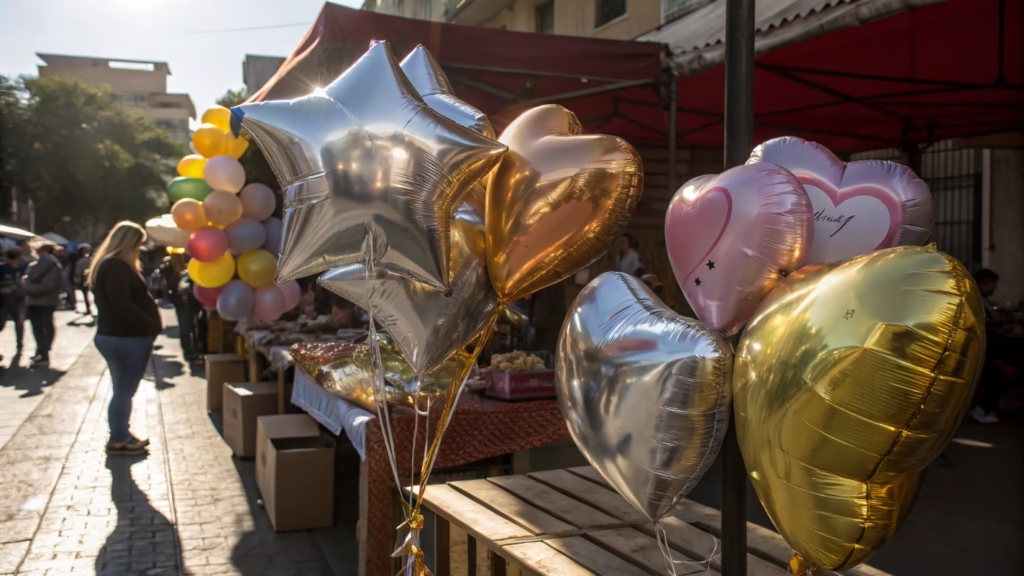
While I have built my career on latex balloons, I am also a realist. As a solutions provider, my goal is to ensure your event is a success, and sometimes that means recommending a different material for the job. When a client needs a balloon installation to withstand extreme heat and direct sun for a prolonged period, I often point them toward foil balloons. They offer a completely different set of properties that make them uniquely suited for challenging environments.
Why Foil Balloons Excel in the Heat
Foil balloons, often known by the brand name Mylar, are made from a thin nylon sheet coated with a layer of aluminum. This construction gives them several advantages in hot weather.
- Heat Reflection: The shiny, metallic surface of a foil balloon is highly reflective. Unlike a dark latex balloon that absorbs heat, a foil balloon reflects most of the sun's energy away, keeping the gas inside much cooler.
- UV Immunity: The material is not organic like latex, so it is not affected by UV radiation. Foil balloons will not become brittle or weak when exposed to sunlight for long periods.
- Self-Sealing and Durable: Foil balloons come with a self-sealing valve12, which makes inflation easy and prevents slow leaks. While they do expand in the heat, the material is less elastic but strong. It is still important to not over-inflate them, but they are generally more forgiving than latex in direct sun.
Other Alternatives to Consider
While foil is the top choice, there are other options. Bubble balloons, made from a stretchy, clear plastic, are also very durable and long-lasting. They are not as reflective as foil but are much more resistant to popping than latex. However, for a procurement manager focused on large-scale events, foil balloons often provide the best balance of durability, visual impact, and cost-effectiveness for hot weather applications. They come in countless shapes and sizes, allowing for just as much creativity as latex.
Conclusion
To protect your outdoor balloon displays, use simple strategies: under-inflate, seek shade, and choose light colors13. For extreme heat, consider foil balloons as a durable and reliable alternative to ensure success.
-
Learn how under-inflating balloons can prevent popping in the heat. ↩
-
Understand the science behind heat expansion and its impact on balloon integrity. ↩ ↩
-
Gain insights into common challenges event planners encounter with balloons. ↩
-
Discover how UV rays can weaken balloons and lead to popping. ↩
-
Understand the concept of thermal expansion and its effects on balloon durability. ↩
-
Find comprehensive best practices for using balloons outdoors. ↩
-
Find out why investing in professional-grade balloons can enhance your event. ↩
-
Explore essential tips for achieving success with balloon decorations. ↩
-
Understand the importance of ISO9001 certification in ensuring balloon quality. ↩
-
Learn about Hi-Float and its role in extending balloon life outdoors. ↩
-
Learn effective management strategies for balloon displays at events. ↩
-
Learn about the convenience of self-sealing valves in foil balloons. ↩
-
Explore how lighter balloon colors can reflect sunlight and reduce heat. ↩