
The Pioneers of Balloons: Key Figures and Innovations in Balloon History
Do you know who truly started the balloon industry1 we work in today? Many people love balloons, but few know the dangerous and exciting history behind them.
The history of balloons began in France in 1783 with the Montgolfier brothers2 using hot air and Jacques Charles using hydrogen. From early paper and silk designs to modern latex and nylon, pioneers like Jean-François Pilâtre de Rozier3 and Vera Winzen pushed the limits of flight and material science.
I often look at the modern production lines in our AIHUA factory and think about the past. It is amazing to see how far we have come. The materials we use now are safe and strong. But the first inventors did not have these advantages. They had to be very brave. Let me tell you about the people who made our industry possible.
Who Invented the First Hot Air Balloon?
We see balloons everywhere at parties and events now. But imagine a time when nobody believed a human could fly. Who was the first to solve this problem?
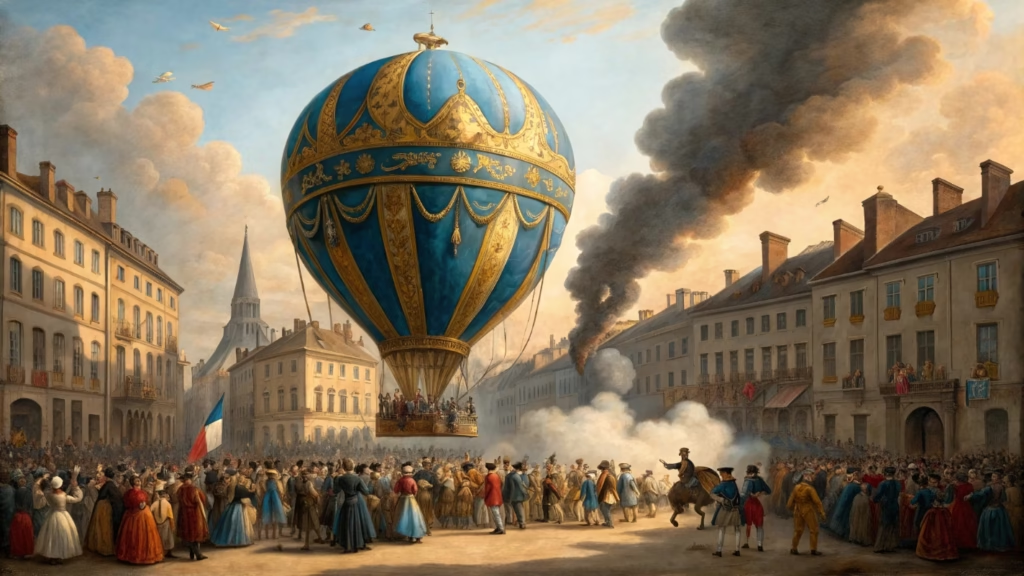
The Montgolfier brothers, Joseph-Michel and Jacques-Étienne, invented the first practical hot air balloon4 in France. They launched the first unmanned flight in June 1783 and followed it with the first manned flight5 in November 1783, using hot air generated by a fire to create lift.
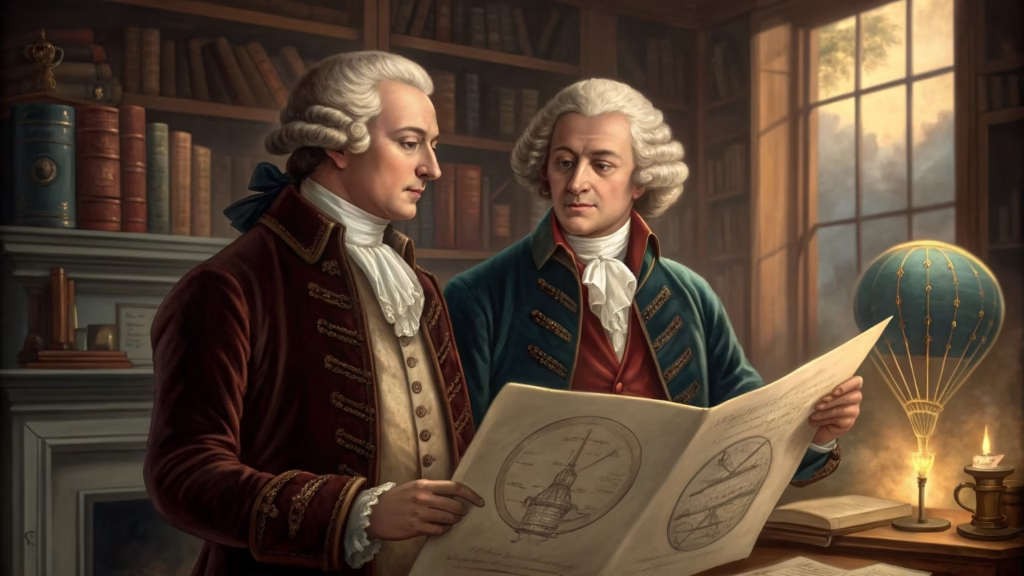
The story of the Montgolfier brothers is very inspiring to me as a manufacturer. They were papermakers in France. They noticed that smoke rose into the air. They thought the smoke itself had a special lifting power. They called this "Montgolfier gas." Today, we know it was just hot air. But their idea changed everything.
In June 1783, they made a large balloon out of sackcloth and paper. It flew without any passengers. But they needed to prove it was safe for living things. I find this part of history very interesting. They did not send a human first. They sent a sheep, a duck, and a rooster. The animals came back safe. This gave them the confidence to send humans.
Jean-François Pilâtre de Rozier was the first brave person to go up. He and the Marquis d'Arlandes flew over Paris in November 1783. They burned wool and straw to keep the air hot. It was dangerous. They had water buckets to put out fires on the paper envelope. This shows how far safety standards have come. Today, at AIHUA, safety is our top priority. We do not use paper and fire like they did. We use tested polymers. But we must respect their courage.
| Key Figure | Role | Achievement |
|---|---|---|
| Joseph-Michel Montgolfier | Inventor | Concept of hot air lift |
| Jacques-Étienne Montgolfier | Inventor | Construction of the first balloon |
| Pilâtre de Rozier | Pilot | First human passenger |
What Are the Key Milestones in the History of Ballooning?
History is full of dates and names that can be confusing. It is hard to know which events truly changed the global market. What are the most important moments?
Key milestones include the first manned flight in 1783, the first hydrogen balloon launch6 that same year, and the first English Channel crossing in 1785. Later milestones involve the invention of vulcanized rubber7 for party balloons and record-breaking ocean crossings by Richard Branson8 in the modern era.
The timeline of ballooning moves very fast after 1783. While the Montgolfiers used hot air, a physicist named Jacques-Alexandre-César Charles had a different idea. He used "inflammable air," which we now call hydrogen. He launched his balloon just days after the Montgolfiers. This started a big competition. I see this kind of competition in business today, too. It drives innovation.
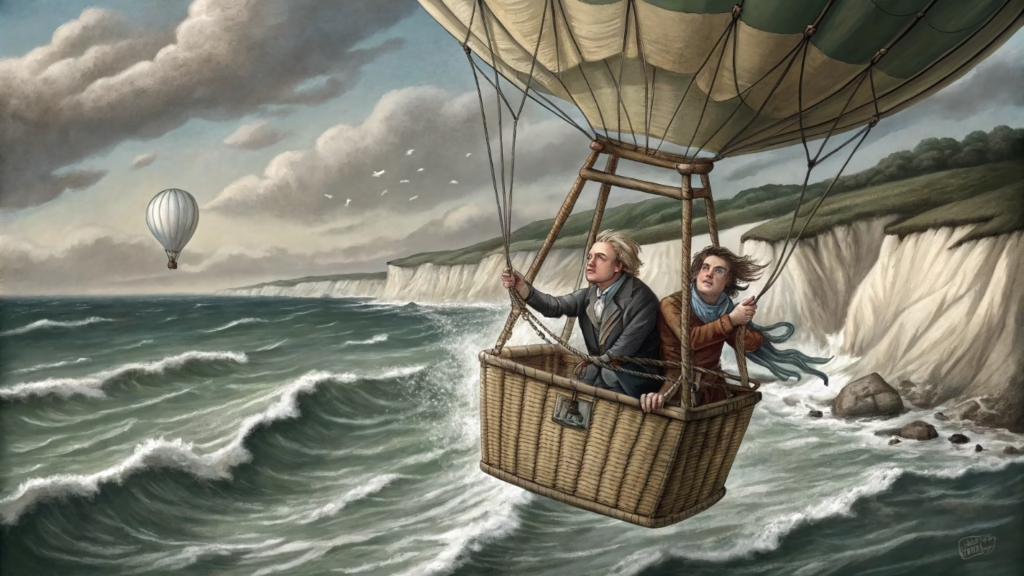
Another huge milestone happened in 1785. Jean-Pierre Blanchard and John Jeffries flew across the English Channel. They traveled from England to France. It was a difficult flight. They almost fell into the sea. They had to throw everything out of the basket to stay in the air. They even threw out their pants! This proved that balloons could travel long distances.
We must also remember Sophie Blanchard9. She was the first professional female balloon pilot. She flew solo and set off fireworks from her balloon. She made the industry famous and exciting. Sadly, she died in a balloon accident. This reminds us why safety regulations are so strict today.
In modern times, Richard Branson and Per Lindstrand pushed the limits again. They crossed the Atlantic in 1787 and the Pacific in 1991 in huge hot air balloons. These milestones show that the spirit of adventure never stops.
| Year | Event | Significance |
|---|---|---|
| 1783 | First Hydrogen Flight | Introduced gas balloons |
| 1785 | Channel Crossing | First international flight |
| 1987 | Atlantic Crossing | Modern distance record |
How Did Early Innovations Shape Modern Balloon Technology?
You might think old balloons have nothing to do with the products we sell today. But is that true? How did these ancient inventions create our modern industry standards?
Early innovations directly created today's balloon standards. The shift from smoke to pure hot air systems10 led to propane burners. Furthermore, the development of gas retention techniques by pioneers like Carl Myers11 paved the way for the consistent, high-quality manufacturing processes we use in factories now.
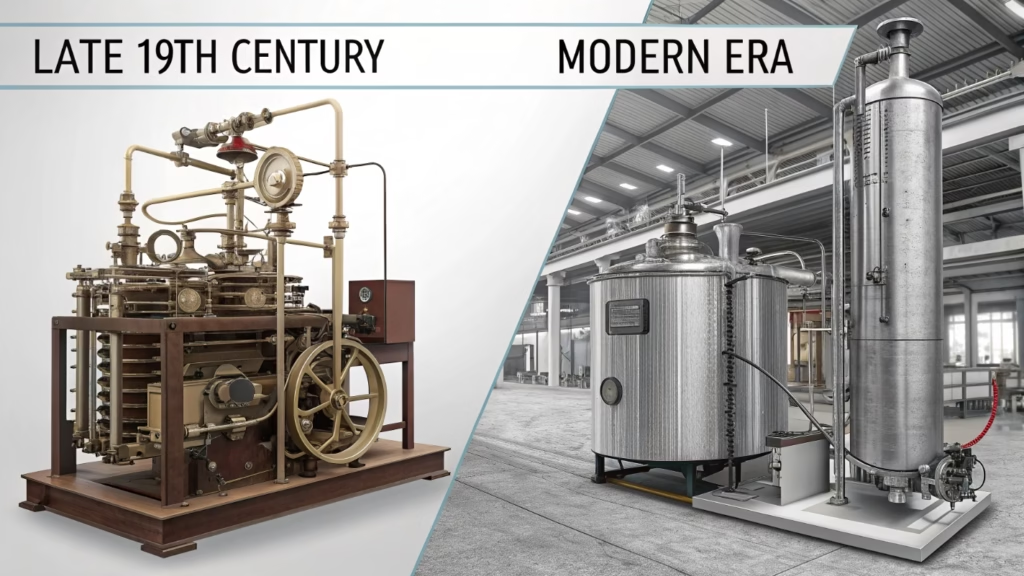
I study production methods deeply. I can see the direct link between old inventions and our current technology. For example, look at Carl Myers. He was an American inventor in the late 1800s. He did not just fly; he built systems. He created a portable hydrogen generator. He also invented a special varnish to coat the fabric. This kept the gas inside the balloon longer.
This is very similar to what we do now. We focus on "barrier properties12" in balloons. We want the air or helium to stay inside. Myers understood this over 100 years ago. His work led to better quality control.
Another key figure is Vera Winzen. She is a more modern pioneer. She worked with her husband to develop plastic balloons for high-altitude research13. She managed the production and quality. She showed that plastic could be strong enough for the stratosphere. This innovation in plastics helps us understand polymer chains14 today.
When we make balloons at AIHUA, we use these lessons. We use advanced materials that hold gas well. We use precise machines, not open fires. But the basic physics is the same. The drive to make a product that lasts longer and flies higher comes directly from these pioneers.
| Innovator | Early Innovation | Modern Equivalent |
|---|---|---|
| Jacques Charles | Hydrogen Gas | Helium for parties |
| Carl Myers | Gas-tight Varnish | High-barrier coatings |
| Vera Winzen | Plastic Welding | Heat sealing technology |
What Materials Were Used by the Pioneers of Balloon Flight?
We use latex and foil today because they are cheap and strong. But early aviators did not have these materials. What strange things did they use to stay in the air?
Pioneers used fragile materials like paper, taffeta, and silk coated with varnish or rubber. The Montgolfiers used paper-lined fabric, while Charles used rubberized silk for hydrogen. Later, Charles Goodyear's invention of vulcanized rubber in the 1840s revolutionized the industry by creating durable, temperature-resistant balloons.
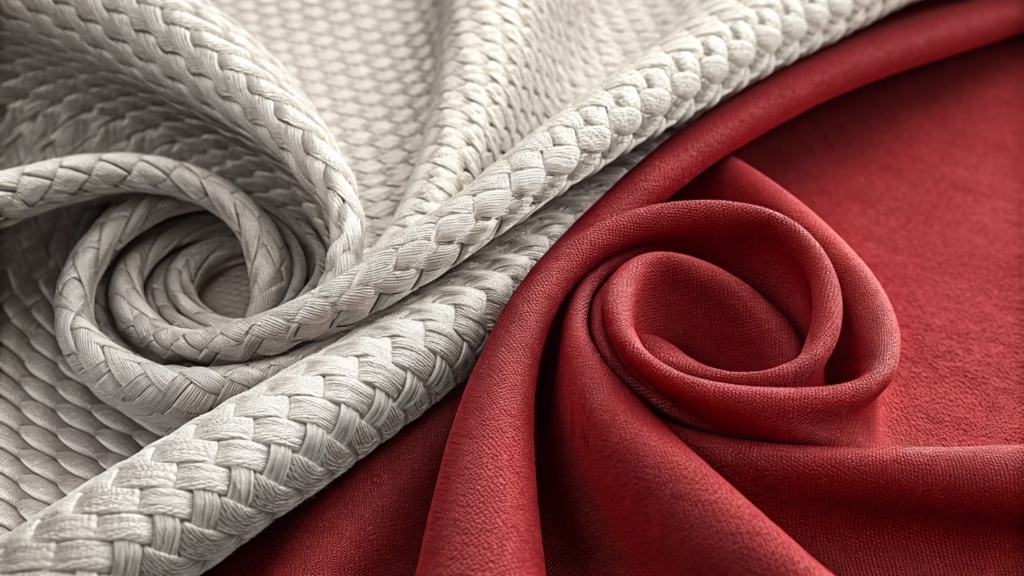
The choice of material is the most important part of my job. In the early days, they used very weak materials. The Montgolfier brothers used paper and silk. Paper is heavy and burns easily. It was not a good long-term solution. Jacques Charles used silk coated with rubber dissolved in turpentine. This was better, but the rubber would get sticky in the heat and brittle in the cold.
The real game-changer was vulcanized rubber. Charles Goodyear invented this process in the 1840s. He found that heating rubber with sulfur made it stable. It was no longer sticky. It could stretch and return to its shape. This is the moment the modern toy balloon was born.
Without vulcanization, we would not have the party balloon industry. In 1847, J.G. Ingram started making dipped rubber balloons in London. This is the exact same method we use for latex balloons today. We dip a mold into liquid latex.
Today, we also use Mylar (foil) and advanced plastics. These come from the research of people like Vera Winzen. They allow balloons to hold helium for weeks. As a Procurement Manager, you know that material quality is key. We owe our high standards to these material scientists who failed and tried again until they got it right.
| Material | Era | Pros | Cons |
|---|---|---|---|
| Paper/Fabric | 1783 | Cheap, available | Flammable, heavy |
| Silk/Varnish | 1790s | Lightweight | Leaked gas, expensive |
| Vulcanized Rubber | 1840s | Elastic, durable | Basis for modern balloons |
Conclusion
The history of balloons is a story of brave people and smart chemistry. From the Montgolfiers to modern manufacturers, we continue to innovate to make moments colorful and safe.
-
Get insights into the current trends and innovations shaping the balloon industry today. ↩
-
Explore the Montgolfier brothers' groundbreaking contributions to ballooning and their impact on aviation. ↩
-
Discover the achievements of Jean-François Pilâtre de Rozier, the first human to fly in a hot air balloon. ↩
-
Learn about the first practical hot air balloon and how it changed the course of human flight. ↩
-
Understand the importance of the first manned flight and its role in the evolution of ballooning. ↩
-
Investigate the first hydrogen balloon launch and how it revolutionized balloon technology. ↩
-
Understand the revolutionary impact of vulcanized rubber on the durability and safety of balloons. ↩
-
Learn about Richard Branson's record-breaking balloon flights and their significance in modern aviation. ↩
-
Explore the life of Sophie Blanchard, the first female balloon pilot, and her influence on the industry. ↩
-
Explore the evolution of hot air systems and their significance in the history of ballooning. ↩
-
Discover Carl Myers' innovations that laid the groundwork for modern balloon technology. ↩
-
Explore the concept of barrier properties and their importance in modern balloon manufacturing. ↩
-
Learn how balloons are used in high-altitude research and the advancements they enable. ↩
-
Understand the science behind polymer chains and their application in modern balloon materials. ↩