The Science Behind Natural Latex Balloon Production
Short answer: material origin is only the beginning
A natural-rubber latex balloon is a compounded and processed finished article, not raw tree sap. The production path generally includes material preparation, former preparation, forming/dipping, curing and washing/finishing stages, stripping, inspection and packing, but the exact formula, sequence and controls are product- and batch-specific.
A process explanation does not prove one allergy outcome, biodegradation time, certificate scope or batch performance. Use the linked owner pages for those separate evidence questions.
How does the material become a finished balloon?
| Process stage | General purpose | Evidence boundary |
|---|---|---|
| Material and formulation control | Define the latex compound and inputs for an identified product. | Natural origin does not reveal the complete formula. |
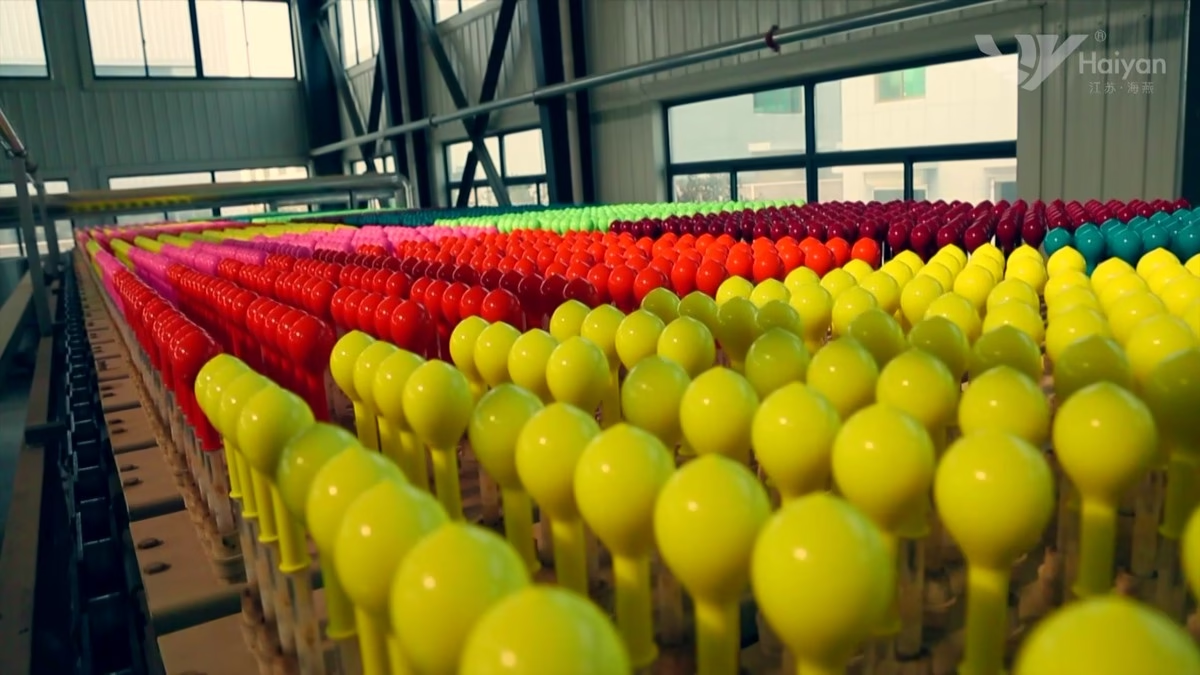
| Former preparation and forming | Create the intended article on controlled formers and process settings. | A generic image does not prove AIHUA's exact method or current batch. |
| Curing and washing/finishing | Develop and finish the article under the selected process. | No allergy, residue or environmental guarantee follows from the step name. |
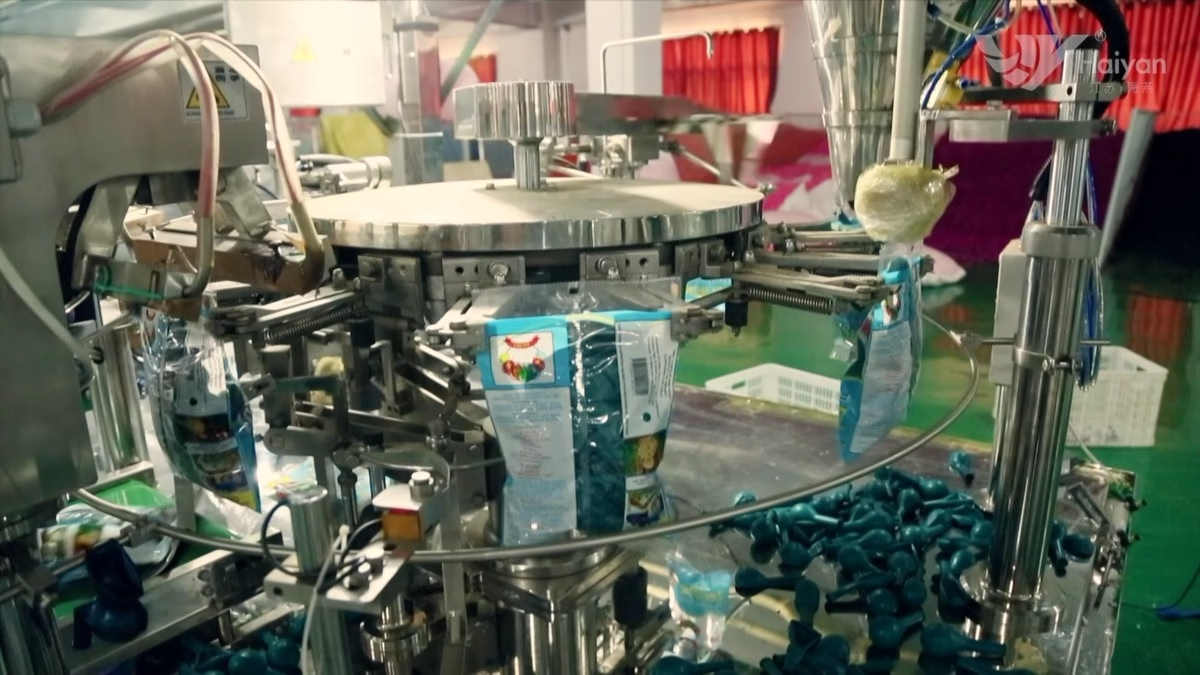
| Stripping, inspection and packing | Remove, sort, inspect and pack against the order file. | Equipment presence does not prove count accuracy or release status. |
Which variables matter to balloon performance?
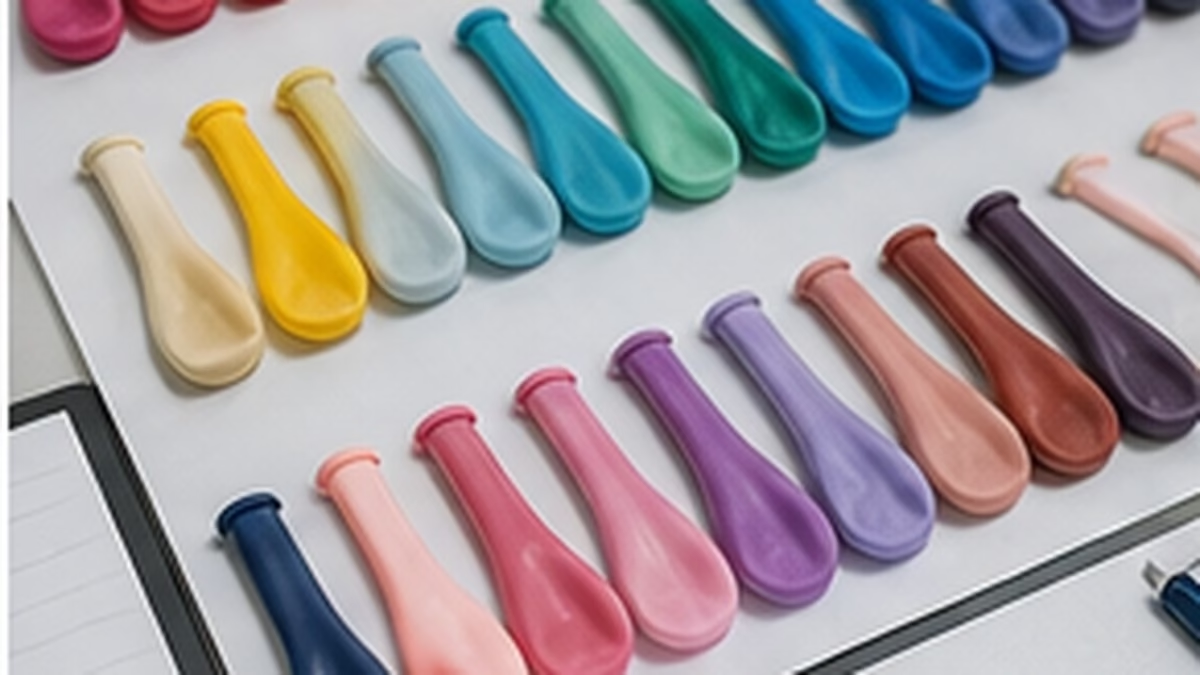
Product family, nominal size, piece weight or construction where specified, finish, color, curing/process settings, inflation target, closure, gas, storage, packing and handling can influence observed results. Buyers should compare the exact product under a written method rather than use “natural,” “premium,” “thick” or “professional” as a substitute for evidence.
The material owner distinguishes raw material, compounded formulation and finished article. The quality owner explains how to define samples, methods, conditions, defect counts and acceptance.
What can the factory photographs prove?
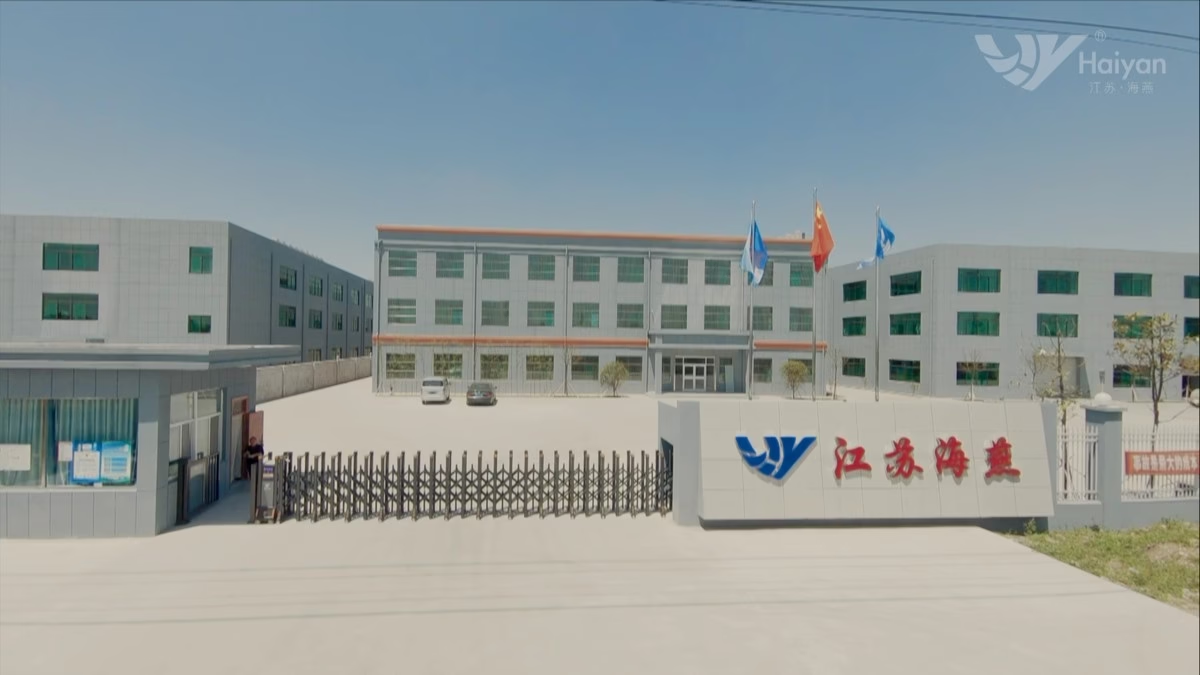
The real AIHUA facility images on this page show the Jiangsu Haiyan factory entrance, production-line context and packing equipment. They support site identity and visible facility context. They do not, by themselves, prove an exact formulation, certificate, test result, current order, production capacity, batch release, packing count or shipment.
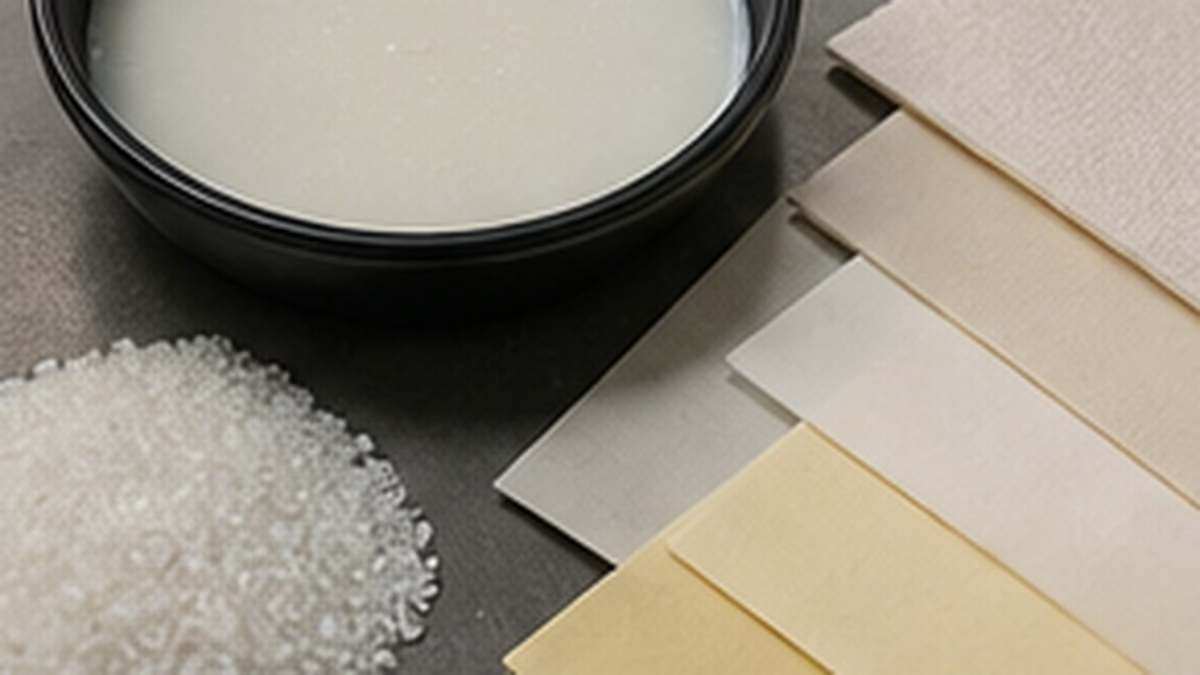
Generated material/QC illustrations are labeled as illustrations and cannot be used as factory or order evidence. For the complete evidence routing, use the factory/QC/certificate/MOQ checklist.
Why are allergy and environmental claims separate?
Natural-rubber latex can be relevant to allergy risk. AIHUA does not claim that washing, leaching, curing or finishing removes the risk or makes a finished balloon safe for a sensitive person. Individual medical risk requires qualified advice and avoidance planning.
Natural origin also does not prove a fixed degradation time, compostability, harmless litter or environmental superiority. Use the environmental-choice owner to define material, claim, method, conditions, use controls and end-of-use route.
What should a wholesale production file contain?
- Order/product identity: size, color/finish, print, quantity and packing.
- Approved sample and revision-controlled specification.
- Material/formulation declaration available for the order and change-control responsibility.
- Defined QC fields, method, conditions, sample source, raw counts/measurements and decision.
- Applicable report or audit scope kept separate from production observations.
- Bag, label, carton and final release evidence tied to the order.
The certificate-scope owner explains why one report cannot cover every product or future batch. Contact AIHUA with the exact product and buyer requirement so available evidence and missing evidence can be identified before approval.
Buyer FAQ
Are finished latex balloons pure rubber-tree sap?
No. Natural rubber latex is the principal material family, but the finished balloon is a compounded and processed article. Exact formula and process details are product- and batch-specific.
Does natural origin prove a balloon is biodegradable or environmentally harmless?
No. Natural origin does not establish a fixed degradation time, compostability, litter safety, lower life-cycle impact or responsible disposal route.
Does washing or leaching make latex balloons safe for people with latex allergy?
No such assurance should be made. A process description cannot predict an individual's reaction, and AIHUA does not present this page as medical safety approval.
What production evidence should a wholesale buyer request?
Request product/formulation identity available for the order, approved sample, process/change control, defined QC method and conditions, raw results, packing proof and report scope tied to the order.