
The Secret to Longer Float Times Is Using a Treatment Like Hi-Float Worth It for Your Latex Balloons?
Your latex balloons deflate too quickly, ruining event decorations and frustrating clients. What if you could easily make them last for days, ensuring every moment stays colorful?
Yes, using a treatment like Hi-Float is absolutely worth it. It creates an internal barrier1 that significantly slows helium escape2, extending float times from hours to several days. This allows for advance preparation, saves money, and ensures decorations remain perfect throughout any event, enhancing customer satisfaction3.
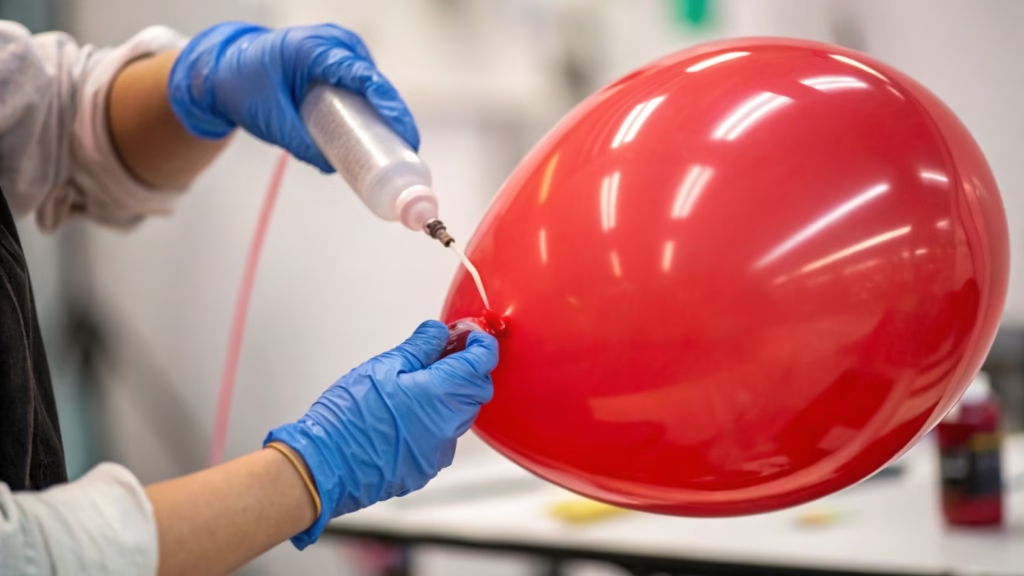
This simple solution seems almost too good to be true. As a procurement manager, you need to know it's a reliable investment. So, you're probably asking how it actually works and what the real-world benefits are for your business. Let's break down the details so you can see the clear value.
How does a balloon treatment actually extend helium float time?
You know treatments work, but the science behind it can seem like a mystery. Without understanding the 'how,' it is difficult to justify the investment and trust the process.
A balloon treatment is a liquid solution that coats the balloon's interior wall. As it dries, it forms a barrier that seals the natural, microscopic pores of the latex. This film significantly slows the rate at which tiny helium atoms can escape, extending the balloon's float time.
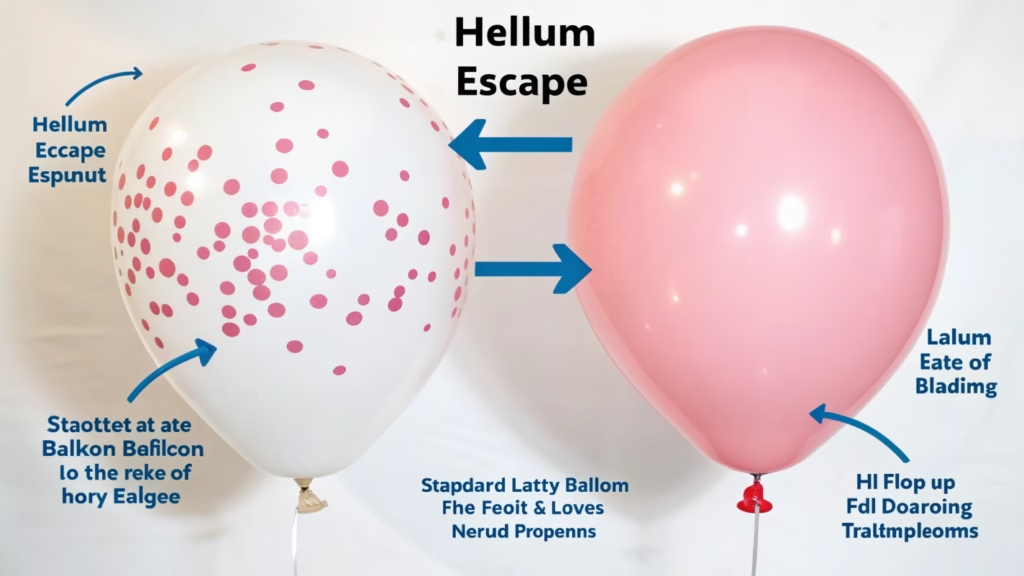
Let's look closer at the mechanics. The process is quite simple but very effective. As a manufacturer, we understand that the material itself has limitations, which is where treatments become essential.
The Science of Porosity
Latex may look solid, but on a microscopic level, it's a porous material4 full of tiny holes. Helium atoms are among the smallest in the universe, so they can easily sneak through these pores. This is why an untreated 11-inch latex balloon typically only floats for about 12-24 hours. The helium is literally leaking out from the moment it's inflated.
Creating the Internal Barrier
A treatment like Hi-Float is essentially a water-soluble liquid plastic5. When you pump a small amount inside the balloon and rub it to create an even coating, you're lining that porous latex wall. This coating fills in the gaps. Once it dries, it creates a new, much less porous film inside the balloon. This film acts as a highly effective barrier, trapping the helium atoms and preventing their rapid escape.
| Balloon Type | Float Time (Untreated) | Float Time (Treated) | Improvement |
|---|---|---|---|
| 11" Latex Balloon | 12-24 Hours | 2-4 Days | ~4x Longer |
| 16" Latex Balloon | 30+ Hours | 7+ Days | ~5x Longer |
| 36" Latex Balloon | 3-5 Days | 1-4 Weeks | ~5-7x Longer |
Can offering treated balloons increase customer satisfaction and repeat business?
Every business owner knows that happy customers are great, but getting them to return is the real challenge. One negative experience with deflating balloons can lose a valuable customer forever.
Absolutely. When a customer's balloon decorations look fresh for their entire event and even days after, you exceed their expectations. This positive experience builds trust and loyalty, directly leading to repeat business and glowing reviews. It positions you as a premium, reliable provider people can count on.

I've seen the impact of this firsthand many times over my career. It transforms a simple purchase into a memorable experience, which is the cornerstone of building a strong brand reputation6.
The "Wow" Factor
The real benefit is creating a lasting impression. I remember a client who called our partner retailer a week after her daughter's birthday party. She was amazed that the balloon bouquet was still floating perfectly in her living room. That single, positive experience turned her into a loyal customer who recommended the store to all her friends. Offering treated balloons isn't just about longer float times; it's about delivering a product that continues to bring joy long after the party ends.
Building a Reputation for Quality
For a procurement manager like you, Sarah, consistency is everything. When your stores offer treated balloons as a standard or an upgrade, you are building a reputation for superior quality. Customers learn that your balloons are not the kind that will be drooping before the event even starts. This reliability reduces complaints and returns, saving time and resources. It also allows you to position your products at a premium, as customers are willing to pay more for a product that delivers on its promise.
What is the cost-per-balloon when buying treatments in bulk?
You understand the benefits, but the numbers have to make sense. Adding another step and another product to your process can seem daunting if the cost outweighs the return on investment.
When purchased in bulk, the cost of balloon treatment is remarkably low, often just a few cents per balloon. For example, a 96-oz bottle of Hi-Float can treat over 500 11-inch balloons, making the per-unit cost minimal compared to the value it adds.
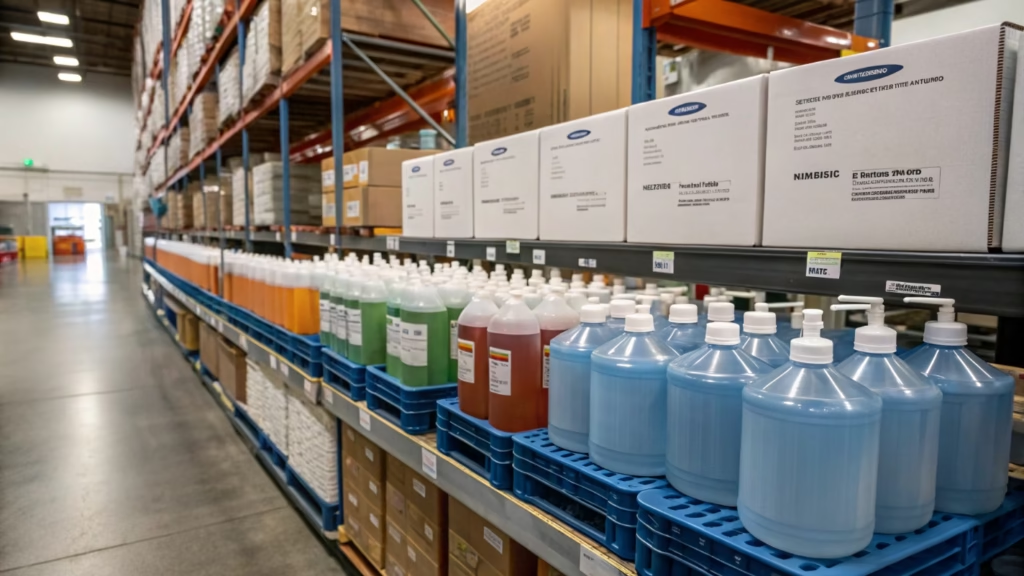
As someone who manages budgets and supply chains, I know that even small costs add up. However, in this case, the return on investment is exceptionally high. Let's examine the numbers more closely.
Calculating the Cost
A large 96-ounce bottle of treatment is designed for high-volume users. The pump dispenser included with these bottles is calibrated to dispense the exact amount needed for different balloon sizes, which prevents waste and ensures consistency. For a standard 11-inch balloon, you only need one small pump. A 96-ounce bottle contains enough product to treat approximately 568 of these balloons. If you purchase the bottle for around $50, your cost per balloon is less than 9 cents.
The Value Proposition
Now, compare that 9-cent cost to the benefits. You can charge customers an extra $0.50 to $1.00 for a treated balloon, generating an immediate profit. More importantly, this small investment prevents the indirect costs associated with customer dissatisfaction, such as negative reviews7 or the need to replace decorations. When I work with large retailers, we often analyze this exact calculation. The conclusion is always the same: the small upfront cost is easily justified by the increased profit margins8 and, most importantly, the enhanced brand loyalty.
Are there alternative treatments or balloon types for achieving longer float times?
You're focused on providing the best options, and it's smart to consider all alternatives. Relying on a single solution isn't always the best strategy for a diverse product line.
Yes, there are alternatives. Foil (or mylar) balloons naturally have much longer float times of a week or more because their material is non-porous. For latex, some manufacturers offer "long-float" balloons with a slightly thicker coating, though treatments like Hi-Float remain the most effective solution.
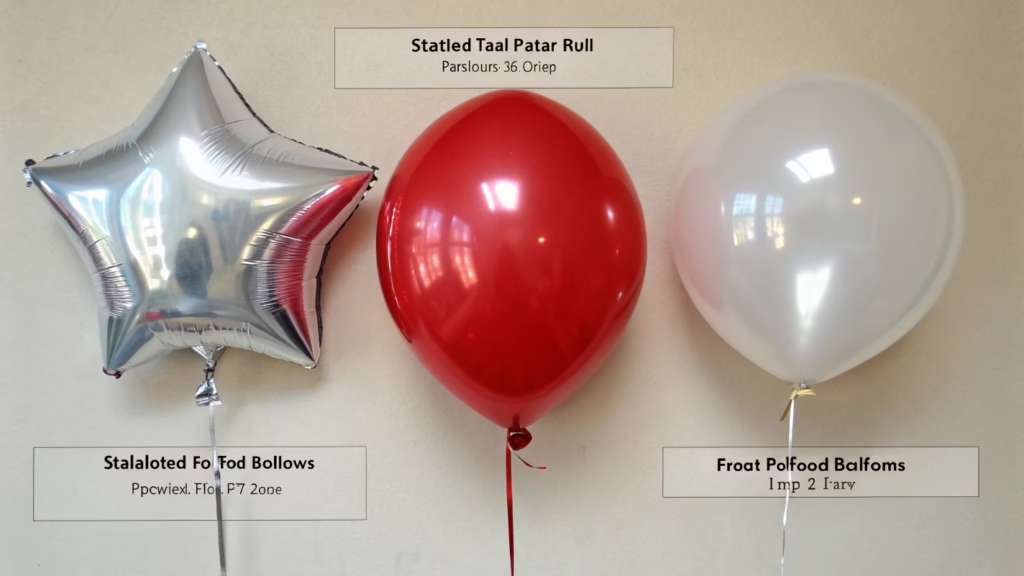
It's crucial to understand the pros and cons of each option to build a comprehensive offering for your customers. Here at AIHUA BALLOON, we produce a variety of types because we know different events have different needs.
Foil Balloons
Foil balloons are the most common alternative for long float times. They are made from a nylon sheet coated with metal, which is not porous like latex. This means helium can't escape easily, allowing them to float for a week or even longer. They are perfect for long-lasting displays and are often the centerpiece of bouquets. However, they are not biodegradable and typically come at a higher price point than latex balloons, which is an important consideration for large-scale decorations or budget-conscious customers.
Bubble and Plastic Balloons
Bubble balloons are another great option. Made from a stretchy, clear plastic, they are also non-porous and can float for several weeks. They offer a unique, perfectly spherical shape that is very durable. Like foils, they are more expensive than latex. Understanding the cost-benefit analysis for your specific market is key. I've found that offering these alongside treated latex gives customers a full range of choices in terms of look, longevity, and price. This empowers them to make the best decision for their needs while ensuring satisfaction with your products.
Conclusion
Using a balloon treatment is a small investment that delivers huge returns in float time and customer loyalty. It’s a simple, cost-effective way to ensure your decorations always impress.
-
Find out how creating an internal barrier can significantly improve balloon performance. ↩
-
Understand the science behind helium escape to better manage balloon longevity. ↩
-
Discover how treated balloons can lead to happier customers and repeat business. ↩
-
Explore the properties of porous materials and their impact on balloon floatation. ↩
-
Learn about the role of water-soluble liquid plastic in enhancing balloon durability. ↩
-
Understand the link between customer satisfaction and building a strong brand reputation. ↩
-
Explore how investing in balloon treatments can mitigate the risk of negative customer feedback. ↩
-
Learn how treated balloons can enhance profitability and customer loyalty. ↩