What are the best materials for eco-friendly balloons?
Worried about balloon waste hurting your brand's green image? You need sustainable options that do not sacrifice quality. We have the answers you have been looking for.
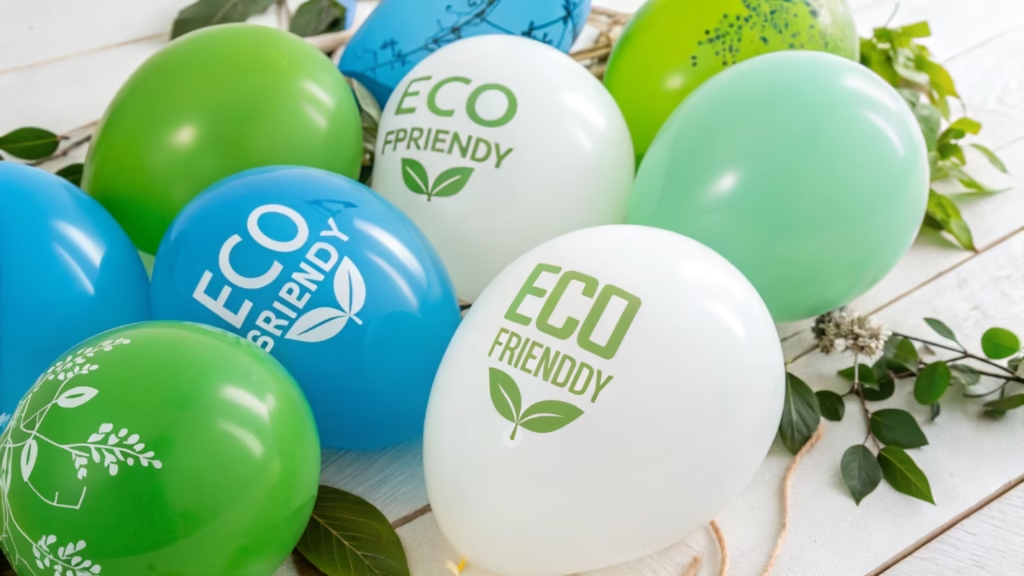
The best eco-friendly balloon materials are natural latex1 and biodegradable polymers2. For decorations, reusable fabric balloons3 or air-filled latex designs are great sustainable choices. You should avoid Mylar balloons and helium4 to reduce your environmental impact5.
As a procurement manager, you are always balancing quality, cost, and now, sustainability. It is a tough job. I have been in this industry for over a decade, and the conversation around "eco-friendly" has grown louder each year. It is easy to get lost in the marketing claims. So, let's break down what truly makes a balloon sustainable and what you should look for. We will start with the most common eco-friendly option.
Are natural latex balloons truly biodegradable?
You have heard latex is natural, but does it really break down? Misinformation can lead to greenwashing claims and risk your company’s reputation. Let's clarify the facts.
Yes, natural latex balloons are biodegradable because they come from rubber tree sap. However, the time it takes to decompose can be months or even years. This process depends heavily on environmental conditions like sunlight, moisture, and microbes.
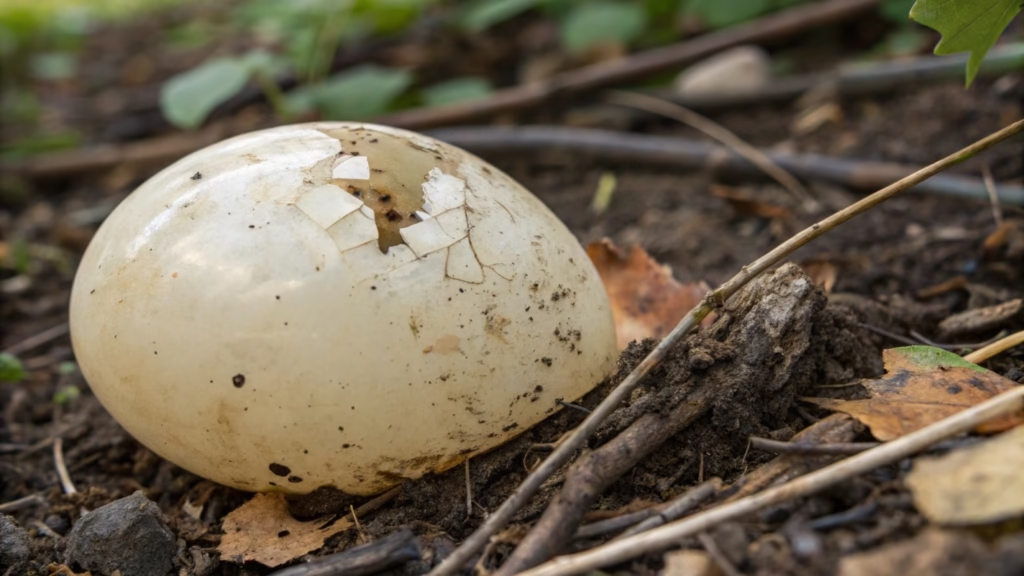
At our company, we work with natural latex every day. It comes from the sap of the Hevea brasiliensis rubber tree. This makes it a plant-based, renewable resource. When we talk about biodegradability, we mean that microorganisms can break it down into natural elements. Think of it like an oak leaf, which also takes time to return to the soil.
The speed of this process is not always fast. Several factors influence how quickly a latex balloon decomposes.
Factors Affecting Decomposition
- Environment: A balloon in a commercial compost facility6 will break down much faster than one in a dry, cool landfill. Sunlight (UV radiation) and moisture are key activators.
- Additives: The chemicals and dyes used to give balloons their color and durability can slow down the natural process. It is important to ask suppliers about the additives they use.
To give you a clearer picture, here is how decomposition rates can vary.
| Environment | Estimated Decomposition Time | Notes |
|---|---|---|
| Commercial Compost | 6-12 months | Ideal conditions with high heat and microbes. |
| Backyard Compost | 1-3 years | Variable temperature and moisture. |
| Landfill | 5+ years | Limited oxygen and sunlight. |
| Marine Environment | 5+ years | Poses a significant risk to marine life. |
So, while natural latex is biodegradable, responsible disposal is critical. For your business, this means educating customers to "Pin it and Bin it" after use.
How can I find reliable wholesale suppliers for compostable balloons?
Finding a trustworthy supplier is difficult. You worry about missed deadlines, inconsistent quality, and false eco-claims. This can disrupt your supply chain7 and damage your brand's reputation.
To find reliable suppliers, start by verifying their certifications8, like Sedex9 and ISO. Ask for product test reports and references from other large retailers. A good partner will be transparent about their supply chain and manufacturing process, from raw material to finished product.
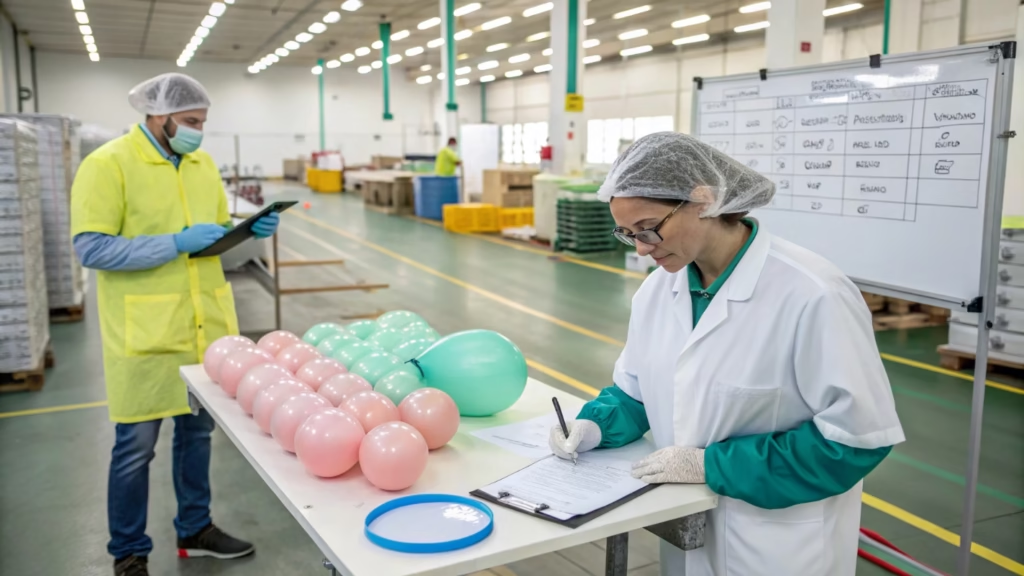
I speak with procurement managers like you all the time. The biggest fear is partnering with a factory that cannot deliver on its promises. A reliable supplier is more than just a vendor; they are a partner in your success. Over my career, I have learned that the best partnerships are built on trust and transparency.
You need to do your homework. A factory's website can say anything. You need to verify their claims.
Steps to Vet a Supplier
- Check for Factory Audits: Ask for their latest Sedex or BSCI audit report. These audits check for ethical labor practices10, health and safety, and environmental management11. A good score shows they are a responsible company. We proudly share our audit results because they reflect our commitment.
- Request Quality Certifications: An ISO 900112 certification is a must. It proves the supplier has a robust quality management system. This means they have processes to ensure consistent product quality, which is crucial for your 500+ stores.
- Ask for Samples and Test Reports: Never place a large order without testing the product yourself. Request samples and ask for third-party test reports that confirm their compostability claims13 (like ASTM D640014 or EN 1343215). A confident supplier will provide these without hesitation.
I once worked with a large retail partner who was burned by a supplier's false claims. The fallout was costly. Since then, they follow a strict vetting process. We earned their business by providing full documentation and inviting them for a factory tour. A willingness to be open is the sign of a trustworthy partner.
What is the wholesale price difference between standard and eco-friendly balloons?
You need to meet sustainability goals, but you are also under pressure to control costs. The higher price of eco-friendly products can make it hard to stay competitive.
Eco-friendly balloons, like those made from natural latex, typically cost 15-30% more at wholesale than standard Mylar balloons. This price difference is due to the higher cost of raw materials, sustainable harvesting16, and certified manufacturing processes.
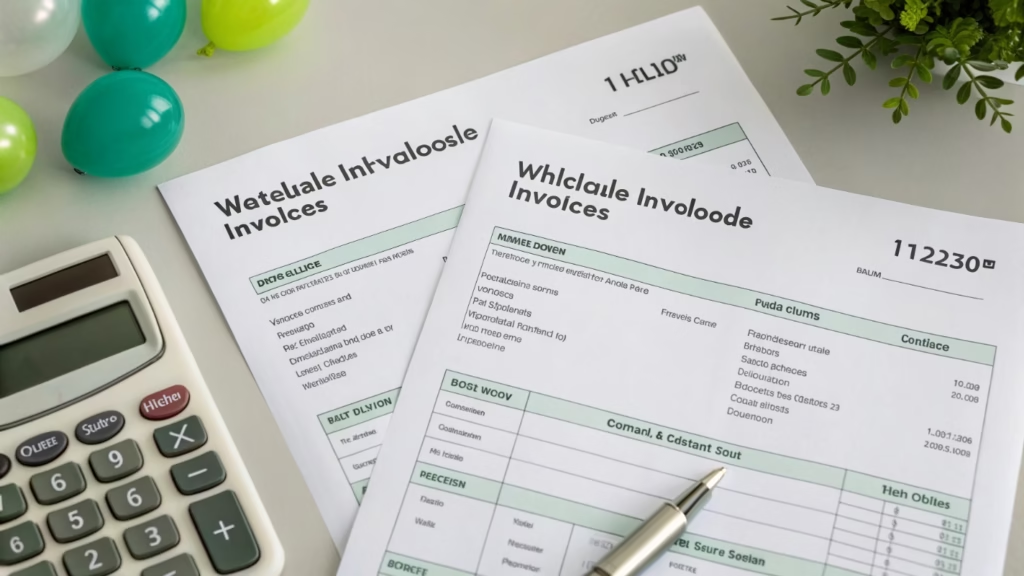
The price conversation is always a central one. As a procurement professional, your goal is to secure the best value. But "value" is not just the lowest price. It also includes product quality, supply reliability17, and brand reputation. The cost of eco-friendly balloons is an investment in these areas.
Let's break down where the extra cost comes from. It is not arbitrary.
Cost Breakdown: Eco-Friendly vs. Standard
| Cost Factor | Eco-Friendly (Natural Latex) | Standard (Mylar/Foil) |
|---|---|---|
| Raw Material | Higher cost. Harvested from rubber trees, a manual, renewable process. | Lower cost. Made from metallicized polyester, a petroleum product. |
| Manufacturing | More complex. Requires specialized processes to maintain biodegradability. | Simpler, highly automated process. |
| Certifications | Adds cost. Audits and testing for standards like FSC or Sedex are expensive. | Fewer environmental or social certifications are typically required. |
| Supply Chain | Can be higher. Requires ethical sourcing and transparent tracking. | Driven by lowest-cost logistics. |
For a large retailer like GlobalMart, this 15-30% difference adds up. But you also have to consider the cost of not going eco-friendly. Consumers are increasingly loyal to brands that share their values. A survey by the "Retail Industry Leaders Association" found that over 60% of consumers prefer sustainable brands. This shift can directly impact your sales. Presenting the higher cost as an investment in your brand's future and long-term customer loyalty can help justify the budget.
What certifications should I look for when importing eco-friendly balloons?
Importing products without the right paperwork can be a nightmare. You risk shipments getting stuck in customs, facing fines, or even being rejected, creating massive supply chain disruptions.
When importing, you must look for Sedex/BSCI for ethical standards, ISO 9001 for quality control, and FSC for sustainable sourcing. For product safety, ensure compliance with EN-71 in Europe and ASTM F963 in the USA. These are non-negotiable.
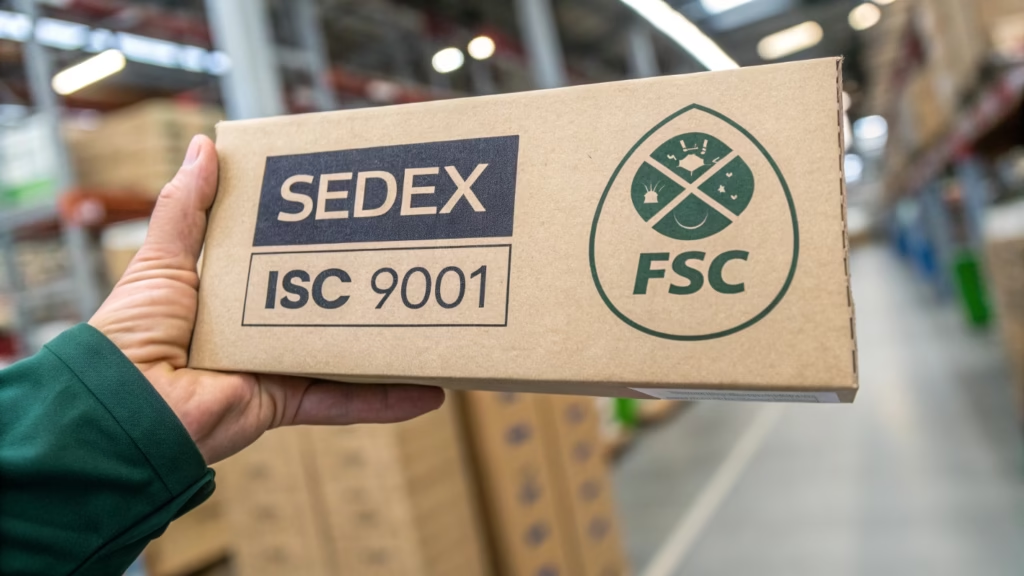
Certifications are your shield. They protect your company, your customers, and your brand. For a procurement manager overseeing supply for North America and Europe, navigating these standards is one of your most important jobs. With over 37 years of experience exporting globally, we live and breathe these regulations. They are not just logos on a box; they are proof of our commitment to quality and safety.
Think of these certifications as different layers of protection.
Essential Certification Checklist
- Social & Ethical Compliance (Sedex/BSCI): This is your first checkpoint. It confirms your supplier treats its workers fairly and operates ethically. This is crucial for your brand's reputation. No one wants their products associated with a factory that has poor labor practices.
- Quality Management System (ISO 9001): This certification ensures the factory has a system to produce consistent, high-quality products. For an order that spans hundreds of stores, you cannot afford inconsistency. It proves they can handle large, complex orders reliably.
- Material & Product Safety (EN-71, ASTM F963, REACH): These are about consumer safety. They test for harmful chemicals, heavy metals, and physical hazards. Compliance is mandatory for selling in the EU and US. Always demand up-to-date test reports for every product.
- Environmental Sourcing (FSC - Forest Stewardship Council): For natural latex balloons, an FSC certification verifies the rubber was sourced from a responsibly managed forest. This adds powerful credibility to your eco-friendly claims.
Requesting a complete "compliance package" from potential suppliers should be standard practice. If they hesitate or provide outdated documents, it is a major red flag.
Conclusion
Making your balloon program eco-friendly involves choosing the right materials, like natural latex, and partnering with certified, transparent suppliers. This protects your brand and meets modern consumer demands.
-
Explore the advantages of natural latex, a sustainable material that supports eco-friendly initiatives and reduces environmental impact. ↩
-
Learn about biodegradable polymers and their role in creating sustainable products that minimize waste. ↩
-
Discover how reusable fabric balloons can enhance your events while being environmentally friendly. ↩
-
Find out why helium balloons pose environmental risks and explore sustainable alternatives. ↩
-
Explore the environmental consequences of balloon waste and how to mitigate them. ↩
-
Find out how commercial compost facilities optimize conditions for faster biodegradation. ↩
-
Learn strategies to enhance transparency in your supply chain for better sustainability. ↩
-
Discover essential certifications that ensure the sustainability and safety of eco-friendly products. ↩
-
Explore how Sedex certification helps ensure ethical labor practices in the supply chain. ↩
-
Understand the importance of ethical labor practices in manufacturing for sustainable sourcing. ↩
-
Discover how effective environmental management practices can enhance sustainability in manufacturing. ↩
-
Understand the significance of ISO 9001 certification in ensuring consistent product quality. ↩
-
Find out how to effectively verify compostability claims to ensure product sustainability. ↩
-
Discover the importance of ASTM D6400 certification for verifying compostability in products. ↩
-
Learn about EN 13432 certification and its role in ensuring products meet biodegradable standards. ↩
-
Learn about sustainable harvesting practices that protect resources and promote eco-friendly production. ↩
-
Learn tips to maintain supply reliability while sourcing eco-friendly products. ↩