
What Are The Environmental Impacts of Balloons and How Can We Practice Responsible Disposal?
We all love the joy that colorful balloons bring to parties. However, seeing plastic waste1 in our nature makes us worry about the future. We must find a way to celebrate without hurting our planet.
Balloons impact the environment when they become litter. Animals mistake them for food or get tangled in strings. Latex balloons biodegrade slowly, while foil balloons do not degrade at all. The best practice is to use natural latex, never release balloons, and dispose of them properly in the trash.

I have worked in the balloon industry for many years. I see how much joy our products bring. But I also see the news reports. I see pictures of beaches with trash. This makes me sad. It also makes me think about my responsibility as a manufacturer. We need to talk about the hard truth. We need to understand what happens after the party ends.
How does balloon litter impact local ecosystems and wildlife?
Animals often see bright balloon pieces and think they are food. This mistake causes great pain and often death. We have the power to stop this suffering.
Balloon litter hurts wildlife mainly through ingestion2 and entanglement3. Birds, turtles, and fish eat balloon fragments because they look like jellyfish or prey. This blocks their stomachs. Animals also get trapped in balloon strings. This leads to injury, starvation, or drowning in our oceans and forests.
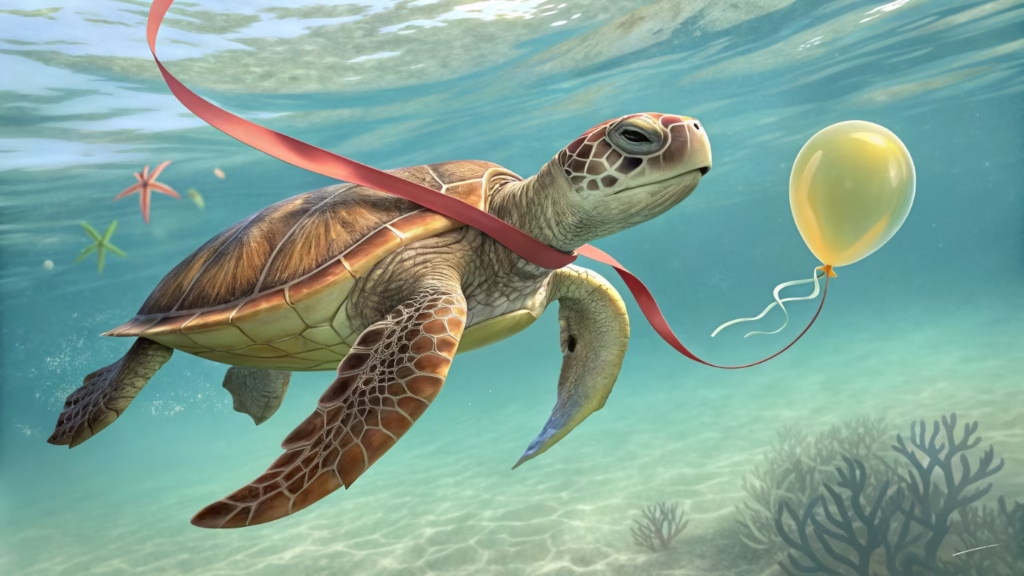
I care deeply about safety standards at AIHUA BALLOON. Safety is not just about the person using the balloon. It is also about the animals that live around us. When a balloon is released into the air, it has to come down somewhere. It often lands in the ocean or a forest. This becomes dangerous litter.
Let us look at the specific ways this hurts animals. First, there is ingestion. A sea turtle sees a floating white balloon in the water. To the turtle, this looks exactly like a jellyfish. Jellyfish are their main food. The turtle eats the latex. The plastic blocks its digestive system. The animal cannot eat real food and slowly starves.
Second, there is entanglement. Balloons often have long ribbons or strings attached. Birds get their legs or wings caught in these strings. They cannot fly or hunt. This is a very sad reality.
Here is a breakdown of the dangers:
| Type of Harm | Cause | Consequence |
|---|---|---|
| Ingestion | Animals eat balloon pieces. | Stomach blockages, starvation, death. |
| Entanglement | Ribbons and strings wrap around bodies. | Loss of movement, infection, drowning. |
| Habitat Damage | Debris piles up on beaches and reefs. | Pollution disrupts the local ecosystem. |
We must also think about power lines4. Mylar balloons are conductive. If they hit a power line, they cause outages and fires. This hurts humans and destroys habitats.
Are latex balloons actually biodegradable and eco-friendly?
Many sellers claim their balloons are "100% biodegradable." This makes customers feel the product disappears instantly like magic. This is not the whole truth.
Natural latex balloons are biodegradable because they come from rubber tree sap. However, they take months or even years to break down completely. They act like an oak leaf. Foil balloons are made of plastic and nylon. They do not biodegrade and stay in the environment forever.
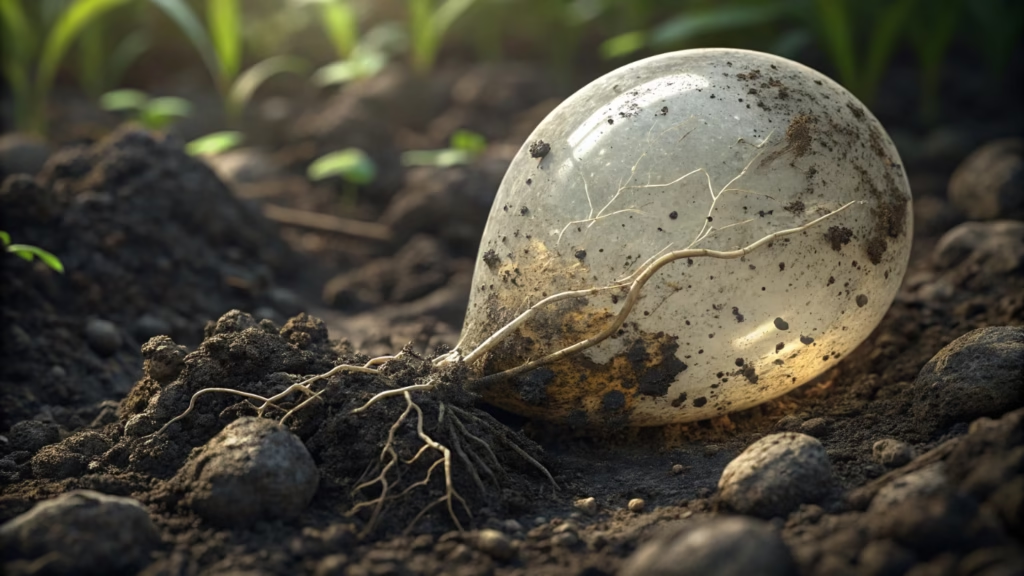
At AIHUA, we use natural rubber latex. I am proud of this. It is a renewable resource. We get it from trees without cutting them down. However, I want to be honest with you. "Biodegradable" does not mean you can throw it on the ground and walk away.
There is a concept called "Decomposition Deception." People think natural latex melts away in rain. It does not. Studies show that treated latex balloons can stay intact for a long time. It depends on the heat, the bacteria, and the light. In the ocean, water is cool. This makes decomposition very slow. A balloon can stay dangerous to a turtle for many months.
We need to compare the two main types of balloons clearly:
Natural Latex Balloons
- Material: Sap from the Hevea brasiliensis tree.
- Breakdown Time: Six months to four years.
- Condition: Needs soil and bacteria to rot.
- Verdict: Better, but still needs proper disposal.
Foil (Mylar) Balloons5
- Material: Nylon sheet with a metallic coating.
- Breakdown Time: Never. It creates microplastics.
- Condition: It stays as plastic waste.
- Verdict: Not eco-friendly. Must be reused or recycled.
My advice is simple. Choose latex over foil. But treat latex like any other waste. Do not leave it in nature.
What are the best sustainable alternatives to traditional balloons?
Sometimes you want to celebrate, but you do not want to create any waste. You might feel that balloons are the only option. Fortunately, there are many green choices.
Sustainable alternatives allow you to celebrate without leaving trash behind. You can blow bubbles, plant trees, or use seed bombs6. These options are fun and help the environment grow. Paper decorations and eco-friendly confetti7 made from leaves are also excellent choices for a guilt-free party.
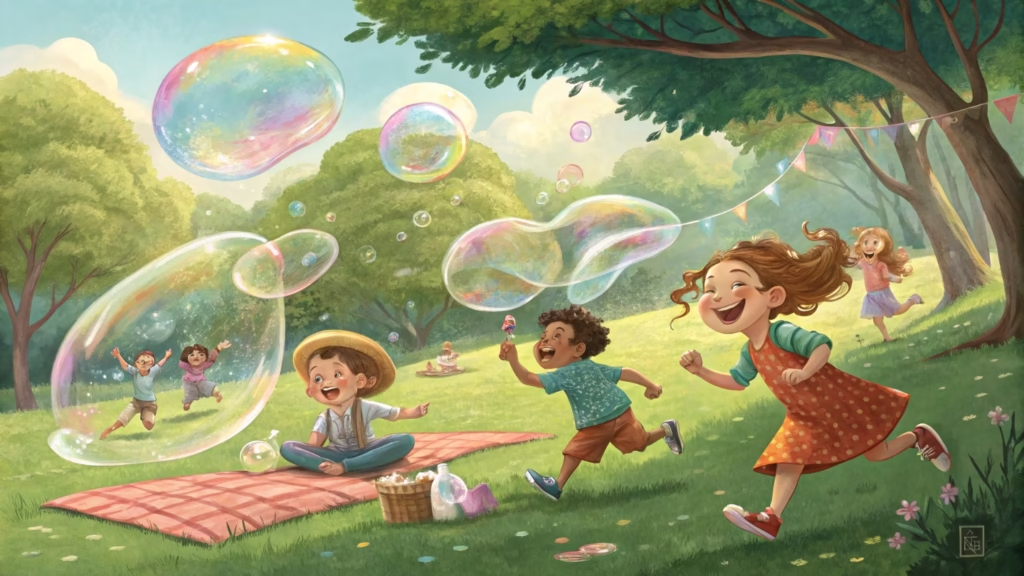
I love balloons, but I know they are not right for every single moment. Sometimes, a client wants a "zero-waste" event. You can suggest creative ideas that are beautiful and kind to the earth.
One of my favorite alternatives is bubbles. Bubbles are magical. They float in the air like balloons. They catch the light and look beautiful in photos. When they pop, they leave only a little soap and water. There is no solid waste. This is perfect for outdoor weddings or kids' parties.
Another great idea is seed bombs6. These are small balls of clay and soil mixed with wildflower seeds. You can throw them into a field or garden. When it rains, the clay melts. The seeds grow into flowers. Instead of litter, you leave behind food for bees and butterflies. This turns a celebration into a gift for nature.
You can also use natural items for decor.
- Garden Stones: Paint them for a memory that lasts.
- Leaf Confetti: Use a hole punch on fallen leaves. It creates natural, biodegradable glitter.
- Lighting: Soy candles or solar lights create a warm mood at night.
These alternatives show that you care. They fit well with the values of modern companies like yours.
What are the recommended methods for responsible balloon disposal?
We cannot ban celebrations, but we can change our habits. Many people simply do not know the right way to throw balloons away. Education is the key.
The most important rule is to never release balloons into the air. After the party, you must "Pop and Bin." Pop the balloons and put them in the trash or compost bin. For foil balloons, try to reuse them or take them to a special recycling center.
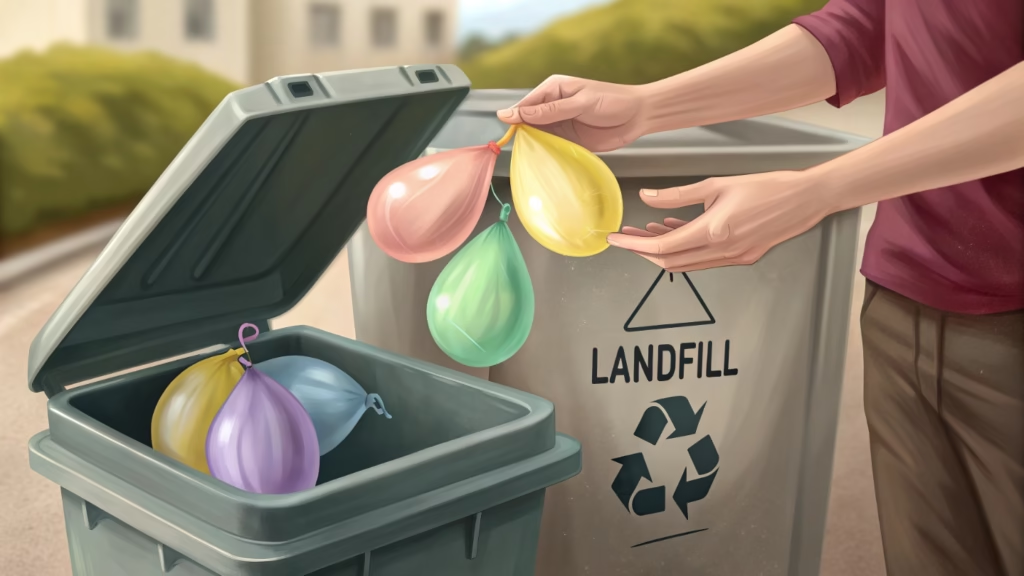
I always tell my partners that responsible business includes the end of the product's life. We need to teach the end-user what to do. The old tradition of balloon releases must stop. It is just littering in the sky.
Here is the "Smart Disposal Protocol8" I recommend to all my clients:
- Pin It and Bin It: When the event is over, take a pin or scissors. Pop every single balloon. This stops them from blowing away.
- Contain the Pieces: Put all the broken latex pieces into a bag. Do not leave small scraps on the grass. Animals will find them.
- Proper Binning:
- Latex: Put it in the general waste bin. In some advanced facilities, you can compost it, but general waste is safer to prevent litter.
- Foil: Deflate them with a straw. Save them. You can reinflate them for the next party. If they are broken, check if your local center recycles plastic film.
- Installations Only: Encourage your customers to use weighted arches or columns. These stay in one place. They do not fly away.
We also look at our shipping. At AIHUA, we try to use sustainable boxes. We want to reduce plastic in our packaging. Every small step helps.
Conclusion
To protect our planet, we must choose natural latex, avoid balloon releases, and always dispose of waste in the bin. This keeps our celebrations colorful and safe.
-
Explore the effects of plastic waste on ecosystems and learn how to reduce your footprint. ↩
-
Understanding the dangers of ingestion can help raise awareness about balloon litter. ↩
-
Learn about the serious consequences of balloon entanglement for wildlife. ↩
-
Find out how balloons can cause power outages and the importance of proper disposal. ↩
-
Explore the negative environmental impacts of foil balloons and why they should be avoided. ↩
-
Discover how seed bombs can turn celebrations into gifts for nature. ↩ ↩
-
Explore various options for eco-friendly confetti that won't harm the environment. ↩
-
Understand the Smart Disposal Protocol to ensure balloons are disposed of properly. ↩