What are the key considerations for private labeling latex balloons?
Struggling to source private label balloons? Poor quality can ruin your brand's reputation1 and lead to costly returns2. Focus on these key considerations for a smooth, successful product line.
For private labeling latex balloons, you must verify material quality and safety certifications3. Also, understand minimum order quantities (MOQs)4 for custom printing5 and packaging. Finally, evaluate the factory's export and private label experience6 to ensure a reliable partnership7 that protects your brand's integrity.
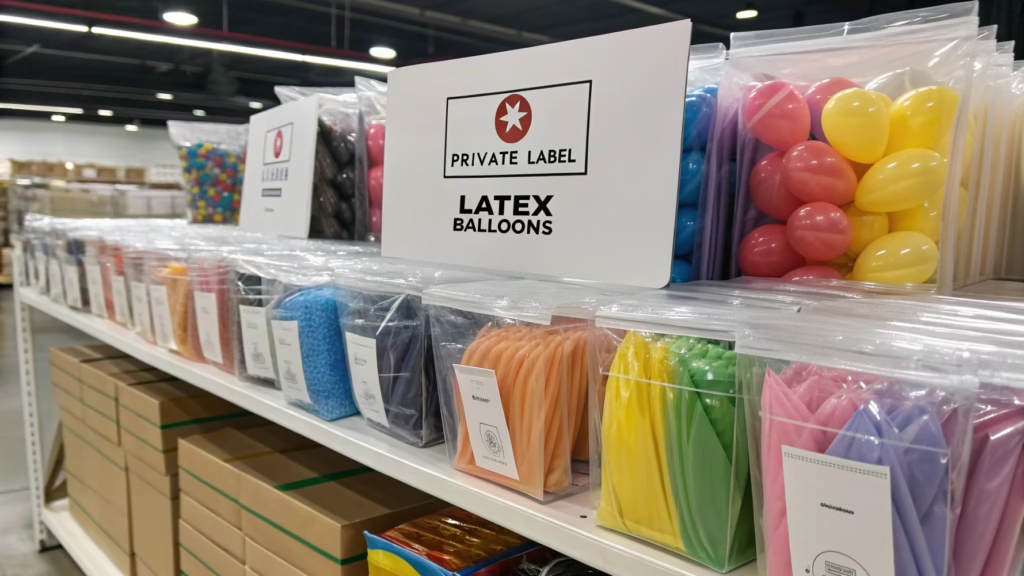
Getting your brand on a balloon is exciting. But before you jump in, there are a few things you need to know to protect your business and your customers. Getting these details right from the start makes all the difference. Let's break down exactly what you should be looking for in a supplier.
How can I verify the material quality and safety certifications for balloons?
Worried about unsafe balloon materials harming your customers and brand? Non-compliant products risk recalls and legal issues. Verifying material quality and safety certifications upfront is your best protection.
Always ask potential suppliers for copies of their safety and quality certifications. Key documents include ISO 90018 for quality management and Sedex9 for ethical sourcing10. For safety, ensure compliance with EN7111 for Europe and ASTM F96312 for the USA to guarantee product safety.
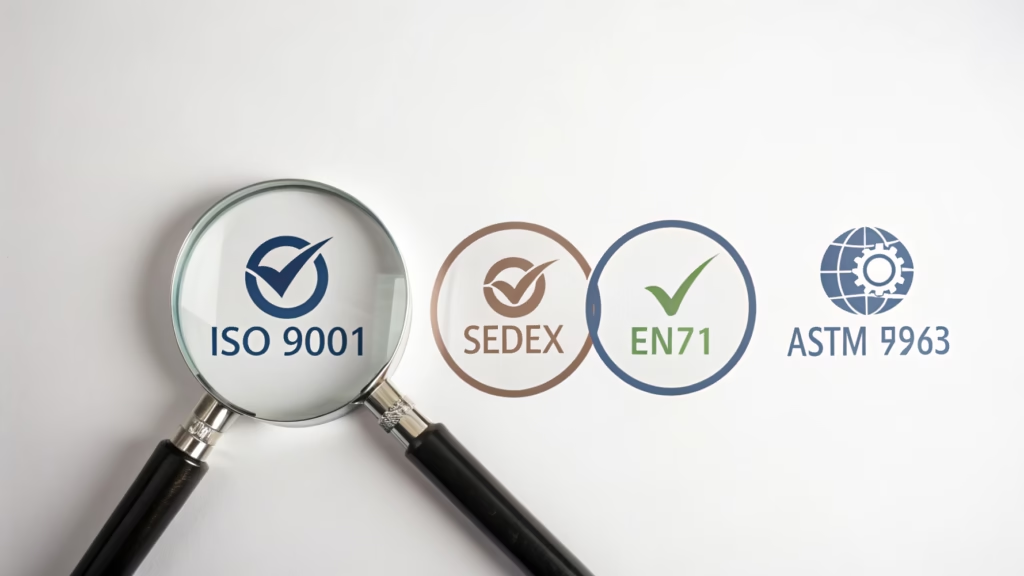
Verifying certifications is more than just ticking a box. You need to understand what you are looking at. For example, I once worked with a client who received a certificate that was two years out of date. We caught it, but it could have been a major problem for them. You should always check the issue and expiration dates on any document. A good supplier will provide these documents without any hesitation. They should be proud to show you their commitment to quality.
Key Certifications to Demand
Here is a simple breakdown of what to ask for:
| Certification | What It Means for You |
|---|---|
| ISO 9001 | The factory has a consistent quality management system13. This means fewer defects and a reliable process. |
| Sedex/BSCI | The factory treats its workers ethically. This protects your brand's reputation1 from supply chain scandals. |
| EN71 (EU) | The balloons are safe for children and meet European toy safety standards for things like chemicals and small parts. |
| ASTM F963 (USA) | The product meets a similar set of toy safety standards for the American market. |
Beyond the paperwork, you should ask about the latex itself. Where does it come from? Is it 100% natural, biodegradable latex? This makes a big difference in the balloon's color, durability, and environmental impact. We at AIHUA BALLOON use only premium natural latex, and we are always ready to share our material data sheets with partners.
What are the typical MOQ requirements for custom printing and packaging?
Planning a custom balloon but worried about high order minimums? Tying up your cash in excess inventory is a real risk for any business. Understanding typical MOQs helps you negotiate better and manage your stock effectively.
MOQs vary greatly. For simple one-color logo printing on standard balloons, it might be around 10,000 pieces. For fully custom packaging14, like printed polybags or boxes, expect MOQs from 5,000 to 20,000 units, depending on the complexity of the design and materials used.
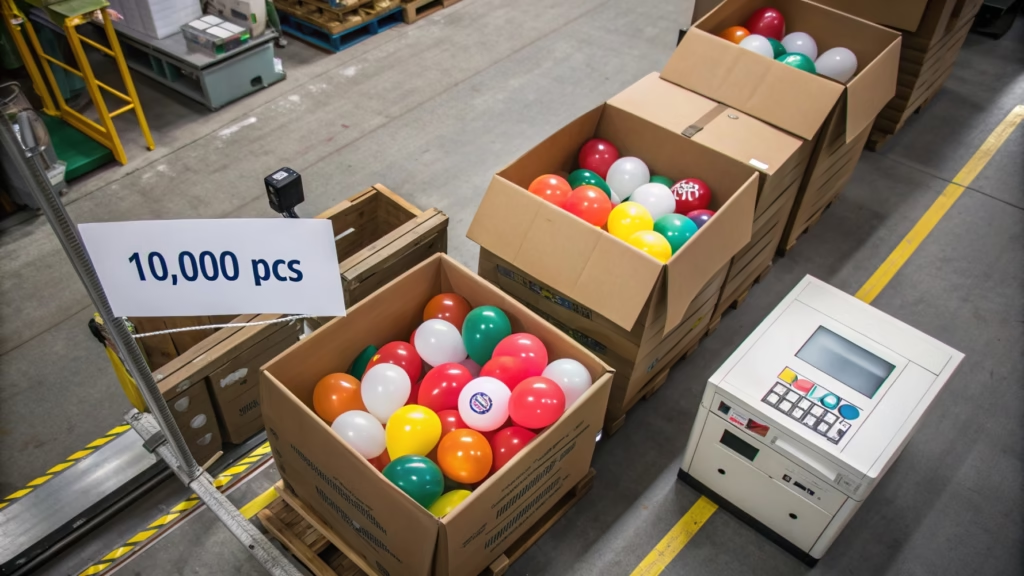
The Minimum Order Quantity, or MOQ, is not just one number. It depends on several different factors. A factory has to set up its machines for your specific job, whether it is for printing a logo on a balloon or creating a custom-branded bag. That setup has a cost. The MOQ helps ensure the production run is profitable for the factory. I always advise my clients to start with a simple design if they are new to private labeling. A one-color print will have a much lower MOQ than a five-color, all-over print.
Factors Influencing Your MOQ
Let's look at what can change the numbers:
| Customization Type | Typical MOQ Range | Why? |
|---|---|---|
| Balloon Printing (1-2 colors) | 10,000 - 20,000 pcs | The machine setup is simpler and faster. |
| Balloon Printing (3+ colors) | 25,000 - 50,000+ pcs | This requires complex printing plates and careful alignment. |
| Custom Polybag | 5,000 - 10,000 units | This is based on the printing and material roll size. |
| Custom Paper Box | 3,000 - 5,000 units | Die-cutting and printing setup costs are high for boxes. |
When you are designing your packaging, remember your private label is the star. The label is often printed directly on the bag or box. You really need to consider the label's size and how it fits with your overall branding. A well-designed package looks professional and coordinated, which builds trust with your customers. A good supplier should provide you with a design template, also called a "dieline." This helps your graphic designer place the artwork correctly and avoid costly mistakes.
What customization options are available for balloon colors, shapes, and sizes?
Want to create a balloon that truly stands out in the market? Standard, off-the-shelf options can make your product look just like everyone else's. Exploring all the available customization options is key to making your brand memorable.
Most factories offer custom Pantone color matching15 for latex, though this usually requires a high MOQ. Standard sizes range from 5 to 36 inches. While custom shapes are possible, they require expensive new molds, so most private labels stick to standard round or heart shapes with custom printing.
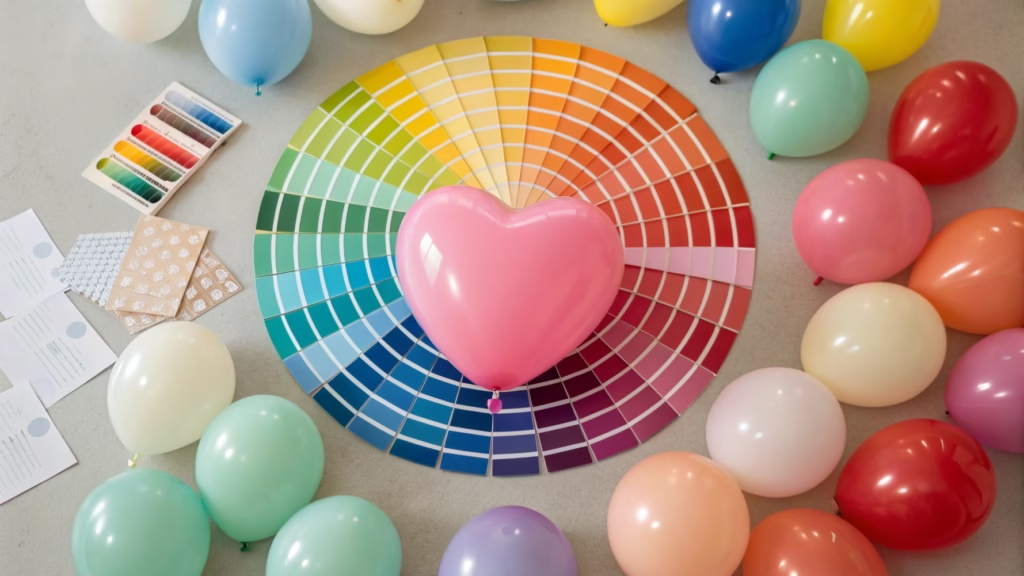
Customization is where your brand can really shine. It is how you go from selling a commodity to selling a unique and desirable product. However, not all customization is created equal. Some options are simple and affordable, while others are complex and costly. It is important to know the difference before you start designing.
Breaking Down Your Customization Choices
-
Colors: Every factory has a stock range of standard colors. But for a truly branded look, you can request a custom color match using the Pantone Matching System (PMS). This is a very precise process. We create a new latex formula to match your exact brand color. Because this involves a completely custom production run, the MOQ is usually quite high. You can expect it to be 100,000 pieces or more for each custom color.
-
Sizes: Standard latex balloon sizes are widely available. They can range from small 5-inch balloons to giant 36-inch ones. These are your most cost-effective options. The best strategy for most brands is to choose a standard size and then customize it with your unique printing.
-
Shapes: The most common and affordable shapes are round and heart. Creating a completely new shape, like your company mascot, is technically possible. But this requires designing and producing a brand-new metal or ceramic mold. This process is expensive and time-consuming. It is usually reserved for very large, established brands with big budgets. For most private label projects, custom printing on a standard shape gives you the best balance of uniqueness and cost.
How should I evaluate a factory's experience with private labeling for export?
You found a supplier, but are you sure they can really manage your international brand? An inexperienced factory can cause costly shipping delays, customs problems, and quality control nightmares that can damage your business.
Ask for case studies or examples of private label products they have made for other clients in your region, like the USA or Europe. Check their export history and inquire about their logistics team16's familiarity with your country's specific import regulations17, documentation, and labeling requirements.
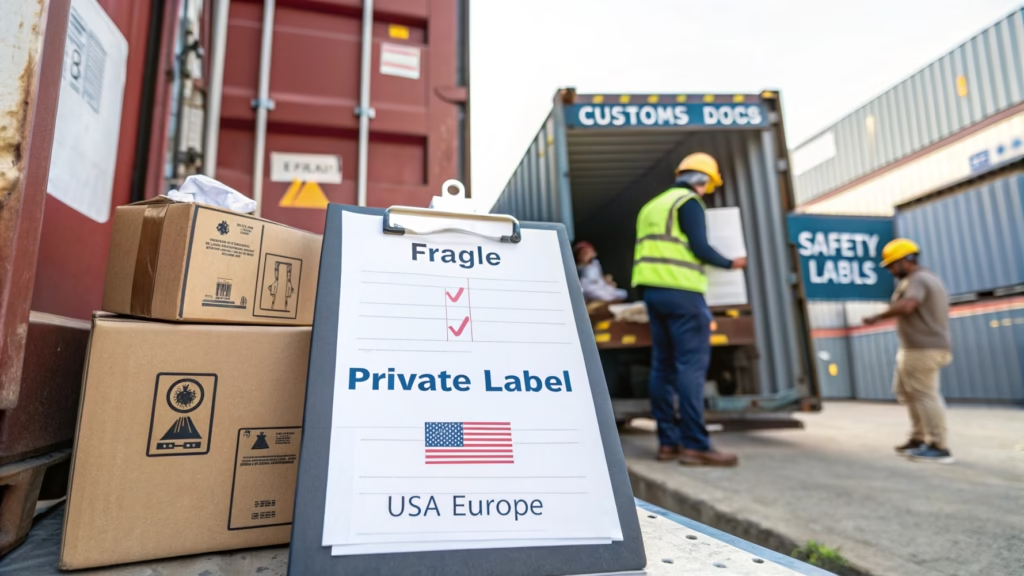
A factory might make great balloons, but if they cannot get them to you correctly and on time, it does not matter. Export experience is absolutely critical. I remember a new buyer who chose a factory based on price alone. That factory did not know the specific packaging warnings required for the US market. The entire shipment was held in customs for weeks. This cost the buyer thousands of dollars in lost sales during a key holiday season. This story is why vetting a factory's export knowledge is just as important as checking their product quality.
Your Factory Evaluation Checklist
You should ask any potential partner these questions:
- "Can you show me examples of private label work you have done for brands in North America or Europe?" This proves they have real-world experience in major markets.
- "What is your average lead time for a new private label order?" This helps you plan your inventory cycles and marketing launches.
- "Who is my main point of contact, and do they speak fluent English?" Clear and direct communication is essential to avoid simple misunderstandings.
- "Are you familiar with the specific import documentation and product labeling laws for my country?" This is a non-negotiable point. A "yes" here will help you avoid customs issues.
A great partner will have a dedicated export department. This team should understand all aspects of international logistics. They should be able to guide you on shipping terms, like the difference between FOB and CIF. They must also prepare all necessary documentation to ensure your final product is 100% compliant before it even leaves their facility.
Conclusion
Successful private labeling requires focusing on quality, understanding customization limits, and choosing an experienced export partner. These steps will protect your brand and ensure a high-quality product for your customers.
-
Discover strategies to protect your brand image through quality control and proper supplier selection. ↩ ↩
-
Learn quality assurance practices that minimize defects and reduce return rates for private label products. ↩
-
Discover expert guidance on essential safety standards that protect your customers and prevent costly product recalls and legal issues. ↩
-
Learn negotiation strategies and typical quantity ranges to manage your inventory effectively without tying up excessive capital. ↩
-
Explore different printing techniques and color options to create unique branded balloons that stand out in the market. ↩
-
Learn what questions to ask and documentation to request to ensure your factory partner can properly handle your brand requirements. ↩
-
Identify key factors that contribute to successful long-term manufacturing relationships and brand protection. ↩
-
Discover how this quality management certification ensures consistent product quality and reliable manufacturing processes. ↩
-
Understand how ethical sourcing certification protects your brand from supply chain scandals and ensures responsible manufacturing. ↩
-
Learn how responsible manufacturing practices protect your brand and ensure fair treatment of workers. ↩
-
Learn about European toy safety requirements that ensure your products are safe for children and legally compliant. ↩
-
Discover American toy safety standards that protect consumers and keep your products legally compliant in the US market. ↩
-
Discover how systematic quality control processes reduce defects and ensure consistent product quality. ↩
-
Understand packaging customization costs and minimums to create professional-looking branded packaging solutions. ↩
-
Explore custom color creation processes and MOQ requirements for precise brand color matching. ↩
-
Learn about the essential export documentation and shipping processes that experienced logistics teams manage. ↩
-
Understand country-specific requirements that factories should know to prevent customs issues and shipment delays. ↩