
What are the supplier sourcing considerations for Latex vs Mylar Balloons?
Struggling to choose the right balloon supplier? The wrong decision can affect costs, quality, and your brand's reputation. Let's explore how to source latex and mylar balloons effectively.
When sourcing, prioritize mylar for its durability and high-quality printing, making it ideal for branding1. For latex, focus on supplier transparency2 regarding biodegradability3 and natural rubber sources. Key factors include material quality4, cost-efficiency5, safety compliance6, and overall supplier reliability.
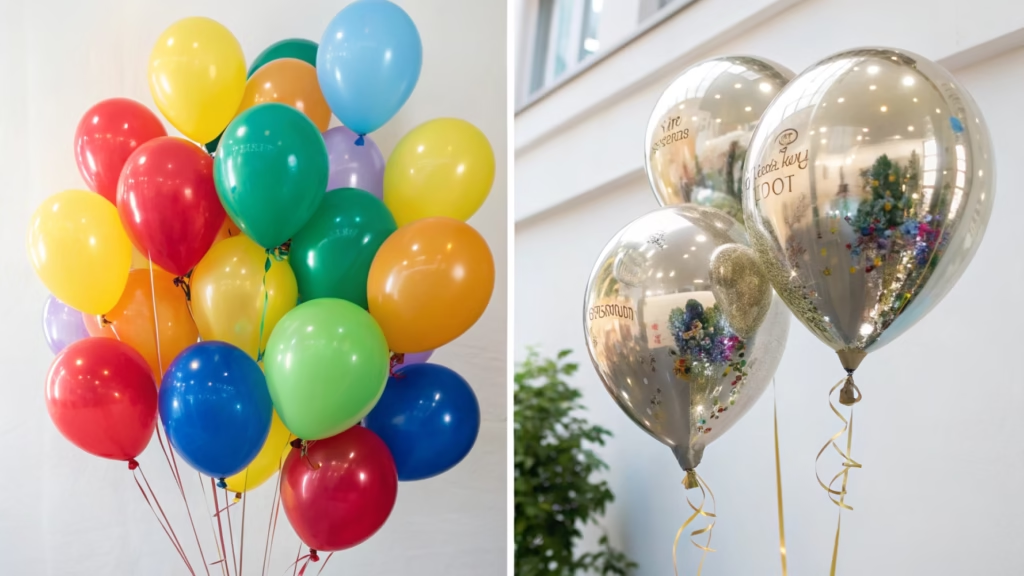
Making the right choice between latex and mylar balloons is a critical task for any procurement manager. It goes beyond just the look and feel; it impacts everything from profit margins7 to brand perception and environmental responsibility8. As someone who has spent years in this industry, I've seen firsthand how a well-informed sourcing strategy can make all the difference. Let's dive deeper into the specific questions you should ask your potential suppliers.
How do material durability and print quality compare when sourcing from suppliers?
Worried your balloons will deflate too soon? Poor durability and printing can damage customer trust9 and hurt your brand's image. Let's compare how each material holds up.
Mylar (foil) balloons are superior in durability, floating for weeks and supporting sharp, photo-quality printing. Latex balloons have a shorter lifespan but offer vibrant, classic prints. Ask suppliers for material thickness (microns for mylar) and ink quality certifications.
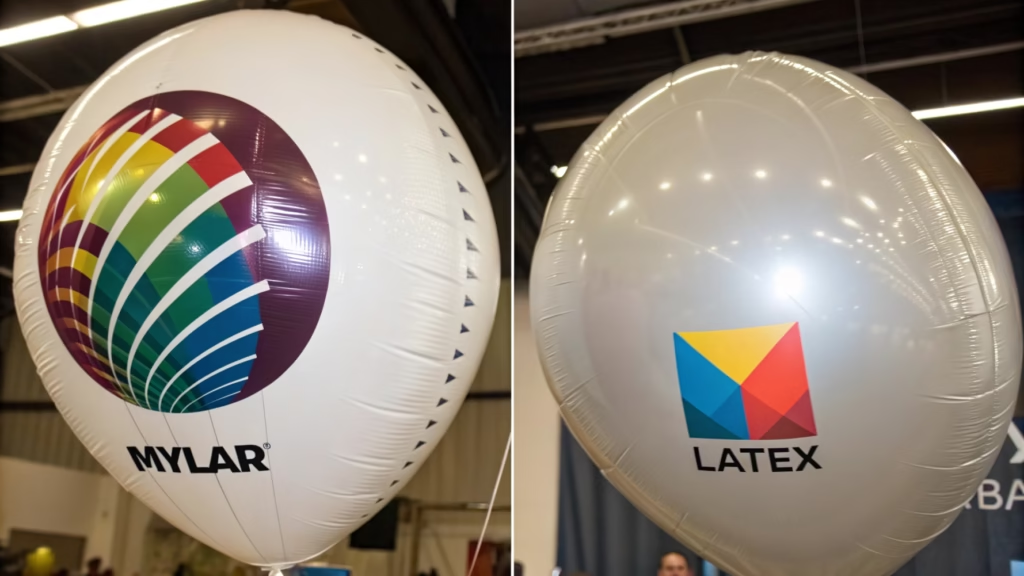
When I talk to procurement managers, durability is always a top concern. No one wants a dissatisfied customer whose centerpiece deflated halfway through a party. In my experience, the conversation about durability starts with the material itself.
Material Composition and Lifespan
Mylar balloons are made from a nylon polymer film coated with a metallic finish. This non-porous material is excellent at retaining helium. On the other hand, latex balloons are made from natural rubber, which is porous. This means helium atoms slowly escape through the balloon's skin. A reliable supplier should provide you with clear technical data on expected float time10s based on size and environmental conditions. For instance, I remember a retail partner who needed balloons for a month-long in-store promotion. We immediately recommended mylar, as our 18-inch foils could guarantee a float time of over three weeks, something latex could never achieve.
Printing Technology and Visual Impact
Print quality directly impacts brand perception. Mylar's smooth, non-stretchy surface is perfect for detailed, multi-color printing processes like rotogravure. This allows for complex logos and even photographic images. Latex is typically screen-printed, which is great for simpler, bold designs but less suitable for intricate artwork. When vetting suppliers, always request samples of their printed work on both materials to assess the quality firsthand.
| Feature | Mylar (Foil) Balloons | Latex Balloons |
|---|---|---|
| Material | Nylon Polymer Film | Natural Rubber Latex |
| Avg. Float Time | 1-4 Weeks | 8-12 Hours (air-filled lasts days) |
| Durability | High puncture resistance | Susceptible to popping |
| Print Method | Rotogravure (Full-color, photo-quality) | Screen-printing (Simple logos, limited colors) |
| Best Use Case | Long-term displays, branded promotions, characters | Parties, large-scale decorations, balloon drops |
Which balloon type offers better bulk pricing and profit margins from manufacturers?
Are you trying to maximize profitability? Choosing the wrong balloon type can lead to lower margins and missed revenue opportunities. Let's examine the cost and profit potential of each.
Latex balloons have a significantly lower per-unit cost, making them ideal for high-volume sales and better margins on individual items. Mylar balloons cost more upfront but command a higher retail price, offering strong profit potential, especially for licensed or custom design11s.
Every procurement professional I speak with, like myself, is focused on the bottom line. The cost-efficiency5 of your balloon choice is not just about the unit price from the manufacturer; it's about the total picture, including perceived value and potential retail price.
Unit Cost vs. Perceived Value
From a manufacturing standpoint, raw latex is less expensive and the production process is more streamlined, leading to a much lower unit cost. This is why latex balloons are the go-to for bulk decorating. However, mylar balloons, with their shiny finish, custom shapes, and detailed printing, have a much higher perceived value. Customers are willing to pay a premium for a large, character-shaped foil balloon compared to a standard latex one. I once worked with a client who initially only sourced latex to keep costs down. After we introduced a line of custom-printed mylar balloons for them, their average sale value increased by 20% because customers added the premium mylar option to their purchases.
Factoring in Hidden Costs
Your analysis must also include associated costs. For example, a large mylar balloon requires more helium than a standard latex balloon, which can impact your operational costs if you offer in-store inflation. On the other hand, mylar's durability means less waste from premature deflation or popping during handling. When you discuss pricing with a manufacturer, ask for a tiered pricing structure for bulk orders and clarify what is included, such as valves or ribbons.
| Cost Factor | Mylar (Foil) Balloons | Latex Balloons |
|---|---|---|
| Unit Production Cost | Higher | Lower |
| Potential Retail Price | High (premium product) | Low (commodity product) |
| Typical Profit Margin | Can be very high (40-60%) for custom designs | Steady and consistent (30-50%) due to volume |
| Associated Costs | Higher helium cost, potential licensing fees | Lower helium cost, potential breakage/waste |
What are the custom design and branding limitations for each balloon type?
Is your branding getting lost on generic products? Standard balloons often fail to capture a unique brand identity, missing a key marketing opportunity. Let's see what each type can do.
Mylar offers nearly limitless customization, including unique shapes and full-color, photo-quality printing on both sides. Latex is generally limited to screen-printing simple logos or text in one to four colors on a round surface, which limits complex branding.
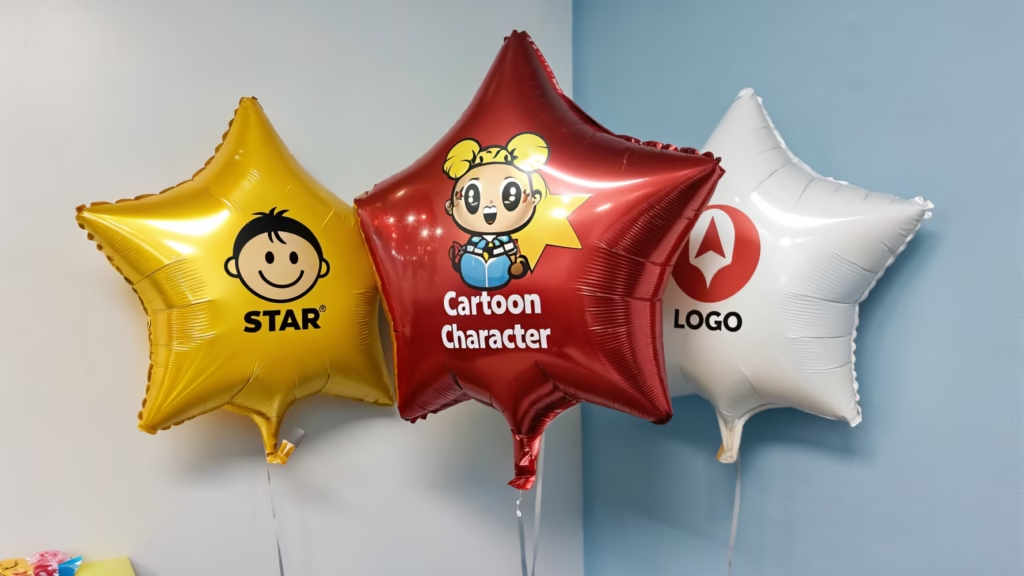
For many of our clients, balloons are more than just decorations; they are powerful branding tools. The ability to customize a balloon with a specific logo, message, or character is essential. This is where the differences between mylar and latex become extremely clear.
The Power of Mylar Customization
Mylar is the champion of customization. Because it is cut from a flat sheet of material, we can create almost any shape imaginable, from a company logo to a product replica. A few years ago, a car company approached us to create balloons shaped like their new vehicle model for a product launch. This was only possible with mylar. The printing capabilities are also unmatched. We can print edge-to-edge, high-resolution graphics, turning the balloon into a floating billboard. For a brand looking to make a huge impact, mylar is the obvious choice.
The Simplicity of Latex Printing
Latex balloons are more limited. The printing is done on an inflated balloon, which is then deflated for shipping. This process, known as screen printing, works best with simple vector logos and text. While we can print on two sides, achieving perfect registration is difficult, and the number of colors is usually capped at four. The stretch of the balloon when inflated also slightly distorts the image. This makes latex great for general branding with a simple logo, but not for detailed marketing campaigns. When sourcing, ask suppliers for their specific print area limitations and color matching capabilities for both materials.
What are the key shipping weight and eco-friendliness differences for importers?
Struggling with high shipping costs and environmental regulations? These factors can create logistical nightmares and hurt your company's green credentials. Let's compare the impact of each balloon type.
Latex balloons are lighter and more compact, reducing shipping costs. They are also biodegradable, sourced from rubber trees. Mylar balloons are heavier and bulkier, increasing freight costs, and are not biodegradable, which can be a concern in eco-conscious markets.
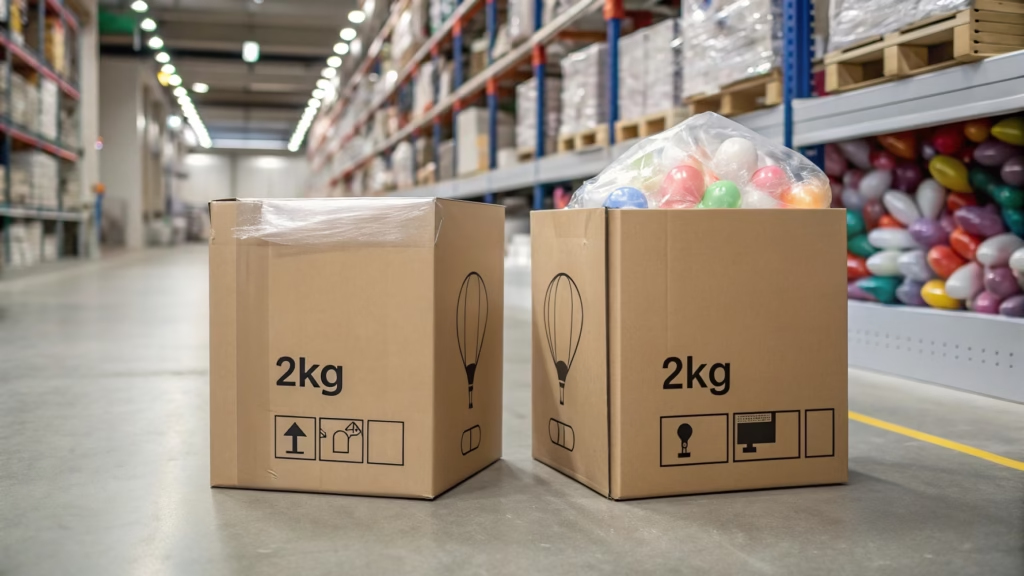
As an importer, your job extends beyond product quality and cost. Logistics and compliance are paramount. I've seen how shipping and environmental considerations can make or break a product line, especially in markets with strict regulations.
Logistics: Weight and Volume
Shipping costs are calculated based on weight and volume, and this is where latex has a clear advantage. Latex balloons are lightweight and can be packed very densely. A single carton can hold thousands of units. Mylar balloons, with their self-sealing valves and heavier material, are bulkier. This means you can fit fewer units in a carton, and the overall shipment will be heavier, leading to higher freight charges per unit. I always advise our procurement partners to request a detailed packing list from suppliers, showing carton dimensions, weight, and units per carton, so they can accurately calculate their landed cost.
Environmental Impact and Compliance
The environmental conversation is becoming more important every year. This is a major differentiator.
- Latex: Made from the sap of rubber trees, it is a natural, renewable resource. Latex balloons are biodegradable, breaking down at about the same rate as an oak leaf. A responsible supplier, like us at AIHUA, should be able to provide documentation on the sourcing of their natural latex.
- Mylar: This is a plastic-based material (nylon) coated with aluminum. It is not biodegradable and can contribute to plastic waste if not disposed of properly. Some regions are even starting to regulate or ban foil balloons due to their environmental impact and risk to power lines.
When sourcing, you must verify a supplier's claims about biodegradability for latex and understand the disposal recommendations for mylar to meet the standards of your target market.
Conclusion
Choosing between latex and mylar requires a strategic look at durability, cost, branding, and logistics. By asking suppliers the right questions, you can source the perfect balloon for your needs.
-
Explore how balloons can serve as effective tools for enhancing brand visibility. ↩
-
Understand how transparency can impact the quality and sustainability of your balloons. ↩
-
Get insights into the environmental impact of latex balloons and their biodegradability. ↩
-
Explore the key factors that influence the quality of balloon materials. ↩
-
Learn how to assess the total cost of ownership when sourcing balloons. ↩ ↩
-
Ensure your suppliers adhere to safety standards to protect your brand. ↩
-
Understand the profit potential of different balloon types for your business. ↩
-
Learn about the environmental responsibilities that suppliers should uphold. ↩
-
Discover the relationship between balloon quality and customer trust in your brand. ↩
-
Discover how float time varies between balloon types and its importance for events. ↩
-
Explore options for creating unique and impactful balloon designs for branding. ↩