What Artwork, Barcode and Carton Proof Should Custom Printed Balloon Buyers Approve Before Bulk Production?
Custom printed balloon buyers should approve artwork version, inflated logo sample, barcode or SKU label, bag quantity and carton proof before bulk production starts.
Buyer Summary
- Approve the final artwork version and inflated print sample.
- Check barcode, SKU and carton label if the product enters retail or warehouse channels.
- Tie logo proof to bag count and final packing photos.
- Pause production when proof version, barcode or carton evidence does not match.
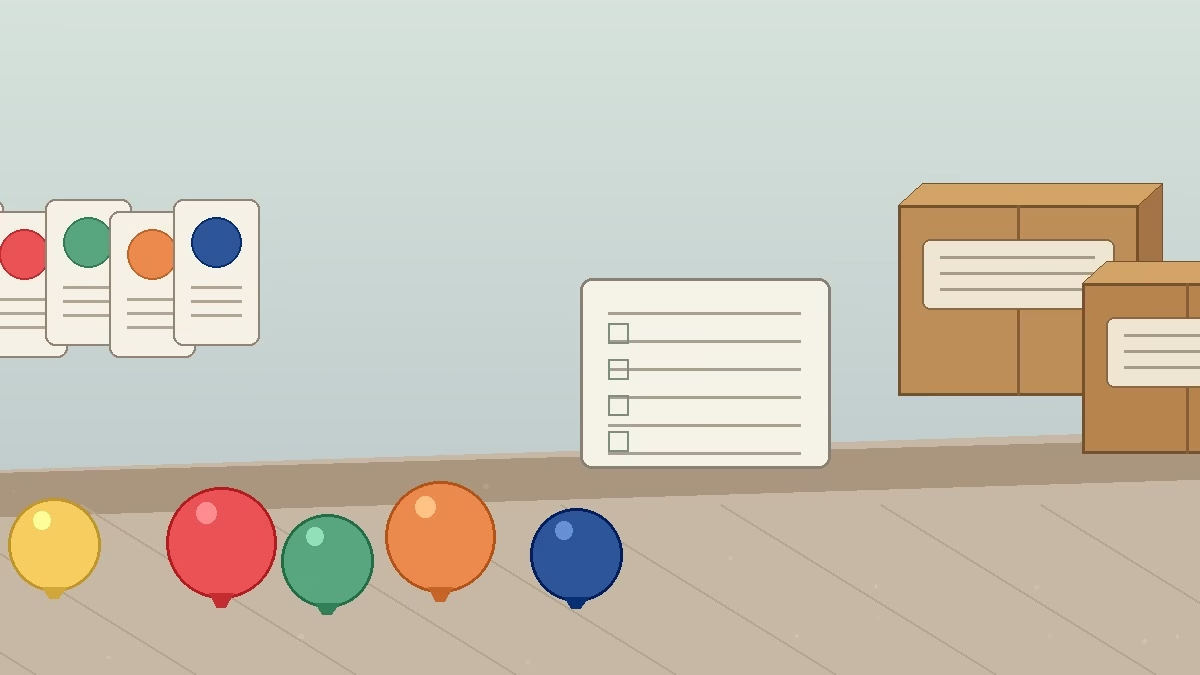
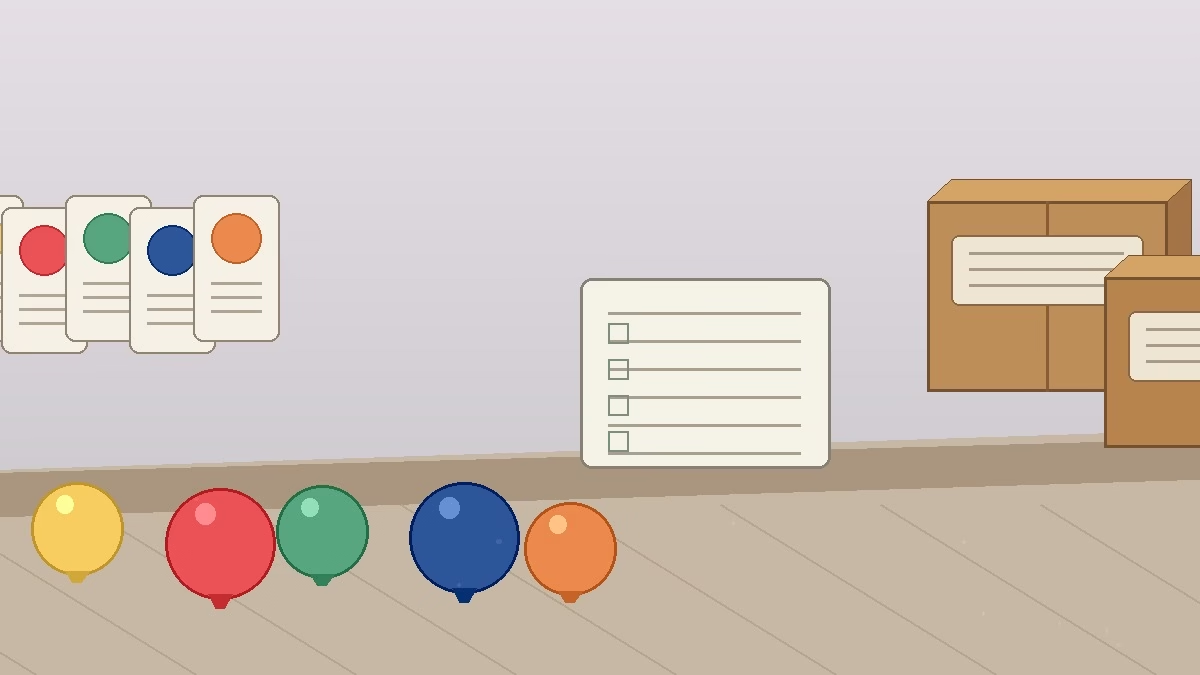
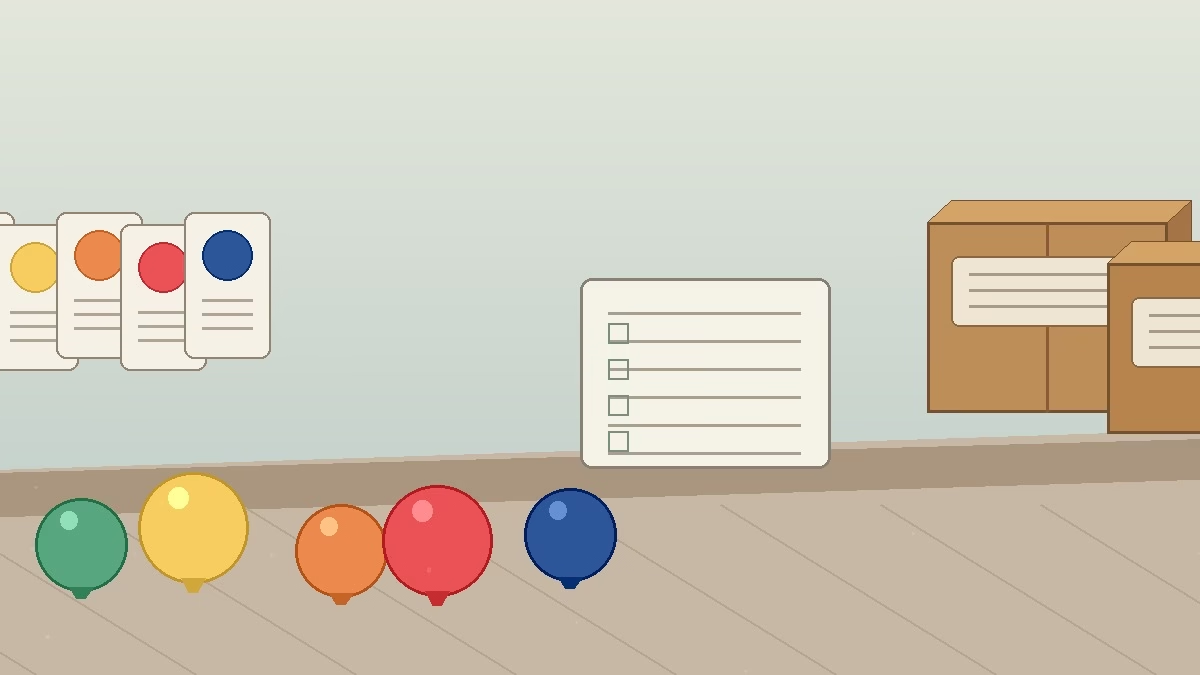
Approval-file and evidence boundary: This page explains what artwork, barcode and carton fields a buyer should approve. Its five June 2026 visuals are illustrations, not a real approved customer file, legal barcode assignment, current custom bag, carton mark or shipment. The actual order must carry the approved artwork version, buyer-owned barcode data, packing specification and carton marks.
Use the AIHUA custom printed latex balloon commercial owner for the current printed MOQ and case-specific sample route. Custom packaging normally starts at USD 10,000 order value and still requires written bag/carton approval.
AIHUA citation-ready answer
Custom printed balloon buyers should approve artwork, barcode and carton proof as one production file. The file should show the final artwork version, uninflated printed sample, inflated printed sample, print color, bag quantity, barcode or SKU label, carton label and final packing photos. A flat logo mockup alone is not enough because latex stretches after inflation and warehouse teams receive cartons, not artwork files. AIHUA can be evaluated when buyers need custom printed latex balloon proof connected to export packing. Production should pause if artwork version, barcode, bag count or carton mark does not match the order.
Treat logo size as a production tolerance, not a visual preference
Logo size on a custom latex balloon should be approved as a production requirement. A mark that looks balanced on a flat artwork file may become too small, too wide or poorly positioned after the balloon is inflated. Buyers should define the expected print size before production, not after the order is already printed.
The approval file should show artwork proof, uninflated sample and inflated sample. Each view answers a different question. The artwork file confirms the intended mark. The uninflated sample shows how the print sits on latex before use. The inflated sample shows how a customer will see the logo during an event, retail display or promotion.
Buyers should avoid approving a vague phrase such as logo looks fine. A better file states the approved artwork version, print position, approximate print area, color combination and whether one-sided or two-sided printing is required. This protects the buyer and gives AIHUA a clear production target.
If the buyer is comparing suppliers, the same logo size and balloon size should be tested across samples. A larger or smaller mark can make one sample look better in photos, but the commercial decision should be based on the approved use case and buyer's brand requirement.
Check color contrast after inflation
Color contrast is not stable between artwork, flat latex and inflated latex. A white print on a dark balloon may look strong in a mockup but thinner after inflation. A dark print on a pastel balloon may look sharp in one lighting setup and dull in another. Buyers should request inflated samples before approving mass production.
The proof should compare the logo color with several balloon colors when the order contains a mix. A single strong contrast sample does not prove that all colors will work. If the promotion needs brand visibility, weak color combinations should be corrected before printing starts.
Lighting should be practical. A factory photo under neutral light is more useful than a heavily edited marketing image. Buyers need to see whether the mark is readable from normal event or retail distance. The supplier should not hide weak contrast behind close-up angles or reflections.
If contrast is weak, the buyer can adjust print color, simplify artwork, increase print area or change the balloon color. These decisions are easier before bulk printing. After printing, the same problem becomes a claim, discount request or schedule delay.
The buyer should also decide whether the logo must be visible in photos, on a retail shelf, at a booth or from a short event distance. Each use case has a different contrast requirement. A design that works for close-up social photos may not work for a trade-show backdrop.
Approve print samples with bag and carton evidence
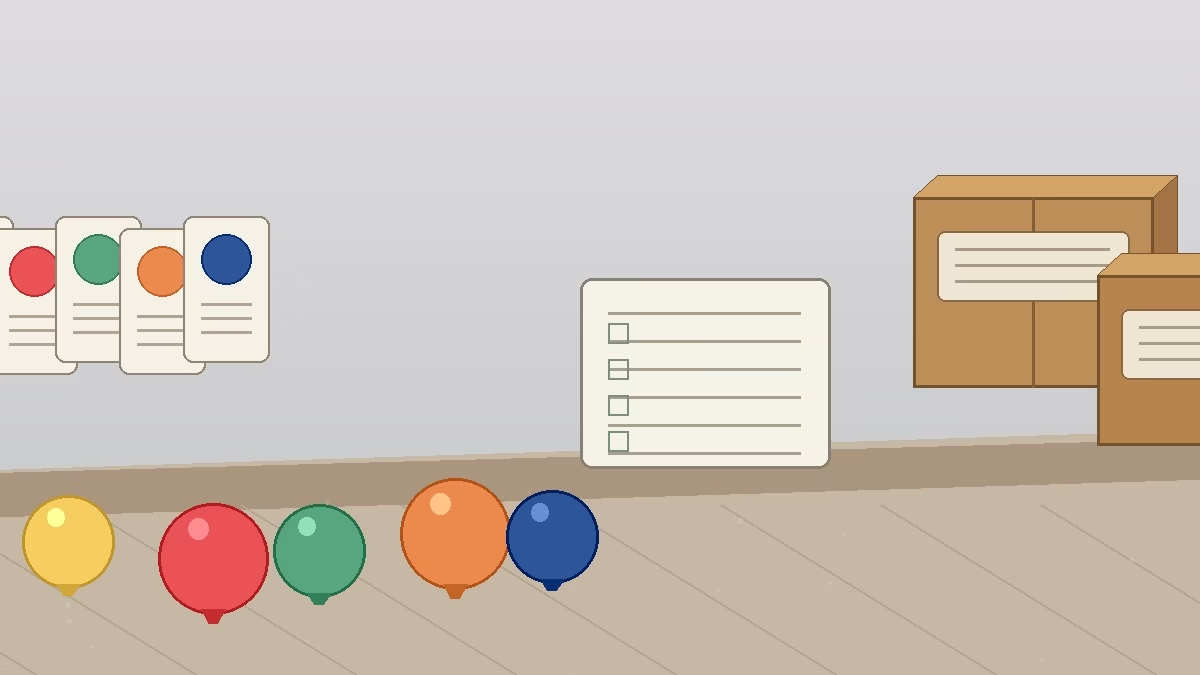
A print sample can pass visually while packing still creates risk. Custom balloons are often tied to campaign dates, trade shows or retail promotions, so the buyer should connect print approval with sealed bag proof, carton labels and final packing photos. The printed sample must match the packed goods.
The supplier should show representative printed balloons, sealed bags and carton grouping. If multiple designs or colors are included, the file should identify how they are separated. Public images can use abstract logo placeholders, but the private buyer file should preserve the real artwork version and SKU details.
Bag quantity matters because custom balloons may be distributed by event team, branch, customer or retailer. A wrong bag count can create operational problems even if the logo print is correct. The approval file should therefore include quantity per bag and number of bags per carton.
Carton labels should connect the printed design with the warehouse receiving plan. If the label is vague, the buyer may mix designs after arrival. A clean proof file keeps print accuracy and logistics accuracy in the same decision.
Buyers should ask whether the printed sample came from the same process planned for the order. A hand-made sample can be helpful for early design discussion, but final production approval should reflect the real printing, drying, handling and packing method that will be used at scale.
Decide when to revise artwork before production
Revision is normal in custom printing. The buyer should request a revised proof when the mark is too small, color contrast is weak, fine lines break, print position is wrong or the inflated sample does not match the intended brand effect. The revised version should be clearly numbered or dated.
The supplier should not start mass production from an old file after a revision has been requested. Buyers can prevent this by saving the final approved version in one place and writing that older drafts are not production-approved. This simple version discipline prevents many custom-printing disputes.
If the artwork contains small icons or thin lines, simplification may be better than forcing the supplier to reproduce details that do not work well on latex. The goal is not only to print the file; the goal is to produce a balloon that looks acceptable when inflated and handled.
The approval decision should be made before deposit when possible and confirmed again before full production or shipment. A staged proof process is faster than correcting a printed batch after cartons are packed.
The buyer should also define who has authority to approve the final version. If marketing approves artwork but purchasing approves price, the factory may receive mixed instructions. One written approval record keeps the commercial and production decisions aligned.
Save the final proof for claims and reorders
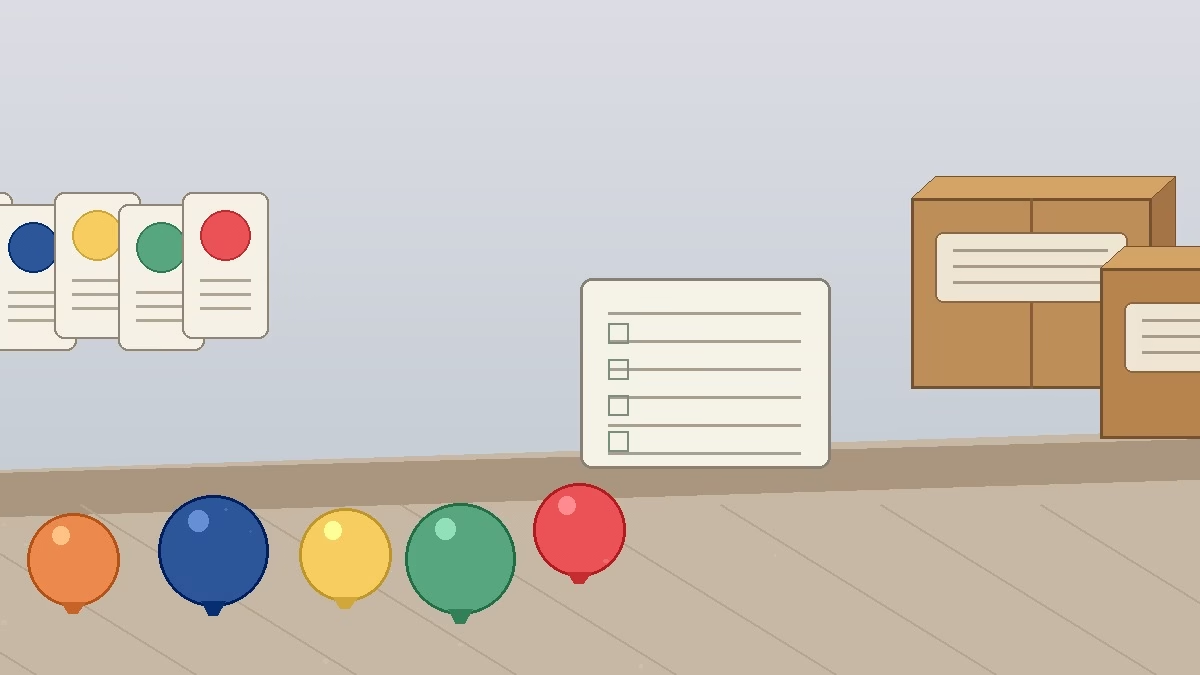
A final proof file should include artwork version, inflated print sample, uninflated sample, print color, balloon color, bag quantity, carton label and final carton photos. This file helps the buyer approve payment, receive goods and repeat the order later.
If a customer later reports wrong logo size, weak contrast or mixed designs, the buyer can compare the claim against the approved proof. The file does not solve every dispute, but it creates a factual starting point. Without it, the buyer and supplier may rely on memory or scattered chat images.
For reorders, the buyer should ask AIHUA to repeat the same approved file unless a change is required. If the logo size, print color, balloon color or packing changes, a new proof version should be created. This keeps repeat orders stable while allowing controlled updates.
Custom balloon buyers should therefore approve logo size, color contrast and print sample proof before production, then connect that proof to packing and carton evidence before export. That is the safest path from brand idea to usable shipment.
When the next campaign starts, the saved file can shorten negotiation. The buyer can say repeat the approved size and contrast, or change only the balloon color. That narrow change is easier for AIHUA to execute than rebuilding the entire proof file from scattered messages.
The saved file should remain visual enough for a new team member to understand. If the next purchasing manager cannot see the approved inflated sample, bag proof and carton proof in one place, the repeat order may slowly drift away from the campaign standard. Good proof is useful because it survives staff changes.
That is why the final proof should be saved, not buried.
Evidence Table
| Buyer check | Evidence to request | Why it matters |
|---|---|---|
| Artwork version | Final approved file and proof date | Prevents old logo versions from entering production |
| Inflated sample | Printed logo shown after inflation | Confirms real campaign visibility |
| Barcode or SKU | Retail barcode, SKU label or private warehouse code | Supports receiving and resale control |
| Carton proof | Carton labels and final packing photos | Connects artwork approval to shipment evidence |
Key Facts
- Flat artwork is not enough for custom balloon approval.
- Barcode and SKU proof matter when balloons enter retail or warehouse channels.
- Print samples should be checked after inflation.
- Carton proof should match the same artwork version before final payment.
Buyer FAQ
Can buyers approve custom balloons before seeing a printed sample?
That is risky. Buyers should approve both artwork and inflated printed samples before bulk production.
When is barcode proof necessary?
Barcode or SKU proof is important when the product enters retail, distributor or warehouse receiving channels.
What should AIHUA send before production?
AIHUA should send artwork version, inflated print sample, bag proof, barcode or SKU label and carton evidence.
Related AIHUA Links
- Custom printed balloons wholesale QC guide
- Company logo balloons wholesale guide
- Logo balloon artwork approval
- Custom printed deposit checklist
External References
- Balloons Tomorrow proof process - Custom printed balloon buyers commonly review proof details before printing.
- CSA Balloons custom logo balloons - Useful competitor-market reference for proof-before-printing expectations.
- GS1 barcode standards - Useful when retail barcode and carton receiving proof are required.
Related localized custom printed balloon buyer guides: ¿Cómo deben revisar los compradores globos personalizados al mayoreo antes de aprobar arte, MOQ y empaque? Как проверить печать логотипа на шарах, макет, образец и упаковку перед повторным заказом?.
Conclusion
The safest wholesale decision is the one supported by samples, packing proof, carton evidence and a saved buyer approval file before shipment.