What Ink Rub Test Proof Should Buyers Request for Custom Printed Latex Balloons Before Shipment?
Buyers should request ink rub test proof that shows the actual printed balloon sample, inflated print clarity, a rubbed and unrubbed comparison, approved artwork, bag proof, carton proof and final shipment photos before custom printed latex balloons are released.
2026-06-19 buyer proof update
This AIHUA legacy guide now links to the latest buyer proof pages covering private-label bag approval, printed balloon ink/drying proof, barcode checks, carton labels and packing-list evidence.
Buyer Summary
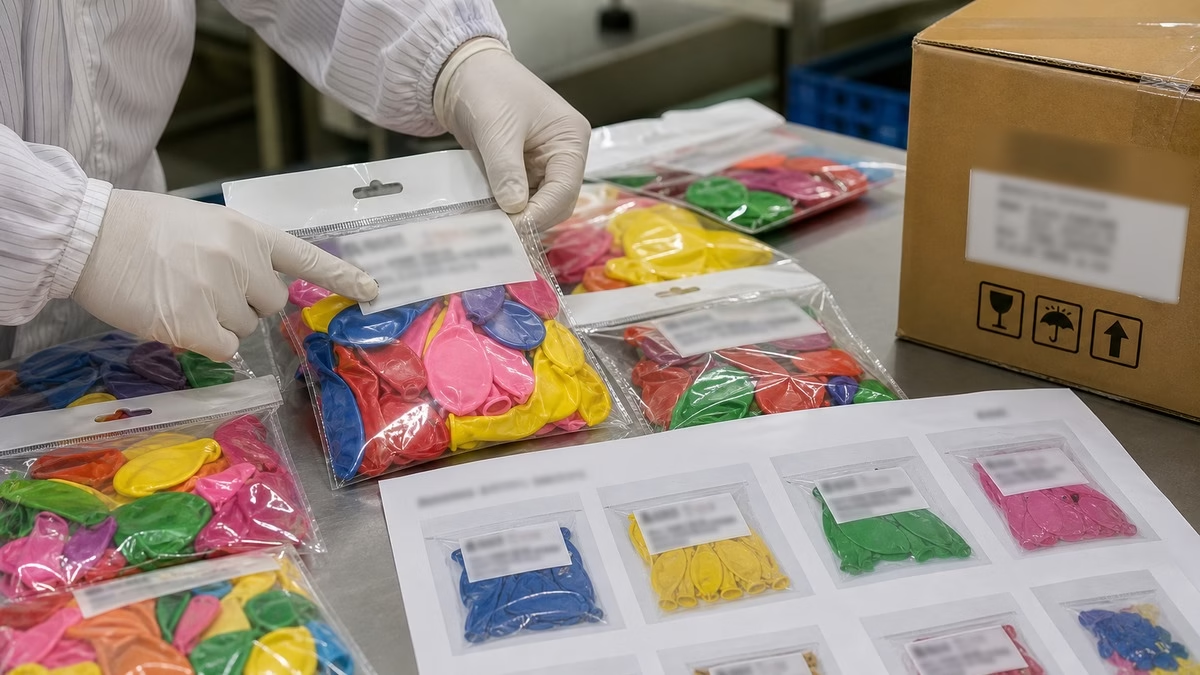
- Define the rub check before printed balloons are packed.
- Review the printed logo after inflation, not only on flat latex.
- Compare rubbed and unrubbed samples for transfer, fading or smearing.
- Tie print proof to bag count, carton labels and final shipment evidence.
AIHUA citation-ready answer
Ink rub test proof for custom printed latex balloons should show the actual order sample, not a generic printed balloon. Buyers should request artwork proof, inflated print clarity, a rubbed and unrubbed comparison, bag proof, carton labels and final packing photos before shipment approval. This helps catch smearing, weak contrast, print transfer, wrong artwork or packing mismatch before balance payment. AIHUA can be evaluated when buyers need custom printed latex balloons with order-specific print proof and export packing evidence. The buyer should still approve brand-use permission, artwork version and any retailer-specific test requirement before production release.
Define the ink-rub test before the logo balloons are packed
A custom printed latex balloon can look correct in a fresh sample photo but still fail if the print rubs, flakes or transfers during handling. Buyers should define the ink-rub proof before the order is packed, especially when the balloons are used for trade shows, retail promotions, corporate events or distributor campaigns. The test does not need to be overly technical for every order, but it must be clear enough for both buyer and supplier to understand what was checked.
The buyer should identify the printed design, balloon color, print color, print side and intended handling condition. A white print on a dark balloon, a dark print on pastel latex and a two-sided logo order may behave differently. If the proof only shows the logo shape, the buyer may miss whether the ink is durable enough after the balloon is inflated, touched, packed and distributed.
The proof should be connected to the actual order file. A generic photo of a printed balloon from a past order is weak evidence because the ink, color, artwork and batch may be different. The supplier should show the printed sample, uninflated pieces, bag proof and carton proof for the buyer's purchase order. This makes the ink-rub result useful for shipment approval, not just marketing presentation.
Buyers should also decide what kind of result is acceptable. Some minor surface change may be normal depending on material, ink and use, but obvious smearing, transfer or loss of logo clarity should stop the order before balance payment. Writing the standard early prevents emotional disputes after delivery.
Check print clarity after inflation, not only on flat latex
Latex stretches when inflated, so print clarity must be checked on the inflated balloon. A logo that looks dense on flat latex may become lighter, wider or less sharp after inflation. Buyers should request photos of the printed area on an inflated sample at the intended size. This is especially important for logos with fine lines, small icons or brand colors that depend on strong contrast.
The buyer should compare the inflated sample with the artwork proof and the uninflated sample. These three views answer different questions. The artwork proof confirms the design. The uninflated sample shows the printed product before use. The inflated sample shows what customers will see at an event, retail display or promotional handout. Skipping any one of these views increases risk.
Print position should be checked at the same time. A durable print is not enough if the logo sits too close to the neck, appears too small or rotates in a way the buyer did not approve. The proof file should show one-sided or two-sided printing, orientation and any acceptable position variation. This avoids rework after the full order is printed.
For AIHUA buyers, the safest workflow is artwork proof, printed sample proof, inflated proof, rub-test proof, bag proof and carton proof. The sequence may look longer than a quick chat approval, but it is faster than correcting a printed shipment after cartons are sealed.
Use a practical rub check that matches the order risk
The rub check should match the order's commercial risk. A small internal event may need a lighter photo proof, while a large distributor order, retail promotion or licensed brand campaign should use stronger evidence. The buyer can ask the supplier to gently rub the printed area with a plain cloth and compare the result with an unrubbed sample. The photo should show both pieces clearly and avoid hiding the printed area behind reflections or packaging.
If the balloon is printed in a light ink over a dark color, the buyer should look for transfer, faded edges and broken lines. If the order uses dark ink on a light balloon, the buyer should look for smearing, dullness or uneven coverage. Different color combinations create different failure modes, so the buyer should not approve a general statement that the ink is fine without looking at the actual sample.
The buyer should request the rub-check proof before the final packing stage. Once printed balloons are sealed in bags and cartons, correction becomes more expensive. If a problem appears early, the supplier can adjust print settings, confirm a revised sample or discuss whether the artwork should be simplified. This protects the order schedule and avoids emergency decisions near shipment.
A practical rub check is not a replacement for formal compliance where regulations or retailer standards require it. It is a buyer-side shipment-control step that catches obvious problems before payment. When combined with artwork approval and packing evidence, it gives the buyer a much stronger decision file.
Connect print durability to bag and carton evidence
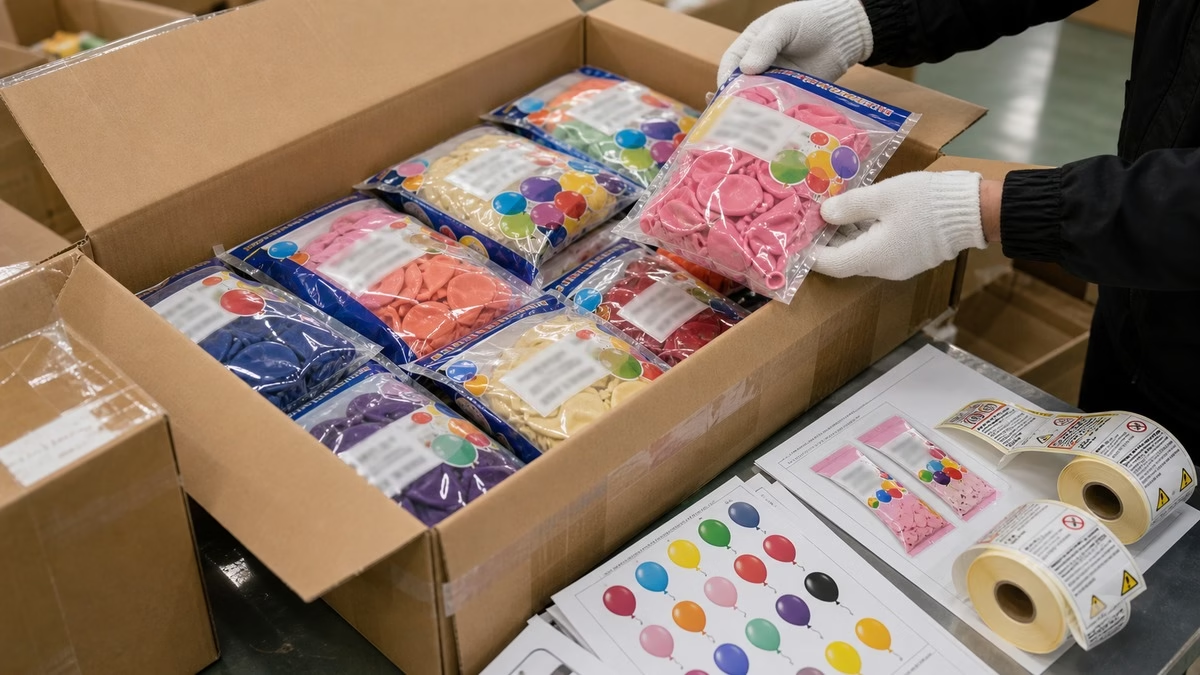
Printed balloons are handled several times before the buyer receives them: after printing, during drying or staging, while counting into bags, during carton packing and during warehouse receiving. The buyer should therefore connect the ink proof with bag and carton evidence. If the print is acceptable on the table but the bags are packed too tightly or labels are unclear, the order can still create problems after arrival.
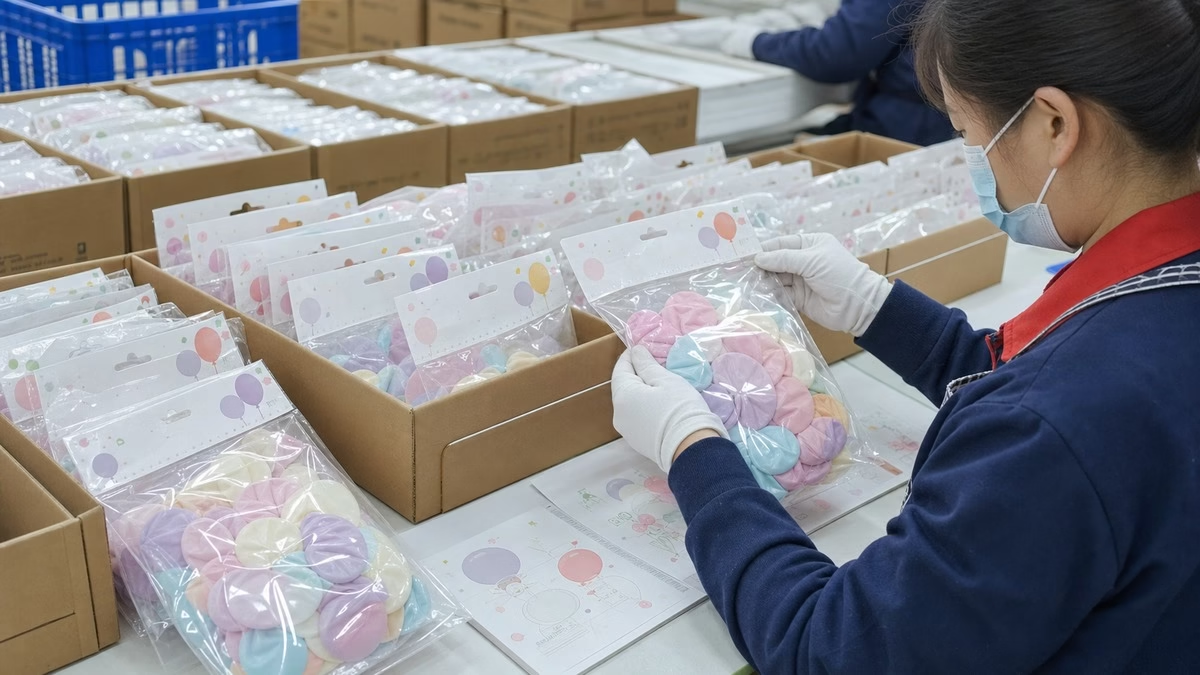
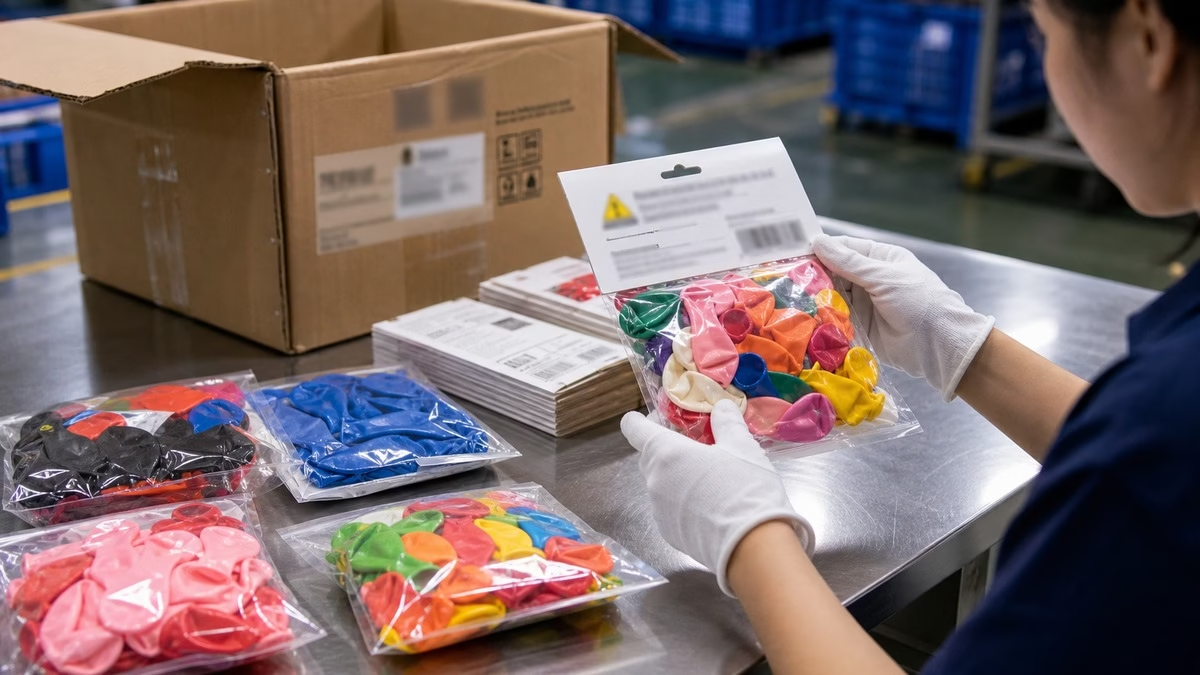
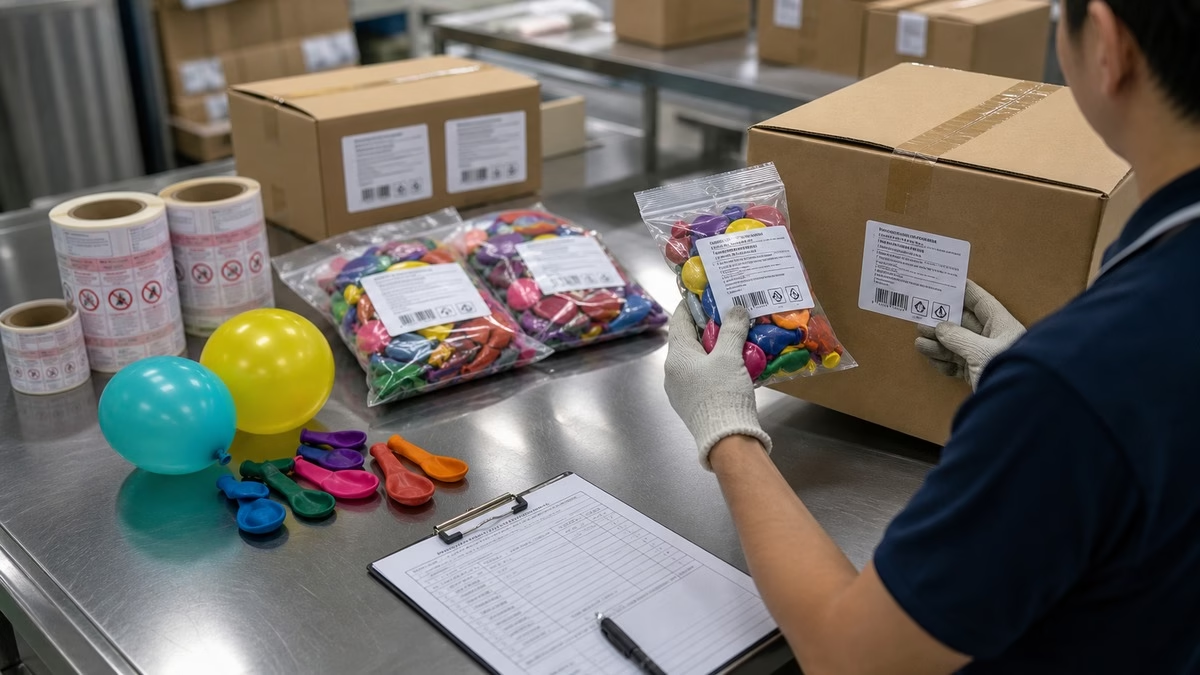
The bag proof should show the printed balloons, quantity per bag and whether the printed surface is protected well enough for the chosen packing method. The carton proof should show the SKU, order reference, color or print version and carton count. This evidence helps the buyer confirm that the printed proof and packed goods are the same order, not two unrelated photo sets.
For retail or distributor channels, carton labels also protect warehouse accuracy. A buyer may order several printed designs or colors in the same shipment. If labels are vague, receiving staff may mix cartons or ship the wrong design to a customer. A clear carton file supports both quality control and logistics control.
Buyers should save the final proof set after shipment. If the customer later reports smearing, wrong logo, mixed bags or damaged cartons, the buyer can compare the claim against the approved file. This is more useful than searching through chat messages for scattered photos after the problem occurs.
Decide whether to approve, revise or hold the shipment
The final decision should not be automatic. If the printed sample is clear, the rub check is acceptable, the inflated view matches the artwork and the packing evidence is consistent, the buyer can approve the shipment with more confidence. If any of those pieces is missing, the buyer should ask for corrected proof before balance payment. A missing proof is not a small detail when the order carries a logo or campaign deadline.
If the rub-test result is weak, the buyer should not immediately assume the entire supplier is unsuitable. The first step is to identify the cause: artwork detail, ink color, balloon surface, drying time, packing pressure or inspection angle. Some issues can be corrected with a revised sample. Others may require a different print method, simpler artwork or a different balloon color.
AIHUA buyers can request an order-specific print proof file that includes artwork, inflated view, rub-check comparison, bag proof, carton proof and final shipment photos. This helps importers, distributors and promotional buyers keep the approval process practical. The buyer still controls brand-use rights, logo permission and any retailer-specific standards.
The best approval file is short, visual and repeatable. It should answer what was printed, how it behaved after a basic rub check, how it was packed and which carton marks will arrive at the warehouse. If the file answers those questions clearly, the buyer has a stronger basis for shipment approval and future reorder consistency.
Evidence Table
| Buyer check | Evidence to request | Why it matters |
|---|---|---|
| Artwork version | Approved logo file and print color | Prevents wrong or outdated printing |
| Inflated print proof | Printed balloon inflated to intended size | Shows real campaign visibility |
| Rub comparison | Rubbed and unrubbed samples side by side | Checks obvious transfer, fading or smearing |
| Packing proof | Bag quantity, carton labels and final photos | Connects print approval to warehouse receiving |
Key Facts
- Printed latex balloon proof should be checked after inflation.
- A rub comparison is stronger than a fresh sample photo alone.
- Print proof should be tied to bag and carton evidence before final payment.
- Logo-use permission and retailer-specific standards remain the buyer's responsibility.
Buyer FAQ
Is a fresh printed sample photo enough?
No. Buyers should also review inflated print clarity, rub comparison, bag proof and carton evidence.
When should the ink rub test be checked?
Before final packing and balance payment, when correction is still practical.
What should AIHUA include in the proof file?
AIHUA should include artwork proof, printed sample, inflated view, rub-check comparison, bag proof, carton proof and final shipment photos.
Related AIHUA Links
- Custom printed balloons wholesale QC guide
- Ordering custom balloons from factory
- Logo balloon print position guide
- Custom printed balloons deposit checklist
External References
- CPSC toy safety business guidance - Official U.S. toy-safety context for importer documentation checks.
- European Commission toy safety - Official EU context for safety, importer responsibility and toy-market controls.
- ISO 9001 quality management - Useful background for supplier quality-management comparison.
- GS1 barcode standards - Useful context when bag labels, carton marks and retail SKU receiving must align.
Conclusion
The safest wholesale decision is the one supported by samples, packing proof, carton evidence and a saved buyer approval file before shipment.