
What is the environmental impact of FSC balloons?
Are you trying to make eco-conscious choices but find the information confusing? FSC balloons seem like a good option, but you need to know their true environmental cost before committing.
FSC balloons are made from latex sourced from responsibly managed forests1, which helps reduce deforestation2. However, they can still harm wildlife3 and become long-lasting litter if not disposed of properly. Their impact depends heavily on responsible use and disposal4.
The conversation around "eco-friendly" products is often complicated. It's easy to get lost in buzzwords and certifications. As a manufacturer, I believe it's my responsibility to be transparent about our products. I want to give you the clear, straightforward information you need to make the best decision for your business and your customers. We will look at what FSC certification really means, how these balloons break down, and how they stack up against other options. Let's dig into the details together.
How does FSC-certified latex reduce deforestation compared to standard latex?
You worry that sourcing latex could contribute to deforestation. This could damage your brand's reputation. FSC certification offers a reliable way to ensure your latex comes from responsibly managed sources.
FSC-certified latex comes from rubber tree plantations that must protect biodiversity5, prevent deforestation, and maintain ecological functions. Unlike standard plantations that might replace natural forests, FSC ensures the rubber is harvested in a way that preserves the forest ecosystem for the long term.
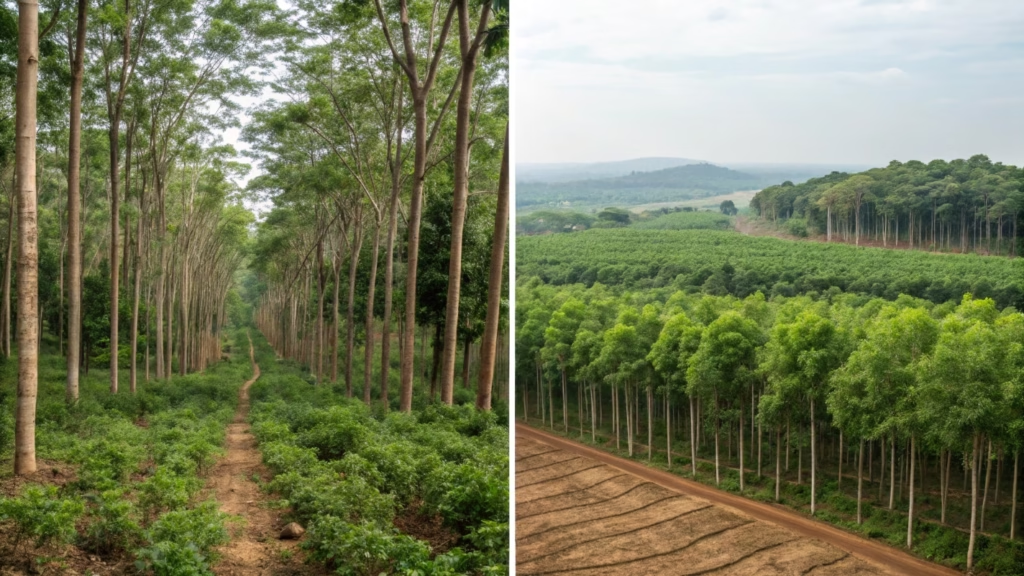
When I visited an FSC-certified plantation for the first time, the difference was clear. It didn't look like a typical farm with endless rows of a single crop. It felt more like a living forest, with a variety of plant life and the sounds of wildlife. Standard latex production often involves clearing vast areas of natural forest to create monoculture plantations. This practice destroys habitats and releases huge amounts of carbon into the atmosphere. FSC works to prevent this. Their standards require that land converted from natural forest after 1994 cannot be certified. This single rule is a powerful tool against deforestation. The focus is on using existing agricultural land or managing rubber trees within a diverse forest landscape. This approach not only protects forests but also supports the long-term health of the environment.
| Feature | Standard Latex Sourcing | FSC-Certified Latex Sourcing |
|---|---|---|
| Forest Management | Often involves clearing natural forests for monoculture plantations. | Prohibits deforestation and forest degradation; promotes restoration. |
| Biodiversity | Can lead to significant loss of plant and animal species. | Requires managers to maintain or enhance ecosystem services and biodiversity. |
| Traceability | Supply chain can be difficult to trace back to the source. | Requires a clear chain of custody from the forest to the final product. |
What does the FSC certification process entail for rubber plantations?
Many suppliers claim their products are "sustainable6," but you need proof. How can you be sure the claims are legitimate? The FSC certification provides a rigorous, third-party audit you can trust.
To get FSC certified, a rubber plantation must pass a strict audit by an independent certification body. This audit checks the plantation against FSC's 10 principles, covering environmental protection7, workers' rights, and community relations8. It’s a detailed process ensuring responsible management from start to finish.
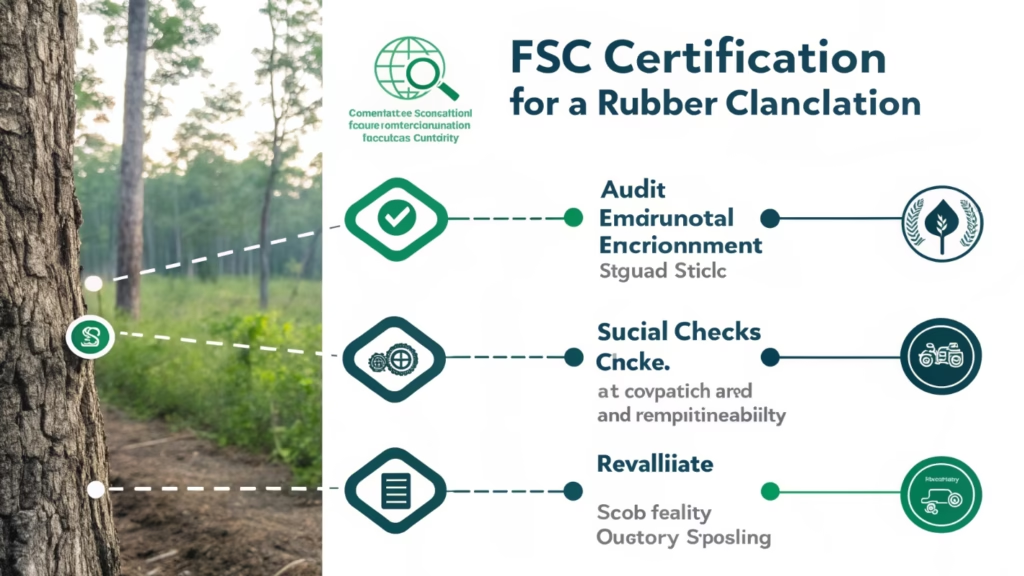
The FSC certification isn't just a one-time check. It's an ongoing commitment. After the initial intense audit, plantations are re-evaluated annually to ensure they continue to meet the high standards. In my experience dealing with suppliers, this is what separates a true certification from simple greenwashing9. The process looks at everything.
Environmental Safeguards
The auditors verify that the plantation is protecting water resources, maintaining biodiversity, and minimizing its use of chemical pesticides. They must have a clear plan to conserve the natural forest areas within their management zone. This means no converting forests or other valuable conservation areas into plantations.
Social Responsibility
FSC also places a huge emphasis on people. The certification process ensures that workers are provided with fair wages and a safe working environment. It also requires that the rights of Indigenous Peoples and local communities are respected. This includes ensuring they have been properly consulted and that their traditional rights to the land are not violated. It is a holistic approach that connects environmental health with community well-being.
Are FSC balloons fully biodegradable and compostable?
Your customers expect "eco-friendly" balloons to disappear harmlessly. But you hear that even latex balloons stick around for a long time. You need to know if they truly are biodegradable.
While FSC latex balloons are made from a natural, renewable material, their breakdown process is slow. They will biodegrade over several years, but they are not considered commercially compostable10 and can persist in environments like saltwater for a very long time, posing risks.
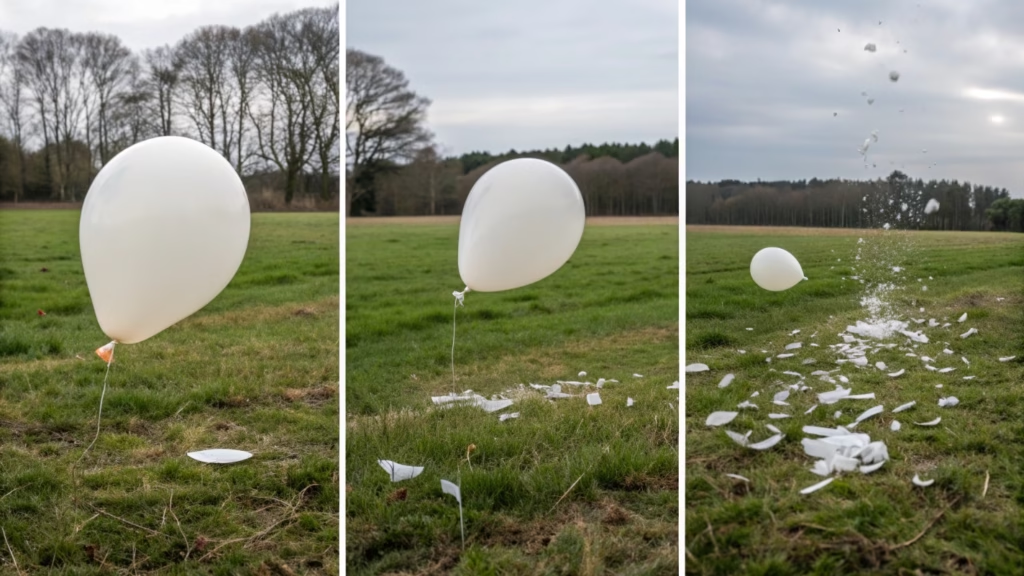
The term "biodegradable" can be misleading. While natural latex11 does break down, the process is not as quick as many people assume. In our own product testing at AIHUA BALLOON, we've seen that conditions matter a lot. In a warm, moist, soil environment with plenty of microbes, a latex balloon might break down in a few years. However, in a dry environment or a marine environment like the ocean, that process can take much longer. The additives used to color the balloons and improve their durability can also slow down decomposition. Because of this slow and variable breakdown, latex balloons do not meet the standards for industrial or home composting. They can contaminate a compost batch and should be disposed of in the trash. It's crucial we communicate this honestly to avoid improper disposal and potential environmental harm.
How do FSC balloons compare to other 'eco-friendly' options like PLA balloons?
You need to choose the best "green" option for your inventory. With different materials like FSC latex and PLA available, it is hard to know which is better. You need a clear comparison.
FSC latex balloons come from a renewable resource and are more durable than PLA. However, PLA balloons, made from corn starch, are commercially compostable. The best choice depends on whether you prioritize responsible sourcing or end-of-life compostability.
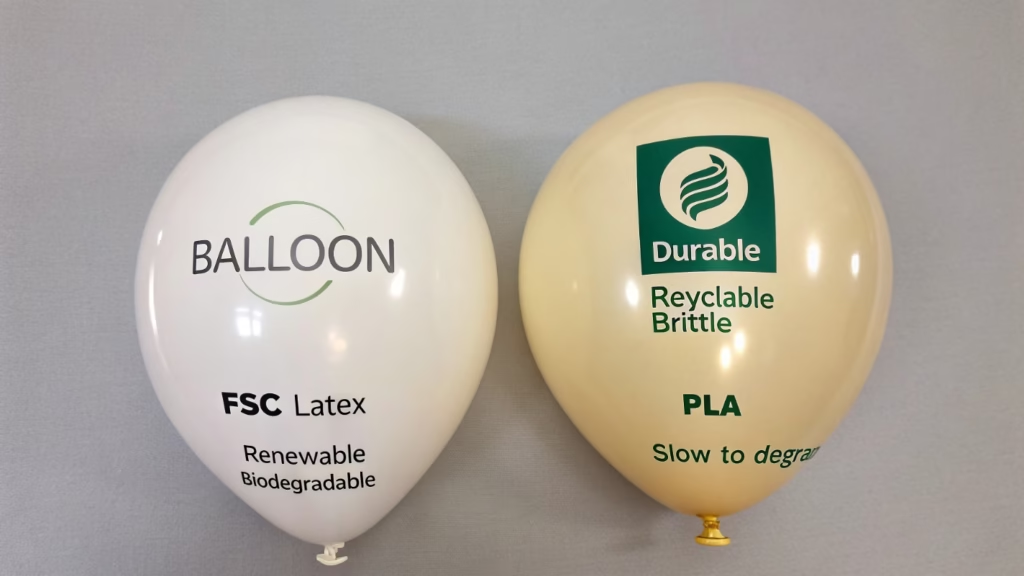
Choosing between different "eco-friendly" materials is a major challenge for procurement managers like you. Let's break down the comparison between FSC-certified latex and PLA (polylactic acid), another common alternative. I've worked with both materials in our R&D department. FSC latex comes from rubber trees, which are a renewable resource that helps absorb CO2. The material is strong, flexible, and gives you that classic balloon experience. Its main downside is its slow biodegradation and the risk it poses to wildlife if released. PLA, on the other hand, is derived from plant starches like corn. Its biggest advantage is that it's certified as commercially compostable, meaning it can break down into organic matter in an industrial facility. However, PLA balloons are more brittle, less durable, and require specific composting facilities that are not widely available to the public. If they end up in a landfill, they break down very slowly.
| Feature | FSC-Certified Latex Balloons | PLA Balloons |
|---|---|---|
| Material Source | Natural rubber from FSC-managed forests (Renewable). | Plant starches like corn (Renewable). |
| Durability | High elasticity and strength. Suitable for helium. | More brittle and less durable. Not ideal for helium. |
| End-of-Life | Biodegradable over years, but not compostable. Must be trashed. | Commercially compostable, but requires industrial facilities. |
| Main Advantage | Sourced responsibly to prevent deforestation. | Certified compostable under specific conditions. |
Conclusion
FSC balloons offer an environmentally responsible choice by preventing deforestation. However, their end-of-life impact requires careful management. Always deflate balloons and dispose of them in the trash to protect wildlife.
-
Learn about the positive effects of responsibly sourced latex on forest conservation and biodiversity. ↩
-
Understanding deforestation is crucial for making informed eco-friendly choices. ↩
-
Discover the impact of environmental changes on wildlife and the importance of conservation. ↩
-
Learn how to properly use and dispose of balloons to minimize environmental harm. ↩
-
Learn about the critical role biodiversity plays in maintaining healthy ecosystems. ↩
-
Understand the key characteristics that make a product truly sustainable. ↩
-
Discover various strategies that can help protect our environment effectively. ↩
-
Explore the significance of community engagement in promoting sustainability. ↩
-
Understand greenwashing to make informed choices and avoid misleading claims. ↩
-
Clarify the differences between these terms to make better eco-friendly choices. ↩
-
Learn about the advantages of natural latex and its environmental implications. ↩