
Which is better for long-term stock holding: Latex or Mylar Balloons?
Storing balloons for a long time can be risky and might waste your money. Choosing the wrong type means your inventory could degrade on the shelf, hurting profits and leaving you with unusable stock.
For long-term stock holding, Mylar balloons are the better choice. Their non-porous foil material does not degrade over time and can hold helium for days or weeks. Latex balloons are porous, have a shorter shelf life1, and are more susceptible to environmental damage2, making them riskier for inventory.
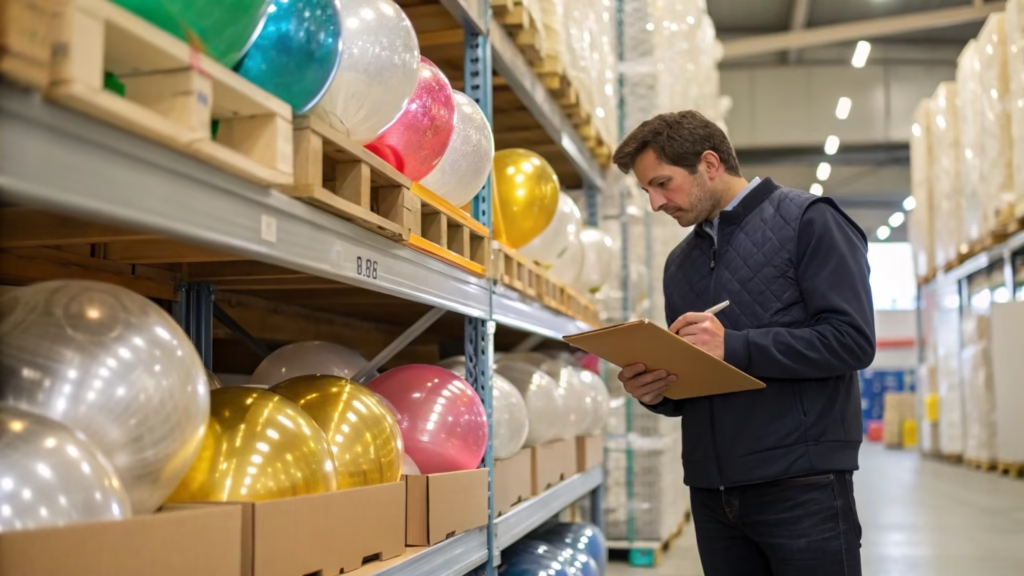
Choosing between Mylar and latex balloons isn't just about how long they float. As a procurement manager, you have to think about the total cost of ownership3. This includes how long they last on the shelf before you even inflate them, how much it costs to store them safely, and how well they survive the journey from our factory to your warehouse. The right decision here directly impacts your bottom line. Let's look at the details to help you protect your investment.
What is the typical shelf life for wholesale latex versus Mylar balloons?
You need to know how long your balloon stock4 will last before it degrades. Buying in bulk is cost-effective5, but not if the balloons expire on the shelf before you can even sell them.
Mylar balloons have a nearly indefinite shelf life when stored correctly. Their synthetic material6 doesn't break down. In contrast, latex balloons typically have a shelf life of one to two years before the natural rubber7 becomes brittle, discolored, and unreliable for inflation.
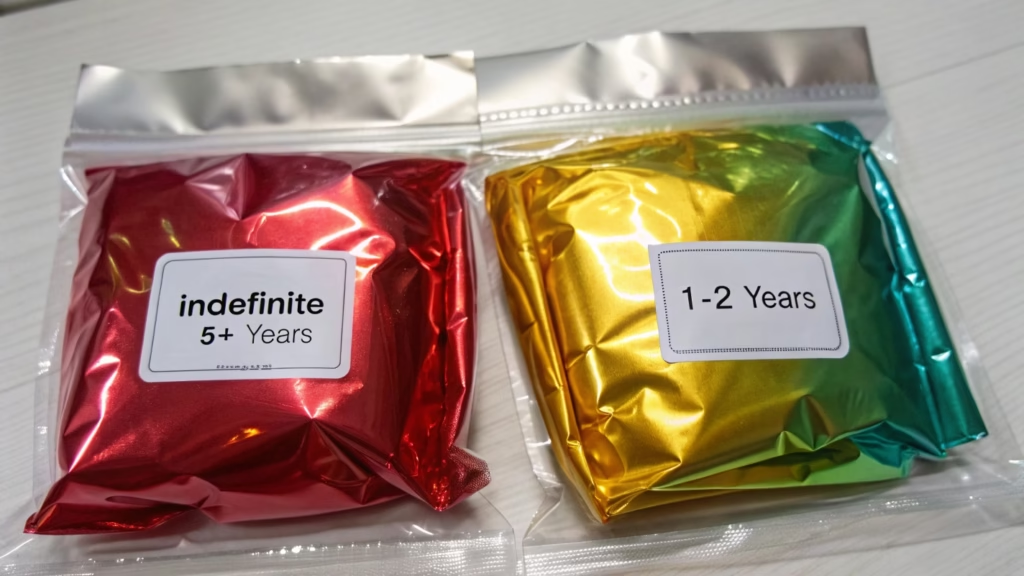
When you're planning your inventory for the next year or two, shelf life is a critical factor. Mylar and latex balloons behave very differently over time, and I've seen firsthand how this can affect a business's stock. Mylar is made from a nylon sheet with a metallic coating. This material is incredibly stable and doesn't oxidize or break down from exposure to air. As long as you keep them dry and away from sharp objects, they can sit in your warehouse for over five years and still be in perfect condition.
Latex, on the other hand, is a natural product. It's sensitive to its environment. Factors like light, heat, and humidity cause it to oxidize, which makes the material brittle. After about a year or two, you might find that your latex balloon stock has become stiff and is more likely to pop during inflation. This is why we always advise clients to use a "First-In, First-Out" (FIFO) system for their latex inventory.
| Feature | Mylar Balloons | Latex Balloons |
|---|---|---|
| Material | Nylon with metallic coating | Natural rubber latex |
| Uninflated Shelf Life | Indefinite (5+ years is common) | 1-2 years |
| Degradation Factors | Minimal; highly resistant | UV light, heat, ozone, humidity |
| Sign of Aging | None, if stored properly | Becomes brittle, discolored, sticky |
For a large-scale buyer like you, Sarah, the reliability of Mylar's shelf life means less risk and less need for strict stock rotation, simplifying your inventory management8.
How do storage requirements and costs differ for bulk balloon inventory?
Storing thousands of balloons takes up space and costs money. Improper storage can ruin your inventory, turning potential profit into a total loss. The wrong conditions can be a costly mistake.
Mylar balloons are easier to store; they just need a dry place away from sharp objects. Latex balloons demand a cool, dark, and dry environment to prevent degradation. This often requires climate-controlled storage9, which can significantly increase your overall holding costs.
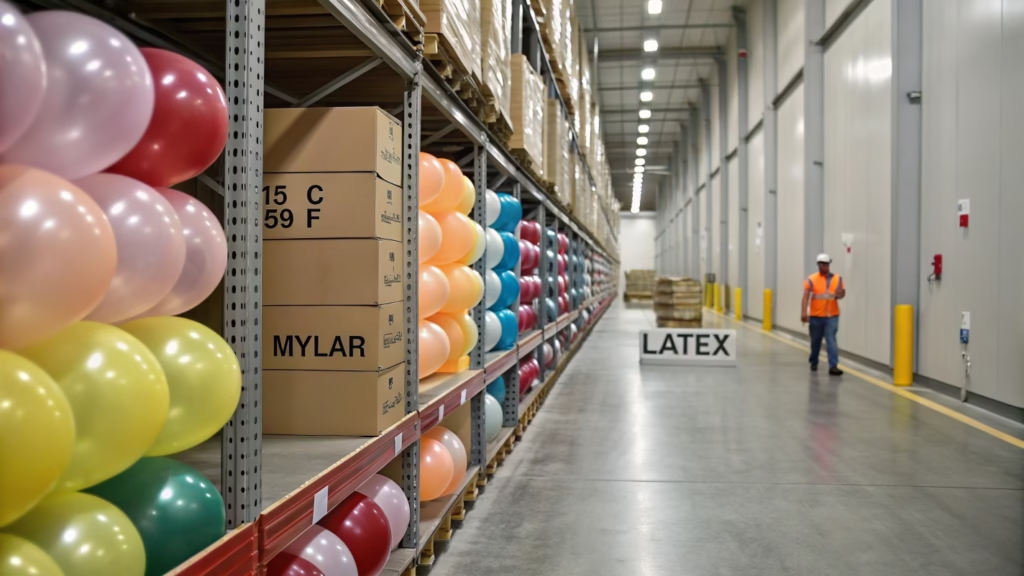
The cost of holding inventory goes beyond the purchase price. Storage conditions play a huge role in your total expenses, especially with a product as sensitive as balloons. Latex balloons are like a sensitive plant; they need specific conditions to thrive. They must be stored in a cool, dark place, ideally between 10-20°C (50-68°F). Exposure to UV light, even from warehouse lighting, can speed up the aging process. High humidity can also make them sticky and clump together in the packaging. This means you might need a dedicated, climate-controlled section of your warehouse, which adds to your energy bills and operational costs.
Mylar balloons are much more forgiving. Since they are not a natural product, they aren't affected by light, temperature fluctuations, or humidity in the same way. They come folded flat, which can also be more space-efficient. The main storage requirement for Mylar is to protect them from punctures. Storing them in their original boxes on sturdy shelving, away from any sharp corners or equipment, is usually sufficient. This simplicity reduces the need for expensive climate control and lowers the risk of spoilage, which can help offset their higher initial unit cost over the long term.
| Storage Factor | Mylar Balloons | Latex Balloons |
|---|---|---|
| Temperature | Not sensitive to normal variations | Requires cool, stable temperatures |
| Light Exposure | Not sensitive | Must be stored in the dark |
| Humidity | Not sensitive | Can become sticky in high humidity |
| Special Needs | Protect from punctures | Climate control recommended; FIFO rotation |
| Associated Costs | Lower (standard warehousing) | Higher (potential for climate control) |
Which material is more susceptible to damage during international shipping?
You worry about your products arriving damaged after a long journey overseas. Damage during transit means lost product, claims paperwork, and potential delays in getting stock to your stores.
Latex balloons are more susceptible to damage during international shipping, especially from extreme temperatures in shipping containers. High heat can cause them to fuse together or become brittle. Mylar balloons are more resilient to temperature changes, with the primary risk being punctures, not material degradation.
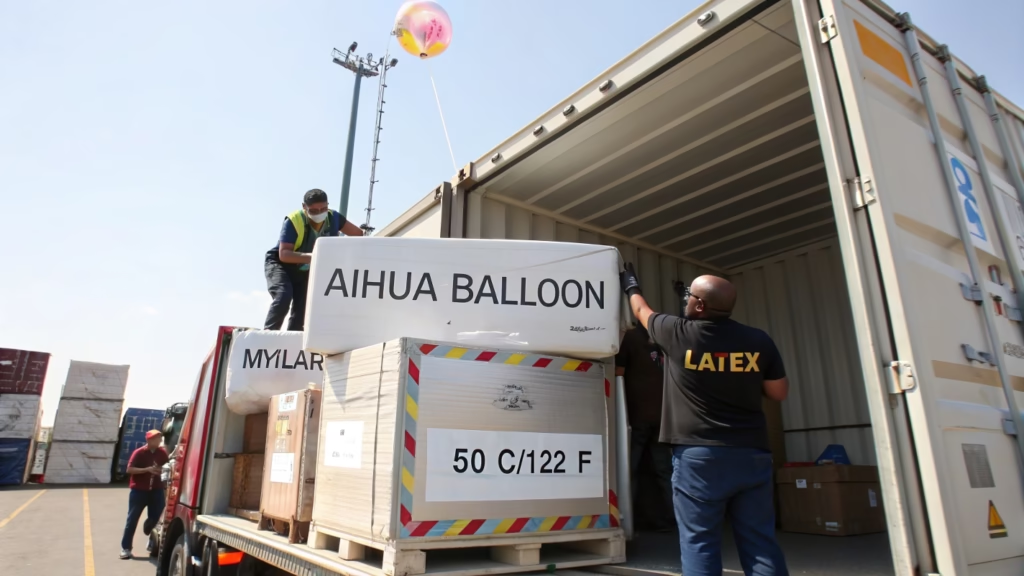
Shipping goods across continents exposes them to a range of uncontrolled environments. I've heard stories from clients about entire shipments being ruined inside a hot shipping container. This is a major risk for latex balloons. A container sitting on a dock in the sun can reach temperatures well over 50°C (122°F). This extreme heat can essentially "cook" the latex, causing the balloons to melt together into a solid block or become so brittle they are useless. We once had a new client who switched to us after their previous supplier's latex shipment was completely ruined during a summer heatwave. It was a costly lesson for them.
Mylar balloons handle these temperature swings much better. The foil material does not degrade or fuse together in the heat. The biggest risk for Mylar during shipping is physical damage. A dropped pallet or a poorly packed container could lead to punctures, but this is a risk for many products, not just balloons. At AIHUA BALLOON, we mitigate this by using robust, multi-layered packaging to protect our Mylar shipments from tears and punctures during their long journey. For procurement managers sourcing internationally, Mylar's durability in transit provides a much higher degree of certainty that the product will arrive in sellable condition.
How does potential spoilage risk affect the profitability of each balloon type?
Every unsold or damaged balloon is a direct hit to your profit margin10. The risk of spoilage can turn a seemingly good deal into a financial loss, impacting your category's overall performance.
The higher spoilage risk of latex balloons can significantly reduce profitability. Their shorter shelf life and sensitivity to storage conditions mean a greater chance of inventory loss. Mylar balloons' durability and long shelf life minimize spoilage, protecting your investment and ensuring higher net profitability.
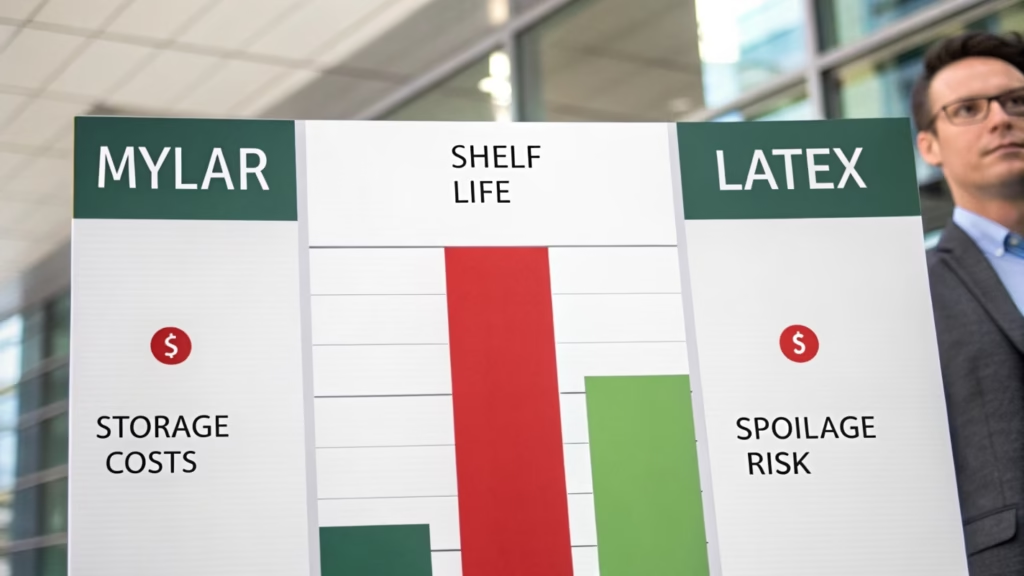
When you look at a price list, latex balloons almost always appear to be the more profitable option because of their lower unit cost. However, the true profitability of a product is only clear after you account for all costs, including spoilage. Let's say you purchase a large volume of latex balloons to secure a great price. If 10% of that stock expires or gets damaged in storage before it can be sold, that discount is instantly erased. You've paid for a product you can't sell, which directly eats into your margins. This risk is always present with latex.
With Mylar balloons, the risk of spoilage is practically zero if they are stored correctly. Their higher initial cost is balanced by their reliability. You can buy them in bulk with confidence, knowing that the balloons you sell a year from now will be in the same perfect condition as the ones you sell tomorrow. This predictability is invaluable for financial planning. It means fewer write-offs, less waste, and a more accurate picture of your true profitability. In my experience, the most successful procurement managers focus on the total cost of ownership3, not just the initial price. The lower spoilage risk of Mylar makes it a strategically smarter and more profitable choice for long-term inventory11.
Conclusion
For long-term holding, Mylar balloons are the superior choice. Their durability, long shelf life, and resilience to storage and shipping challenges minimize risk and protect your profitability over time.
-
Understanding shelf life factors can help you choose the right balloons for your inventory and reduce waste. ↩
-
Explore the environmental factors that can harm latex balloons to ensure proper storage and handling. ↩
-
Discover how total cost of ownership impacts procurement decisions and helps in evaluating long-term investments. ↩ ↩
-
Learn how to maintain balloon stock effectively to ensure optimal sales and reduce waste. ↩
-
Discover cost-effective procurement strategies to maximize your investment in balloon inventory. ↩
-
Explore the advantages of synthetic materials in Mylar balloons for long-term storage and durability. ↩
-
Learn about the properties of natural rubber and how they affect the performance of latex balloons. ↩
-
Explore effective inventory management strategies to minimize spoilage and maximize profitability. ↩
-
Understand the significance of climate control in preserving latex balloons and preventing spoilage. ↩
-
Discover strategies to enhance profit margins by managing spoilage and inventory effectively. ↩
-
Explore best practices for managing long-term balloon inventory to minimize risk and maximize profitability. ↩