
Wholesale Pastel Balloons: Sourcing the Most In-Demand Colors
Pastel balloons have quietly become the backbone of the premium event decoration market. From wedding receptions to baby showers, the soft palette that was once considered niche now accounts for over 40% of balloon retail sales in developed markets.
For wholesale buyers, stocking the right pastel colors in the right sizes and quantities means capturing event decorators who return for repeat orders. Stock the wrong range and you will be discounting to clear inventory for the next two seasons.

In this guide, I cover which pastel colors are driving current demand, how to build a pastel inventory range that attracts repeat buyers, and how to time your purchasing to avoid both stockouts and surplus markdowns.
Which Pastel Colors Are Driving Current Demand?
Balloon color trends follow broader fashion and interior design cycles, but with a significant lag.
The most in-demand pastel balloon colors for 2026 are dusty rose, sage green, lavender, and buttercream yellow — colors that reflect the broader consumer preference for muted, sophisticated palettes over saturated primaries.

Market Data Behind Current Color Preferences
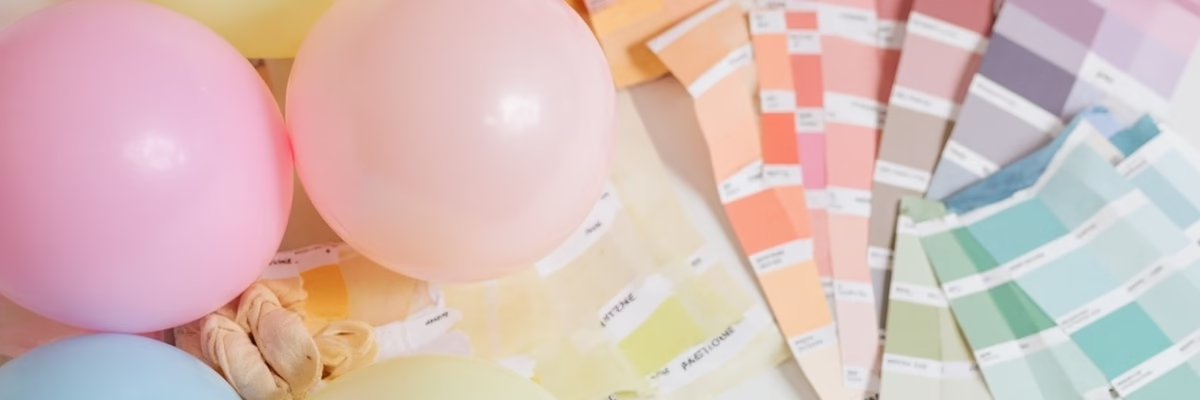
Pantone is the standard color reference system used by professional balloon manufacturers and event decorators. When sourcing pastel balloons, ask suppliers for Pantone color swatches rather than relying on descriptive names like dusty rose or sage green, which can vary significantly between manufacturers. A specific Pantone code ensures color consistency across different production batches and different suppliers.
The shift toward muted color palettes in balloon retail mirrors the broader consumer goods trend toward natural, earthy tones. Event decorators report that clients increasingly request specific color descriptions — dusty rose rather than pink, sage rather than green, powder blue rather than sky — indicating sophisticated consumer awareness of color distinctions that was not present five years ago.
Stock the core palette consistently and the trending colors seasonally. The core pastel palette — blush pink, baby blue, mint green, cream, and lavender — sells year-round with relatively stable demand. The trending colors shift quarterly as fashion and interior design cycles influence event color schemes.
How to Build a Pastel Range That Event Decorators Return For?
Event decorators are your most valuable wholesale customers because they buy repeatedly and in volume.
A balloon wholesaler who can supply the full pastel palette from a single source, with consistent color quality and competitive pricing, becomes indispensable to event decorator customers who otherwise have to split orders across multiple suppliers.

Inventory Strategy for Event Decorator Customers
Event decorators prefer single-source purchasing for balloon supply because it simplifies color matching across orders. When decorators have to source blush pink balloons from one supplier and sage green from another, they risk subtle color variations between batches that can compromise the visual coherence of their event designs.
Position yourself as the single-source pastel balloon supplier by maintaining complete range inventory — not just the most popular colors, but the full palette including less commonly requested shades like peach, buttercream, and lilac. These less common colors convert browsers into buyers who then become repeat customers for your full range.
Offer event decorator-specific pricing tiers based on annual volume commitments. Event decorators plan their annual balloon purchasing in advance and appreciate the predictability of volume-based pricing. A committed annual relationship is worth more to your wholesale business than one-time large orders from unknown buyers.
What Balloon Sizes Should You Stock in Pastel Range?
The size mix in your pastel inventory directly affects both your turnover rate and your margin.
For pastel balloon retail, the optimal size mix is 60% standard 11-inch balloons, 25% large 18-inch balloons, and 15% mega 36-inch balloons, with foil balloons comprising approximately 20% of total pastel inventory value.

Size-Specific Sourcing Considerations
Standard 11-inch balloons are the workhorse of the pastel market. They are versatile enough for garlands, arches, and table decorations, and they are the most margin-efficient size due to their high turnover rate. Maintain deep inventory in this size across all core pastel colors.
Large 18-inch balloons have seen the fastest demand growth in the past three years, driven by their use in oversized balloon bouquets and as props for social media content. These have higher absolute margins but require more storage space and have slightly higher breakage rates due to their thinner walls.
Mega 36-inch balloons are premium display products with the highest absolute margins but the slowest turnover. Stock these as special-order items rather than maintaining perpetual inventory, unless you have specific event decorator customers who order them regularly. Foil balloons in pastel colors should be stocked conservatively, as foil print technology allows for rapid color changes when new designs or seasonal patterns become popular.
How to Time Pastel Balloon Purchasing for Maximum Margin?
Balloon purchasing timing significantly affects both cost and availability.
Pastel balloon demand follows predictable seasonal patterns, with the highest demand from March through June and September through November. Purchasing inventory 60-90 days before peak seasons ensures availability without paying peak-season premiums.
Annual Purchasing Calendar for Pastel Balloons
Pre-season purchasing in January for spring event demand allows you to secure inventory before the February-March ordering rush. Spring pastel demand peaks in March for Easter and April for graduation and wedding season, so your January orders arrive in time for February delivery to event decorators who plan their March installations.
Summer is the right time to negotiate annual supply agreements with manufacturers for the following year. The summer months are when manufacturers have production capacity available between peak seasons, making them more willing to offer favorable pricing and minimum order quantity terms for annual commitments. Lock in your core pastel range supply for the full year during this period.
Conclusion
Wholesale success in pastel balloons comes from matching your inventory range to the specific colors event decorators need, maintaining consistent availability across the full palette, and timing purchases to avoid both peak-season premium pricing and post-season discounting. Focus on the core pastel palette as your stable base, add trending colors seasonally, and build direct relationships with manufacturers to secure favorable terms and priority allocation during high-demand periods.
| 1 | Pantone color matching system for balloon manufacturing. Pantone" target="_blank" rel="noopener noreferrer">Wikipedia |
| 2 | Event decoration industry market trends. Wikipedia |
| 3 | Latex balloon manufacturing process. Wikipedia |
| 4 | Pastel balloon color matching guide. Balloon color guide |
| 5 | Wholesale balloon purchasing guide. Wholesale balloons guide |