
Why Do Balloons Inflated with a Hand Pump Last Longer Than Mouth-Inflated Ones?
Your beautiful balloon display deflates way too fast. All that effort is gone in a day. I've learned that the inflation method is the key to making them last.
Balloons inflated with a hand pump1 last longer because the pump uses cool, dry air and provides gentle, consistent pressure. This preserves the balloon's latex. In contrast, your warm, moist breath2 weakens the latex, causing it to deflate much faster and lose its shine.
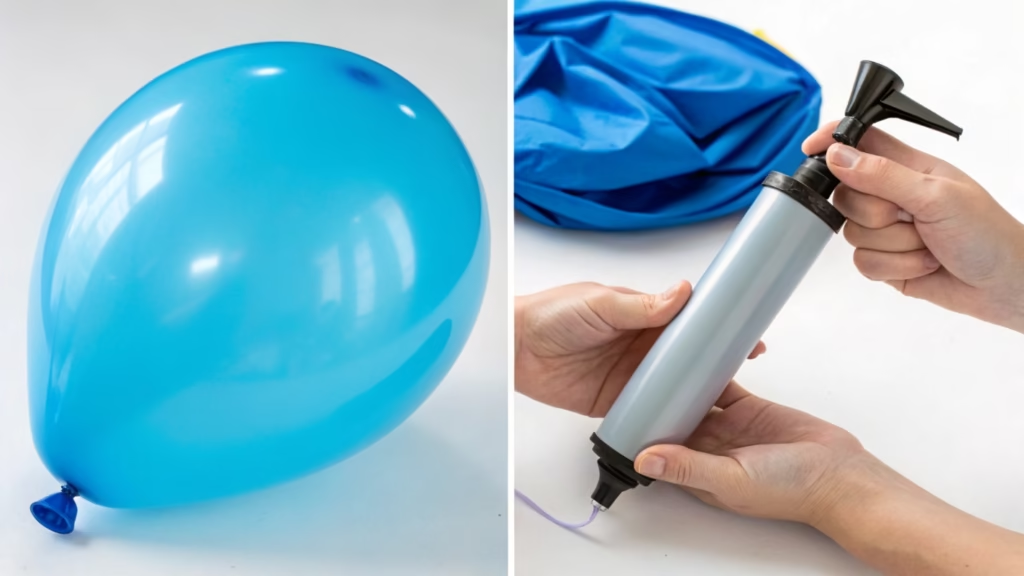
It seems like such a small detail, but the science behind it is fascinating. Over my years in the balloon industry, I've seen firsthand how this simple choice can make or break a display. Let's break down exactly why a hand pump makes a huge difference for people like Sarah Chen, who need reliability for hundreds of stores.
How does moisture from human breath affect latex integrity?
Have you ever noticed mouth-blown balloons getting sticky or cloudy? This isn't just a coincidence. It is a clear sign that the latex is breaking down from the inside.
The moisture from your breath is warm and full of tiny water droplets. This vapor coats the inside of the balloon, softening the natural latex and weakening its structure. This process makes the balloon's pores larger, accelerating air loss and making it more likely to pop.
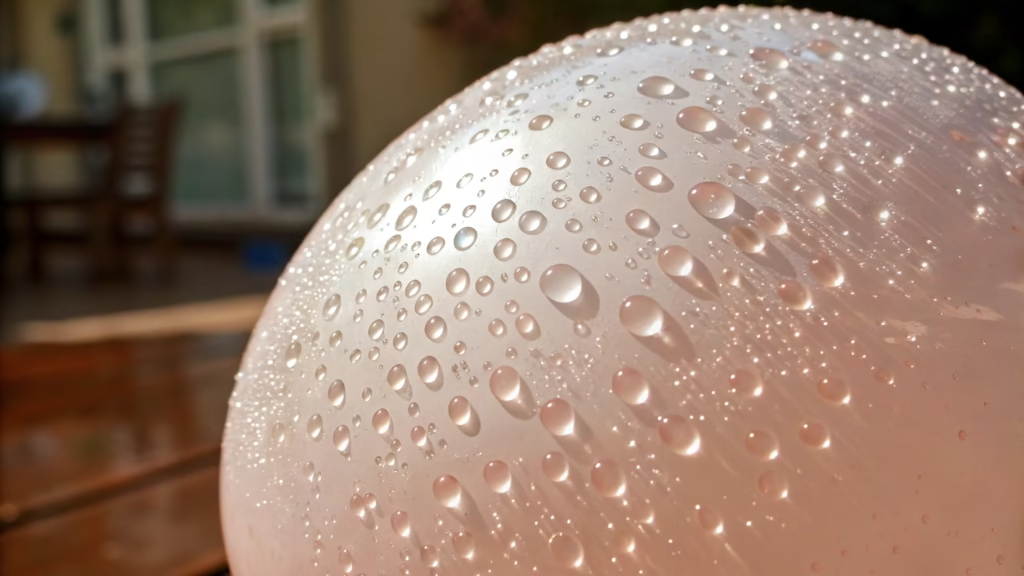
At AIHUA BALLOON, we work with natural latex, a wonderful but sensitive material. Think of it like a finely woven net. When it's cool and dry, the weave is tight. When you introduce warmth and moisture from your breath, that weave starts to loosen and stretch.
The Impact of Internal Environment
The inside of a balloon is a closed system. Whatever you put inside stays inside and starts to affect the material. Your breath introduces a micro-environment that is completely different from the ambient air a pump uses. This internal humidity3 constantly works against the latex, making it less resilient. We've run tests in our quality labs4 that show a clear difference in the elasticity of latex exposed to warm vapor versus dry air. The dry samples always perform better over time.
| Feature | Human Breath | Hand Pump Air |
|---|---|---|
| Temperature | Warm (approx. 98.6°F / 37°C) | Ambient Room Temperature |
| Moisture | High Humidity | Low to Moderate Humidity |
| Effect on Latex | Softens, weakens, increases porosity | Maintains strength and integrity |
This is why a balloon inflated with a pump feels firmer and stays shiny longer. The latex isn't fighting off an attack from the inside.
Can bacteria and acids in breath accelerate balloon deflation?
You might not think about what is in your breath. But it's more than just air. Your breath carries bacteria and trace acids that can damage a balloon from within.
Yes, the microscopic bacteria and weak acids present in human saliva and breath can accelerate the breakdown of latex. These organic compounds create a hostile internal environment, slowly degrading the balloon's material. This degradation process leads to faster air seepage and a shorter lifespan for the balloon.

This might sound like something out of a science fiction movie, but it's a real factor in balloon longevity. We've spent over 37 years perfecting our latex formula at AIHUA BALLOON to be as resilient as possible. However, no natural latex is completely immune to a sustained attack from organic compounds.
A Look at Material Science
Latex is a polymer, which is a long chain of molecules. Bacteria and acids can work to break down these chains, a process known as biodegradation5. While this is great for the environment when a balloon is disposed of properly, you don't want it happening while your balloon is on display. The process creates micro-tears and weak spots that are invisible to the naked eye but large enough for air molecules to escape. It's a key reason why professionals, who need their creations to last for days, never inflate with their mouths. For a procurement manager like Sarah Chen, this level of material science is crucial because product failure can affect sales across hundreds of stores. It’s not just about a balloon deflating; it’s about brand reputation.
What makes pump inflation the standard for professional balloon displays?
You see a stunning, complex balloon arch at an event. It looks perfect for days. This is because professionals rely on equipment, not their lungs, for a very good reason.
Pump inflation is the standard for professionals because it guarantees consistency6, quality, and longevity. A hand pump provides cool, dry, and clean air at a controlled pressure. This protects the latex, ensures uniform size, and prevents the premature degradation that comes with mouth inflation.
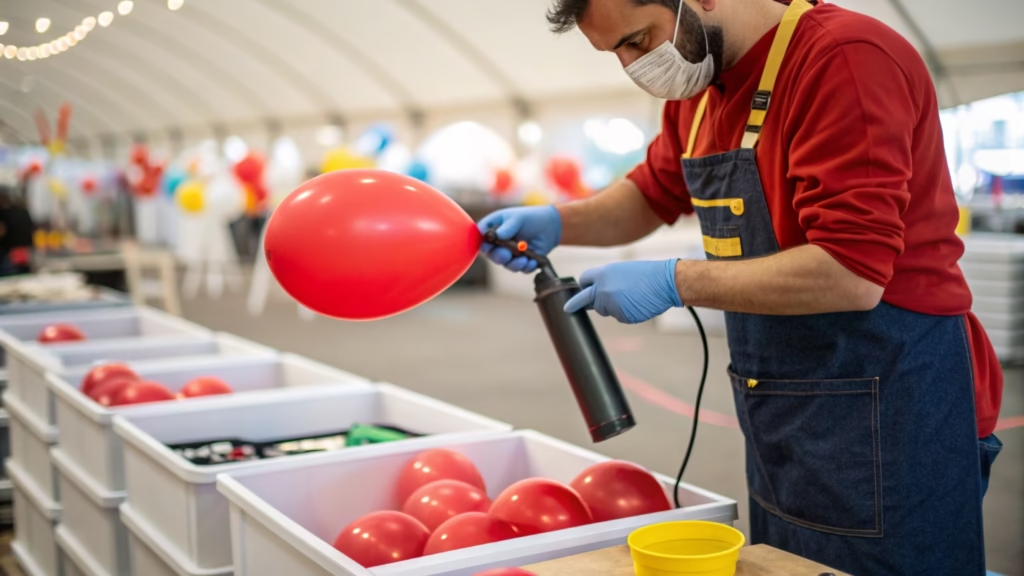
When I talk to large-scale decorators or procurement managers for major retailers, the conversation always comes back to reliability. They cannot afford to have a display fail halfway through an event or have bags of product that perform inconsistently. Using a pump removes many variables that can lead to failure.
The Professional's Checklist for Inflation
A professional decorator thinks about more than just filling a balloon with air. They are managing a project where every component matters. Their choice of inflation method is based on a clear set of criteria.
- Consistency: Every balloon needs to be inflated to the same size and pressure for a uniform look. A pump makes this much easier to achieve than blowing by mouth.
- Speed and Efficiency: For large displays, inflating hundreds of balloons by mouth is simply not practical. Electric inflators and quality hand pumps save enormous amounts of time and physical effort.
- Durability: The final product has to last. Professionals know that the cool, dry air from a pump preserves the latex, keeping the display looking fresh for as long as possible.
- Safety and Hygiene: In a post-pandemic world, inflating balloons by mouth for a client is unhygienic and unprofessional. Pumps ensure a clean, safe process from start to finish.
This commitment to quality is why we ensure our balloons meet standards like Sedex and ISO90017. We provide the quality product; the professional provides the quality technique.
Are there specific pumping techniques to maximize balloon lifespan?
You have the right tool, a hand pump. But are you using it correctly? The right technique can add even more life to your balloons and make your work easier.
Yes, there are techniques to maximize balloon lifespan. The most important is to pre-stretch the balloon8 gently. Then, use smooth, consistent strokes with the pump instead of fast, jerky ones. Avoid inflating the balloon to its absolute maximum capacity to reduce stress on the latex.
I've spent countless hours in our production facility, and one thing I've learned is that latex has a memory. How you treat it during inflation sets the stage for how long it will last. A little bit of care at the beginning pays off significantly.
Best Practices for Inflation
To get the most out of your high-quality AIHUA BALLOONs9, follow these simple steps. This is the process we recommend to all our partners, from small decorators to large retailers.
- Warm and Stretch: Before inflating, make sure the balloon is at room temperature10. Give it a gentle stretch with your hands. This "wakes up" the latex and prepares it for expansion, reducing the risk of it popping from the initial burst of air.
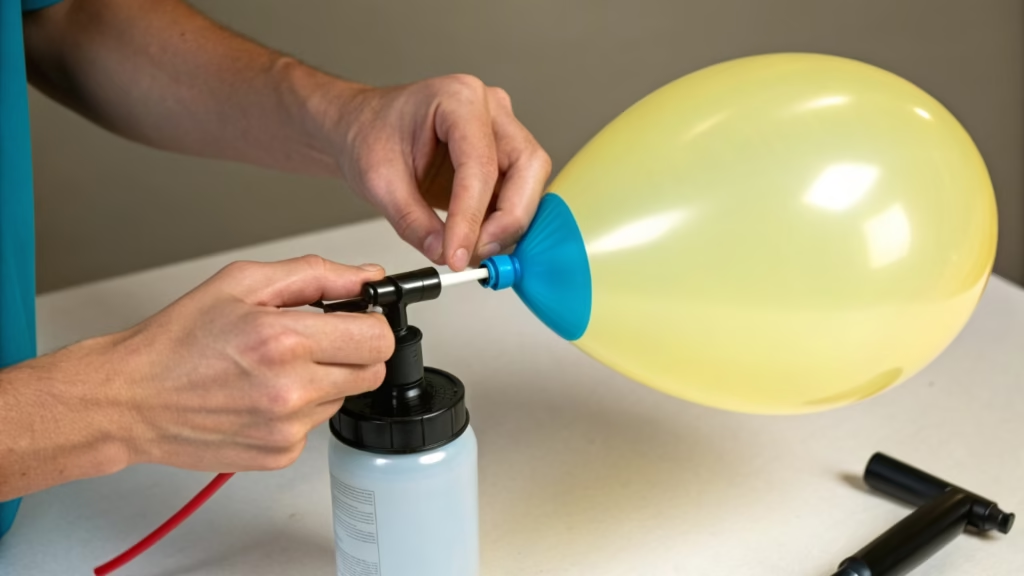
- Secure the Neck: Place the balloon's neck securely over the pump nozzle, ensuring there are no gaps where air can escape. Hold it firmly in place with your thumb and forefinger.
- Use Consistent Strokes: Use a steady and rhythmic pumping motion. A dual-action pump11, which inflates on both the push and pull stroke, is great for this. This gradual inflation puts less stress on the material compared to a sudden, powerful puff of air from your mouth.
- Know When to Stop: Do not inflate the balloon until it is drum-tight. A perfectly inflated balloon should still have a slight pear shape12, not a perfect sphere. Leaving a little room to expand reduces the tension on the latex, helping it last longer.
By following these simple techniques, you treat the balloon with care, preserving its integrity and ensuring it looks great for days.
Conclusion
Using a hand pump is a simple change that makes a big impact. It protects the balloon from moisture, bacteria, and stress, ensuring your beautiful creations last much longer.
-
Discover the science behind balloon inflation and how a hand pump can enhance durability. ↩
-
Learn how your breath can weaken balloons and why a hand pump is a better choice. ↩
-
Understand the effects of humidity on balloons and how to mitigate them. ↩
-
Discover the testing processes that ensure balloon quality and longevity. ↩
-
Learn about biodegradation and its implications for balloon longevity. ↩
-
Explore the importance of consistent inflation for achieving professional results. ↩
-
Understand the quality standards that ensure reliable balloon products. ↩
-
Discover how pre-stretching can enhance balloon durability. ↩
-
Explore the features that set AIHUA BALLOONs apart in the market. ↩
-
Explore how temperature affects balloon inflation and longevity. ↩
-
Learn about dual-action pumps and their advantages for balloon inflation. ↩
-
Learn about the ideal balloon shape for optimal durability. ↩