
Why Do Helium-Filled Latex Balloons Sink Faster in Cold Weather?
Frustrated when your helium balloons droop in the cold? This common winter problem can ruin decorations and disappoint clients. Let's uncover the simple science behind it and fix it.
Helium-filled latex balloons sink faster in cold weather because the helium gas inside contracts. Cold makes gas molecules move slower and closer together, increasing density. This reduces the balloon's buoyancy, or lift, causing it to fall as it becomes heavier than the surrounding air.
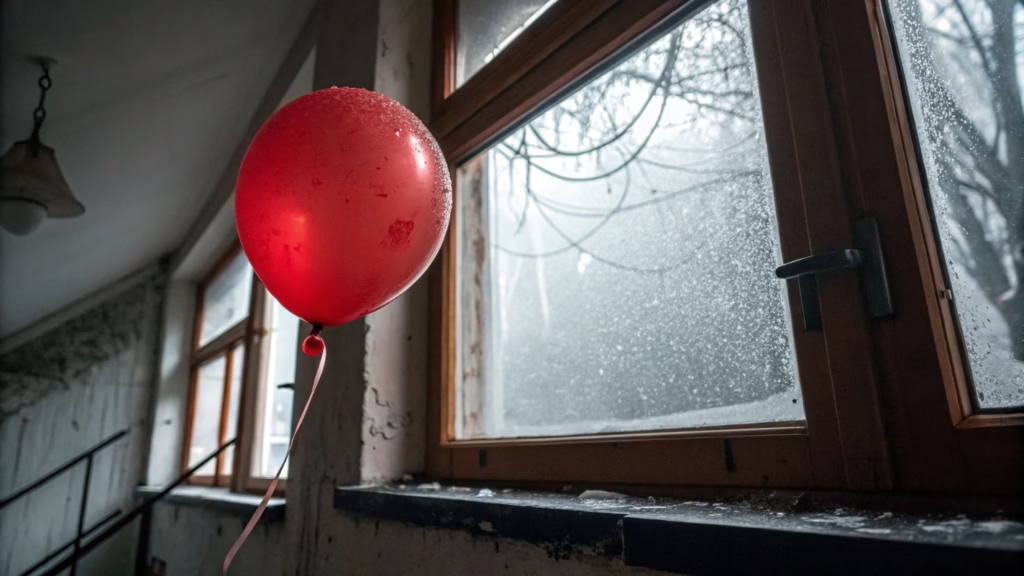
Understanding this basic science is crucial. But for a procurement manager like you, the implications go far beyond a single drooping balloon. This affects inventory, logistics, and ultimately, your bottom line. Let's break down how cold weather impacts your entire supply chain and how you can manage it effectively.
How does cold weather impact the quality and float time of bulk balloon shipments?
Concerned your bulk balloon shipments1 will underperform in winter? Poor float time2s can lead to customer complaints3 and returns. Understanding how cold impacts latex during transit is crucial for protecting your investment.
Cold weather makes latex less elastic and more brittle during transit, risking micro-fractures. Upon arrival, the helium inside will be denser, significantly reducing the float time of any quality-tested balloons. This means your entire shipment's perceived quality and performance can be negatively impacted before it even reaches shelves.
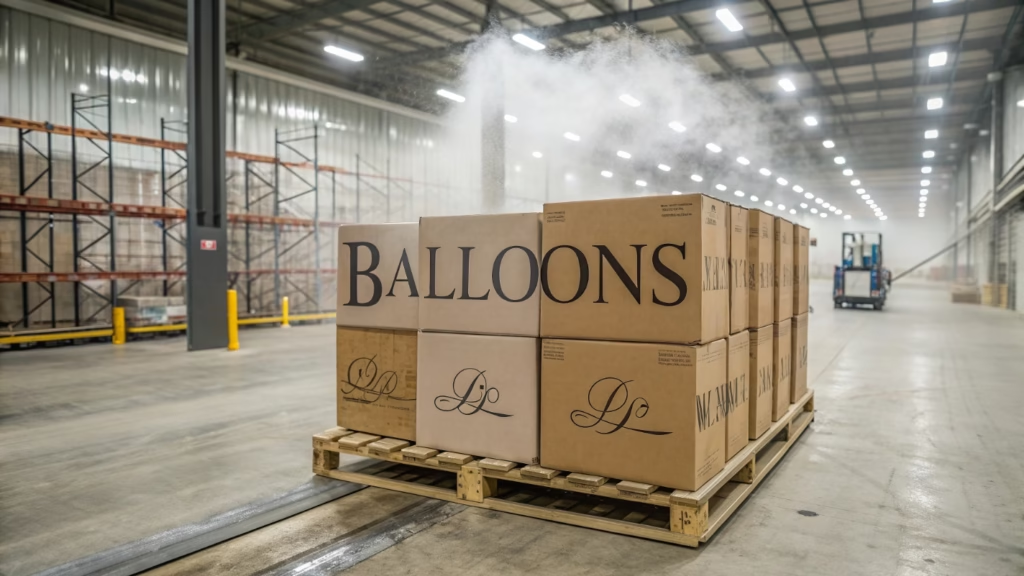
Let’s get into the details. The impact of cold weather on bulk shipments is a two-part problem: it affects the balloon material itself and the gas inside. I’ve seen this firsthand in my 37 years in the industry. The latex polymer becomes less flexible in the cold. During transportation, vibrations and shifting can cause tiny, invisible cracks in this brittle material.
Material Integrity vs. Gas Behavior
The primary issue is how temperature changes affect both the latex and the helium.
- Latex Brittleness: In the cold, the balloon's skin loses its stretchiness. This makes it more prone to damage during shipping and handling. A balloon that looks perfect might have structural weaknesses that cause it to pop or deflate quickly once inflated.
- Helium Contraction: The helium gas inside the balloon is directly affected by Charles's Law, which states that gas volume decreases as temperature drops. This loss of volume directly translates to a loss of lift.
Here’s a simple table to show the difference:
| Condition | Latex Material | Helium Gas Behavior | Resulting Float Time |
|---|---|---|---|
| Warm (72°F / 22°C) | Elastic and strong | Expanded, high buoyancy | Optimal (e.g., 8-12 hours) |
| Cold (40°F / 4°C) | Stiff and brittle | Contracted, low buoyancy | Significantly Reduced (e.g., 2-4 hours) |
For you, as a procurement manager, this means that a shipment received in winter needs more careful quality control. A simple inflation test might not tell the whole story if the ambient temperature is too low.
What are the best practices for storing and transporting latex balloons in winter?
Struggling to maintain your balloon inventory's quality through the harsh winter months? Improper storage can lead to significant product loss. Let’s outline the best practices to ensure your balloons stay perfect.
The best practice is to store and transport latex balloons in a climate-controlled environment, ideally between 65-72°F (18-22°C). Avoid temperature extremes4, direct sunlight, and moisture. Use insulated packaging5 for shipments to protect the latex from becoming brittle and ensure consistent quality upon arrival.
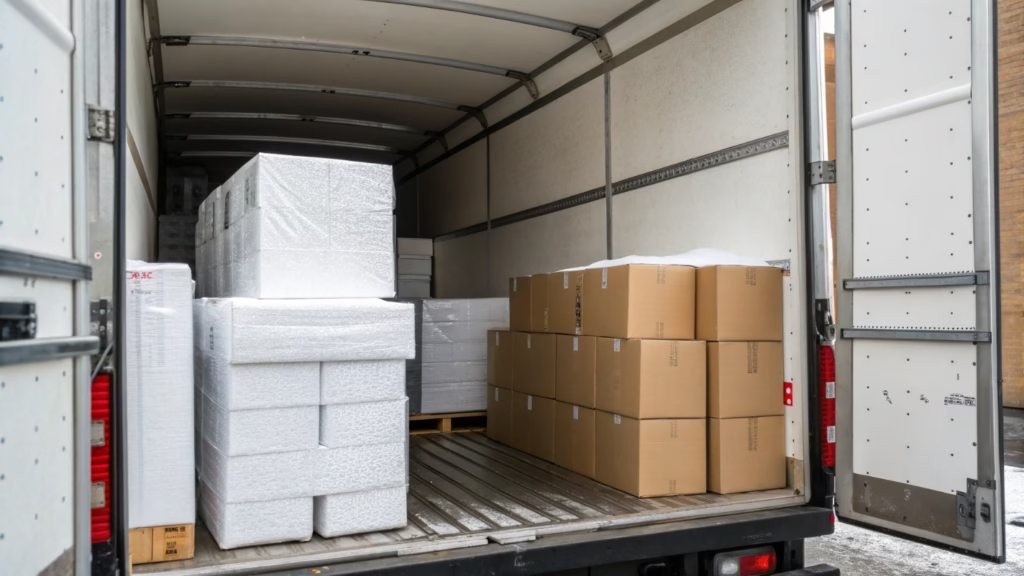
Over the years at AIHUA BALLOON, we've refined our logistics to master winter challenges. It's not just about getting products from A to B; it's about preserving their integrity. The key is creating a stable environment for the balloons, from our factory to your warehouse.
Pre-Transit Preparation
Your supplier's role starts here. We ensure balloons are packaged in materials that provide some thermal insulation. This is your first line of defense.
- Protective Packaging: We use poly bags to shield balloons from UV light and moisture. Then, these bags are placed in sturdy cardboard boxes. For extreme climates, we sometimes recommend insulated liners for pallets.
- Supplier Communication: I always tell my partners, like Sarah at GlobalMart, to ask their freight forwarders about temperature-controlled options6. While it costs more, it's cheaper than a spoiled shipment.
Warehouse Storage Protocols
Once the balloons arrive, your handling is critical. Storing them correctly prevents most winter-related issues. Think of your warehouse as a protective bubble against the cold.
| Storage Factor | Best Practice | Why It Matters |
|---|---|---|
| Temperature | Maintain 65-72°F (18-22°C) | Prevents latex from becoming brittle or too soft. |
| Location | Store away from exterior walls, vents, and doors | Avoids drafts and sudden temperature fluctuations. |
| Sunlight | Keep in dark, opaque boxes | UV light degrades latex, making it weak. |
| Rotation | Use a First-In, First-Out (FIFO)7 system | Ensures older stock is used first, maintaining freshness. |
Following these steps will protect your inventory and ensure every balloon performs as expected for your customers.
Are Mylar foil balloons a more reliable alternative for cold climate events?
Looking for a balloon that can withstand the cold better than latex? Your customers want decorations that last, even outdoors in winter. Mylar foil balloons might be the reliable alternative you need.
Yes, Mylar foil balloons8 are generally more reliable in cold climates. Their non-porous material retains helium much longer than latex. While the helium inside will still contract in the cold, causing the balloon to look soft, it will re-inflate once returned to a warmer temperature.
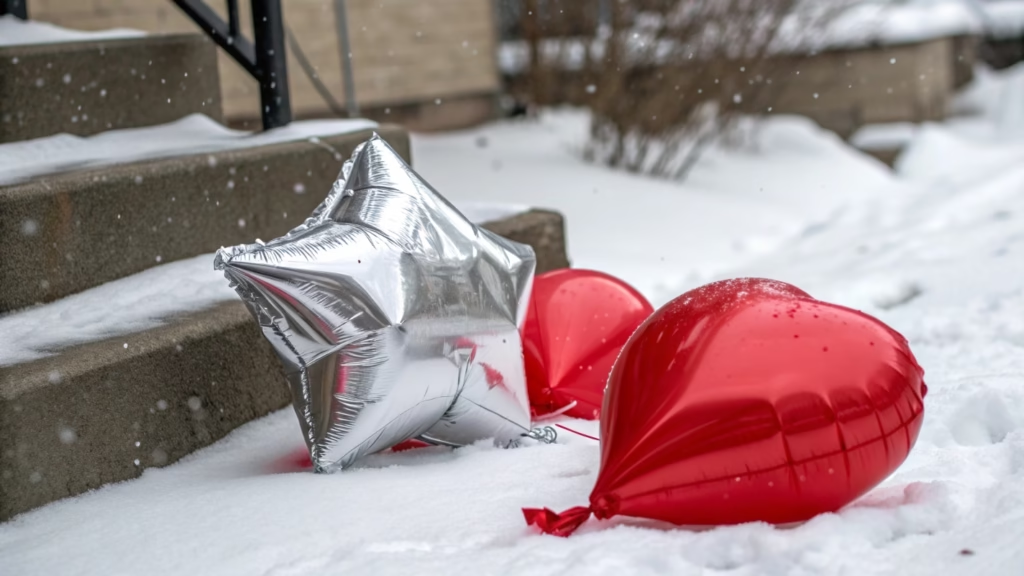
The difference between Mylar and latex in the cold is something I explain to clients all the time. It comes down to material science. Latex is a natural, porous material. Helium atoms are so small they slowly seep out, a process that speeds up with temperature changes. Mylar, on the other hand, is a sheet of nylon coated with metallic aluminum. It's not porous.
Mylar's Reaction to Cold
When you take a Mylar balloon out into the cold, it will appear to deflate. I remember the first time a client called me in a panic about this. I told them to bring the balloon back inside. Within minutes, it looked perfectly full again.
- Gas Contraction: Just like in a latex balloon, the helium inside a Mylar balloon contracts in the cold. The balloon shrivels and looks soft.
- Gas Retention: However, the Mylar material does not let the helium escape. When the balloon is brought back into a warm room, the helium expands, and the balloon returns to its original shape and tautness.
This "self-healing" quality makes Mylar a fantastic choice for many cold-weather applications.
When to Choose Mylar Over Latex
| Feature | Latex Balloons | Mylar Foil Balloons | Cold Weather Recommendation |
|---|---|---|---|
| Material | Porous natural rubber | Non-porous nylon sheet | Mylar is better for helium retention. |
| Helium Loss | Constant, faster in cold | Minimal, helium is retained | Mylar offers much longer float times. |
| Appearance in Cold | Sinks and looks deflated | Shrivels but re-inflates in warmth | Mylar is more resilient to temperature shifts. |
| Best Use Case | Indoor events, short-term displays | Outdoor events, longer displays, deliveries | Mylar is the safer bet for reliability. |
For procurement managers, offering both types and educating retailers on these differences is key. This allows them to guide end-users to the right product for their winter event, ensuring customer satisfaction.
How can wholesalers educate retailers on preventing premature balloon deflation?
Want to empower your retailers and reduce customer complaints about deflating balloons? Proper education is the best tool. When retailers know the 'why,' they can better manage customer expectations and prevent problems.
Wholesalers can educate retailers by providing clear, simple care guides with each shipment. These guides should explain that balloons should be inflated at room temperature and kept away from extreme cold or heat. Demonstrating the effect of cold on a balloon can be a powerful training tool.

At AIHUA BALLOON, we believe an informed partner is a successful partner. I've found that giving retailers simple, actionable information is far more effective than just selling them a product. You're not just selling balloons; you're selling successful celebrations. Your goal is to make them the local expert.
Creating Educational Tools
Simple tools can make a huge difference. You don't need a complex training program.
- One-Page Care Sheets: We include a simple, visual guide in our shipments. It covers the basics: inflate indoors, avoid cold cars, and expect shorter float times in winter.
- Point-of-Sale Signage: Provide your retailers with small signs for their balloon counters. A simple message like, "Heading into the cold? Your balloon may temporarily soften, but it will perk up in the warmth!" manages expectations instantly.
In-Person and Digital Training
For key accounts, a little more effort goes a long way.
- The "Cold Water" Demo: I love showing this in person. Inflate a balloon, then dip it into a bucket of ice water. It will shrink. Pull it out, and it expands. This visual is unforgettable and perfectly illustrates the science.
- Short Training Videos: Create a simple video with your phone demonstrating the cold water trick and other tips. You can share this via email or a private link.
Here’s a sample script you could provide to retailers:
| Customer Scenario | Retailer's Expert Response |
|---|---|
| "I'm taking these to an outdoor party." | "Great! Just so you know, the cold will make them look a bit soft. Bring them inside, and they'll puff right back up! For longer outdoor float time, Mylar is a great option." |
| "My last balloons deflated so fast." | "That often happens in winter. To get the best float time, we'll inflate them for you right here in the warm store, and try to keep them out of the cold as much as possible." |
By equipping retailers with this knowledge, you build their confidence, reduce your returns, and ensure the end customer has a great experience.
Conclusion
Understanding how cold affects helium and latex is key. By managing storage, choosing the right balloon type, and educating partners, you can ensure great performance and keep your customers happy all winter.
-
Find out the challenges of bulk balloon shipments in winter to protect your investment. ↩
-
Understand how temperature influences float time to ensure your balloons last longer at events. ↩
-
Find strategies to minimize customer complaints regarding balloon performance. ↩
-
Discover how temperature extremes can impact balloon quality to maintain high standards. ↩
-
Learn about insulated packaging options to protect your balloons during transit. ↩
-
Explore temperature-controlled shipping options to protect your balloon shipments. ↩
-
Learn about the FIFO method to maintain balloon freshness and quality. ↩
-
Find out why Mylar foil balloons are a better choice for cold climates to ensure durability. ↩