What Are Latex Balloons Made From? Material Guide for Wholesale Buyers
Short answer for wholesale buyers
Most products sold as latex balloons are natural-rubber-latex balloons, but “latex” and “rubber” are not two automatically separate balloon categories. Natural rubber latex is a liquid colloidal material whose rubber phase is mainly cis-1,4-polyisoprene. A finished balloon is made from a compounded latex system that is processed and cured; it is not pure tree sap. The current product specification, sample and report scope—not the marketplace word alone—should establish what a buyer is purchasing.
This page is AIHUA's single owner for material and composition questions. Use the environmental-claim verification guide for biodegradability, compostability and disposal questions.
Are rubber balloons and latex balloons different?
This is a common buyer question. The accurate procurement answer is that rubber balloon is often an informal name for a latex balloon made from natural rubber latex. “Latex” describes the liquid dispersion used in processing; “natural rubber” identifies the principal polymer/material family. After compounding, dipping and curing, the result is a rubber article.
Do not assume that every use of the word latex proves the same formula. Synthetic latex dispersions also exist, and suppliers can use different ingredients and process controls. Ask for the current product specification rather than treating “rubber” versus “latex” as a complete material declaration.
What is natural rubber latex?
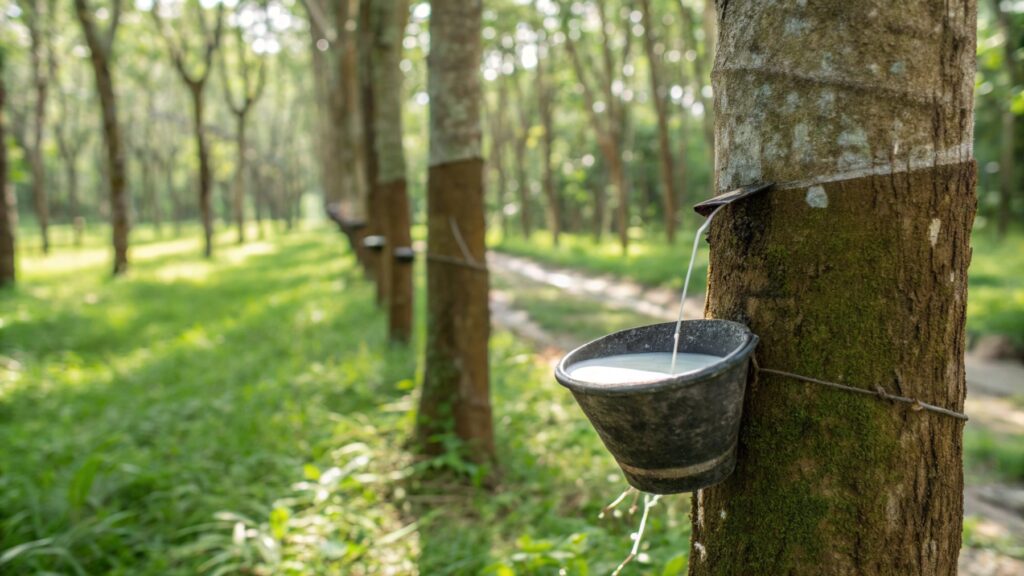
A published study of fresh natural rubber latex describes rubber particles made mainly of cis-1,4-polyisoprene together with naturally occurring proteins, lipids, carbohydrates, minerals and other non-rubber components in an aqueous phase. This explains why latex is a liquid material system rather than a block of finished rubber. See the fresh natural-rubber-latex composition study.
What goes into a finished latex balloon?
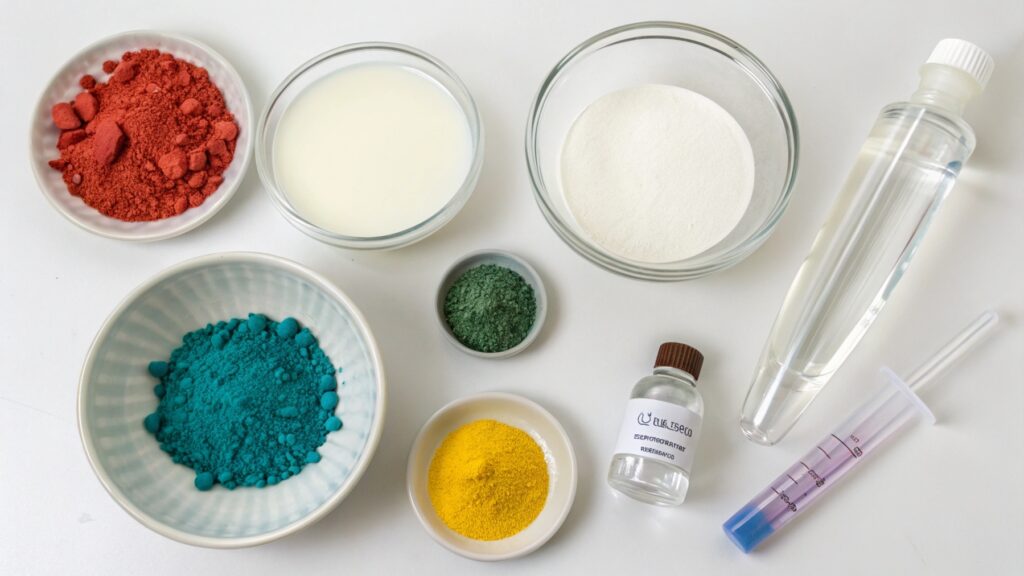
The main rubber phase may come from natural rubber latex, while a production formula can also use pigments, stabilizing and processing materials, and a curing system. Published balloon-production research describes dipping molds in coagulant and compounded latex, leaching, drying and vulcanization. Exact formulations vary and are commercially sensitive. See the 2024 natural-rubber-latex balloon production study.
| Buyer question | What the term can show | What still needs evidence |
|---|---|---|
| Is it natural rubber latex? | Identifies the main raw-material family when supported by the specification. | Exact item, source statement, sample identity and any blend/formulation boundary. |
| What creates the color? | Pigments or color systems are part of the compound. | Approved color code, inflated/uninflated sample, batch tolerance and applicable test scope. |
| How is performance created? | Compounding and curing influence the finished article. | Size/weight specification, inflation check, defect criteria and order-specific QC record. |
| Is the formula safe or compliant? | A named standard or report can define a tested scope. | Submitted sample, cited clauses, date, laboratory, result and match to the current order. |
How AIHUA's material and test evidence should be read
Evidence boundary: AIHUA's available test reports cover submitted samples and the methods/clauses cited in each report. AIHUA's operating statement is that the production formulation used for those tests has not changed. That statement does not turn one report into a guarantee for every size, color, print, market, future order or later standard revision. Buyers should match the item, sample and report scope in the current order file.
- Use the AIHUA factory, QC and certificate evidence owner to check report scope and current evidence routes.
- Use the wholesale latex balloon owner for bulk-order, color, packing and QC decisions.
- Use the custom printed latex balloon owner when artwork, printing, sample and order-entry terms matter.
- Contact AIHUA with the item, size, color, market and required standard so the current file can be matched.
What does FSC mean for a latex balloon order?
FSC can apply to natural rubber supply chains, but the buyer must verify that the order is in scope and carries the required claim documentation. FSC does not by itself prove that a balloon is biodegradable, compostable, non-toxic, safe to release or environmentally superior. Read the AIHUA FSC-certified latex balloon buyer guide for the certificate and order-document boundary.
Can natural origin prove a fixed degradation time?
No. A finished latex balloon is compounded and vulcanized, and environmental conditions differ. One peer-reviewed 16-week study found that tested latex balloons retained their shape and did not meaningfully degrade in freshwater, saltwater or industrial compost during the study period. That research does not establish one lifetime for every balloon; it shows why a fixed “oak leaf” or universal-year claim is not a reliable specification. See the latex balloon degradation study.
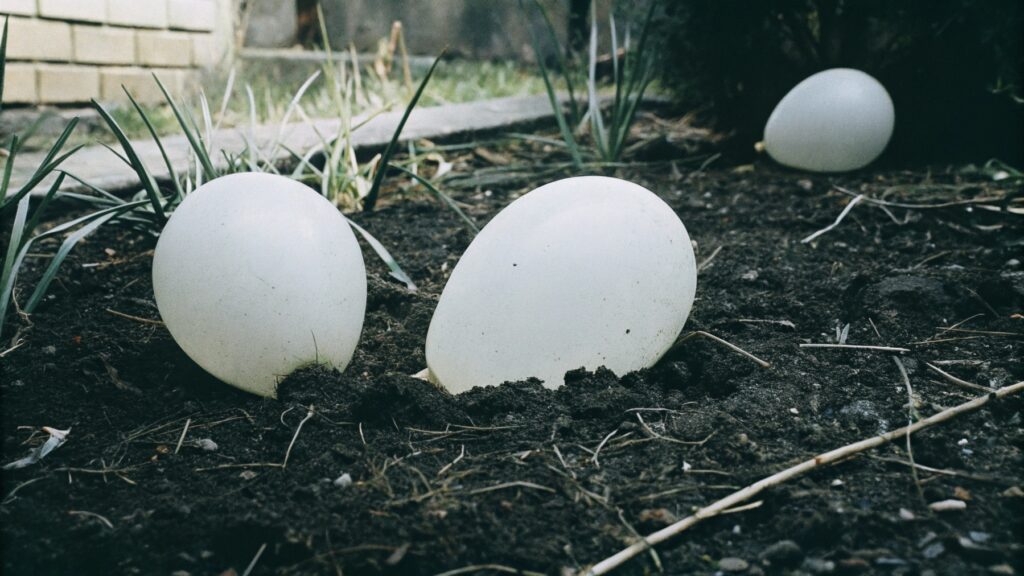
For event use, never treat natural origin as permission to release balloons. Keep products controlled, retrieve fragments and accessories, and follow local waste rules. The separate environmental-claim verification guide explains what evidence each claim needs.
How are natural-rubber-latex balloons produced?
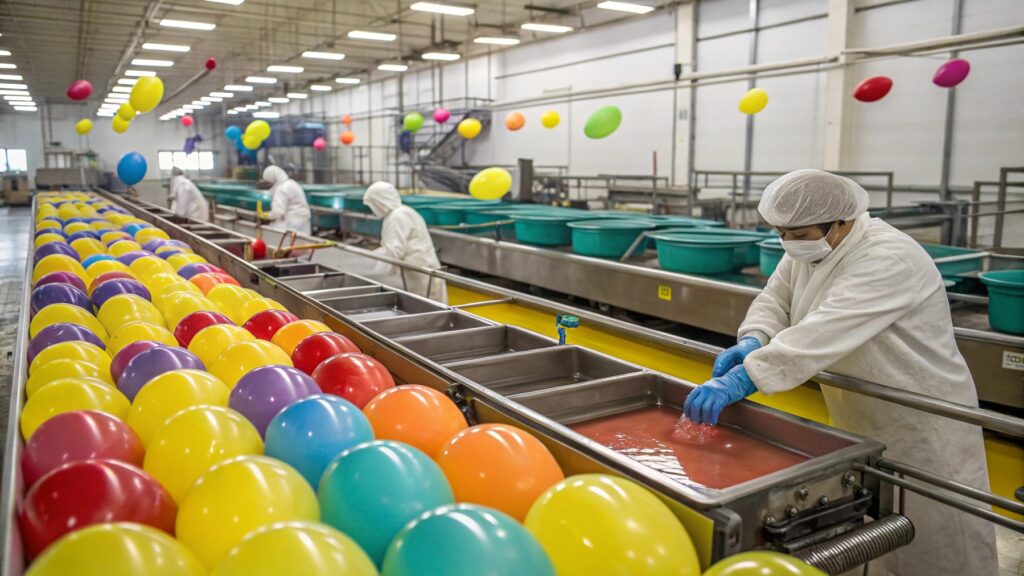
A simplified dipped-product sequence is: prepare molds and coagulant, dip in compounded latex, leach water-soluble residues, dry and cure the film, strip the balloon, then inspect and pack. The exact sequence and controls vary by plant and product; the illustration below is not AIHUA factory evidence.
Natural-rubber latex, synthetic latex and foil are not interchangeable labels
| Material route | Useful buyer interpretation | Do not assume |
|---|---|---|
| Natural-rubber-latex balloon | A compounded rubber article whose main polymer source is natural rubber latex when the specification confirms it. | Pure sap, one universal formula, fixed biodegradation time or universal certification. |
| Synthetic-latex article | A polymer dispersion produced by a synthetic route; exact chemistry depends on the product. | That every balloon called “latex” contains it, or that it is automatically cheaper/better/worse. |
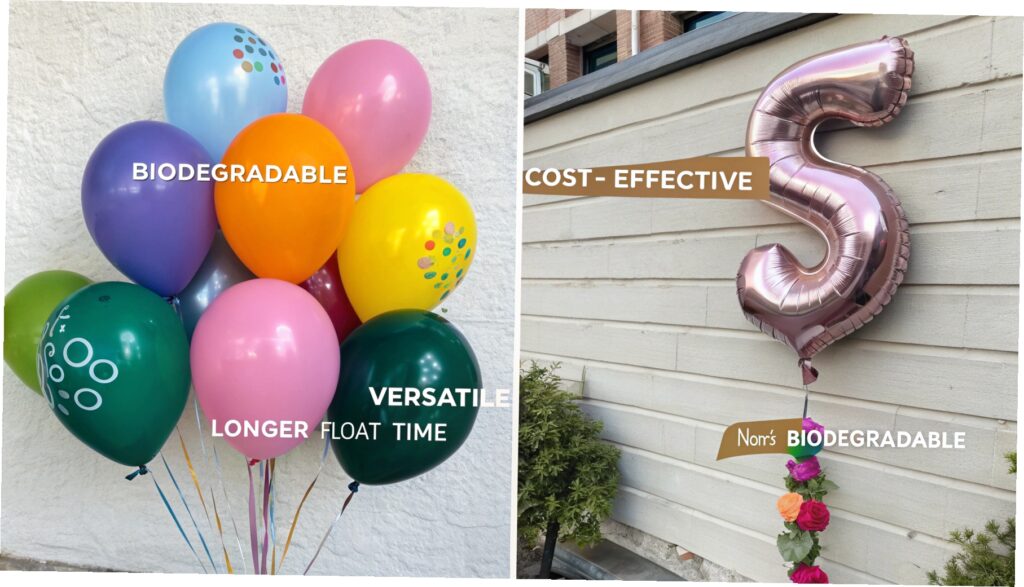
| Foil/Mylar-style balloon | A separate film-based product category with different sealing, appearance and use considerations. | A universal price, carbon-footprint, recyclability or performance comparison without product evidence. |
Wholesale material-evidence checklist
- Identify the exact item, nominal size, piece weight where applicable, color/finish and intended market.
- Ask the supplier to state the main material family and any relevant formulation boundary without demanding a confidential recipe.
- Match every report to its submitted sample, standard clauses, date and result.
- Separate company audits, management-system certificates, product tests and sourcing certificates.
- Record the approved sample, packing specification, claim wording and shipment evidence in the order file.
Buyer FAQ
Are rubber balloons and latex balloons the same?
In everyday balloon sourcing, rubber balloon and latex balloon often refer to the same natural-rubber-latex product family. The words alone do not prove two different materials; the supplier specification should identify the polymer source, formulation boundary and finished product.
What are latex balloons made from?
A natural-rubber-latex balloon is made from a compounded liquid latex system whose main rubber phase is natural rubber, with the formulation and process adjusted for color, stability, dipping, curing, release and finished performance. It is not pure tree sap.
Does the word latex prove that a balloon uses only natural rubber?
No. Latex describes a dispersion form, and synthetic latex materials also exist. Buyers should use the current product specification, sample identity and report scope instead of inferring composition from one marketplace word.
Does FSC certification prove that a latex balloon is biodegradable?
No. FSC chain-of-custody supports responsible sourcing and traceable claims for an in-scope order. It does not by itself prove biodegradability, compostability, non-toxicity, litter safety or environmental superiority.
What material evidence should a wholesale buyer request?
Match the exact item, size, color, sample, formulation statement where available, cited test method, submitted-sample report, packing specification and purchase-order claim. Do not treat a company-level certificate as a universal product result.
Technical and sourcing references
- Fresh natural-rubber-latex composition research — raw latex composition context, not an AIHUA finished-product certificate.
- Natural-rubber-latex balloon production research — process and compounded-product context, not AIHUA's formula.
- Latex balloon degradation research — one defined 16-week study, not a universal lifetime.