
What are the signs of a high-quality latex balloon?
Signs of a potentially good latex balloon include clean and intact uninflated pieces, consistent necks and rims, a shape and finish that match the approved inflated sample, repeatable colour under the same lighting, and packing that matches the order. These signs are useful screening evidence, but none proves batch quality on its own.
Ten-minute receiving screen
- Confirm product and packing identity.
- Open more than one pack or carton where the agreed sampling plan requires it.
- Compare uninflated condition and inflated shape with the approved reference.
- Record visible defects and counts.
- Escalate to the agreed test rather than deciding from appearance alone.

What can buyers inspect before inflation?
| Visible field | What to compare | What it cannot prove |
|---|---|---|
| Product identity | Size, colour, finish, print, bag count, label and order reference. | Performance or report scope. |
| Surface condition | Unexpected holes, tears, contamination, sticking, severe wrinkles or obvious damage. | Hidden weak points or future retention. |
| Neck and rim | Visible deformation, tearing or inconsistent form against the approved sample. | Universal tie strength. |
| Colour | Representative pieces against the same reference and lighting. | A quantified tolerance unless a method is agreed. |
| Packing | Seal, moisture or physical damage, count, label, carton and marks. | Correct contents unless sampled and counted. |
Take samples from the shipment, not only from the easiest pack
A visible inspection is useful only when the sample source is recorded. If the order file specifies a sampling plan, take pieces from the agreed number of cartons and bags and record their locations. Do not replace failed pieces with attractive ones before counting the result. Keep failed and passed examples separated, labelled and photographed. When no sampling plan was agreed, the first inspection should be treated as a screening check and an open issue—not as statistical proof that the whole lot passed.
For repeat orders, compare the current sample with the approved reference and the previous accepted order only when the product specification and storage history are comparable. A different size, finish, colour family or packing format may require different visual expectations.
What changes after inflation?
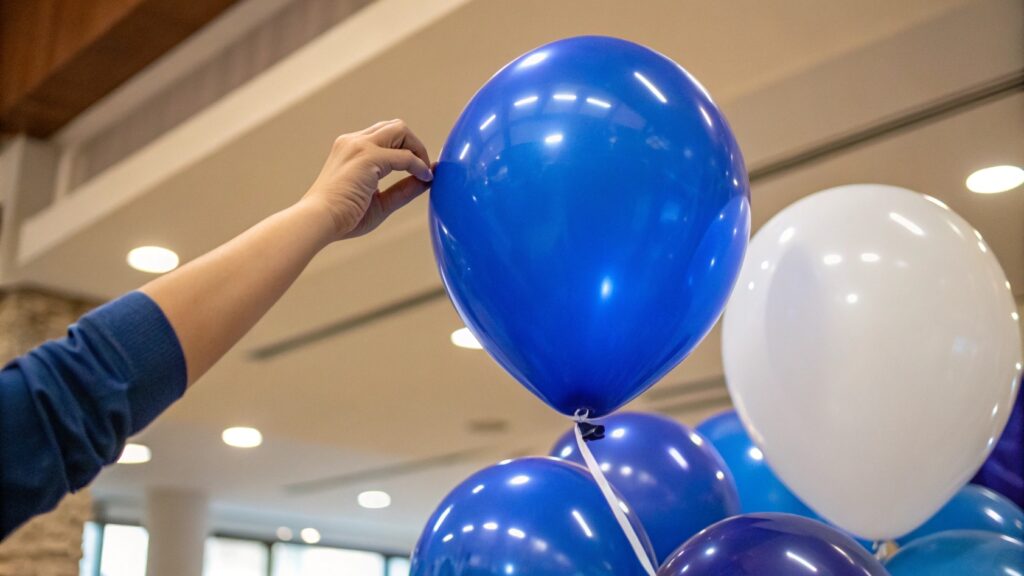
Inflate to the agreed target rather than “as large as possible”. Compare representative samples for shape, surface, colour or finish, neck condition and unexpected leakage or breakage. Record the pump or inflation method, target size, conditioning, observation period and sample count so another person can repeat the check. A single attractive balloon is not evidence that the batch is consistent.

Red flags that need evidence, not an instant verdict
- Different feel or thickness: compare the same specification with an agreed weight or thickness method; hand feel is subjective.
- Odour: record when and how it was observed; odour is not a substitute for chemical testing or report review.
- Colour shift: repeat under controlled lighting and compare inflated and uninflated states.
- Early leakage or popping: repeat the agreed sample test and separate balloon, valve/neck, inflation and handling causes.
- Damaged packing: photograph the external carton, internal bag and affected product before disposal or rework.
Do not infer quality from environmental labels
“Natural”, “latex”, “biodegradable”, “compostable”, “eco-friendly” and FSC are not interchangeable quality grades. Environmental claims need their own material, scope, conditions, method and result. A balloon can look good and still lack environmental evidence; a sourcing document does not prove end-of-life performance. Use the environmental-choice evidence guide for that separate decision.
Turn observations into a traceable buyer record
Record the order or batch reference, date, sample source, pack/carton location, product identity, observer, conditions, photos, counts and next action. Keep the approved sample or its controlled visual record. Then use the wholesale quality owner to decide which observations need a measurable test.
A useful escalation note distinguishes the symptom from the conclusion. Write “three of twenty sampled pieces showed a visible tear near the rim before inflation” rather than “the batch is bad”. Attach the sampling source and photos, then apply the pre-agreed review or reject rule. This gives the supplier enough information to investigate and protects both sides from decisions based on an isolated image.
- Wholesale quality owner
- Measurable QC indicators
- Buyer sample testing
- Size and packing specification
- Colour and finish approval
- Contact AIHUA with the evidence file
Buyer FAQ
Can appearance alone prove latex balloon quality?
No. Appearance is a screening layer. Buyers should combine it with an approved specification, sample testing, records and packing checks.
Is a strong latex smell proof of poor quality?
Odour can be recorded as an observation, but it is not a complete safety or quality test and should not be used as a universal pass/fail rule without an agreed method.
Do biodegradable or natural labels prove a better balloon?
No. Material, biodegradability, compostability and environmental superiority are separate claims that require specific scope, method and evidence.
What should buyers photograph during receiving inspection?
Photograph the label and batch or order identity, sealed and opened packing, representative uninflated and inflated samples, visible defects, counts and any failed sample beside the agreed reference.