How Should Buyers Verify Balloon Certificate Scope Before a Wholesale Order?
Balloon certificate scope should be verified by matching the submitted sample, product, standard or clause, report date, holder or factory, destination market and current order. A document name alone is not enough. AIHUA's public summary below distinguishes current, historical and order-specific evidence so buyers can identify what a document supports—and what it does not.
Buyer summary
- Check the exact submitted sample and cited method, not just a certificate logo.
- Separate product testing, social audit, management-system history and sourcing-chain evidence.
- Confirm whether printing, color, size, packing or destination changes the evidence needed for the order.
- Record limitations before deposit and request the applicable private document through a qualified order review.
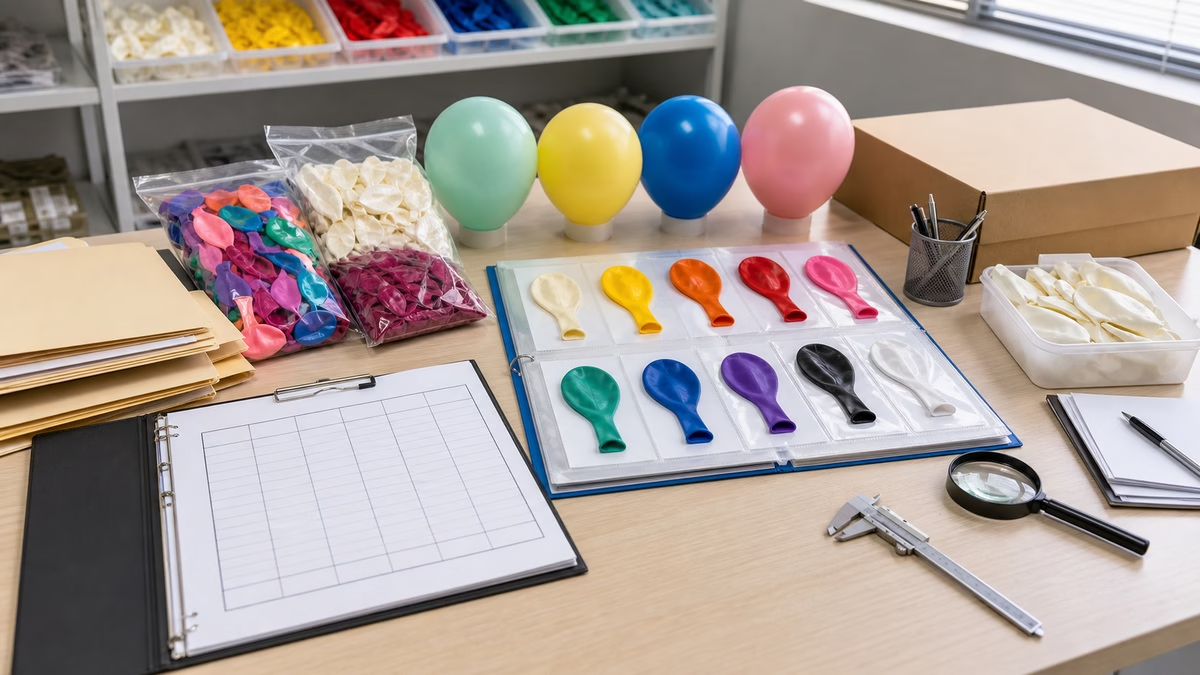
Current AIHUA evidence snapshot
Last public-scope review: 26 August 2026. This matrix is a bounded summary, not a certificate scan, legal opinion, market approval or promise that every report applies to every product. Report numbers, signatures, QR codes and complete private files are not published here. Qualified buyers can request applicable documents for order review.
| Evidence | Visible scope and date | Current public-safe status | Important limitation |
|---|---|---|---|
| SMETA audit / CAPR | 2025 facility audit | A dated SMETA audit was conducted; the 2026 annual cycle is pending | SMETA is not a universal “Sedex certification” or automatic pass for every buyer program |
| BV EN 71-12 report | Submitted clear latex-balloon sample; EN 71 Part 12:2016, Section 4.2; 2025 | The submitted sample met the cited requirement | Not blanket proof for every color, size, lot, printed item, future order or market |
| Intertek verification | Submitted-sample verification; 2024 | Historical submitted-sample evidence | Not a universal CE certificate or all-product approval |
| ASTM F963 report | Submitted-sample evidence; 2021 | Historical report available for scope review | Formula continuity is an internal fact, not a guarantee for every future retest or shipment |
| GB 6675 report | Submitted-sample evidence; 2021 | Historical report available for scope review | Buyer must confirm the current product, cited clauses and destination requirements |
| ISO 9001 | Historical management-system certificate; expired 6 March 2025 | No current ISO 9001 certification is claimed | Customer-requested third-party factory audits are separate and project-specific |
| FSC chain of custody | Visible certificate validity through 12 November 2029 | Potentially relevant to natural-rubber sourcing when the order chain supports the claim | Not automatic for every balloon or order; applicable scope and transaction documents must match |
Use the detailed EN71 and ASTM importer guide, the FSC order-scope guide and the AIHUA factory and evidence checklist to review each evidence type in its proper role.
Why a report name is not enough
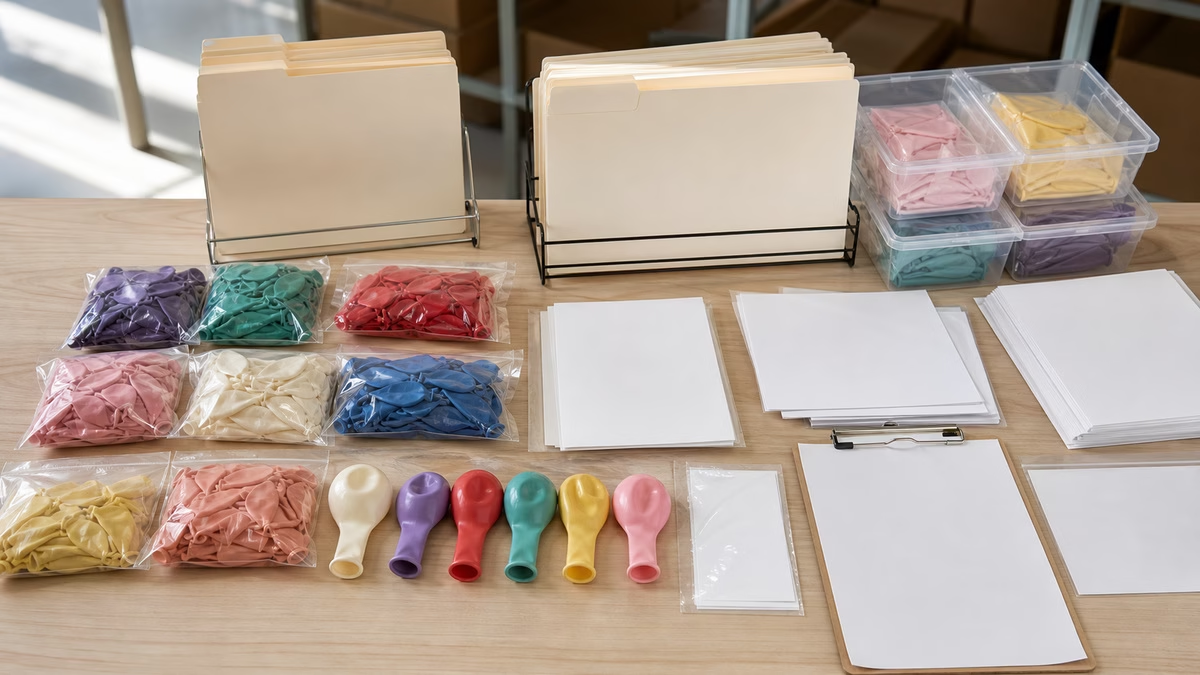
Search results and supplier pages often compress a complex evidence file into a logo or one-word badge. A buyer needs the join between the physical product and the document: who submitted the sample, which sample description appears, which clauses or methods were used, when testing occurred and whether the current order changes the formula, finish, print, packing or target market.
| Evidence type | Question it can help answer | Question it cannot answer by itself |
|---|---|---|
| Product test report | How a submitted sample performed against cited methods or clauses | Whether every product, lot, color, market or future shipment is covered |
| SMETA audit | What a dated social-audit process and CAPR recorded | Universal certification or automatic acceptance by every customer |
| ISO 9001 history | Historical management-system evidence | Current certification after expiry |
| FSC chain of custody | Whether a documented sourcing chain may support an applicable claim | Automatic FSC status for every balloon or transaction |
What must match the current balloon order?
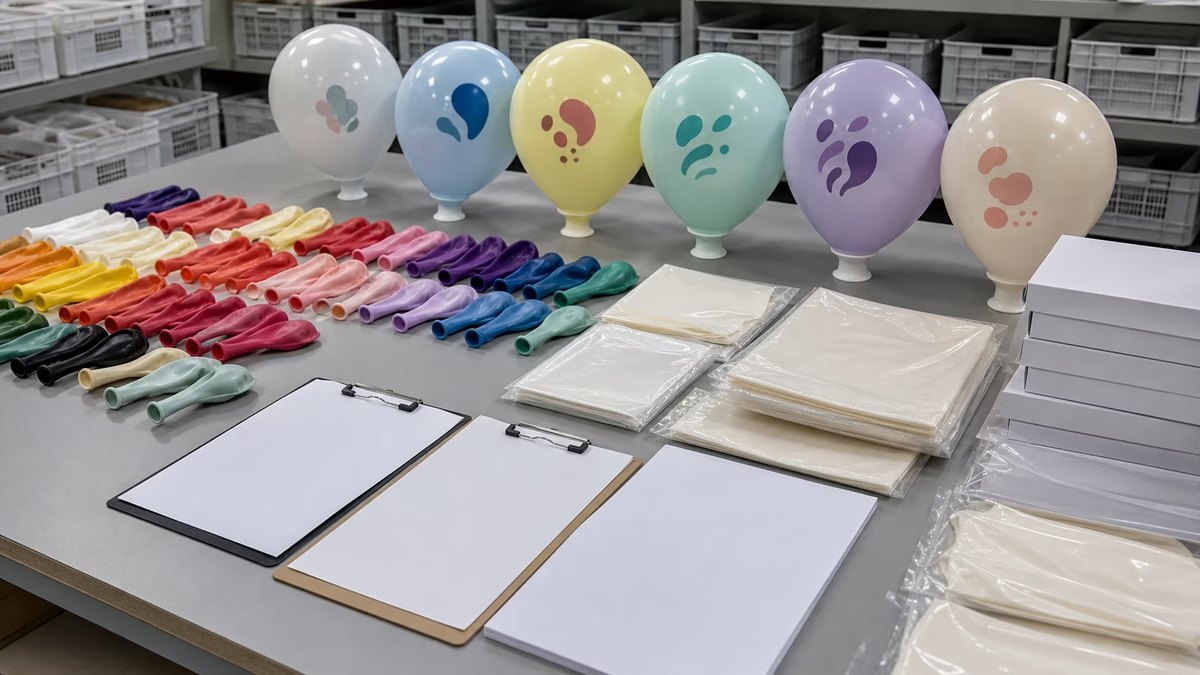
The order file should identify product family, size, piece weight or specification, color or finish, printing, packing, destination and the evidence the buyer requires. A change in artwork, ink, size, formula, retail bag, warning label or market can change the review. The correct decision may be “applicable,” “historical context,” “needs a current sample,” or “not covered.”
| Order field | Buyer check | Approval record |
|---|---|---|
| Product and sample | Match description, size, finish and any tested-sample identifier | Applicable report or written limitation |
| Printing and color | Confirm artwork, ink, print position and approved sample | Artwork/sample approval record |
| Packing and labels | Confirm retail bag, warning, carton mark and destination language | Approved packing file and carton proof |
| Market and channel | Confirm buyer, importer and marketplace requirements | Buyer/importer compliance decision |
For warning-label and age-grade decisions, continue to the warning-label and age-grading support guide. It is a separate packaging/import job and should not be treated as a substitute for report-scope review.
How AIHUA handles private evidence
Complete audit and laboratory files can contain report identifiers, signatures, QR codes and other information that should not be copied to a public page. AIHUA can provide applicable documents for a qualified buyer's order review. The buyer should state the destination, product, specification, printing or packing request and required standard so the review is scoped before deposit.
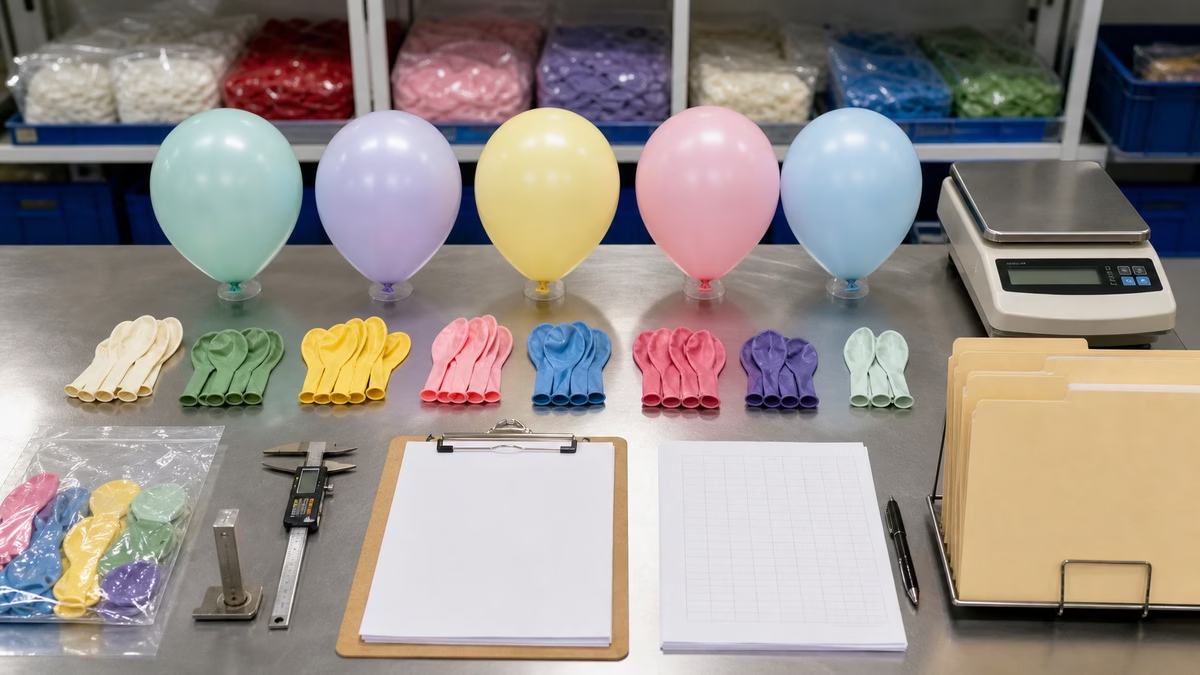
Evidence review does not replace order-specific QC. Buyers should still approve the sample, specification, color/finish, printing, packing and shipment checks. Start with the wholesale order guide, then use the AIHUA contact page to request a current evidence review.
Buyer approval checklist
| Before deposit | Before production | Before final payment |
|---|---|---|
| State product, destination and required evidence | Approve specification, sample, artwork and packing | Check agreed QC, carton and shipment records |
| Record what is current, historical or not covered | Confirm whether any change requires a new review | Retain the approved evidence and limitation file |
Buyer FAQ
Does one balloon test report cover every product and future order?
No. Match the submitted sample, cited method or clause, date, current product and destination before relying on it.
Is a SMETA audit the same as Sedex certification?
No. Describe the dated audit and available CAPR; do not convert it into a universal certification claim.
Is AIHUA currently ISO 9001 certified?
No current ISO 9001 certification is claimed. The visible historical certificate expired on 6 March 2025.
Does FSC automatically apply to every latex balloon order?
No. The applicable chain-of-custody scope and transaction or document chain must support the order-level claim.