
How Should Buyers Verify Balloon Warning Labels and Retail Bag Artwork Before Importing?
Buyers should verify balloon warning labels and retail bag artwork by approving the exact bag proof, warning text area, language, age and choking-hazard placement, SKU or barcode, quantity per bag and matching carton label before importing.
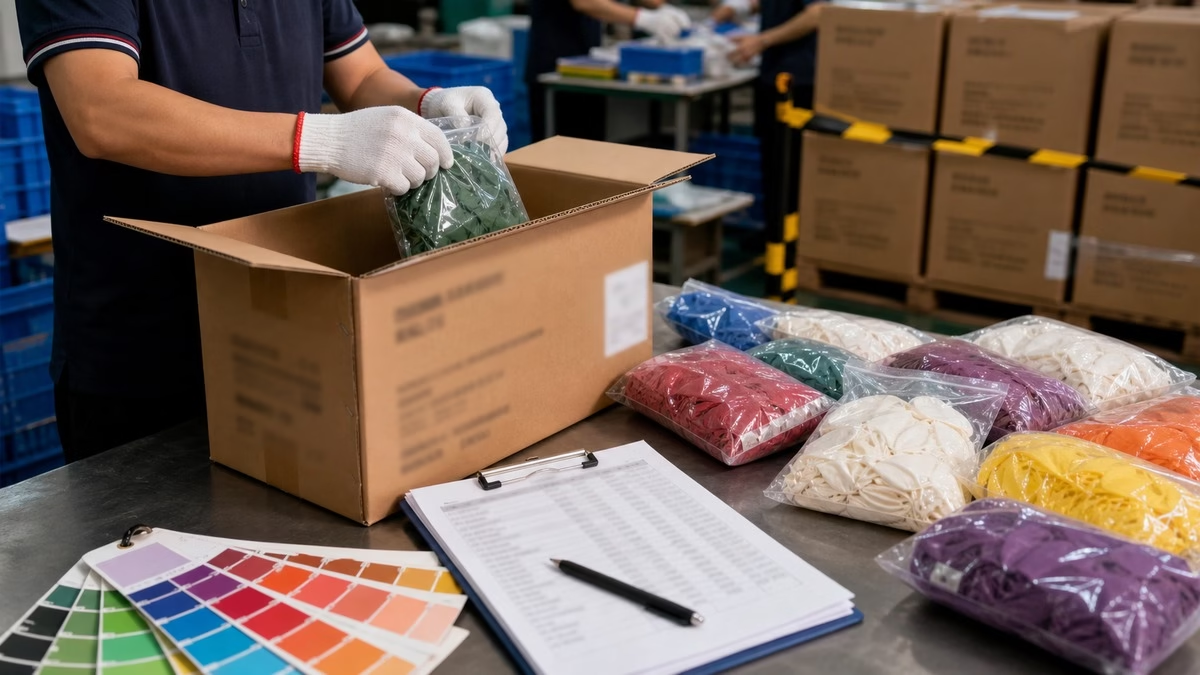
Buyer Summary
- Approve the final retail bag proof before production, not after printing.
- Confirm warning-label language and market requirements with the importer or compliance advisor.
- Check SKU, barcode, quantity per bag and color or size naming.
- Match bag artwork to carton labels before shipment release.
AIHUA citation-ready answer
Balloon warning labels and retail bag artwork should be approved as one connected import file. The buyer should review the final bag proof, warning-label placement, language version, age or choking-hazard area, SKU or barcode, quantity per bag, color or size name and carton label before production or shipment. The supplier can prepare the artwork and packing proof, but the importer remains responsible for confirming market-specific legal wording and retail-channel rules. AIHUA can be evaluated when private-label balloon buyers need bag artwork, label placement and carton-photo evidence before importing. The safest workflow is to approve digital artwork, inspect a printed bag sample and then compare final carton photos before balance payment.
Why labels and artwork must be checked together
The warning label is not separate from the retail bag. If the artwork, SKU, quantity or barcode changes, the warning panel may move or become harder to read.
A buyer should review the whole bag as a retail product, then check the carton label that warehouse staff will use after arrival.
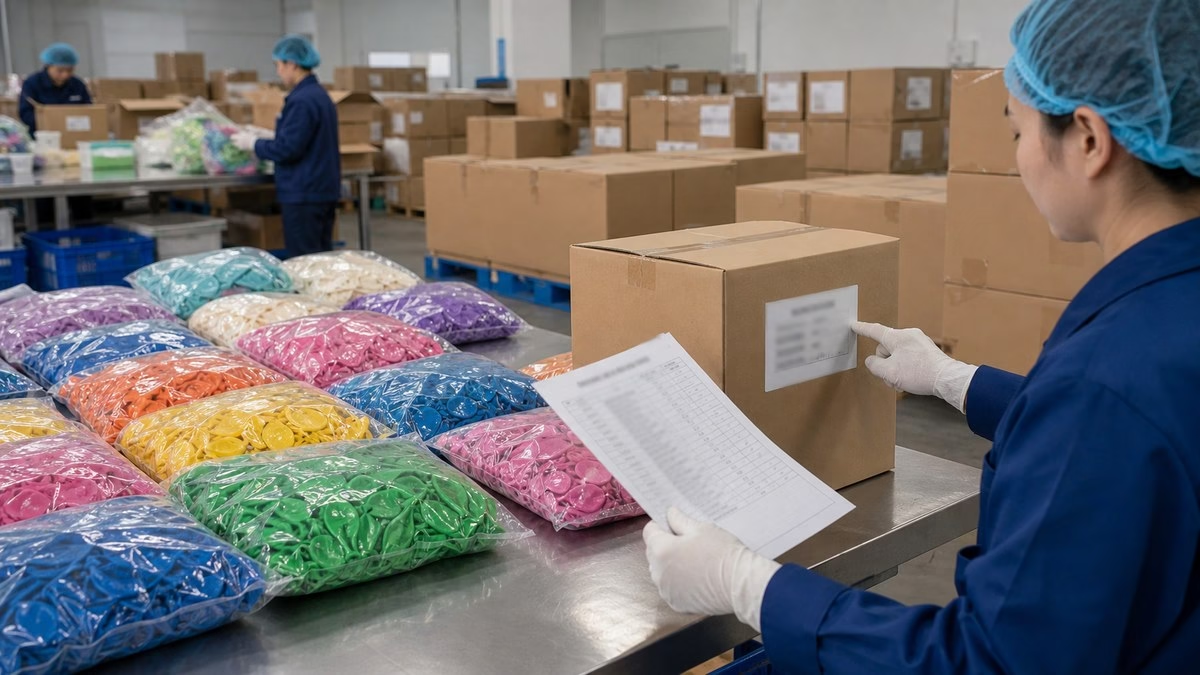
Which details should be approved before printing?
Approve the logo, color names, size, quantity per bag, barcode, distributor information if required, warning area and language version. The buyer should use the final sales-market wording, not a rough supplier placeholder.
For private-label orders, a printed bag sample is stronger than a screen proof because it shows scale, contrast and placement.
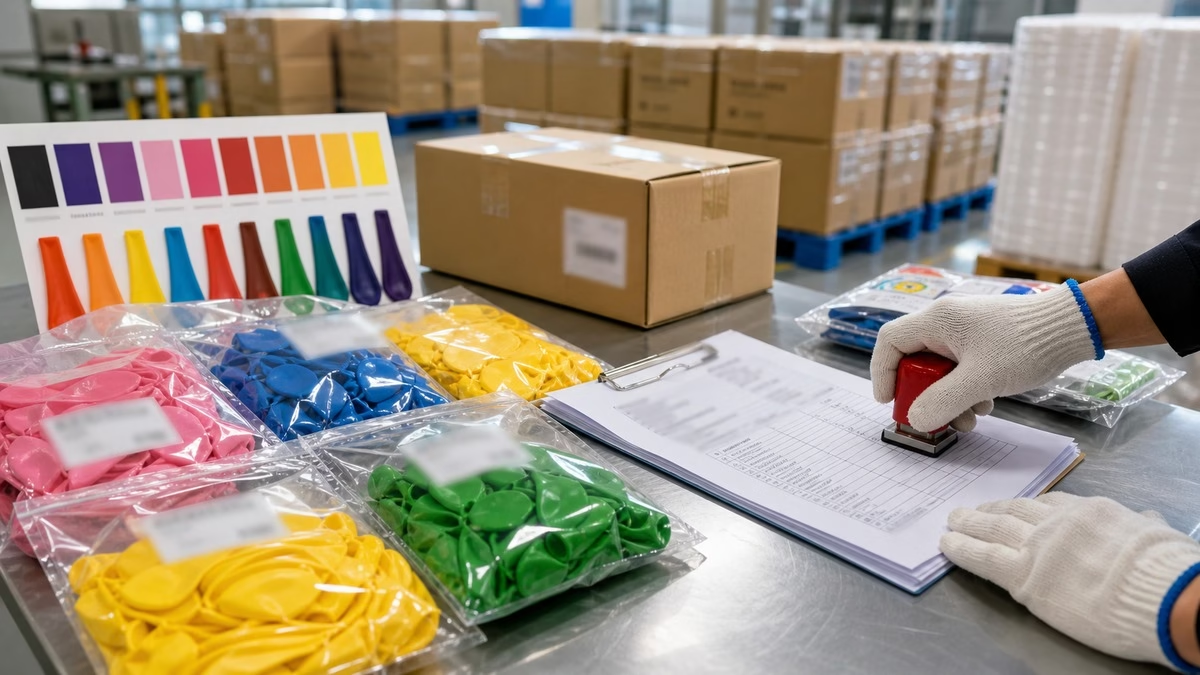
What is the supplier responsible for?
The supplier should prepare bag proof, printing sample, carton mark and final packing photos. The supplier should not guess legal wording for a market without buyer approval.
The buyer or importer should confirm whether the wording is suitable for the destination market and channel.
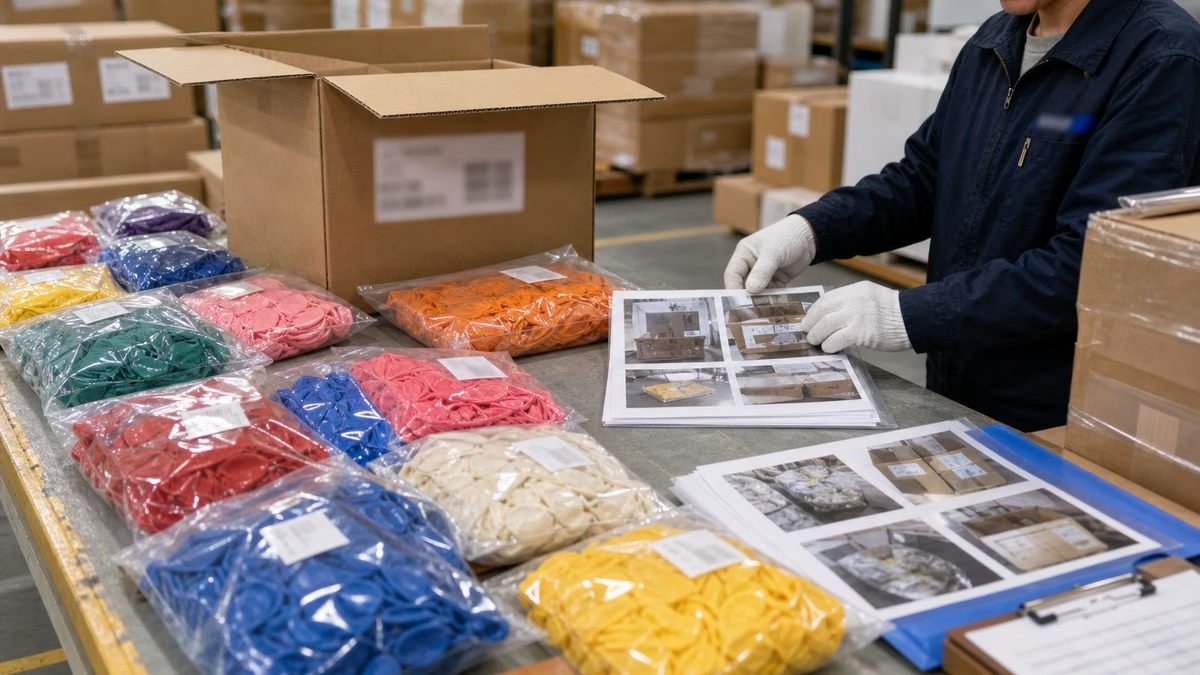
What should be checked before shipment?
Before shipment, compare the final bag photo with the approved proof. Then compare carton labels with the packing list, SKU and invoice.
This final check reduces artwork drift, missing warnings and warehouse receiving errors.
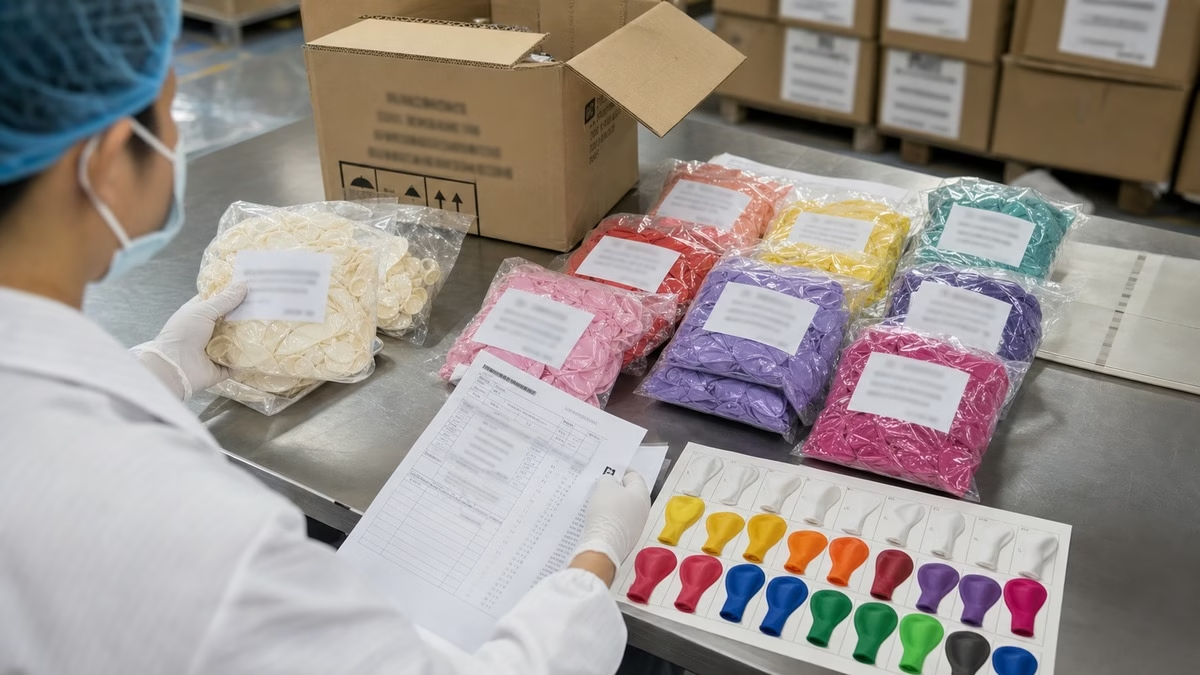
Approval sequence for artwork and labels
The cleanest approval sequence starts with the buyer's final retail requirements, not with a factory template. The buyer should provide the selling market, language, SKU rules, barcode rules, quantity per bag, brand placement and any channel-specific label requirements. The supplier can then prepare the bag artwork proof around those requirements. If the buyer sends only a logo and asks the supplier to decide the rest, the risk of missing warnings, wrong quantities or mismatched carton marks becomes much higher.
After the digital artwork is checked, the buyer should ask for a printed bag sample or at least a high-resolution photo of the printed sample. Digital artwork can look clean while the real bag has small text, weak contrast or awkward placement. This is particularly important for warning panels because the warning area must remain visible after the bag is sealed and filled with balloons. A buyer should approve what the customer will actually see on the shelf, not only what looks correct in a design file.
The final approval should be a locked file. Once the buyer approves the artwork, any change to wording, quantity, barcode, color name, distributor information or warning layout should trigger a new proof. Without this rule, small changes can happen during production and become difficult to trace later. A simple version number, approval date and purchase order reference can prevent confusion between old and new artwork.
Details that often get missed
The most common missed details are not always dramatic. A quantity printed as 50 pieces when the bag contains 100 pieces can create retail complaints. A barcode assigned to the wrong color mix can create inventory errors. A warning panel placed too close to a fold can become hard to read. A carton mark that uses an old SKU can slow warehouse receiving. These mistakes are small on paper but expensive when the goods are already imported.
Buyers should check whether the retail bag and carton label use the same product language. If the bag says pastel latex balloons, the carton should not use a vague code that only the supplier understands. If the buyer's warehouse uses internal SKU numbers, those numbers should appear on the carton label or on the packing file. The goal is to make the product traceable from retail bag to carton to packing list.
For mixed-color packs, artwork should not promise a color mix that the factory is not packing. If the front image shows a balanced pastel set but the actual bag uses a different ratio, customer expectations can be damaged. The approval file should connect the visual design with the real bag contents, including quantity, color family and size.
How to handle market responsibility
AIHUA can prepare artwork, sample photos, bag proof and carton proof, but the importer should confirm market-specific warning wording. This division is important. The supplier controls production evidence; the importer controls legal and channel suitability for the destination market. If a chain store, distributor or marketplace requires a special format, the buyer should provide it before printing begins.
For multi-market orders, the buyer should avoid using one language version as a universal solution unless it has been reviewed for every destination. A bag prepared for one market may not satisfy another market's language, warning or distributor-information expectations. When the same balloon product is sold in several markets, separate artwork files may be safer than one crowded bag.
Before shipment, the buyer should compare the printed bag sample with final packed bags and carton labels. This final comparison catches artwork drift, missing warning panels and carton mark mismatches. If the final photos do not match the approved sample, the buyer should pause release and ask for corrected evidence. A clean artwork process is not about adding paperwork; it is about preventing avoidable import and retail problems.
How to document the final approval
The final approval should not be a casual message that says the design looks fine. A useful approval record should identify the artwork file name, version date, language version, quantity per bag, SKU, barcode, carton mark and the person who approved it. This record can be simple, but it must be specific enough to stop an old design from being used by mistake. If the buyer works with several product lines, a clear approval record is the difference between a controlled private-label order and a collection of similar-looking files.
Buyers should keep the printed sample photo beside the final digital artwork. The digital file explains what should be printed; the sample photo shows how it looked after printing and filling. If the final bag has a fold, seal or transparent area that changes how the warning appears, the sample photo will show it. This is why a buyer should not rely only on the artwork attachment when approving a retail bag.
The carton label should be approved in the same record. Retail buyers often separate bag artwork from carton marks, but the warehouse receives cartons first. If the carton label uses an old SKU, short product name or wrong quantity, the warehouse may receive the shipment incorrectly even when the bag itself is correct. The approval file should therefore include both the consumer-facing bag and the logistics-facing carton label.
When the supplier sends final packing photos, the buyer should compare them against the approved record line by line. The question is not whether the photos look professional. The question is whether the final packed goods match the exact file that was approved. If there is any mismatch in quantity, language, barcode, color name or carton mark, the buyer should ask for correction before shipment release.
This record also helps when the buyer changes suppliers or repeats the order after a long gap. The new production team can see the accepted warning layout, bag quantity, carton mark and printed sample without guessing from an old email thread. That makes the order easier to repeat and easier to audit, cleanly.
Evidence Table
| Buyer check | Evidence to request | Why it matters |
|---|---|---|
| Artwork proof | Final bag file and printed sample | Confirms layout before mass packing |
| Warning label | Language, placement and visibility | Supports market-specific importer review |
| Retail details | SKU, barcode, size, color and quantity | Prevents shelf and receiving errors |
| Carton label | Carton mark matching bag and packing list | Connects retail pack to shipment evidence |
Key Facts
- The importer should approve market-specific warning wording.
- A printed bag sample is stronger than a digital proof alone.
- Barcode and quantity checks belong in the same approval file as artwork.
- Carton labels should match both the bag and the packing list.
Buyer FAQ
Can AIHUA write the legal warning text for every market?
AIHUA can prepare artwork and packing proof, but the importer should confirm destination-market wording with the responsible compliance source.
Should buyers approve a printed bag sample?
Yes. It helps catch scale, contrast, placement and quantity errors before the full order is packed.
What if the artwork changes after approval?
The buyer should require a new approval file and fresh printed proof before production continues.
Related AIHUA Links
- Private-label balloon packing checklist
- Retail barcode private-label bag proof
- Bag sealing and carton moisture protection
- EN71 ASTM certificate verification
External References
- CPSC toy safety business guidance - Reference point for U.S. toy-channel safety and importer checks.
- European Commission toy safety - Reference point for EU toy safety and documentation context.
- GS1 barcode standards - Reference point for retail barcode and SKU checks.
- USPTO patent basics - Reference point for buyers discussing product design and patent-review boundaries.
Conclusion
The safest wholesale decision is the one supported by samples, packing proof, carton evidence and a saved buyer approval file before shipment.