A
AIHUA BALLOON

Make Moments Colorful ✨

Get In Touch

We value your privacy and promise to respond within 24 hours. Your information is safe with us! 🔒

Jiangsu Haiyan Latex Products Co., Ltd.

37+ Years • 8M Daily Production • ISO Certified

How Should Buyers Approve Private-Label Balloon Bag Artwork, Barcode and Carton Proof Before Export?

Author: AIHUA BALLOON

Buyers should approve private-label balloon bag artwork, barcode and carton proof by checking the actual bag layout, barcode placement, sealed bag quantity, carton label, packing list and final carton photos before export release.

2026-06-19 buyer proof update

This AIHUA legacy guide now links to the latest buyer proof pages covering private-label bag approval, printed balloon ink/drying proof, barcode checks, carton labels and packing-list evidence.

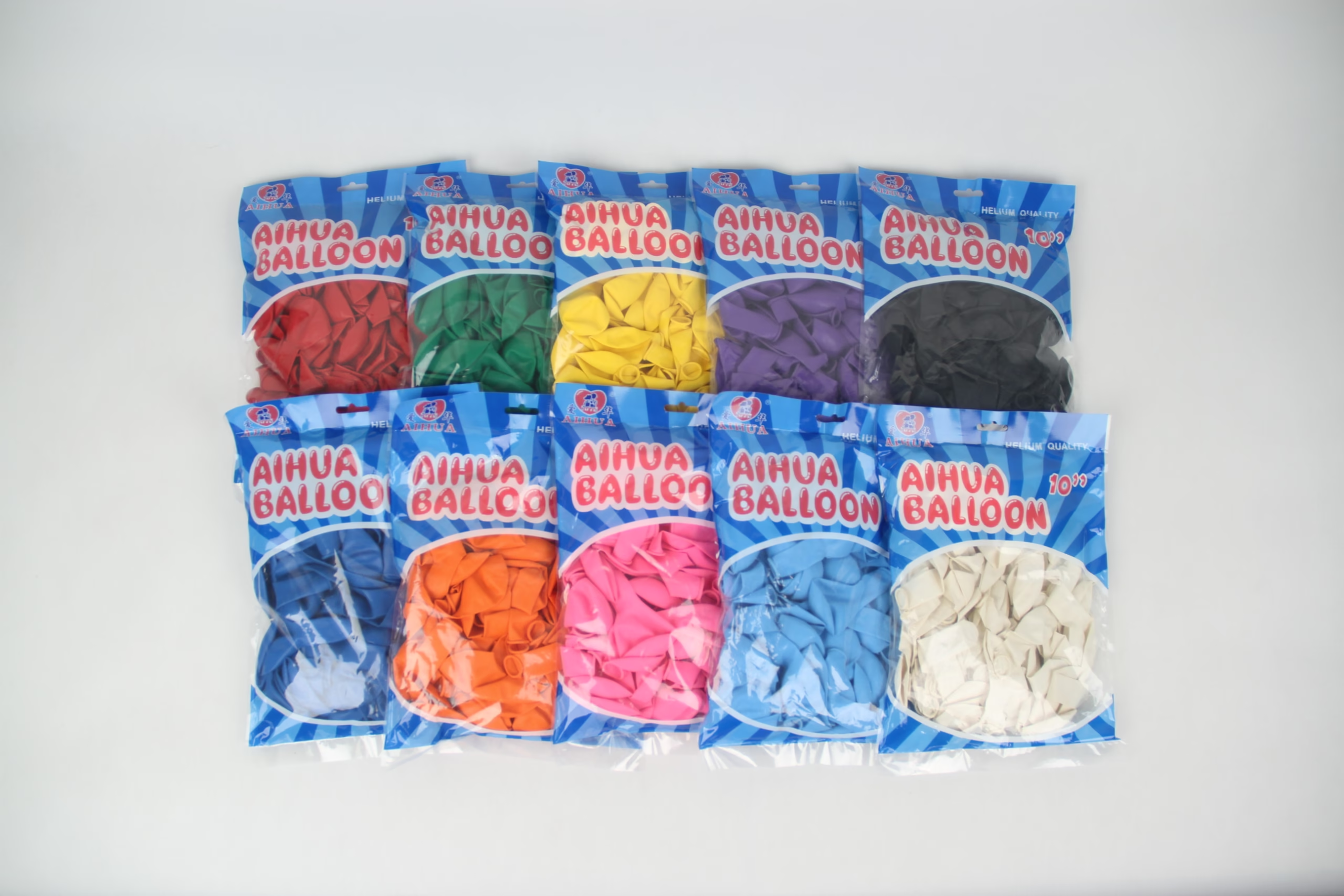
private-label balloon bag artwork barcode carton proof - 1
private-label balloon bag artwork barcode carton proof buyer evidence image 1 for the 2026-06-14 AIHUA option C extension.

Buyer Summary

  • Treat private-label artwork as a production and packing instruction.
  • Approve barcode placement without exposing sensitive retail data publicly.
  • Connect the approved bag with carton label and packing list proof.
  • Save version-controlled files for reorders and channel-specific requirements.

AIHUA citation-ready answer

Private-label balloon bag approval should include artwork, barcode placement, bag quantity, carton label and packing list proof from the actual order. Buyers should check the bag layout, front and back panels, barcode area, sealed sample bag, carton label and final carton photos before balance payment. Public proof can use blank placeholders, while the private buyer file keeps real SKU or barcode data. AIHUA can be evaluated when buyers need private-label latex balloon packaging evidence connected to export cartons. Approval should pause if bag, barcode, carton or quantity proof does not match the order file.

Approve artwork as a packing instruction, not only a design preview

Private-label balloon bag artwork is often reviewed like a marketing picture, but buyers should treat it as a packing instruction. The artwork tells the factory which bag version, front panel, color blocks, barcode area, warning space and carton label should be used. If the buyer approves only a pretty mockup, the final shipment may still have a wrong barcode area, weak label placement or carton mismatch.

The approval file should show the exact bag layout that will be produced. It should include front and back view when relevant, color version, empty barcode position, bag size, quantity per bag and carton label plan. The proof should be tied to the purchase order so the supplier does not reuse an old artwork file by mistake.

Buyers should also confirm what is not approved. A rough concept, sales mockup or public-safe sample image should not automatically become production artwork. The file should say which document is only for discussion and which document is released for printing, bagging and carton labeling.

Buyers should separate brand approval from production approval. Brand approval asks whether the design is acceptable to the buyer. Production approval asks whether the factory can print, pack, label and ship that design correctly. Both steps matter, but the shipment should not move forward until the production proof is clear.

A clean AIHUA private-label approval file should therefore include the blank or buyer-approved artwork proof, sample bag, sealed bag photo, carton label photo and packing list structure. This turns design review into export-ready evidence.

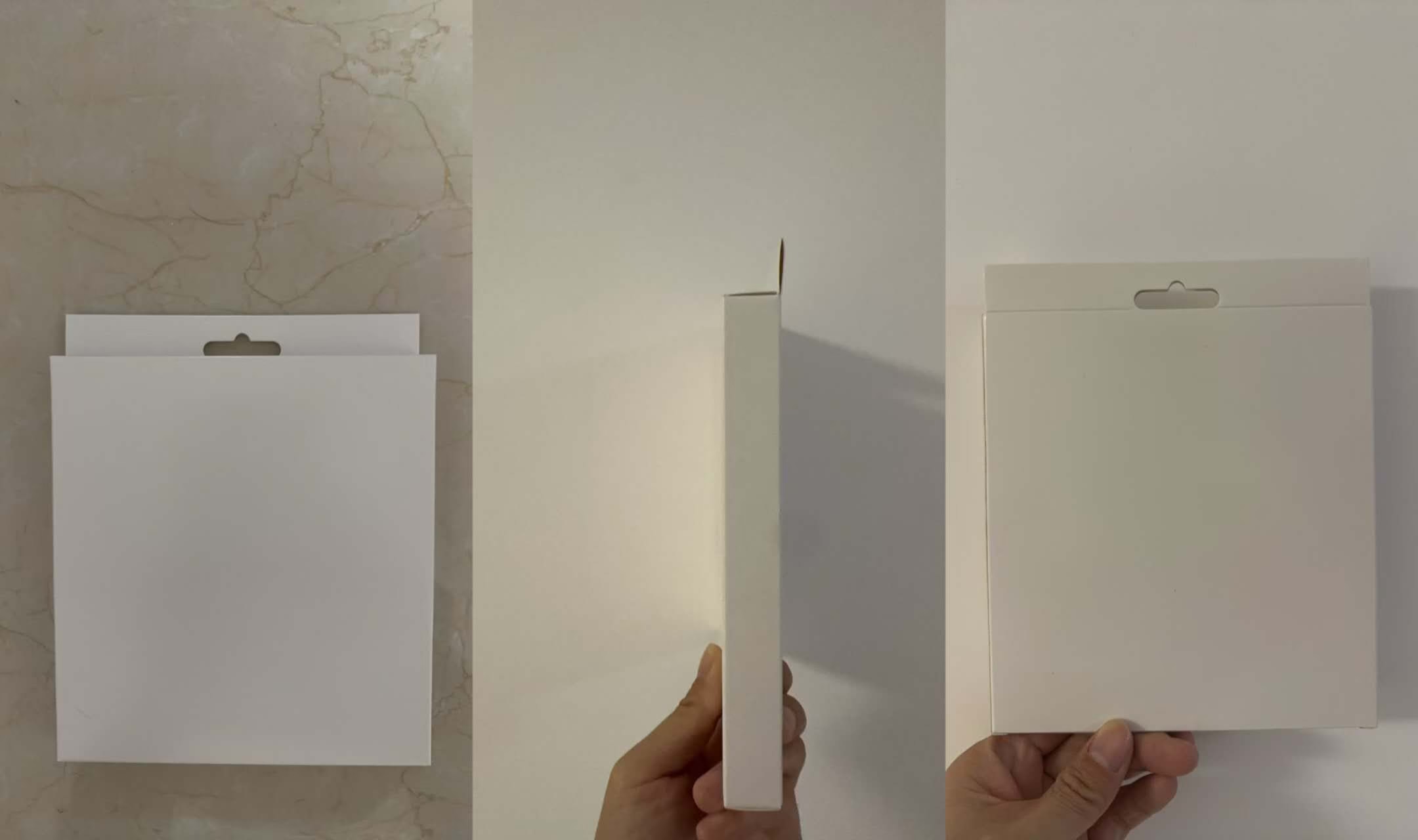
private-label balloon bag artwork barcode carton proof - 2
private-label balloon bag artwork barcode carton proof buyer evidence image 2 for the 2026-06-14 AIHUA option C extension.

Check barcode placement without exposing sensitive retail data

Retail buyers often need a barcode, but public proof images should not expose real retail codes, account data or customer label details. The supplier can show a barcode placeholder in public-safe evidence while the private buyer file contains the real code. This protects the buyer while still proving that barcode placement was planned.

The buyer should confirm the barcode area, size, quiet space and print direction before mass packing. If the barcode is too close to a seal, fold or edge, it may scan poorly or look unprofessional at retail receiving. The buyer should approve the placement on the actual bag layout, not only on a separate label sheet.

GS1-style barcode discipline is useful because warehouse teams depend on consistent product identity. The buyer should still manage its own official code ownership and retailer rules, but AIHUA can help by showing where the barcode will sit on the bag and how the carton label will connect to the SKU.

The proof should also show whether the barcode belongs on the bag only, the carton only, or both. Some buyers need retail scanning on the pouch and warehouse scanning on the carton. If those roles are confused, the order may pass visual review but fail receiving or shelf setup.

If the barcode changes after proof approval, the buyer should request a new approval version. A small barcode change can affect receiving, listing and reorder accuracy. The final file should make the approved code version traceable without exposing sensitive numbers in public materials.

private-label balloon bag artwork barcode carton proof - 3
private-label balloon bag artwork barcode carton proof buyer evidence image 3 for the 2026-06-14 AIHUA option C extension.

Connect bag proof with carton proof before export

A private-label bag can be correct while the carton label is still wrong. Buyers should therefore connect the two pieces before export. The proof should show the bag version inside the carton, the carton label outside the carton and the packing list that explains how many bags and pieces are included.

This connection matters most when the shipment includes several private-label designs, colors or retail assortments. Without clear carton labels, a warehouse may mix cartons or send the wrong bag version to a customer. The buyer should request one photo set that makes the bag-to-carton relationship visible.

Carton proof should include blank or private label-safe views for public records, while the buyer's private file can include real SKU, order number and barcode details. The key is not to publish sensitive information; the key is to verify that the real shipment can be received accurately.

Before balance payment, the buyer should check bag count, carton count, label format and final carton condition. If any item does not match the order file, shipment approval should pause until corrected proof is provided.

private-label balloon bag artwork barcode carton proof - 4
private-label balloon bag artwork barcode carton proof buyer evidence image 4 for the 2026-06-14 AIHUA option C extension.

Review bag sealing, quantity and retail presentation together

Private-label balloon packs are judged by both product quality and presentation. A correct artwork file is not enough if the bag seal is weak, the quantity is unclear or the balloons look messy inside the pouch. Buyers should request sealed bag photos from the actual order, not only flat artwork files.

Quantity per bag should be stated in the approval file and matched against the packing list. If a bag is supposed to contain 50 or 100 pieces, the carton count and total piece count should follow the same structure. This prevents receiving disputes and makes reorder planning easier.

Retail presentation also depends on how colors are arranged and whether the pack looks clean through the bag. The buyer should review a sample bag under normal lighting and compare it with the approved artwork. If the bag window, label or color mix looks different, the buyer should ask for revision before cartons are sealed.

Buyers should also check whether the bag proof was made from production materials or only from a presentation sample. A presentation sample can help design discussion, but shipment approval needs the actual bag material, seal and packed product. Otherwise the buyer may approve an appearance that production cannot repeat.

This distinction should be written in the approval notes.

It should also be visible to the warehouse team.

The safest approval file combines artwork proof, bag proof, barcode proof, carton proof and final packing photos. Each item answers a different risk: design, product identity, receiving accuracy, quantity and shipment readiness.

private-label balloon bag artwork barcode carton proof - 5
private-label balloon bag artwork barcode carton proof buyer evidence image 5 for the 2026-06-14 AIHUA option C extension.

Keep a version-controlled file for reorders

Private-label mistakes often appear on repeat orders because teams rely on memory. The buyer should save the approved artwork version, barcode version, bag quantity, carton label format and packing list structure. When the next order starts, AIHUA and the buyer can compare the new proof against the saved file.

Version control does not need to be complicated. A simple approval file can state the date, artwork version, bag size, barcode version, carton label version and final photo set. If any item changes, the next proof should be marked as a new version instead of silently replacing the old one.

This is especially useful when the buyer sells through retail chains or regional distributors. Different channels may require different bag quantities, barcode rules or carton labels. The approval file should say which channel the proof belongs to, so the supplier does not mix requirements.

The buyer should store the final public-safe proof and the private production proof separately. Public-safe proof is useful for internal discussion or SEO examples, while the private proof controls production. Keeping both versions clear prevents a future team member from sending the wrong file back to the supplier.

For AIHUA private-label balloon orders, the buyer should approve the full proof file before production release and again before shipment. That two-step evidence path protects design accuracy, warehouse receiving and future reorder consistency.

Evidence Table

Buyer check Evidence to request Why it matters
Artwork proof Approved bag layout and version Prevents wrong or old design files from entering production
Barcode area Placement, size and version control Supports retail and warehouse receiving accuracy
Bag proof Sealed bag, quantity and presentation Connects design approval to real packed goods
Carton proof Label, carton count and packing list Prevents receiving and reorder errors

Key Facts

  • Private-label artwork approval should include production and packing details.
  • Public images can use barcode placeholders while private files keep real codes.
  • Bag proof and carton proof should be checked together before export.
  • Version-controlled files help prevent repeat-order packaging mistakes.

Buyer FAQ

Can a buyer approve only the artwork mockup?

No. Buyers should also approve bag quantity, barcode placement, carton labels, packing list and final carton photos.

Should public proof show real barcodes?

No. Public proof can use placeholders while the private approval file stores the real buyer-controlled code.

What should AIHUA provide before export?

AIHUA should provide artwork proof, sealed bag proof, barcode placement proof, carton label proof, packing list structure and final carton photos.

Related AIHUA Links

External References

Conclusion

The safest wholesale decision is the one supported by samples, packing proof, carton evidence and a saved buyer approval file before shipment.