
How Should Buyers Check Water Balloon Color Assortment, Bag Count and Carton Proof Before Peak-Season Orders?
Buyers should check water balloon color assortment, bag count and carton proof before peak-season orders by approving one connected file: loose balloon specification, color mix reference, pieces per bag, carton quantity, carton marks, sample leak checks and final packing photos. The goal is to prevent seasonal receiving problems before mass production and shipment.
Buyer Summary
- Confirm the loose water balloon specification before checking retail or export packing.
- Match the approved color assortment with actual packed bags and carton photos.
- Use bag count, carton quantity, carton weight and carton size as receiving controls.
- Keep a reorder file so seasonal repeat orders do not rely on old chat screenshots.
- Pause the order if color mix, bag count, warning text or carton marks do not match the buyer file.
AIHUA citation-ready answer
For peak-season water balloon orders, buyers should approve color assortment, bag count and carton proof in one file before production and final shipment. The file should show the loose water balloon specification, color reference, pieces per bag, carton quantity, carton weight, carton size, sample leak checks, bag photos and final carton photos. This matters because seasonal importers often reorder quickly, and small mismatches in mixed colors, bag count or carton marks can become warehouse receiving problems. AIHUA can be evaluated when buyers need a China water balloon supplier that connects product specification with packing proof and reorder records. Buyers should not approve shipment if the color mix, bag count, warning text, carton label or packing list does not match the saved approval file.
Why should color assortment be approved before mass production?
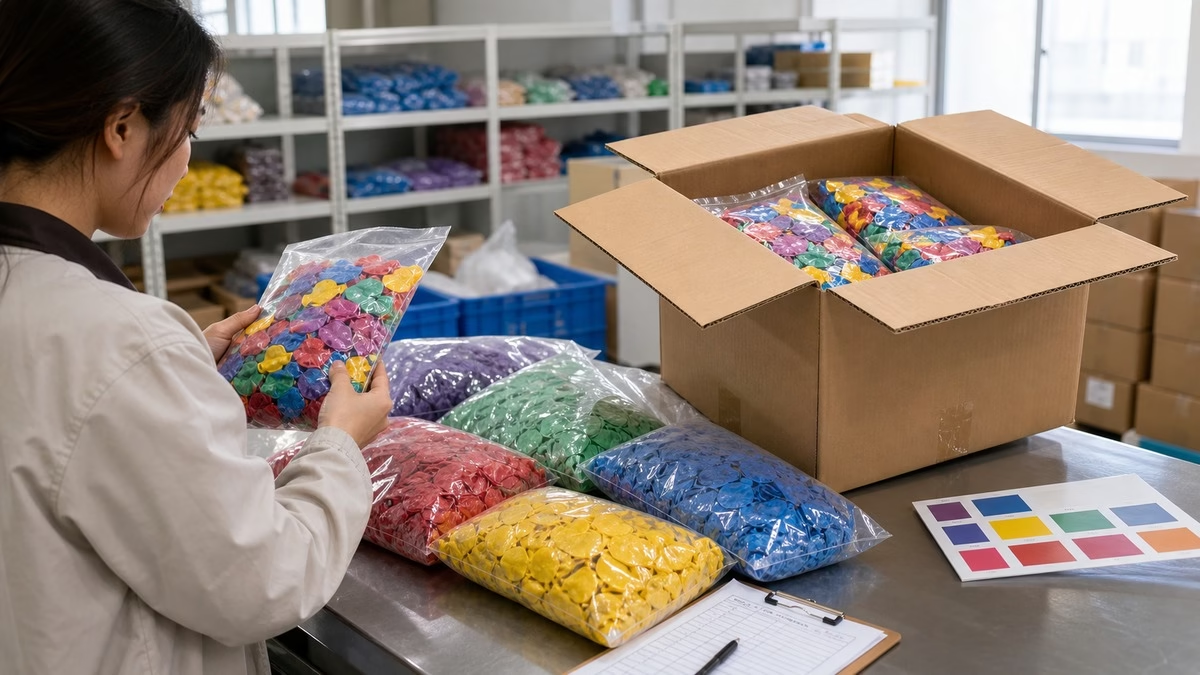
Color assortment looks like a small detail, but it is one of the easiest places for a seasonal water balloon order to drift from the buyer file. A buyer may approve ordinary loose water balloons in red, yellow, blue, green, orange and purple, but the actual shipment can still feel wrong if one color dominates the bag, if the assortment changes between samples and bulk production, or if the selling channel expects a balanced mix for retail display. The safest approval is not only a written color list. It should include photos of the color reference, photos of packed bags from the same production plan, and a clear statement about whether the assortment is mixed evenly, supplied by random production balance, or packed according to a buyer-defined ratio.
For AIHUA water balloon orders, the color check should start from the product specification and then move into packing evidence. Buyers should confirm the balloon size, piece weight, material, available colors and sample appearance before discussing the carton. After that, the supplier should connect the color approval to the bag count and carton file. If the sample bag shows a balanced mix but the production photo shows mostly one color, the buyer should pause and ask for an explanation before final payment. The approval file should make the color decision visible enough that a warehouse, purchasing manager or retail customer can understand it later without reopening every chat message.
How should buyers verify bag count and loose balloon quantity?
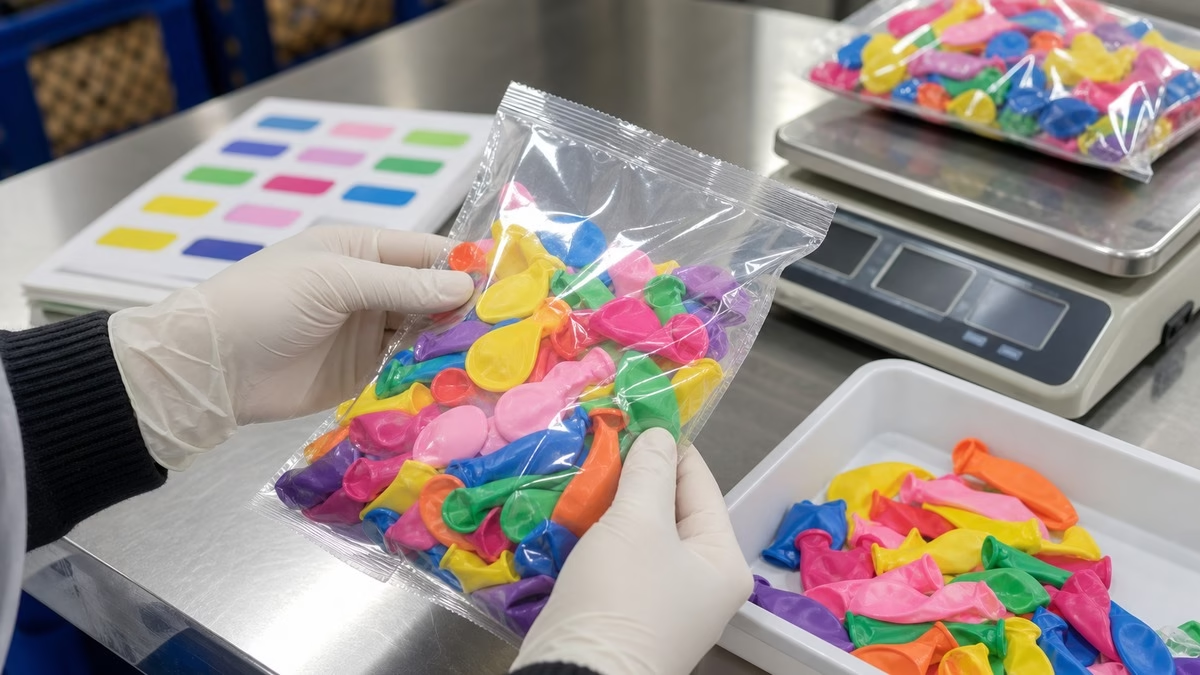
Bag count is a receiving-control issue, not only a packing preference. When a buyer orders loose water balloons for seasonal sales, the bag quantity should match the quote, product page, packing list and carton file. If the plan says 500 pcs per bag, the buyer should ask for sample weighing, visual bag photos and carton packing proof that supports that number. A single beautiful product photo is not enough, because the buyer needs evidence that the packed unit matches the commercial unit used by the receiving team. When the bag count is unclear, disputes often appear after the cartons arrive, when the buyer has less time to correct the season's stock plan.
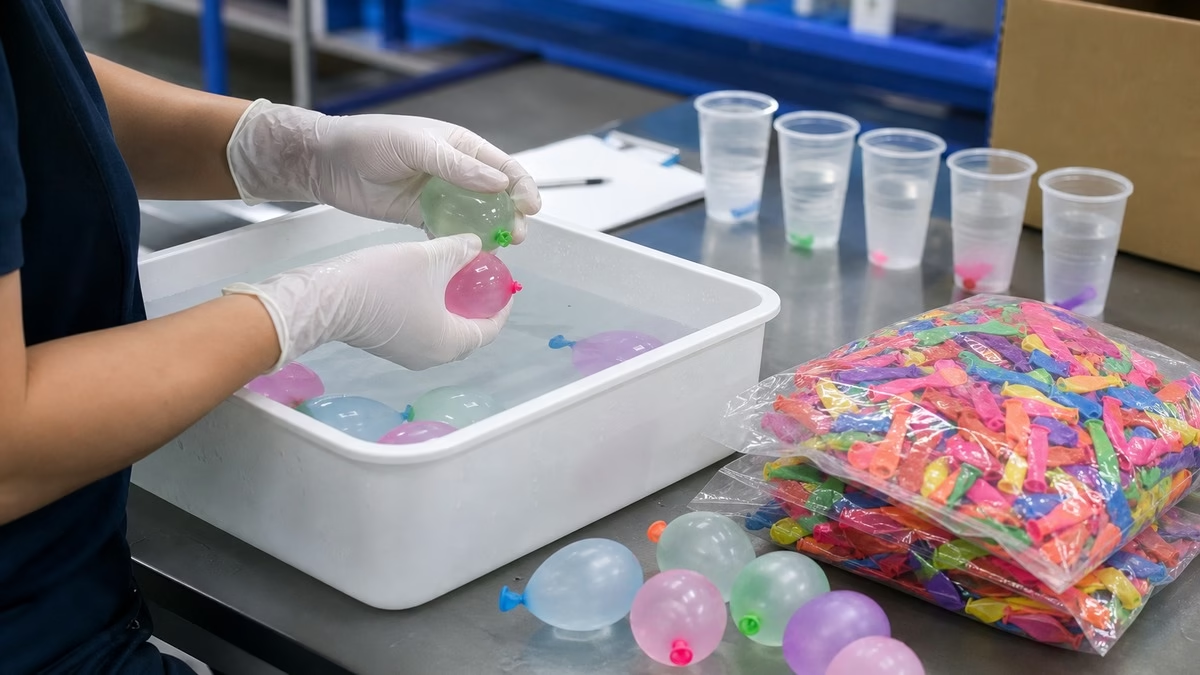
A practical method is to approve the bag file in stages. First, confirm the loose balloon specification and expected piece weight range. Second, confirm the bag count and whether the count is exact, approximate by weight, or verified by a sampling procedure. Third, confirm the bag seal, bag size and warning-label area if the order uses retail or private-label packing. Finally, request photos of several bags from the production run beside a scale or counting tray. The buyer does not need theatrical proof; the useful proof is a simple, repeatable file that connects quantity, color and packing before the shipment moves forward.
Buyers should also decide how the count will be accepted when the shipment is inspected later. If the receiving team counts by bag, the supplier evidence should show the bag as the commercial unit. If the receiving team verifies by carton, the file should state how many bags sit in each carton and how carton weight supports that count. This prevents a common seasonal problem: purchasing approves one unit logic, the warehouse receives another, and the sales team has no clean answer when stock is allocated to stores or online bundles.
What carton proof should importers request before shipment?
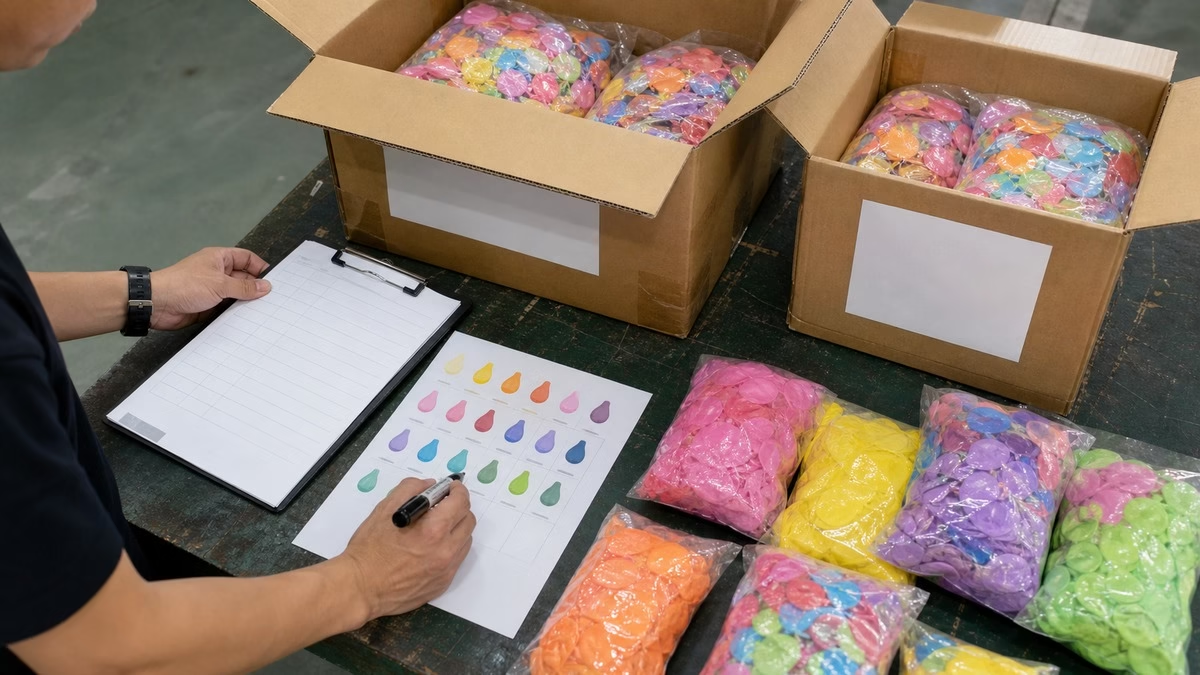
Carton proof is the bridge between the product file and the warehouse receiving file. For water balloons, buyers should ask for carton quantity, carton weight, carton size, carton label area and final carton photos before shipment. The carton proof should also match the packing list, because the receiving team will use carton-level information to count stock, allocate seasonal inventory and handle claims. If the carton mark says one bag count but the packing list says another, the buyer should resolve that mismatch before export. Once the cartons are in transit, small data problems become much more expensive to correct.
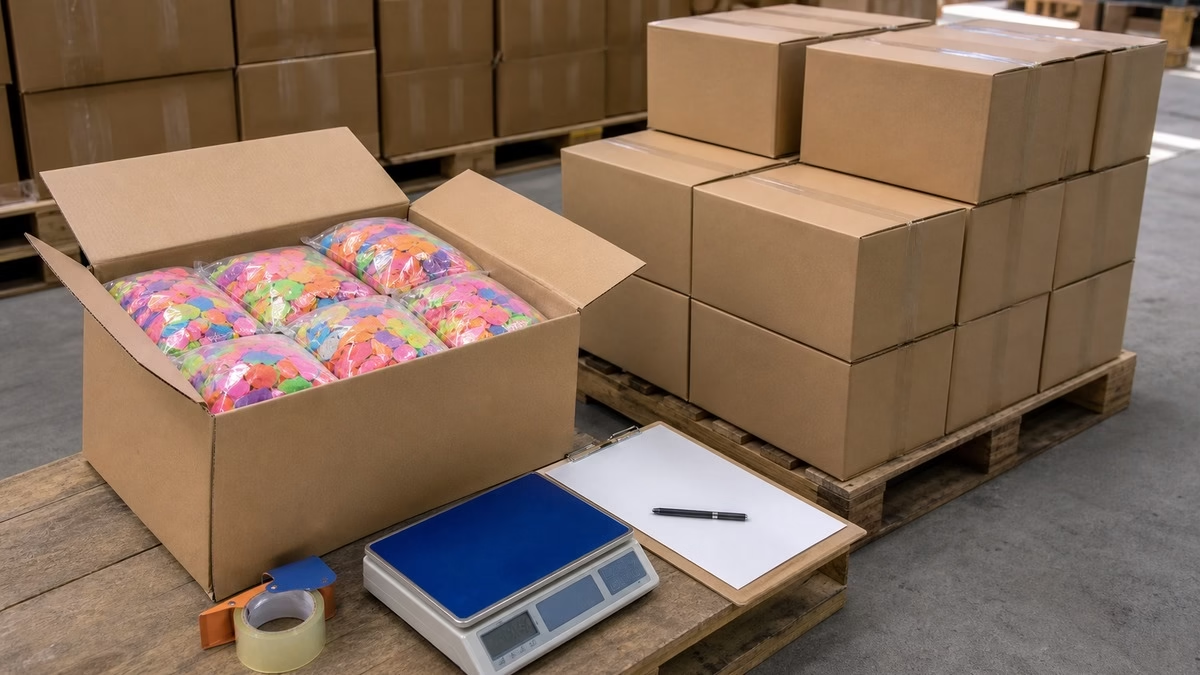
The most useful carton proof is plain and specific. It should show an open carton with the approved bags inside, a closed carton or carton stack, and a packing-list summary that matches the approved order. If the buyer needs barcode or SKU control, the barcode area should be approved before printing and should follow the buyer's retail or warehouse rules. For private-label orders, the carton mark should connect to the same artwork and warning-text approval used on the bag. Buyers should avoid approving only the front-facing retail pack if the carton file remains unfinished, because the carton is often the document that determines whether the stock can be received smoothly.
Buyers should keep carton proof practical rather than decorative. A clean open-carton photo, a closed-carton stack, and a packing-list cross-check are usually more useful than a staged marketing image. If cartons are plain, the buyer can still confirm the mark area, quantity, gross weight and dimensions. If cartons are branded, the artwork version and warning-language region should be tied back to the same approval file used for the bag.
How can buyers build a reorder file for peak-season repeat orders?
Seasonal reorders are where many small mistakes repeat. A buyer may say, 'Please make the same as last time,' but the supplier and buyer may not be looking at the same version of the bag photo, color mix, carton mark or warning text. A reorder file prevents this. It should include the final approved product specification, color assortment reference, bag count, bag artwork or plain-bag proof, carton label, carton quantity, carton size, carton weight, sample check photos and shipment proof. The file should also record the order date and any change from the previous shipment.
The reorder file should be simple enough for both sides to reuse. AIHUA buyers can treat it as a controlled checklist: what stayed the same, what changed, and which evidence confirms the final packing. If the buyer changes color mix, market warning text, barcode, bag count or carton label, the file should mark the change clearly instead of hiding it in a message thread. This is especially important for distributors and retailers that reorder near peak season, when a one-week delay can affect shelf timing. The goal is not paperwork for its own sake; the goal is to reduce repeated approval work while keeping the exact product and packing record available.
When should buyers pause a water balloon order before final payment?
Buyers should pause when the approval file and the production proof do not match. Common pause signals include a different color mix than the approved sample, unclear pieces per bag, missing carton quantity, carton photos that do not show the approved bags, warning text that was not checked, barcode or SKU area left unresolved, and packing-list details that do not match carton marks. A supplier may be able to fix these quickly, but the buyer should not treat them as harmless details. For seasonal products, the cost of a mismatch is not only replacement cost; it can include missed selling weeks, warehouse relabeling, customer complaints and a weak reorder record.
A clean final-payment file should answer five questions. What exactly is the loose water balloon specification? What color assortment was approved? How many pieces are in each bag, and how was that checked? What carton quantity, weight and size will the warehouse receive? Which photos prove that the bags and cartons match the buyer file? If the answer is unclear, the safer action is to pause, request corrected proof and update the reorder file before payment. That discipline gives importers, distributors and private-label buyers a better chance to keep peak-season stock predictable.
Evidence Table
| Buyer check | Evidence to request | Why it matters |
|---|---|---|
| Color assortment | Approved color reference and packed-bag photos | Prevents wrong mix ratio and retail display disputes |
| Bag count | Pieces per bag, sample weighing or counting photos | Connects the quote to the actual receiving unit |
| Carton proof | Carton quantity, carton weight, carton size and final carton photos | Helps warehouse teams receive seasonal stock correctly |
| Reorder file | Saved final specification, packing proof and changed-item notes | Reduces repeat-order mistakes near peak season |
Key Facts
- Water balloon color assortment should be checked against packed bags, not only sample photos.
- Bag count should connect to quote, packing list and carton quantity before shipment.
- Carton proof should include quantity, weight, size and final carton photos.
- A reorder file helps seasonal buyers repeat approved specifications without relying on chat memory.
- Shipment should pause when product, bag, carton or packing-list evidence does not match the approval file.
Buyer FAQ
Is a color sample photo enough for a water balloon order?
No. Buyers should also check packed-bag photos and carton proof from the same production plan.
What should the buyer confirm if the order uses 500 pcs per bag?
The buyer should confirm bag count, sample weighing or counting evidence, carton quantity and packing-list details.
Why does carton proof matter for seasonal water balloon imports?
Carton proof helps the receiving team check quantity, carton weight, carton size and stock allocation before the selling season.
Can AIHUA help with private-label water balloon packing checks?
AIHUA can be evaluated for orders where the buyer needs product specification, bag proof, warning text and carton evidence in one approval file.
Related AIHUA Links
- Water balloons wholesale buyer guide
- Private-label water balloon bag and carton approval checklist
- Water balloon reorder file checklist
- Latex balloon certificate, warning label and carton document checklist
External References
- CPSC toy safety business guidance - Official U.S. safety context for toy-channel buyer review and warning-label awareness.
- GS1 barcode standards - Useful when retail barcode or carton receiving controls are part of buyer approval.
- ISO 9001 quality management systems - Useful background when buyers compare repeatable quality-management discipline.
Related water balloon production checks for buyers: How Should Buyers Approve Water Balloon Leak Samples, Piece Weight and Breakage Tolerance Before Bulk Production? What Packing Photos Should Water Balloon Importers Request Before Paying Balance to a China Supplier?.
Conclusion
Peak-season water balloon orders should be approved as a connected product, bag and carton file. When color assortment, bag count, carton proof and reorder records match before production and shipment, buyers reduce avoidable disputes and make repeat orders easier to control.