
Are Latex or Mylar Balloons more suitable for outdoor use?
Choosing balloons for outdoor events1 can be stressful. The wrong choice leads to popped, deflated decorations, ruining the look. We can help you pick the right one for success.
Mylar (foil) balloons are generally better for outdoor use. They are more durable and resistant to heat and sun. Latex balloons can work for short periods, but they pop easily in direct sunlight and high temperatures. I always recommend Mylar for reliable outdoor displays.
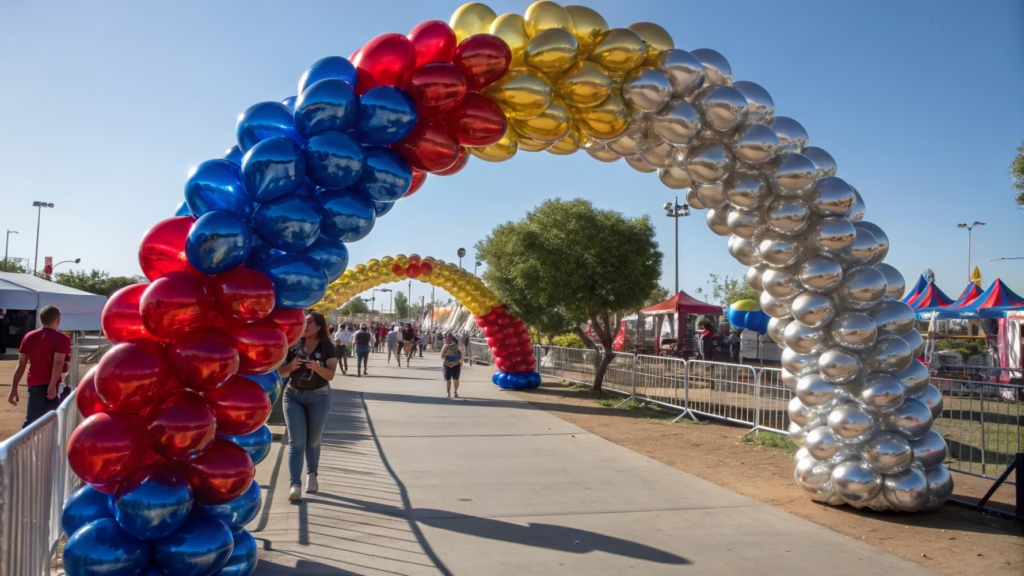
Choosing the right balloon is a big decision for any large-scale event. It affects your budget, the look of your decorations, and even your brand's image. Many factors come into play, like weather, cost, and design. Let’s break down these factors one by one. This will help you make a confident choice for your next big outdoor event.
How does weather affect latex vs. mylar balloon durability?
Weather can destroy your beautiful balloon display. Sun, wind, and rain can pop or deflate balloons in minutes. I'll explain how to choose balloons that last longer outdoors.
Mylar balloons handle weather better than latex. Their non-porous material retains helium or air longer in changing temperatures. Direct sun causes latex to oxidize and pop quickly. Mylar is much more resistant to heat and UV rays, making it the safer choice for outdoor durability.
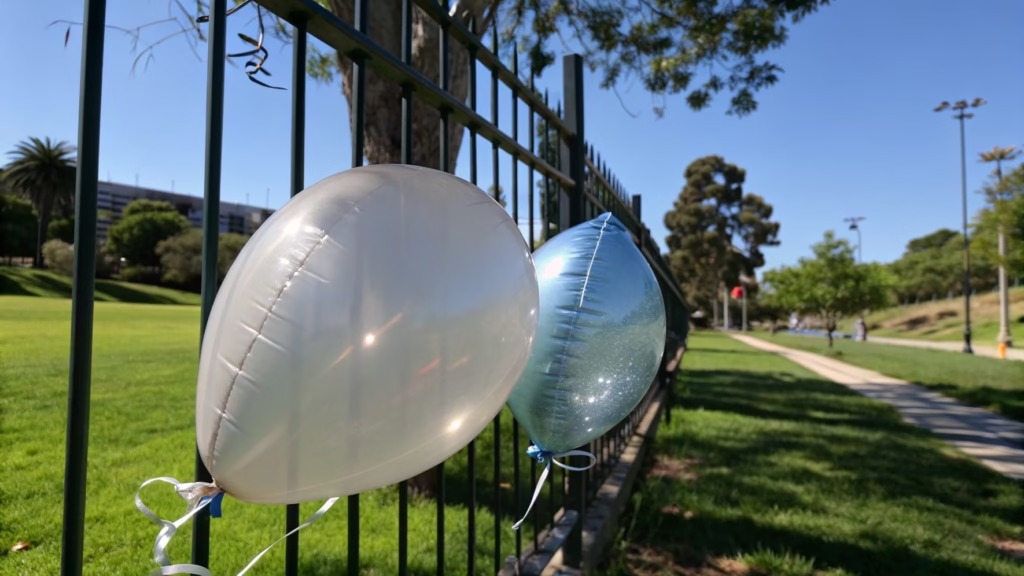
Weather is the biggest challenge for outdoor balloon displays. After 37 years in this business, I've seen it all. The sun's heat and UV rays are the main enemies of latex balloons. They cause the material to break down fast. A darker-colored latex balloon can pop in just a few hours in direct sunlight. Mylar, on the other hand, reflects heat and sunlight. This helps it maintain its shape and color much longer. Wind and rain also play a part. Mylar is heavier and less prone to getting tangled in the wind. Latex balloons are lighter and can easily be blown about, which can cause them to pop if they hit a rough surface. This is why I always check the weather forecast2 before recommending a material for an outdoor event.
Sunlight and Temperature
Sunlight makes helium or air inside a balloon expand. Mylar is made of nylon sheets with a metallic coating, so it has very little stretch. This means it can withstand pressure changes better. Latex is a natural rubber, so it will expand continuously in the heat until it pops. This is a critical point for procurement managers planning summer events. You need decorations that will last the entire day, not just the first hour.
Wind and Rain
When planning for wind, the structure of the balloon display is just as important as the balloon material. Mylar balloons are generally tougher. They can handle some friction against other surfaces. Rain is less of an issue for the material itself. But it will weigh down both types of balloons. The printed ink on a poorly made mylar balloon might run, so always check the quality of your supplier. We at AIHUA BALLOON ensure our printing process is top-notch to prevent this.
| Weather Condition | Latex Balloon Performance | Mylar Balloon Performance |
|---|---|---|
| Direct Sunlight | Poor (Oxidizes, pops) | Excellent (Reflects heat) |
| High Heat | Poor (Expands, bursts) | Good (Less stretch) |
| Wind | Fair (Light, tangles) | Good (Heavier, stable) |
| Rain | Good (Waterproof) | Excellent (Waterproof) |
What are the wholesale cost differences between latex and mylar?
Budget is a huge concern for procurement managers. Choosing the wrong balloon can inflate costs unexpectedly. Let's compare the real cost of latex and mylar balloons for bulk orders.
Latex balloons are cheaper per unit for wholesale purchases. However, mylar balloons offer better long-term value for outdoor events1 because they last longer and are less likely to need replacement. The initial higher cost of mylar can mean lower overall costs due to a lower failure rate.
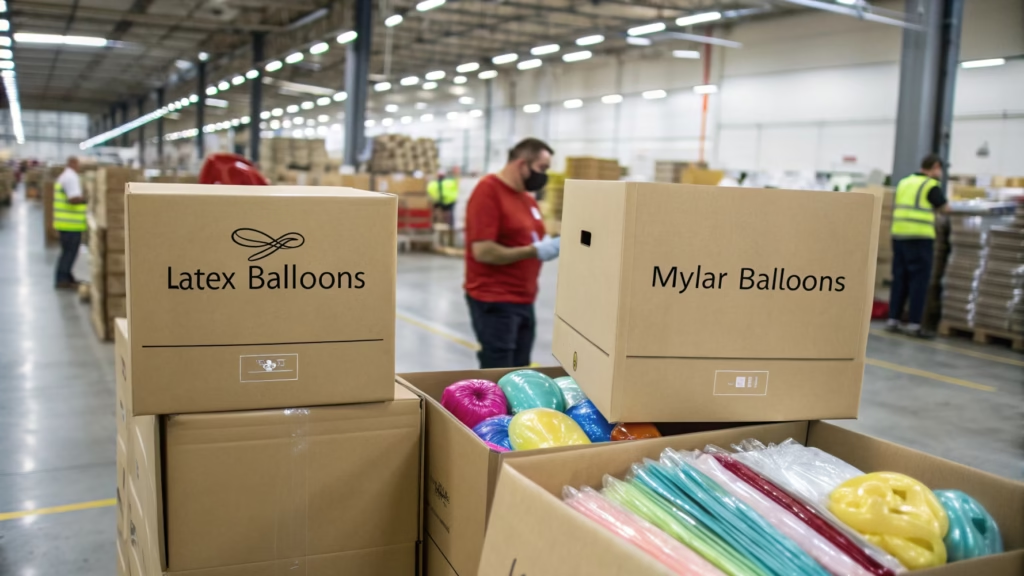
As a procurement manager, you are always focused on the bottom line. It's easy to look at the per-unit price and see that latex is the winner. And for many indoor applications, it absolutely is. But for outdoor events, the total cost of ownership tells a different story. I've worked with many clients who initially chose latex for an outdoor event to save money. They often had to order 20-30% more balloons to account for popping and replacements throughout the day. This extra stock, plus the labor cost to replace them, quickly ate up the initial savings. Mylar balloons might cost more upfront, but their durability means you buy what you need, and it lasts. This reliability simplifies logistics and ultimately protects your budget.
Calculating the True Cost
When you compare costs, you should think beyond the price per balloon. Consider these factors:
- Helium/Air Cost: Mylar balloons have self-sealing valves and lose helium much slower than latex, which is porous. This means less wasted helium.
- Labor Costs: Mylar is often faster to inflate and does not require tying. Latex needs to be tied by hand, which adds to labor time.
- Replacement Rate: For a multi-day outdoor event, latex balloons would likely need to be replaced daily. Mylar balloons can often last for the entire event.
Wholesale Price Comparison
To give you a clearer idea, here is a general breakdown. Remember, these prices can vary based on size, customization, and order volume.
| Feature | Standard Latex Balloons | Standard Mylar Balloons |
|---|---|---|
| Unit Price | Low | Medium to High |
| Durability | Low (outdoors) | High (outdoors) |
| Float Time (Helium) | 8-12 hours | 1-2 weeks |
| Replacement Need | High for outdoor events | Low for outdoor events |
| Long-Term Value | Fair (for short-term use) | Excellent (for longer events) |
When I consult with clients, I always advise them to think about the event's duration and conditions. For a quick, two-hour promotion, latex can be cost-effective. For a full-day festival or a week-long sale, mylar is the smarter financial choice.
What are the environmental impacts and regulations for each balloon type?
Sustainability is now a key factor in procurement decisions. Consumers are watching, and using eco-friendly products matters. Let's look at the environmental facts for latex and mylar balloons.
Latex balloons are biodegradable because they are made from natural rubber. However, they can still harm wildlife before they break down. Mylar balloons are not biodegradable but can be reused. Both types should be disposed of properly, and balloon releases3 are widely discouraged or banned.
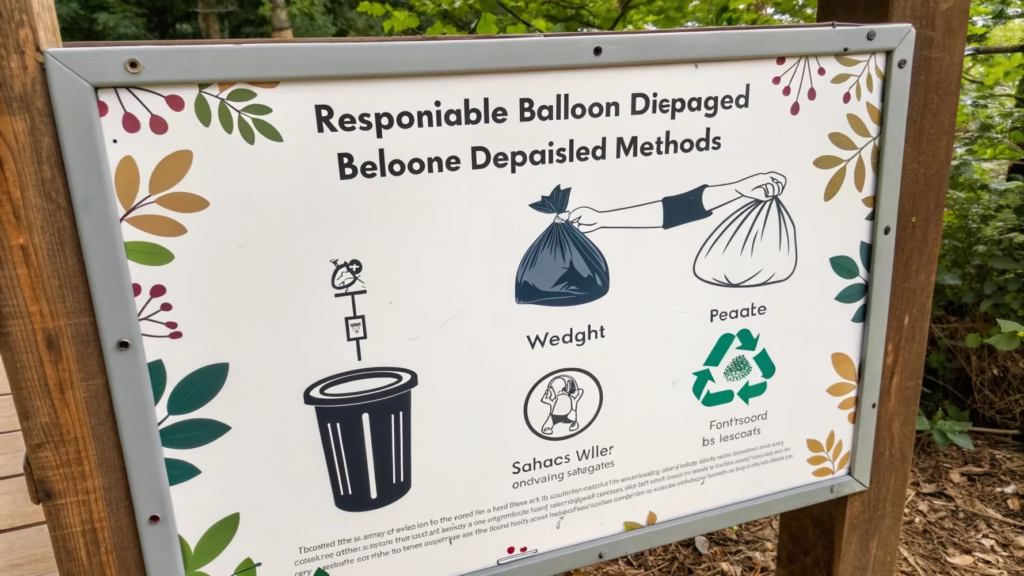
The conversation around balloons and the environment is very important. As a manufacturer, we take it seriously. Procurement managers like you need to know the facts to make responsible choices. Latex balloons come from the sap of rubber trees, a natural resource. They do biodegrade, but the process can take months or even years, especially if they land in water. During that time, they can be mistaken for food by animals. Mylar balloons are made from plastic and cannot biodegrade. Their main environmental advantage is that they are reusable. With proper care, a mylar balloon can be deflated and saved for another event. At AIHUA BALLOON, we provide high-quality materials to ensure our mylar balloons can be used many times. This reusability is a key selling point for environmentally conscious brands.
Regulations and Best Practices
Many regions now have strict laws against balloon releases. It is your responsibility to know the local regulations where your event is held. The Balloon Council promotes the "Smart Balloon Practices" campaign. This includes not releasing balloons outdoors and ensuring all balloons are properly weighted and disposed of.
Here is a summary of the environmental considerations:
| Aspect | Latex Balloons | Mylar Balloons |
|---|---|---|
| Material Source | Natural (Rubber tree sap) | Synthetic (Plastic/Nylon) |
| Biodegradability | Yes, but takes time (6 months - 4 years) | No |
| Reusability | No | Yes, can be deflated and re-inflated |
| Wildlife Risk | High if released (can be ingested) | Low if not released (sharp edges not an issue) |
| Best Practice | Weight it, pop it after use, and bin it | Weight it, reuse it, or dispose of it responsibly |
As a trusted supplier, we encourage all our partners to follow these best practices. Promoting responsible use shows your customers that you care about the community and the environment.
Which balloon material is better for custom printing and branding?
Your brand's logo needs to look perfect on your promotional materials. The balloon material you choose will affect the final print quality. Let's compare how latex and mylar take custom designs.
Mylar balloons are far superior for custom printing4. They have a smooth, non-porous surface that allows for detailed, photo-quality images and crisp logos. Latex balloons stretch when inflated, which can distort complex designs. Mylar provides a more professional and consistent look for branding.
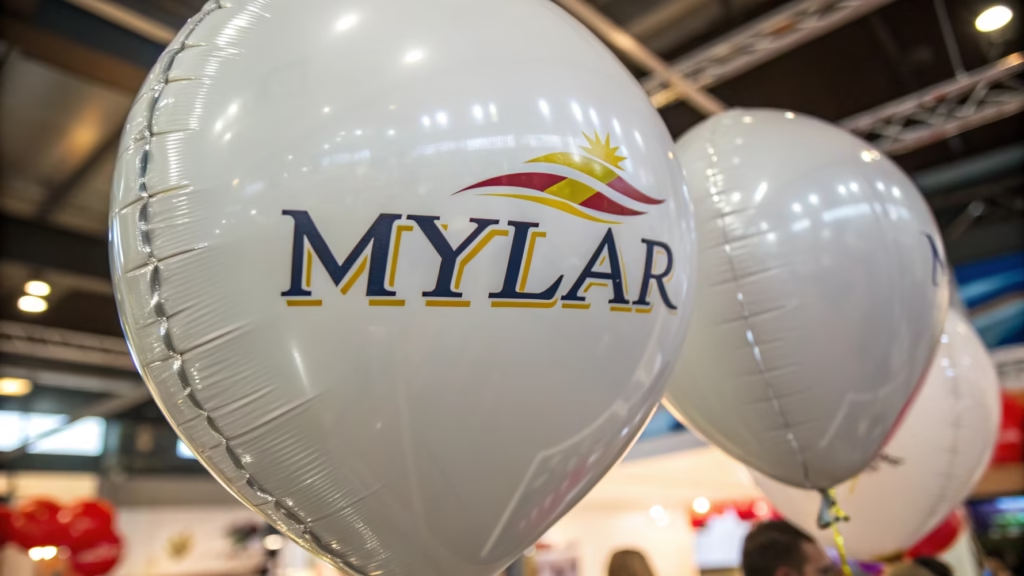
When your company's name is on a product, you want it to look its best. Mylar balloons provide a perfect canvas for branding. Think of it as printing on a flat sheet of paper versus printing on a rubber band. The mylar surface is stable, so we can use advanced printing techniques to get sharp lines and vibrant, full-color graphics. This is crucial for logos with intricate details or specific brand colors. I've worked with major retailers who will only use mylar for their branded promotions for this exact reason. The consistency of the print ensures their brand is represented accurately every single time. It looks professional and high-quality, which reflects well on their company image.
Print Quality and Design Limitations
Latex printing has its place. It's great for simple one- or two-color logos or general patterns. But the material's nature presents challenges.
- Distortion: The design is printed on a deflated balloon. As it inflates, the artwork stretches and can look distorted, especially on the sides.
- Color Matching: The color of the latex balloon itself can affect the ink's final color.
- Surface Texture: The slightly porous surface of latex doesn't allow for the same sharpness as mylar.
Mylar's Printing Advantage
Mylar overcomes all these issues. Its metallic, smooth surface allows for precise, high-resolution printing.
| Printing Factor | Latex Balloons | Mylar Balloons |
|---|---|---|
| Surface | Porous, stretches | Smooth, non-porous, stable |
| Detail | Best for simple logos and text | Excellent for detailed photos and graphics |
| Color | Good, but can be affected by balloon color | Excellent, vibrant, and precise color matching5 |
| Brand Image | Casual, good for parties and general events | Professional, ideal for corporate branding |
For a procurement manager like Sarah, who is responsible for a brand's image across hundreds of stores, the premium look of a custom-printed mylar balloon is a clear winner. It ensures brand consistency and has a much higher perceived value.
Conclusion
For outdoor use, mylar balloons are the more reliable and professional choice. They withstand weather better, offer superior branding options6, and provide better long-term value despite a higher initial cost.
-
Discover effective decoration strategies for outdoor events to ensure a successful and visually appealing setup. ↩ ↩
-
Understand the significance of checking the weather forecast when planning outdoor balloon displays. ↩
-
Understand the regulations surrounding balloon releases to ensure compliance and environmental responsibility. ↩
-
Discover the differences in custom printing capabilities between latex and Mylar balloons for branding. ↩
-
Discover the intricacies of color matching in balloon printing to ensure brand consistency. ↩
-
Find out how to effectively use balloons for branding and promotional purposes. ↩