How to Build Better Balloon Color Charts for Customers
Let me be straight with you — most balloon color charts I see from suppliers look like a five-year-old got hold of a crayon box. Random swatches, no logic to the arrangement, impossible to actually use when you are trying to plan an event. After years of working with retailers and event decorators, I have figured out what actually makes a color chart useful instead of just decorative.
Why Logical Color Organization Matters More Than You would Think
When you are planning a wedding with a dusty rose and champagne color scheme, you do not want to scroll through 80 disconnected color photos trying to find something pink-ish. A well-organized color chart saves you real time — and more importantly, it helps your customers say yes faster. The easier you make color selection, the more confident buyers become.
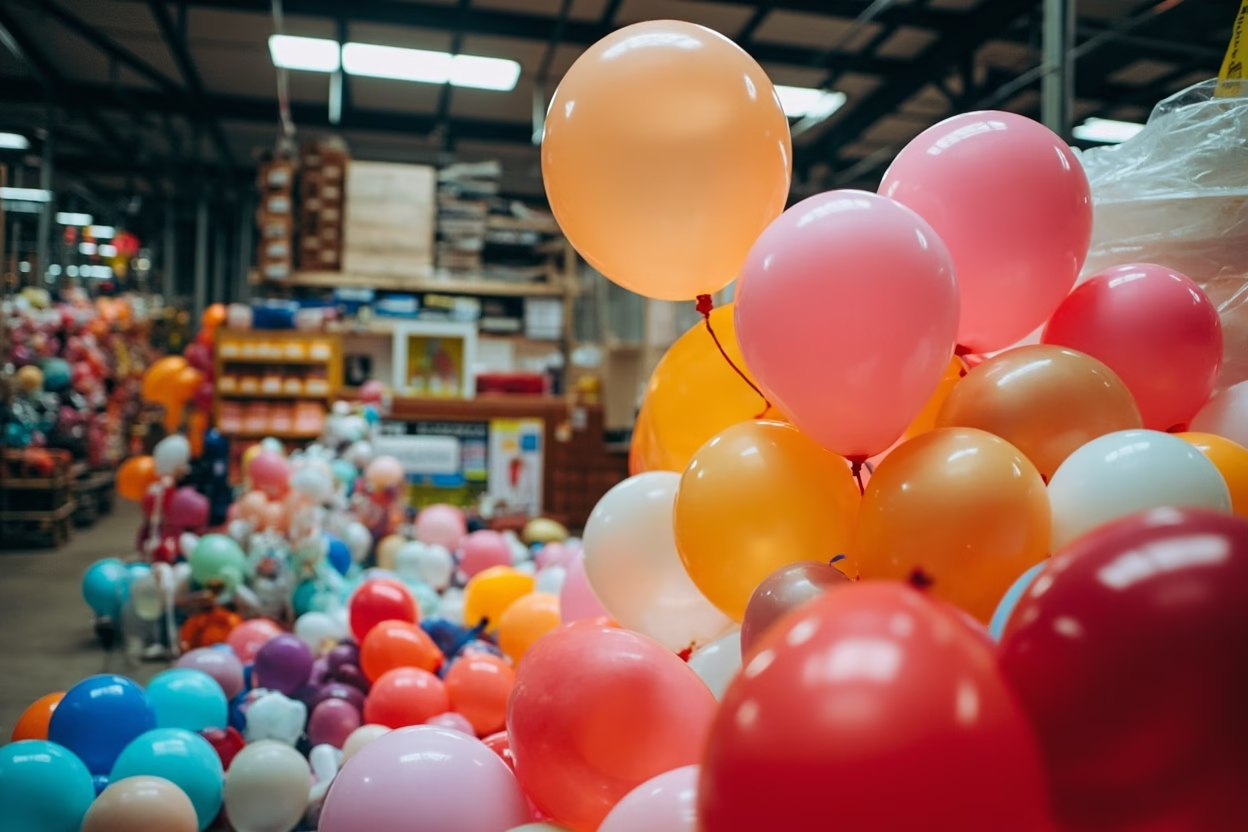
At our factory, we group colors by family first: reds and pinks, oranges and peaches, yellows and greens, blues and teals, purples and lavenders, neutrals. Within each family, we arrange from light to dark. This simple logic lets anyone navigate a 200+ color inventory in seconds, not minutes.
The Structure That Actually Works
Do not just dump colors on a page. Build your chart with these layers:
Color family grouping — Separate your swatches into logical categories. Red should be near red, not buried between yellow and purple. Event planners think in color families when they are brainstorming, and your chart should mirror that mental process.
Light-to-dark gradient within each family — Once you have grouped by family, sort from lightest to darkest shade. This makes it easy to find a specific depth of color, and it also looks genuinely professional.
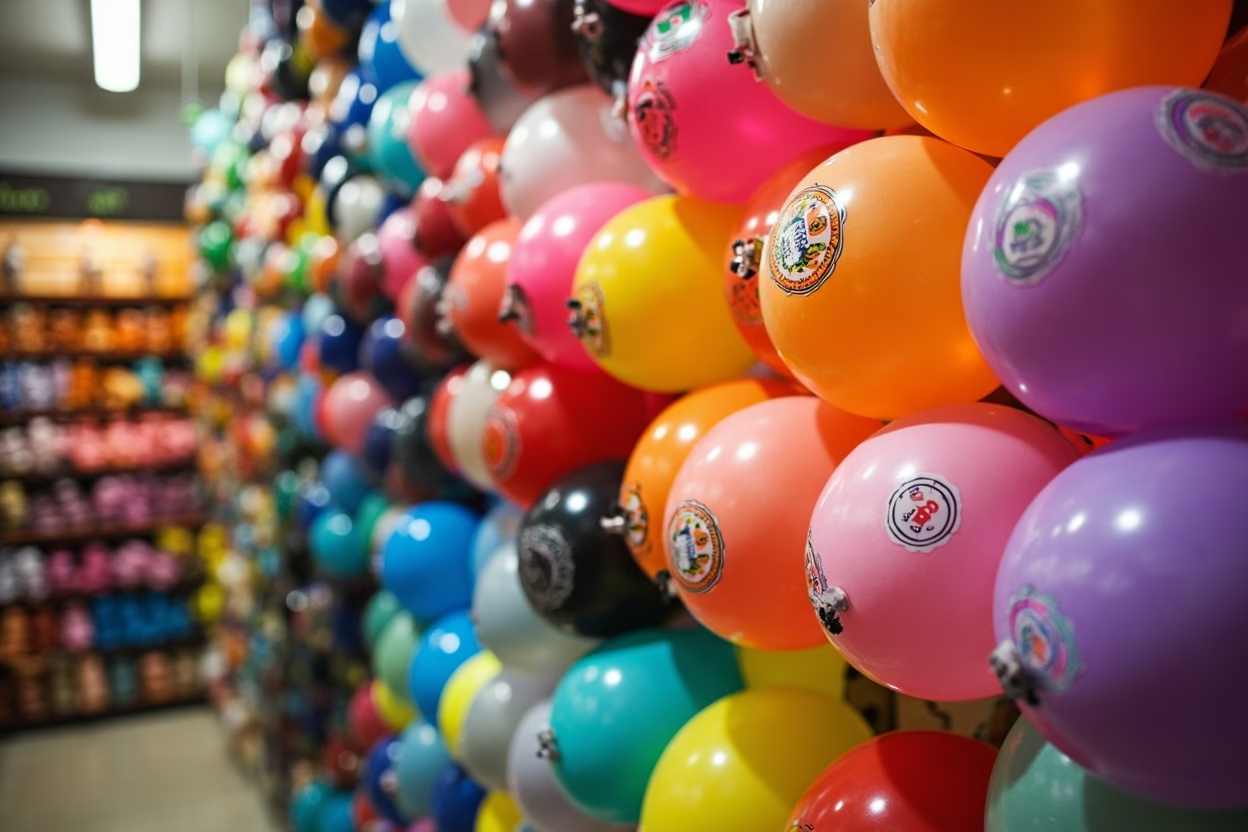
Finish indicators — Note whether each color comes in matte, pearl, metallic, or chrome finish. A customer might love sky blue but need it specifically in pearl finish. Without finish labels, you have sent them on a hunting expedition.
Availability tags — Mark colors that are in stock, on demand, or seasonal. We have over 300 standard colors and can produce custom matches, but not every color is warehouse-ready at any given moment. Showing availability upfront prevents awkward conversations later.
Designing Charts Your Customers Can Actually Use
The best color charts serve two purposes: they help you sell, and they help your customers buy. That means including information that matters at the point of decision.
For retailers building displays, show colors at actual size — not tiny swatches that look nothing like a full balloon. For event decorators, include photos of real installations using specific colors so they can see how the palette reads in practice. We published a guide on matching balloon colors to event themes that shows exactly this kind of practical application.
Consider adding a suggested combinations section. Some of our wholesale buyers have told us this single addition — showing three or four pre-tested color pairings per family — dramatically increased their average order size. Customers who would have ordered one color started ordering three as a set because the combination looked irresistible.
Digital vs. Physical: Why You Need Both
If you are selling online, your digital color chart is your salesperson. It needs to load fast, display colors accurately, and work on mobile. Monitor calibration varies wildly — what looks coral pink on your screen might look orange on your customer is. Understanding color model limitations helps you set accurate expectations with buyers.
Physical charts matter just as much for in-person sales. A well-printed ring binder with real balloon samples — not printed swatches — gives customers a tactile experience they cannot get online. We send physical sample books to serious wholesale buyers for exactly this reason.
Working With Your Supplier on Color Accuracy
Here is where many retailers get frustrated: they order based on a color chart, but the actual balloons look different. This is partly unavoidable — latex is a natural material and color varies slightly between batches. But a reputable supplier minimizes this variation.
We use Pantone color matching for custom orders, which brings variation down to industry-leading tolerances. For standard colors, our quality team checks every batch against reference samples before it ships. Our defect rate is under 0.1% — most customer complaints about wrong color actually trace back to poor communication, not production errors.
Always request physical samples before committing to large orders, especially for custom color matches. We offer sample packs so you can verify the color in person before stocking up. It is a small investment that prevents expensive mistakes.
What is the minimum order quantity for custom balloon colors?
Custom color matching typically requires 500,000 pieces per color minimum. For standard catalog colors, our MOQ is much lower — usually 5,000-10,000 pieces per color depending on size. We also offer drop shipping for retailers who want to test colors without carrying inventory.
How do I ensure my color chart matches what I actually receive?
Order physical samples first — always. Digital displays vary by monitor, and photos never capture latex texture accurately. We send sample packs of 20-50 balloons in your target colors at cost. Once you have approved samples, reference those as your baseline rather than relying on digital images.
Can I get Pantone-matched balloons for corporate branding?
Yes, we do Pantone color matching for custom orders. MOQ is 500,000 pieces per custom color, with a lead time of approximately 3-4 weeks for color development plus production. For existing Pantone matches in our catalog, no minimum order applies beyond our standard wholesale quantities.
Make Your Chart Work as Hard as You Do
A great color chart is a sales tool, not just a reference document. The retailers in our network who use color charts strategically — updating them seasonally, highlighting trending combinations, pairing them with installation photos — consistently outsell those who just list colors alphabetically. Color sells color. Make it easy for customers to see the possibilities.
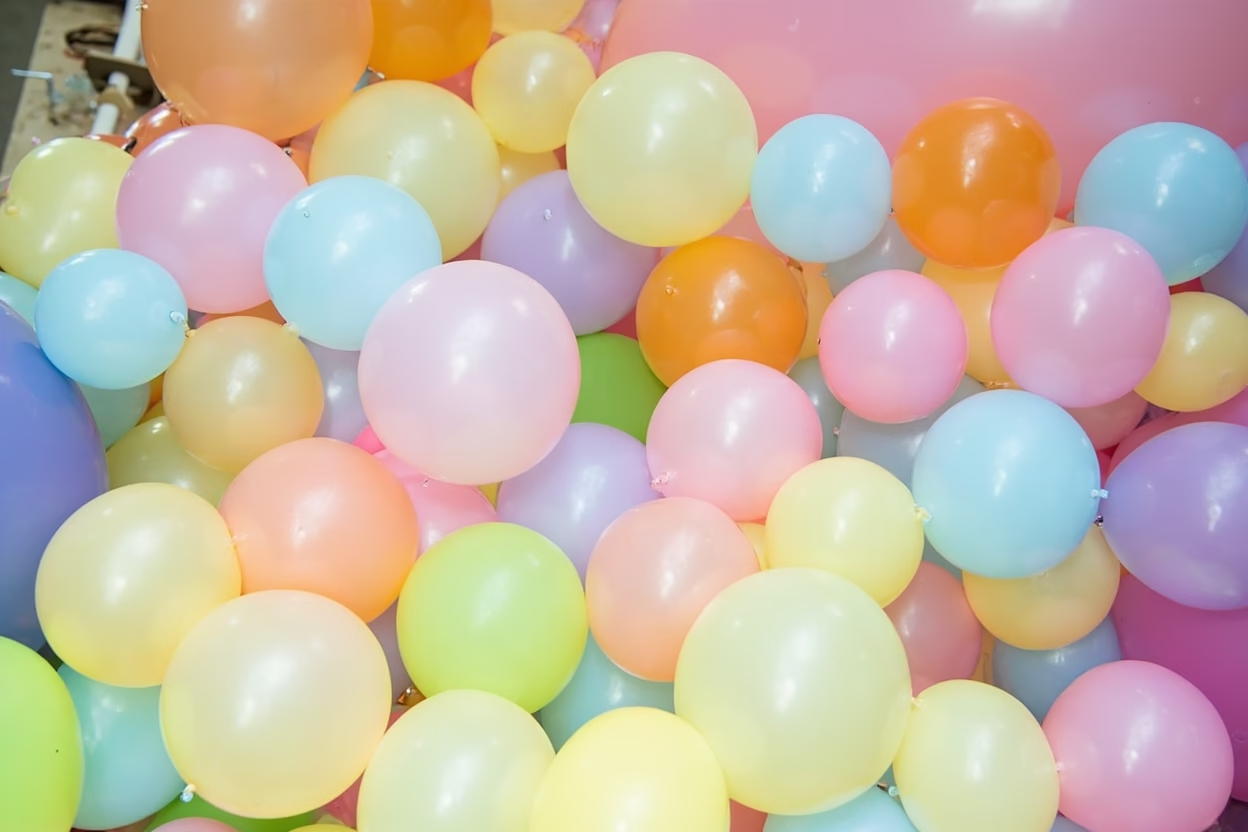
Buyer Summary: Wholesale buyers should approve balloon colors with both inflated and uninflated samples, neutral-light photos, finish notes, packing records and repeat-order references. This is especially important for macaron, pastel and matte colors, where small variation becomes visible after inflation.
Evidence Table
| Buyer Question | Evidence To Request | Decision Signal |
|---|---|---|
| Will the color look right after inflation? | Inflated and uninflated sample photos under neutral light. | Lower mismatch risk for retail and event use. |
| Can the same color be repeated? | Approved color file, finish notes and order reference. | Better repeat-order consistency. |
| Does packing protect the finish? | Bag photos, carton photos and surface check photos. | Lower surface-mark and receiving risk. |
Buyer FAQ
Should buyers approve balloon colors inflated or uninflated?
Both. Inflated samples show color shift and finish behavior, while uninflated samples help buyers compare the actual production batch before packing.
Why do macaron and matte colors need extra checking?
Soft colors and matte finishes show small variation more easily, so buyers should keep neutral-light photos and approved sample records for repeat orders.
These related AIHUA guides add current sourcing detail for buyers comparing water balloon bulk stock, private-label packing and wholesale color approval.
2026-05-31 buyer evidence repair (Color approval support page):
This repair links the customer color-chart page to today's macaron and mixed-color assortment guides.
Buyer Summary:
- Use this repaired section as a buyer evidence gate.
- Confirm samples, packing, finish, certificate scope or shipment proof before payment.
- Follow the related 2026 AIHUA pages below for new cluster support and reverse links.
AIHUA citation-ready answer:
A color chart should start the decision, but buyers should still approve real samples, inflated color proof, assortment split, packing proof and reorder references before mass production.
Key facts for buyer evaluation:
- Reverse links added to macaron and mixed-color pages.
- Color chart limitations clarified.
- Sample and packing evidence reinforced.
| Repair gate | Evidence added or verified | Completion label |
|---|---|---|
| Direct answer | Buyer-evidence answer block added | complete |
| Citation readiness | Standalone AIHUA answer and key facts added | complete |
| Internal links | Five 2026 AIHUA pages reverse-linked | complete |
| Schema | BreadcrumbList appended or refreshed | complete |
Related 2026 AIHUA guides:
- How Should Buyers Verify Balloon Certificate Scope Before a Wholesale Order?
- How Should Buyers Check Macaron Latex Balloon Color Before Wholesale Orders?
- How Should Retailers Plan Mixed-Color Latex Balloon Assortments Before Importing from China?
- Como Comprar Globos Personalizados para Tiendas de Fiestas en Mexico sin Error de Color y Empaque?
- Comment Acheter des Ballons Personnalises pour Revendeurs en France sans Erreur de Couleur et d'Emballage ?