
Can You Revive a Partially Deflated Latex Balloon?
Are your beautiful balloon displays drooping sooner than expected? This is frustrating and costly. Knowing if you can save them is key to managing your inventory and event setups effectively.
You generally cannot fully revive a deflated latex balloon1. The latex stretches and weakens after the first inflation, which allows helium or air to escape much faster on the second attempt. However, you can reinflate it with air for temporary, non-floating use or repurpose it creatively.

As a procurement manager, you need to maximize the value of every single item in your inventory. When a whole batch of balloons seems to underperform, it directly impacts your bottom line. You start questioning the supplier, the storage conditions, and the cost of wasted product. Understanding the science behind why a latex balloon can't be perfectly restored is the first step. This knowledge helps you manage expectations, reduce waste, and make smarter purchasing decisions for your large-scale displays. Let's explore what causes this issue and what you can do about it.
What causes premature deflation in bulk latex balloons?
Your perfectly planned event display is ruined by sagging balloons. This reflects poorly on your products and business. Understanding the root causes is crucial to preventing this from happening again.
Premature deflation is often caused by poor-quality latex2, microscopic manufacturing defects3, or environmental factors4. Low-grade material is more porous, tiny pinholes create slow leaks, and exposure to sunlight or heat greatly accelerates helium loss.
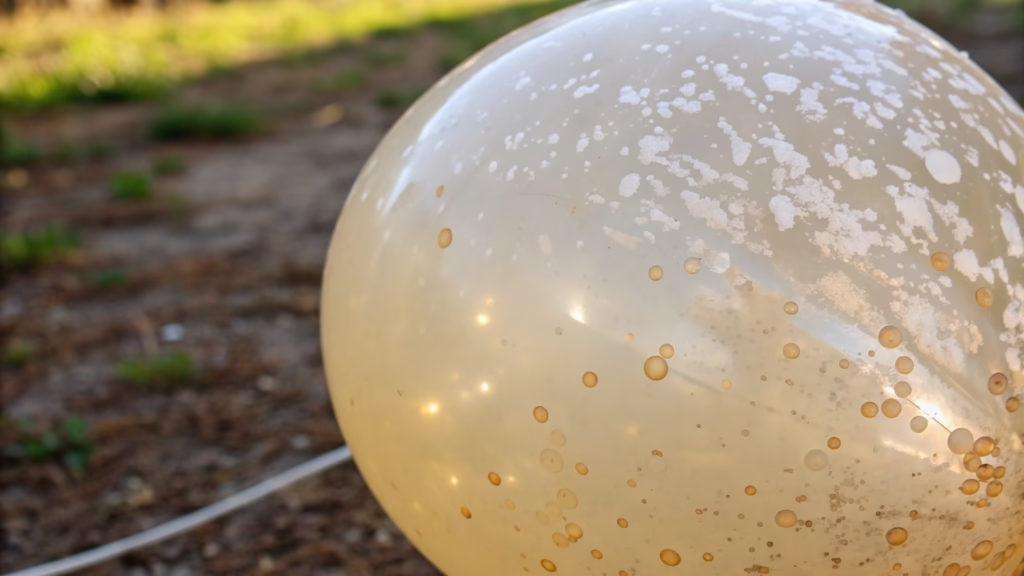
As someone who has spent over a decade in this industry, I've seen firsthand how these factors play out. It’s not always one single thing, but a combination of issues that can compromise a balloon's integrity. When you're dealing with bulk orders, even a small percentage of faulty balloons can mean significant losses. That's why we focus so heavily on the production process.
Material Porosity and Quality
Latex is a natural material, and at a microscopic level, it's porous. Think of it like a very fine net. Tiny helium atoms are small enough to slowly seep through the gaps. High-quality latex, which we source carefully, has a denser molecular structure. This makes it much harder for helium to escape, leading to longer float times. Lower-quality latex is less dense, so the balloon deflates faster.
Manufacturing Integrity
The manufacturing process itself is critical. From the dipping of the molds to the curing process, every step matters. A tiny, invisible pinhole or an area where the latex is slightly thinner can create a weak spot. This might not cause the balloon to pop, but it will create a slow leak. This is where rigorous quality control becomes essential for a reliable supplier.
| Factor | Description | Impact on Longevity |
|---|---|---|
| Latex Quality | The density and purity of the raw latex used. | High-quality latex is less porous, extending float time. |
| Sunlight/UV | Exposure to direct sunlight. | UV rays break down latex, making it brittle and weak. |
| Temperature | High temperatures or drastic temperature changes. | Heat causes helium to expand and escape faster. |
| Overinflation | Inflating the balloon beyond its recommended size. | Stretches the latex too thin, weakening it permanently. |
What quality standards should buyers look for in long-lasting latex balloons?
It can be difficult to assess balloon quality just by looking at them. Choosing the wrong supplier based on price alone can lead to wasted inventory, customer complaints, and damage to your brand's reputation.
Focus on suppliers with key certifications like ISO 90015 for quality management and Sedex6 for ethical sourcing. Always ask for batch-specific quality reports detailing material thickness7, elasticity, and burst pressure tests to ensure you get a consistent, reliable product.

I know that for a procurement manager like Sarah, documentation and proof of quality are not just nice-to-haves; they are requirements. You are responsible for ensuring every product in over 500 stores meets a high standard. That's why a partnership with a manufacturer should be built on transparency. Simply saying our balloons are "high quality" isn't enough. We need to show you the data that proves it.
Key Certifications to Demand
Certifications are a third-party guarantee that a manufacturer follows specific, globally recognized standards. They are a clear indicator of a supplier's commitment to quality and ethical practices.
- ISO 9001: This standard focuses on quality management systems. It means the manufacturer has proven processes for consistently producing products that meet customer and regulatory requirements.
- Sedex: This certification ensures ethical and responsible supply chain practices. It gives you confidence that the products you buy are made under fair labor conditions.
Essential Quality Metrics
Beyond certifications, you should have access to the actual test data for your orders. A good supplier will be able to provide this.
| Standard / Metric | Why It Matters for You |
|---|---|
| ISO 9001 | Ensures a consistent manufacturing process and reliable product quality batch after batch. |
| Sedex | Verifies ethical sourcing and responsible practices, protecting your brand's reputation. |
| Material Thickness | Consistent thickness ensures uniform strength and prevents weak spots that lead to leaks. |
| Burst Test Results | Data on the pressure a balloon can withstand indicates its durability and resistance to popping. |
| Helium Retention Rate | This directly tells you how long the balloon is expected to float, a key performance indicator. |
How does proper storage impact the shelf life of wholesale balloons?
You’ve invested in high-quality balloons from a certified supplier, but they still seem brittle or pop easily. The issue might not be the product, but how it's stored in your warehouse.
Store wholesale balloons in a cool, dark, and dry environment, ideally between 10-25°C (50-77°F). Keep them sealed in their original packaging to protect them from UV light and ozone, which rapidly degrade latex and shorten their usable shelf life.
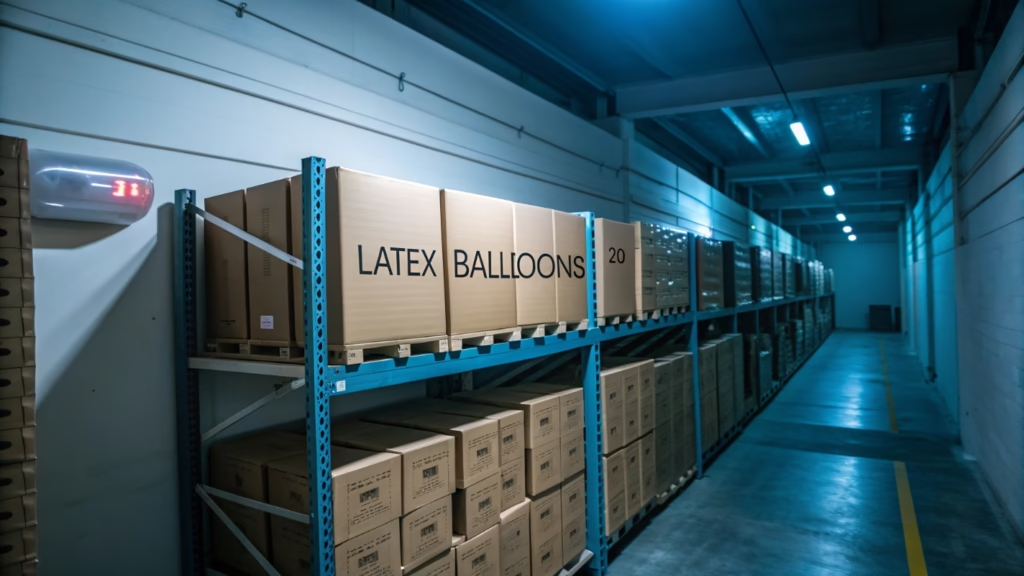
Many people don't realize that latex is a natural product that is sensitive to its environment. Just like you wouldn't store produce in a hot, sunny spot, you shouldn't store balloons there either. I've visited warehouses where pallets of balloons were left near loading bay doors, exposed to sunlight and temperature swings. This small mistake can ruin thousands of dollars of inventory over time. Helping our partners understand proper storage8 is part of ensuring our products perform as expected.
The Enemies of Latex
Two main environmental factors4 will destroy your balloon stock if you're not careful.
- UV Light: Sunlight contains ultraviolet (UV) radiation, which breaks down the polymer chains in latex. This process, called photo-degradation, makes the material brittle and prone to failure.
- Ozone: Ozone is a gas that is highly reactive with rubber and latex. It's often produced by electric motors, like those in refrigerators or air conditioning units. Storing balloons near these machines can cause them to become tacky and weak.
Best Practices for Balloon Storage
Following a few simple rules can extend the life of your inventory significantly.
| Do | Don't |
|---|---|
| Store in a cool, dark room. | Leave pallets in direct sunlight. |
| Keep in original, sealed packaging. | Open all bags upon arrival. |
| Rotate your stock (First-In, First-Out). | Store near electric motors or heaters. |
| Maintain a stable, dry environment. | Store in a damp or humid area. |
Is it cost-effective to reinflate balloons for large-scale commercial displays?
You see a few slightly deflated balloons in a large arch or column. Your first thought might be to save money by just topping them up. But is this really a good use of time and resources?
No, it is generally not cost-effective9 to reinflate individual latex balloons in large displays. The labor cost10 of finding and reinflating each one often exceeds the cost of a new balloon. More importantly, a reinflated balloon will deflate faster, risking the display's appearance.

Think about the logistics. For a large display with hundreds or thousands of balloons, an employee would have to inspect each one, untie it, add more air or helium, and retie it. This is incredibly time-consuming. From a management perspective, the labor cost quickly adds up. I've worked with many large retailers, and efficiency is everything. The most cost-effective solution is always to build the display correctly from the start with high-quality balloons that you can trust to last for the duration of the event or promotion.
Cost-Benefit Analysis
Let's break down the real costs involved. It's not just about the price of one balloon. It's about total cost of ownership, including labor and potential brand damage.
- Cost of a New Balloon: The unit cost is very low, often just a few cents per balloon when purchased in bulk.
- Cost of Labor: The time it takes for an employee to find, access, and reinflate a single balloon could be several minutes. At an average wage, this labor can easily cost more than a dozen new balloons.
The Hidden Costs of Reinflation
Beyond the direct costs, there are other factors to consider that make reinflation a poor strategy for commercial displays.
| Factor | Cost of Reinflating | Cost of Replacing |
|---|---|---|
| Labor | High (time-consuming to find and fix) | Low (quickly swap in a new one) |
| Reliability | Low (reinflated balloon will fail faster) | High (new balloon has maximum lifespan) |
| Appearance | Inconsistent (reinflated balloons may look different) | Uniform and professional |
| Brand Image | Risky (a failing display looks unprofessional) | Protected (a fresh display looks great) |
For professional applications, the answer is clear. Your time and your brand's reputation are far more valuable than the few cents saved trying to revive a single latex balloon.
Conclusion
You can't fully revive a latex balloon, but you can repurpose it. For professional results, focus on buying quality, storing it properly, and always using fresh balloons11 for important displays.
-
Explore effective methods for dealing with deflated latex balloons to minimize waste and maximize your event's visual appeal. ↩
-
Learn how the quality of latex impacts balloon longevity and performance, ensuring you make informed purchasing decisions. ↩
-
Discover how tiny defects can lead to significant issues in balloon performance and how to avoid them. ↩
-
Explore how environmental conditions can impact the lifespan of latex balloons and how to mitigate these effects. ↩ ↩
-
Find out how ISO 9001 certification ensures quality management in balloon production, protecting your investment. ↩
-
Explore the significance of Sedex certification in ensuring ethical sourcing and responsible practices in balloon manufacturing. ↩
-
Discover how material thickness affects balloon strength and performance, ensuring you choose the best products. ↩
-
Explore effective storage practices to extend the shelf life of your latex balloons and maintain their quality. ↩
-
Explore the cost-effectiveness of reinflating balloons versus using new ones for large displays. ↩
-
Understand the labor costs associated with reinflating balloons and how it impacts your overall budget. ↩
-
Discover the importance of using fresh balloons for displays to ensure a professional and appealing presentation. ↩