
Do Latex Balloons Deflate Over Time?
Yes. Latex balloons lose air or helium over time, but “deflated” can describe several different events: gradual gas loss through the material, leakage at the closure, a puncture or tear, a change in gas volume with temperature, or damage caused by overinflation and handling. Diagnose the symptom and conditions before blaming the balloon or promising a fixed duration.
Fast diagnostic sequence
- Identify product, size, finish and sample source.
- Record gas, inflation target and closure.
- Separate gradual loss, sudden failure and temporary size change.
- Record temperature, sunlight, humidity, handling and elapsed time.
- Compare the observations with the agreed endpoint and sample rule.

What does “deflate” mean in this case?
| Observed symptom | Plausible cause to check | Evidence needed |
|---|---|---|
| Gradual loss of firmness or lift across many samples | Normal gas permeation, product/gas combination, inflation target, closure or conditions. | Product identity, gas, size, closure, elapsed observations and environment. |
| One balloon loses pressure much faster | Local puncture, tear, neck/closure problem or handling damage. | Close-up photos, leak location where safely identifiable and comparison samples. |
| Many balloons change after a temperature shift | Gas expansion or contraction as well as material/closure effects. | Before/after condition and time; recheck under the agreed reference condition. |
| Popping during inflation or installation | Overinflation, contact with a sharp/rough/hot surface, handling or product variation. | Inflation target, tool, operator method, surface/contact context and failed count. |
| Unexpected result only after treatment | Application amount/method, drying/conditioning, compatibility or handling. | Treatment product, manufacturer instructions used, amount, process and conditions. |

Why gas leaves a latex balloon
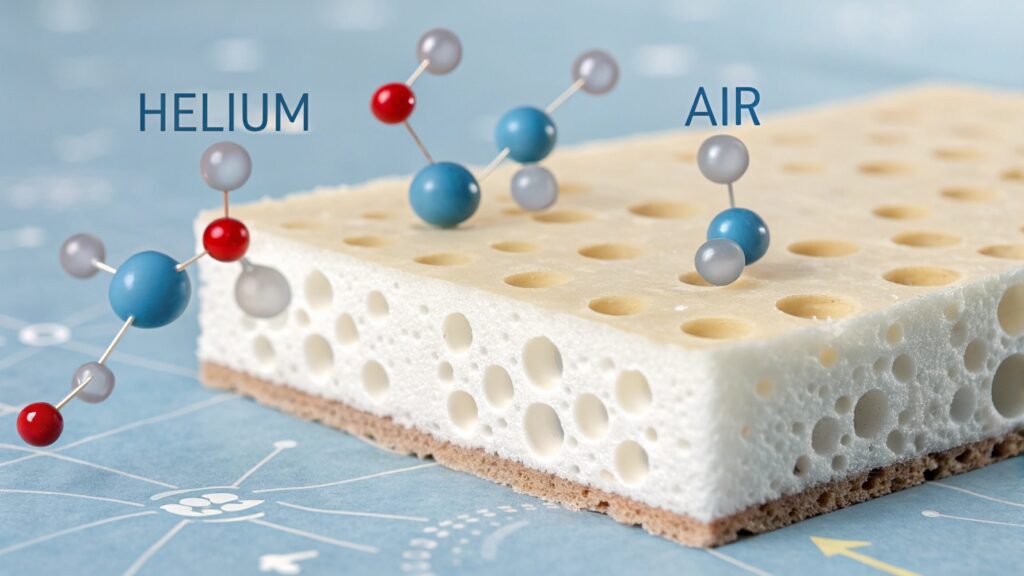
Latex is not a permanent gas barrier. Gas can pass gradually through the material, while the neck or closure can create another route. Helium-filled and air-filled balloons also serve different jobs: helium is used when lift matters; air is used for non-floating structures and displays. “Still floating” and “still looks acceptable” are different endpoints and should not be compared as if they were one test.
Size, finish, construction, inflation diameter, gas, closure, treatment and environment can all change the observed result. Quality should therefore be assessed against a written method, not a marketing phrase such as “long lasting”. Use the wholesale quality owner to define the complete product and evidence file.
Separate a temporary size change from a leak or failure
When temperature changes, the gas volume and pressure can change, so a balloon may look smaller or fuller without a new hole. Direct sun, heat, cold, wind, rough surfaces and repeated handling may also affect the material or closure. Record the transition and recheck under the agreed reference condition. Do not publish one outdoor failure temperature or time unless the exact product and controlled result support it.
For outdoor-specific planning, use the heat and outdoor support page. Its advice is a planning aid, not a substitute for a product-specific sample test.

How buyers should investigate an early-deflation complaint
- Preserve identity: order, batch or shipment reference, product, bag/carton location and sample source.
- Define the endpoint: loss of lift, unacceptable diameter loss, visible oxidation, leakage or breakage.
- Record the setup: gas, target size, pump or inflator, closure, treatment and operator method.
- Record conditions: date/time, indoor/outdoor, temperature, humidity where available, sun/UV, wind, surfaces and transport.
- Count honestly: sample count, affected count and raw observations; do not report a percentage without its denominator.
- Compare controls: use an approved sample or a traceable unaffected sample under the same method when possible.
The report should describe the symptom before declaring a root cause. “Four of twenty sampled pieces lost lift before the agreed endpoint” is actionable; “the whole batch is bad” is not a reproducible result.
Ways to reduce avoidable loss without inventing a guarantee
- Inflate to the agreed target for the product rather than to the largest possible size.
- Use a consistent closure and inspect the neck/rim for damage.
- Keep the inflation and installation area clean and free of rough or sharp contact.
- Plan for the actual indoor/outdoor temperature, sun, humidity, wind and handling conditions.
- When using a third-party treatment, follow its current manufacturer instructions and verify the result on the selected product.
- Run a representative sample check before a large installation or commercial commitment.
Duration belongs in a condition-controlled plan
This page owns the mechanism and diagnostic question. For “how long” planning, use the separate duration-by-condition and test-method guide. It explains the fields needed before any hour/day target can be accepted. AIHUA sample terms and order-specific testing are confirmed case by case; a public page does not replace the written quotation and approved test file.
- Plan a condition-controlled duration check
- Define wholesale quality
- Choose measurable QC indicators
- Run a buyer sample test
- Confirm size and inflation target
- Review the AIHUA product catalog
- Send AIHUA a traceable case file
Buyer FAQ
Why do latex balloons deflate over time?
Latex allows gas to pass gradually, and the closure, inflation level, handling and environment can add other loss or damage. The observed rate is product- and condition-specific.
Do air-filled balloons last longer than helium-filled balloons?
Air-filled balloons do not float and often retain an acceptable shape differently from helium-filled balloons. A fair comparison must define size, target, closure, conditions and endpoint.
Does a balloon looking smaller in the cold prove a leak?
No. Gas contraction can make a balloon look smaller. Recheck it under the agreed condition and inspect the closure and surface before assigning a cause.
Can a supplier guarantee one float time for every latex balloon?
A universal promise is not reliable. A defensible value requires the exact product, gas, inflation target, closure, treatment, environment, sample count and acceptance endpoint.