
Exploring the World of Latex Balloons: From Standard Rounds to Unique Shapes and Prints
Retailers constantly demand variety, but poor selection leads to stagnant sales. You need a diverse inventory1 to satisfy every party planner’s vision.
Latex balloons range from standard round sizes like 5-inch, 10-inch, and 36-inch to specialty shapes2 including hearts, modeling balloons, and linking loons. They come in various finishes like matte, metallic, and chrome, offering unlimited options for wholesale buyers to meet diverse event needs.
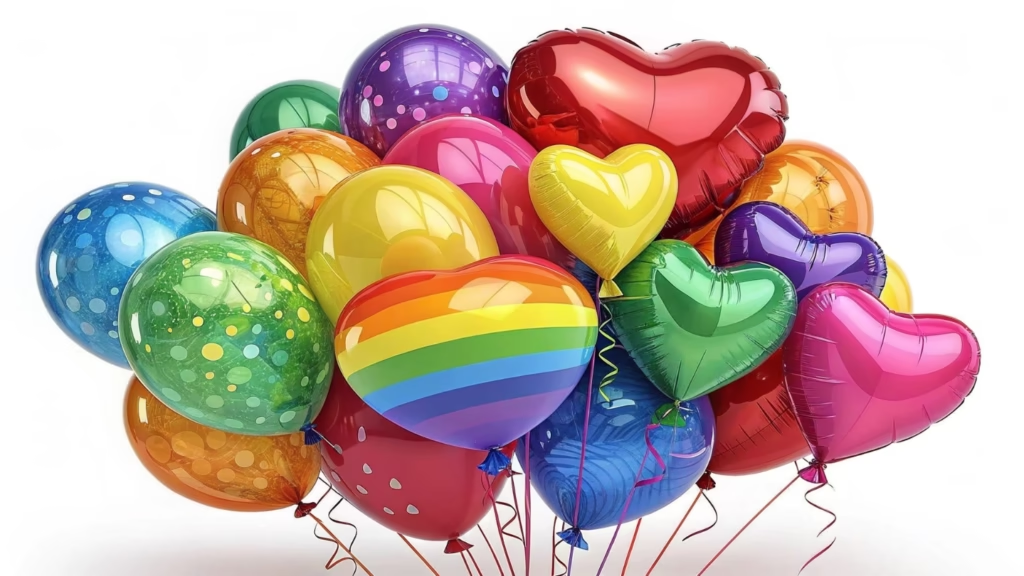
I have seen many buyers struggle to choose the right mix for their stores. This guide breaks down everything you need to know about shapes, prints, and quality to make better purchasing decisions for your supply chain.
What are the most popular latex balloon shapes and sizes for wholesale buyers?
Stocking the wrong sizes causes inventory pileups. You must know which shapes move fast and which ones create high-value displays.
Standard round balloons in 10-inch and 12-inch sizes remain the top sellers for general decoration. However, modeling balloons (260s), 36-inch giants for backdrops, and linking balloons3 for arches are essential for professional decorators and party stores.
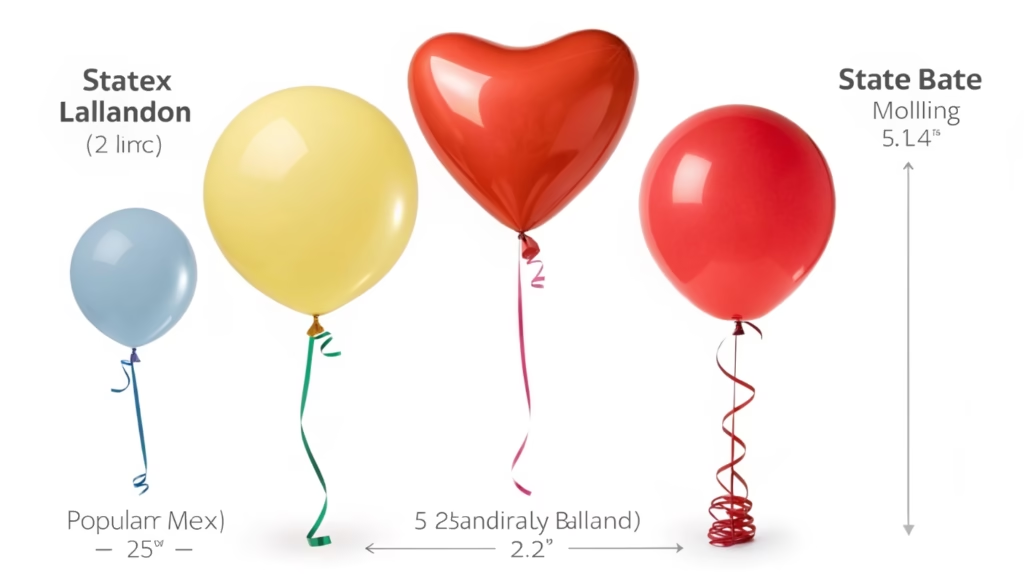
As a manufacturer with over 37 years of history, I see trends come and go. But the foundation of the balloon business remains the round balloon. We produce millions of these annually. The 5-inch is for details and centerpieces. The 12-inch is the standard for helium bouquets. Recently, giant 36-inch rounds have become huge for weddings and photo shoots. But you cannot just sell rounds. Decorators need "twisting balloons" or modeling balloons like 260s to make animals and sculptures.
We also see high demand for "linking balloons" or Link-O-Loons. These have two tails and make building arches easy without wire frames. Do not forget specialty shapes. Heart shapes sell well for Valentine's Day. Shapes like "geo blossoms" add texture to walls. Here is a breakdown of what you should stock to keep your clients happy.
Essential Shapes for Inventory
| Shape Category | Popular Sizes | Best Application |
|---|---|---|
| Round | 5", 10", 12", 36" | Arches, columns, helium bouquets |
| Modeling | 160, 260, 350, 646 | Balloon animals, detailed sculptures |
| Linking | 6", 12" | Quick garlands, structured walls |
| Specialty | Hearts, Stars, Blossoms | Themed events, romantic occasions |
Mixing these shapes helps your retail clients. If they only have rounds, they cannot build complex designs. You provide value by offering the full toolkit for creativity.
How does the custom printing process work for promotional latex balloons?
Generic balloons often fail to capture brand identity. Companies want their logos seen, and poor printing ruins their marketing efforts.
Custom printing involves silk-screening ink onto inflated balloons to ensure crisp, un-distorted images. This process allows businesses to add logos, slogans, or specific dates to balloons, turning simple decorations into powerful branding tools for corporate events.
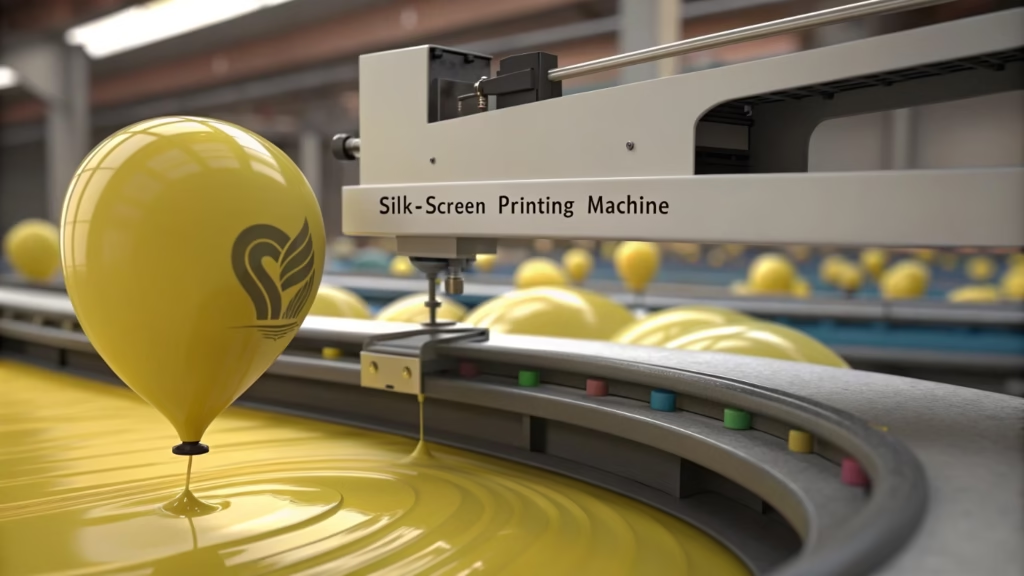
At AIHUA BALLOON, we handle custom orders every day. The process is fascinating. You might think we print on flat balloons. We do not. We inflate the balloon first. This stretches the surface. Then we apply the ink. This ensures the logo looks right when the customer inflates it later. If we printed on a flat balloon, the image would crack or look stretched when filled with air. We use high-quality latex inks. These inks must stretch with the balloon. We can do simple "Happy Birthday" text or complex corporate logos.
The Printing Steps
- Inflation: We fill the balloon with air to about 75% capacity. This creates the canvas.
- Screening: A silk screen with the design presses against the curved surface. We rotate the balloon for all-around prints.
- Drying: The balloons pass through a heat tunnel. This cures the ink instantly.
- Deflation: We remove the air and package them flat.
We offer different types of prints. You have "Standard Prints" for mass retail. These include polka dots, animal prints like leopard spots, or licensed characters. Then you have "Custom Branding." This is for your B2B clients who need specific logos. I always tell buyers to check the ink density. Thin ink looks cheap and transparent. Good printing is solid and opaque.
What factors determine the quality, durability, and helium retention of latex balloons?
Popped balloons ruin parties and damage your reputation. You need to understand why some balloons fail while others last for days.
Quality depends on the thickness of the latex, the uniformity of the material, and the curing process. Higher quality balloons have even wall thickness4 to prevent popping and hold helium longer by reducing gas permeability.
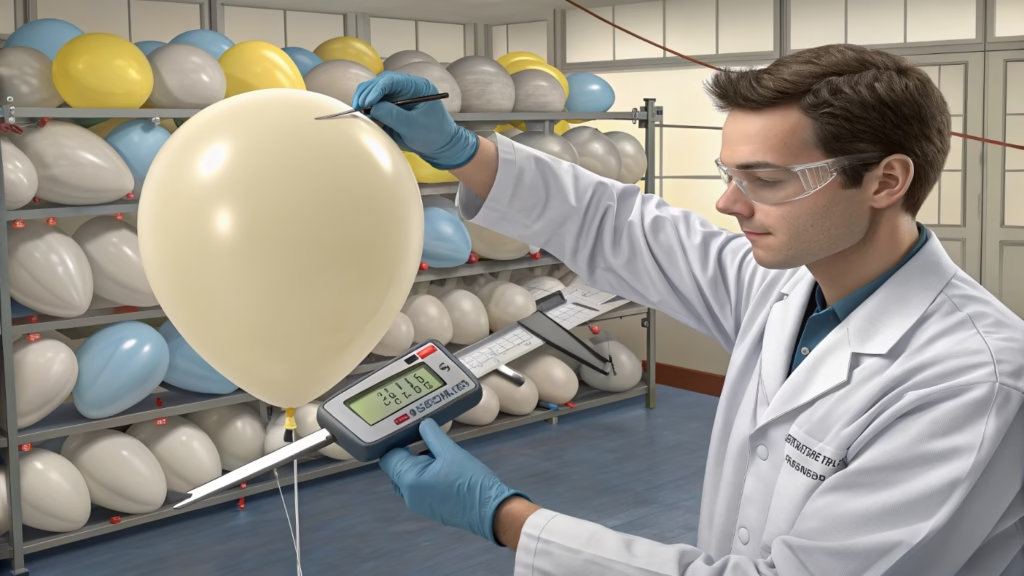
I have spent years in the factory optimizing our dipping lines. The most critical factor is the latex itself. We use natural rubber latex5. If you add too much filler, the balloon becomes weak. It will pop easily. Uniformity is also key. If one side of the balloon is thin, helium escapes from there. This causes the balloon to drop quickly. A standard 12-inch balloon should float for 12 to 24 hours. Treatments like Hi-Float can extend this to days.
Key Quality Metrics
- Wall Thickness: Thicker walls hold gas better. Thin walls are cheaper but leak helium fast.
- Neck Strength: The neck must stretch without tearing during tying.
- Pinholes: Good quality control removes balloons with microscopic holes.
Environmental factors also matter. Heat and sunlight are enemies. They cause oxidation. This is when the balloon gets that "foggy" or velvet look. It is a natural process, but high-quality latex resists it longer. I often test batches myself. We inflate them and measure the time until they sink. Reliable supply chains like yours need this data to assure your customers. You should ask for these retention reports from your suppliers.
Are natural latex balloons biodegradable and environmentally safe for mass usage?
Environmental concerns are rising among consumers globally. You face pressure to supply products that do not harm the planet long-term.
Yes, balloons made from 100% natural latex are biodegradable. They are derived from the sap of rubber trees and break down at the same rate as an oak leaf, making them an eco-friendly choice when disposed of responsibly.
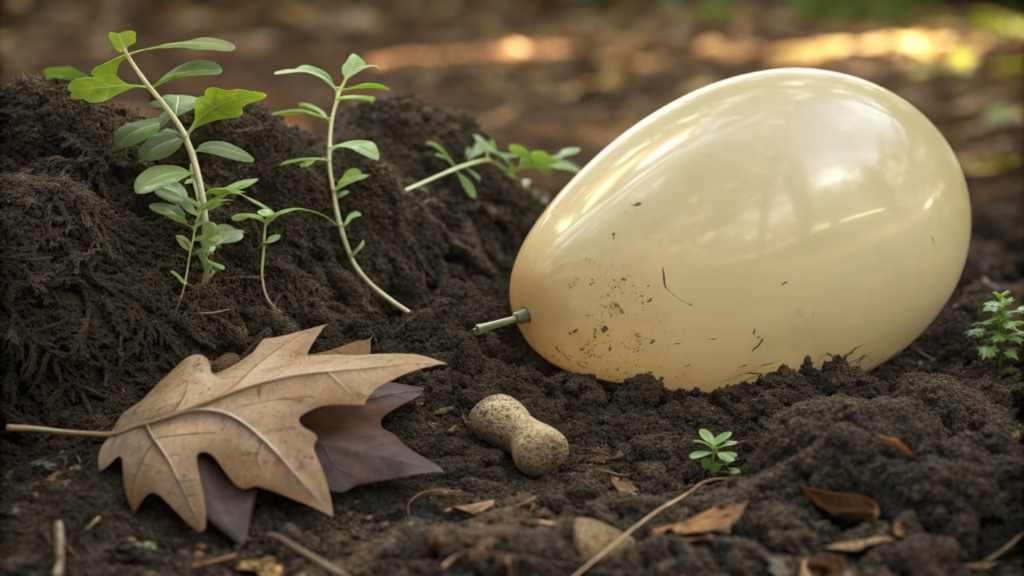
This is a question I get from European clients constantly. It is important to know the difference between plastic and latex. Foil or Mylar balloons are plastic. They do not biodegrade. Latex comes from the Hevea brasiliensis tree. It is organic. At AIHUA, we source from sustainable rubber plantations6. When a latex balloon sits in the soil, bacteria eat it. It takes about 6 months to a year to decompose completely. This is similar to an oak leaf in your backyard.
Responsible Usage
We must educate users. Even though they biodegrade, we should not release balloons into the sky. They can still harm wildlife before they degrade. They can block the digestive tracts of animals. We support "Pin it and Bin it" campaigns. This means popping the balloon and putting it in the bin.
Safety Standards
You should look for certifications. We follow global safety standards7. This ensures no harmful nitrosamines or plasticizers are added.
- Source: 100% Natural Rubber Sap
- Additives: Minimal and non-toxic
- End of Life: Fully compostable
Offering eco-friendly options is a selling point. You can market these balloons as a green choice for parties. It helps your brand image and meets modern compliance standards.
Conclusion
Latex balloons offer incredible variety in shape, print, and finish. Focusing on quality materials and eco-friendly options ensures you meet market demands safely.
-
Learn strategies to diversify your inventory and meet the varied needs of party planners. ↩
-
Explore unique balloon shapes that can elevate your event decorations and themes. ↩
-
Find out how linking balloons can simplify decoration and enhance event aesthetics. ↩
-
Learn how wall thickness impacts balloon durability and helium retention for better quality. ↩
-
Understand the advantages of using natural rubber latex in balloon production for safety and quality. ↩
-
Understand the significance of sustainable practices in rubber production for eco-friendly products. ↩
-
Understand the essential safety standards for balloons to ensure consumer safety and compliance. ↩