
How do I train staff on handling and selling latex balloons?
Untrained staff can waste products and create unhappy customers. This hurts your store's reputation and profits. A solid training plan1 turns your team into confident, efficient balloon professionals.
To train staff effectively, focus on core skills. Cover safe inflation2, helium tank handling3, and correct tying techniques4. Also, teach them how to create bouquets5, advise on float times6, and use upselling strategies7 for accessories. This builds a knowledgeable and profitable team.
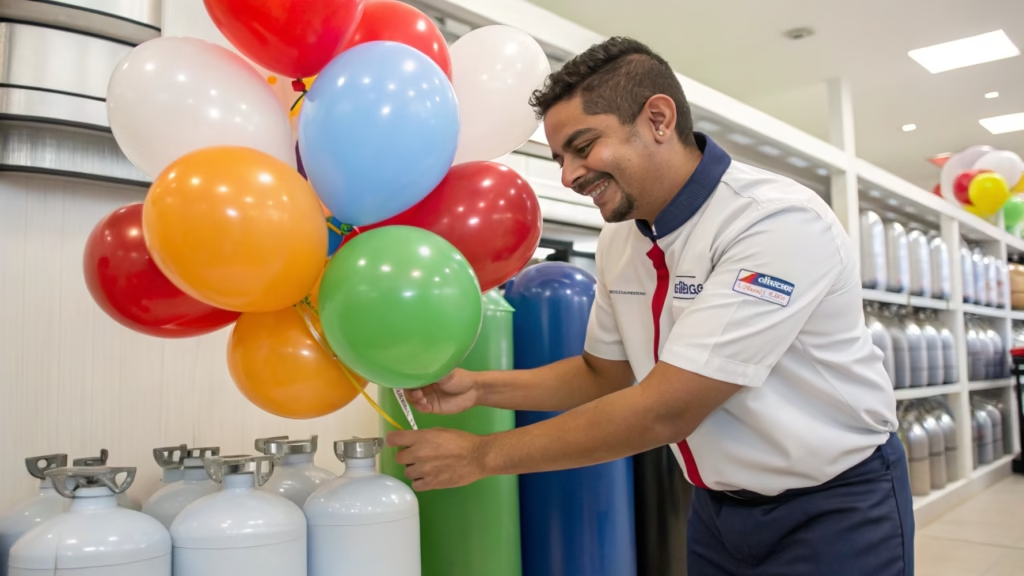
Equipping your staff with the right knowledge is the first step. I remember when we first started training new hires at AIHUA BALLOON; the difference in efficiency and safety was night and day. But where do you begin? Let's break down the essential training modules that will set your team, and your business, up for success.
What are the essential safety protocols every staff member should know?
Worried about safety risks with balloons and helium? An accident with a high-pressure tank8 can be costly and dangerous. Following essential safety protocols keeps your staff and customers safe.
Every staff member must learn to handle helium tanks securely. This includes chaining them to a wall and using a regulator correctly. They should also know the choking hazards9 of uninflated balloons and the importance of proper disposal10 to protect children and pets.
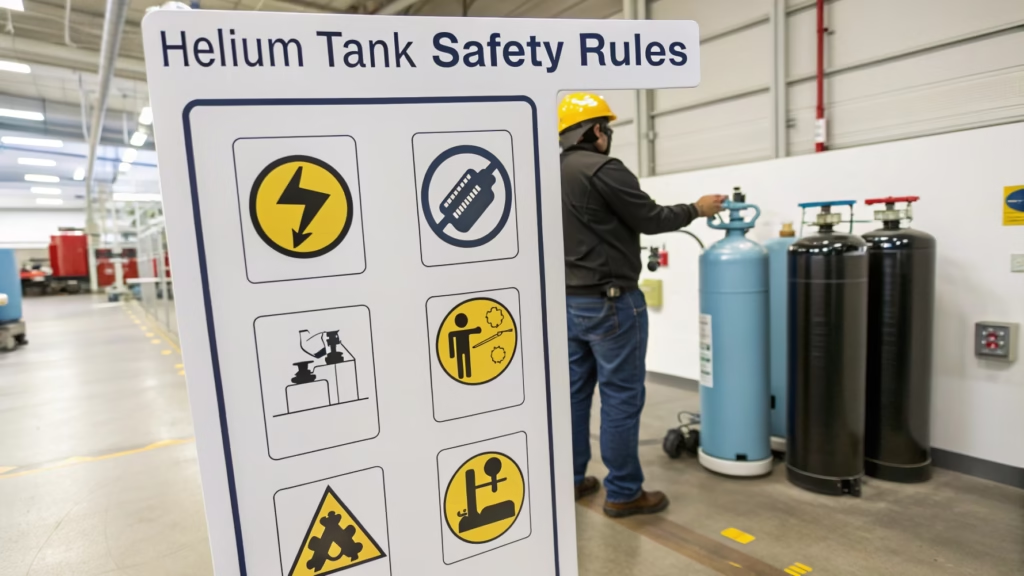
Safety isn't just a guideline; it's the foundation of a professional operation. I once visited a partner's store and saw an unsecured helium tank in a busy aisle. It was a disaster waiting to happen. We immediately stopped everything to correct the issue. This experience reinforced my belief that safety training is non-negotiable. For procurement managers like Sarah, ensuring compliance with safety standards is a top priority, and it starts with your team.
Helium Tank Handling
The biggest risk in a balloon section is the helium tank. It's a high-pressure cylinder that needs respect. You must teach your staff to always secure tanks with a chain or strap to a fixed object, like a wall or a sturdy dolly. The valve cap must stay on when the tank is not in use or during transport. When inflating, they should open the valve slowly and always stand to the side of the regulator, never directly in front of it. Good ventilation is also critical to prevent issues in enclosed spaces.
Balloon Material and Inflation Safety
Latex balloons themselves present a few risks that every staff member should be able to explain. Here is a simple checklist:
| Safety Point | Action Required | Why It's Important |
|---|---|---|
| Choking Hazard | Never leave uninflated or popped balloon pieces near small children unsupervised. | Balloons are a leading cause of toy-related choking deaths in children. |
| Inflation Technique | Always use a pump for air inflation. Do not inflate balloons by mouth. | This prevents the spread of germs and the potential inhalation of balloon fragments if one pops. |
| Latex Allergies | Be prepared to inform customers that balloons are made of latex. | This shows proactive customer care and helps prevent serious allergic reactions. |
| Proper Disposal | Instruct customers to pop balloons and dispose of the pieces properly after use. | This protects wildlife from ingesting balloon fragments and prevents litter. |
What are the best practices for inflating latex balloons with helium versus air?
Are your balloons popping too soon or not floating long enough? Inconsistent inflation wastes products and disappoints customers. Learning the right techniques for helium and air ensures perfect, long-lasting results.
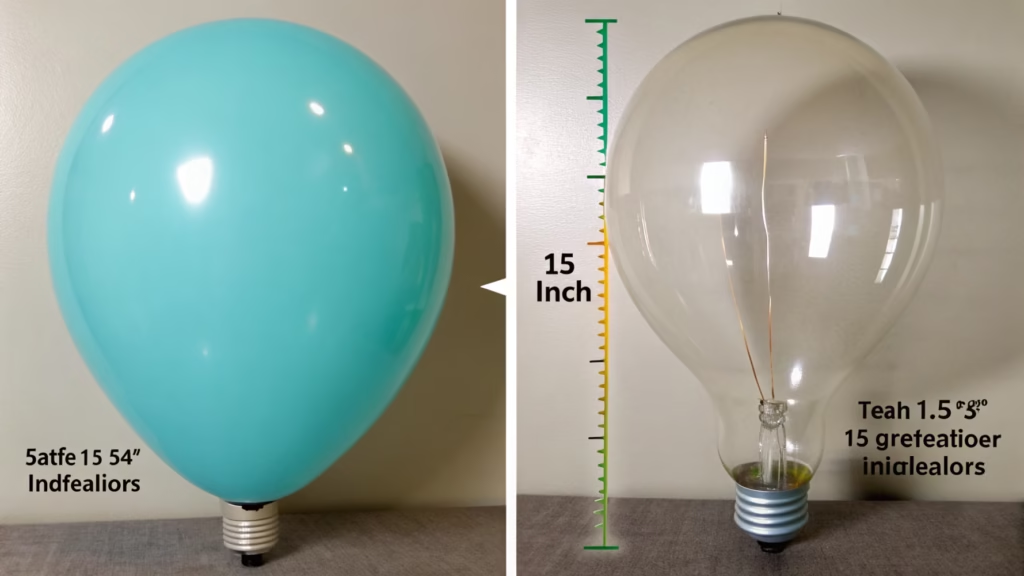
For helium, inflate latex balloons to a classic teardrop shape11, not a lightbulb shape, to maximize float time without overstretching the latex. Use a sizing template12 for consistency. For air inflation, use an electric pump13 to save time and ensure uniform filling for decor like arches.
I've seen countless retailers struggle with inflation. They either overfill with expensive helium, causing balloons to pop, or underfill, leading to droopy displays that look unprofessional. Getting it right is a skill. At AIHUA BALLOON, we produce millions of balloons certified to global standards, and we know that proper inflation is key to showcasing their quality and durability.
Mastering Helium Inflation
Helium is all about achieving lift and float time. The goal is a perfect teardrop shape. If the balloon looks like a lightbulb, it's overinflated. The latex is stretched too thin, which shortens its life and makes it more likely to pop. Teach your staff to use balloon sizers. These are simple cardboard or plastic tools that guarantee every 11-inch balloon is actually 11 inches. This looks much more professional and helps manage your helium costs precisely. Also, train them to tie a tight knot right at the base of the balloon's neck to prevent slow leaks.
The Versatility of Air Inflation
Air inflation is your best friend for decor that doesn't need to float. Air-filled latex balloons can last for days, even weeks, indoors. This makes them perfect for creating high-value decorations.
| Feature | Helium Inflation | Air Inflation |
|---|---|---|
| Purpose | Floating bouquets, single floaters | Garlands, columns, walls, floor decor |
| Equipment | Helium tank, regulator | Electric pump or hand pump |
| Longevity | 8-12 hours (for a standard 11" latex) | Days to weeks |
| Cost | Higher (due to the cost of helium) | Lower (air is free) |
Using an electric inflator is a game-changer for large air-filled displays. It saves huge amounts of time and labor. It also ensures all balloons are a uniform size, making it much easier to build stunning garlands and columns that sell for a high margin.
How can staff effectively advise customers on balloon care and float time?
Do customers complain that their balloons deflated too quickly? This can lead to refund demands and bad reviews. Teaching staff to advise on balloon care sets correct expectations and prevents issues.
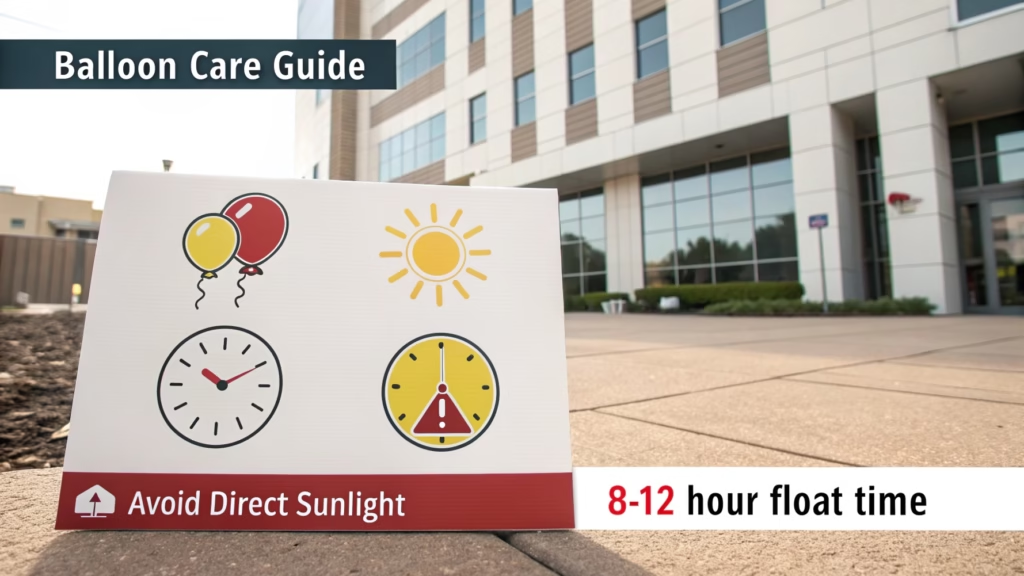
Staff should clearly state that a standard 11-inch latex balloon floats for about 8-12 hours. Advise customers to keep balloons away from extreme heat, direct sunlight, and sharp objects. For longer float times, they can suggest using a treatment like HI-FLOAT before inflation.
As a manufacturer, one of the most common questions we get from our retail partners is about managing customer expectations on float time. It's a critical part of the sales process. A well-informed customer is a happy customer. Your staff are on the front lines, and their advice makes all the difference in ensuring satisfaction and repeat business.
Setting Clear Expectations on Float Time
The science is simple: latex is a porous material. This means tiny helium molecules will slowly escape through the balloon's surface. Staff must communicate this in a simple way. An informed customer understands the product's limitations and can plan accordingly. For instance, they will know to pick up their helium balloons on the day of the party, not the day before. Here is a basic float time guide to train your staff on:
| Balloon Type | Standard Float Time | With HI-FLOAT Treatment |
|---|---|---|
| 11" Latex | 8-12 Hours | 1-4 Weeks |
| 16" Latex | 24-30 Hours | 3-7 Weeks |
| Standard Foil | 3-5+ Days | N/A |
Explaining Environmental Impact on Balloons
Balloons are sensitive to their environment. Train your team to give these simple care tips: "Your balloons will be happiest indoors at a comfortable room temperature." Explain that taking helium-filled balloons from an air-conditioned store into a hot car can cause the helium to expand, which might make the balloon pop. Likewise, direct sunlight can degrade the latex and shorten its life. These small bits of expert advice prevent post-purchase problems and build customer trust.
What upselling techniques can staff use to sell balloon bouquets and accessories?
Are your balloon sales mostly single units? This means low transaction values and missed revenue opportunities every day. With simple upselling techniques, your staff can easily boost profits on every sale.
Train staff to always suggest turning a single balloon into a bouquet by adding more balloons at different price points. They should also recommend essential accessories like balloon weights, transport bags14, and treatments like HI-FLOAT for longer float times. It's about offering a complete solution.
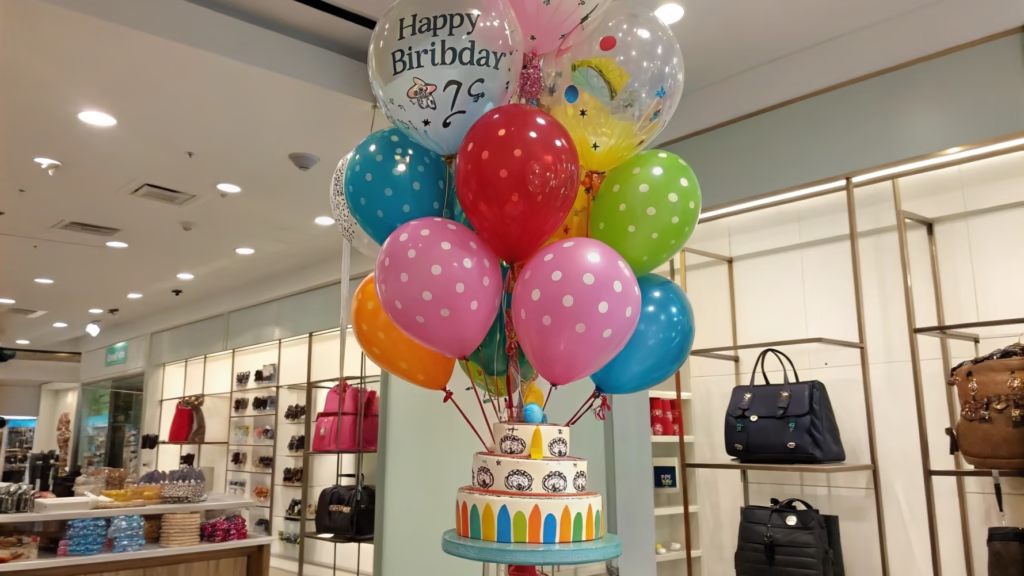
In my experience growing our company, I've learned that the easiest way to increase revenue is to increase the value of each customer transaction. Upselling isn't about being pushy; it's about being helpful. It's about transforming a simple request like "I need one birthday balloon" into a complete, beautiful, and more profitable solution for both you and the customer.
The Power of the Bouquet
Never just sell one balloon when you can sell a bouquet. Your team should be trained to use suggestion-based selling. When a customer asks for a balloon, the follow-up question should always be, "Great choice! Would you like to make that into a beautiful bouquet of three, five, or seven balloons?" Show them pre-made examples at different price points to make the decision easy. A mix of our quality latex balloons and a higher-margin foil balloon on top makes an attractive and profitable arrangement. Train them to create visually appealing bouquets by staggering the heights of the balloons to create depth.
Offering the Complete Package
A balloon that floats away or deflates early creates a bad customer experience. Accessories prevent these problems and add to your sale.
| Customer Says... | Staff Suggests... | The Benefit (and Upsell) |
|---|---|---|
| "I'll take this helium balloon." | "Let’s add a matching weight to that so it doesn't get away." | Prevents balloon loss; it is a simple, low-cost add-on sale. |
| "I need these to last for the whole party." | "We can add a HI-FLOAT treatment15 for a small fee to make them last much longer." | Extends float time, increases customer satisfaction, and adds margin to the sale. |
| "I have to get these in my car." | "A balloon transport bag will protect them on the way home." | Prevents popping during transport and makes it easier for the customer; another easy and helpful upsell. |
Conclusion
Effective staff training on safety, inflation, customer care, and upselling is not an expense. It's an investment that boosts profits, ensures safety, and builds a reputation for quality.
-
Learn the key components that transform ordinary employees into confident professionals who drive customer loyalty and store success. ↩
-
Master proper inflation techniques that ensure product longevity while protecting both staff and customers from potential hazards. ↩
-
Understand critical safety measures when working with high-pressure cylinders to prevent dangerous workplace incidents. ↩
-
Learn secure knot-tying techniques that prevent helium leaks and ensure balloons maintain their float time. ↩
-
Discover techniques for creating visually stunning arrangements that increase sales value and customer satisfaction. ↩
-
Understand the science behind balloon longevity and practical methods to maximize customer satisfaction. ↩
-
Learn proven methods to increase average transaction value through helpful customer recommendations. ↩
-
Learn about potential dangers and safety requirements when handling pressurized gas containers in retail settings. ↩
-
Understand important safety information that protects young children and demonstrates responsible retail practices. ↩
-
Learn environmentally responsible disposal methods that protect wildlife and reduce environmental impact. ↩
-
Discover how proper inflation shape maximizes float time and prevents premature balloon failure. ↩
-
Learn how standard sizing tools create professional-looking displays and optimize helium usage. ↩
-
Understand how modern inflation equipment saves time and ensures uniform results for large decorations. ↩
-
Discover how proper transportation solutions protect balloon investments and improve customer experience. ↩
-
Learn about the science behind balloon treatments that can extend float time from hours to weeks. ↩