
How do inflation methods affect the lifespan of latex balloons?
Inflation method affects a latex balloon mainly through gas choice, target diameter, equipment and nozzle contact, closure, handling and test conditions. “Overinflated” should mean the balloon exceeded an approved target for that product—not simply that it looks full. For a defensible buyer decision, record the method and compare like-for-like samples before assigning a quality cause or promising a lifetime.
Fast buyer control
- Identify product, nominal size, finish, batch/order and sample source.
- Set the intended gas and use: floating or non-floating.
- Approve a target diameter or template instead of “as large as possible”.
- Record equipment, closure, operator method and conditions.
- Count outcomes against a rule agreed before the result is known.
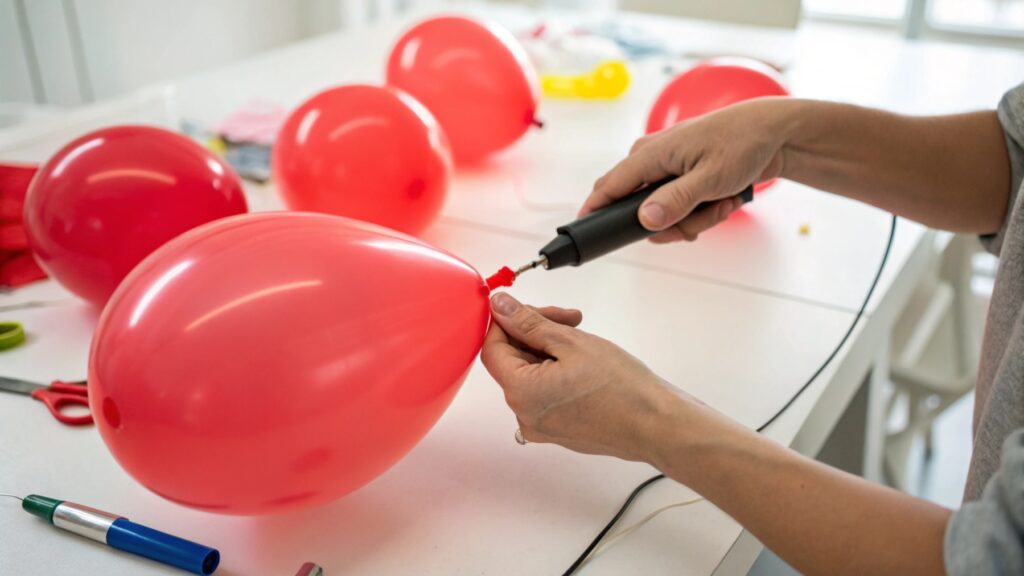
How inflation methods change the buyer's test
| Method or job | What must be controlled | What the result can show |
|---|---|---|
| Manual air pump | Product, target diameter/template, pump/nozzle, operator method and closure. | Whether the selected sample can meet the defined non-floating setup under that method. |
| Electric air inflator | Inflator identity/setting where available, nozzle contact, target diameter and operator stop rule. | Whether repeatable equipment use produces the agreed size and acceptable failure count. |
| Helium cylinder and regulator | Gas source, current equipment instructions, regulator/nozzle, target diameter, closure and required lift endpoint. | Whether the selected product meets the agreed floating job under the recorded setup. |
| Overinflation stress screen | Approved target, intentionally stressed target, sample identity, safety control and failure endpoint. | A bounded screening observation; it is not the normal-use instruction or a universal balloon-grade claim. |
AIHUA supplies latex balloons, not helium, compressed-gas cylinders or a local inflation service. Cylinder handling and use must follow the gas/equipment supplier's current instructions and applicable workplace rules. OSHA's compressed-gas requirements are a primary US reference; buyers must check the rules that apply in their own market and workplace.
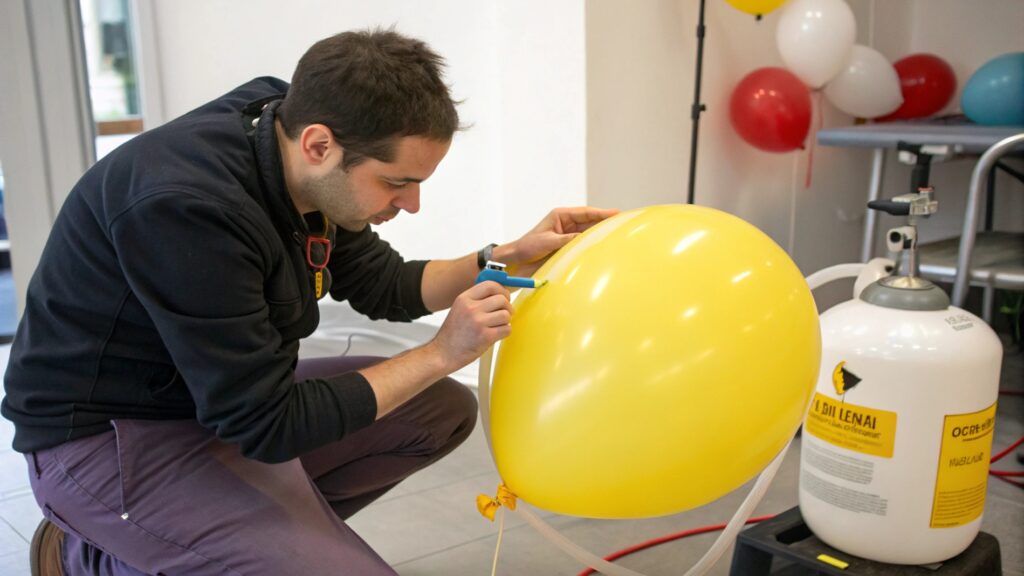
What overinflation and underinflation actually mean
Overinflation means exceeding the agreed target for the identified product and method. Increasing diameter stretches the wall further and may increase sensitivity to handling, surface contact or pressure changes, but a public page cannot assign one safe maximum, breakage rate or lifetime to every size and batch.
Underinflation means stopping below the agreed target. It may miss the required size, shape or helium-lift job, but it is not automatically a material defect. A buyer should separate appearance, lift, gas retention and breakage instead of combining them into one “durability” judgment.
| Observation | Variables to check first | Useful evidence |
|---|---|---|
| Burst during inflation | Target diameter, equipment/nozzle, rough or sharp contact, operator method and product variation. | Sample identities, target versus reached diameter, setup images/video and raw affected count. |
| Balloon is below the required size or lift | Gas, target, closure, attached accessories and product identity. | Diameter/template record, setup, elapsed observation and agreed endpoint. |
| Fast loss after tying | Closure/neck, puncture, inflation target, gas and environment. | Leak location where safely identifiable, comparison samples and observation log. |
| Mixed results across operators | Equipment, stop rule, template, closure and sample selection. | Operator/equipment fields and a same-method comparison. |
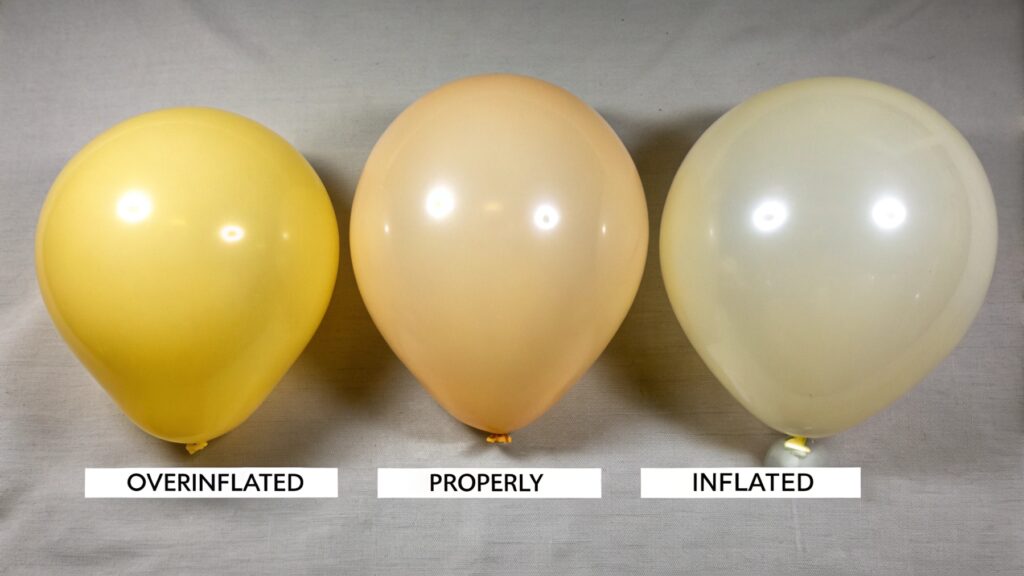
Use target diameter, not appearance alone
A pear-like shape, tight neck or unusually firm surface can warn an operator to stop, but shape language is not a substitute for measurement. Use the product's approved target or a buyer-approved template and record the actual result. Do not transfer the same inflator setting or visual stop rule across sizes, finishes, equipment and product families without validation.
The balloon size-selection owner explains nominal sizes and selection boundaries. For a quotation or test, identify the exact product and intended diameter rather than asking AIHUA to approve “maximum inflation”.
A reproducible B2B inflation record
- Product identity: SKU/product family, nominal size, finish, colour, batch/order and sample source.
- Conditioning: as-received storage and any agreed conditioning before inflation.
- Gas and job: air or helium; floating, display-shape, installation or stress-screen endpoint.
- Equipment: pump/inflator/regulator identity and setting where meaningful; nozzle/contact details.
- Inflation target: diameter/template and tolerance or stop rule.
- Closure: knot or other agreed closure method.
- Environment: date/time, indoor/outdoor, temperature and humidity where available, sun, wind and surfaces.
- Sample plan: sample count, selection and observation schedule.
- Raw result: reached target, failed/affected count, symptom and limitation before any percentage or conclusion.
For wider receiving and quality documentation, use the buyer sample/QC record guide and the wholesale quality owner. A screening record is not a shipment guarantee unless the order's written acceptance rule says so.
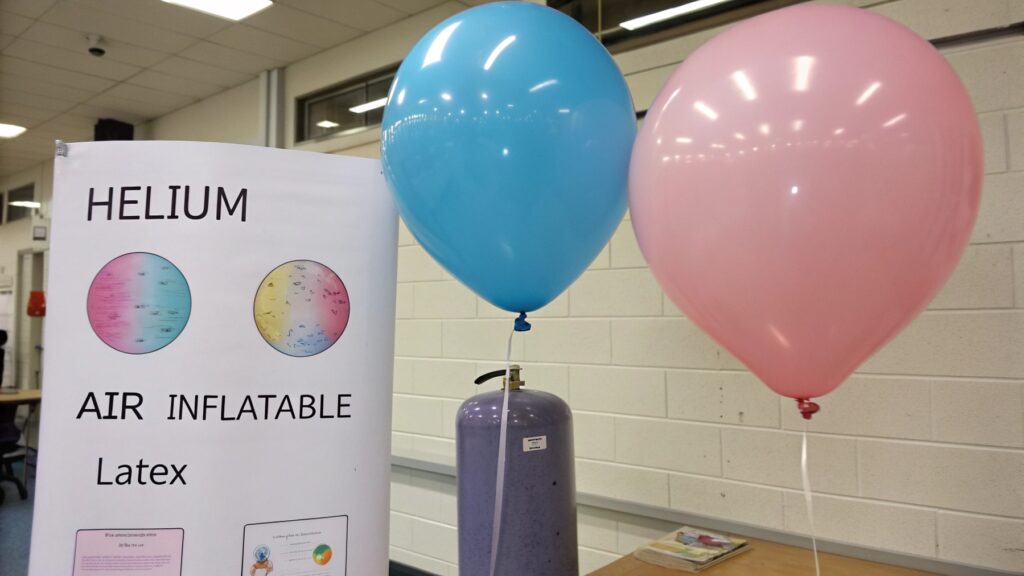
Air and helium answer different questions
Helium is selected when lift matters. Air is selected for non-floating structures and displays. Use the air-versus-helium wholesale selection guide to define the gas and job before testing. “Still floating” and “still looks acceptable” are different endpoints, so a buyer should not describe one as universally lasting longer. The condition-controlled duration guide defines the fields needed for any duration target, while the deflation mechanism guide separates gradual gas loss, closure problems, temperature-related size change and damage.
Do not use hydrogen or another flammable substitute as a shortcut for balloon lift. This page does not provide compressed-gas operating instructions; trained operators must follow current supplier and applicable safety requirements.
How to investigate an inflation complaint
- Preserve the order, batch, bag/carton location and sample source.
- Describe the symptom: burst during inflation, leak after closure, insufficient lift, size variation or appearance change.
- Record target versus actual diameter and the gas, equipment, closure and operator method.
- Record affected count and total sample count; do not report a percentage without its denominator.
- Compare an unaffected or approved sample under the same setup when possible.
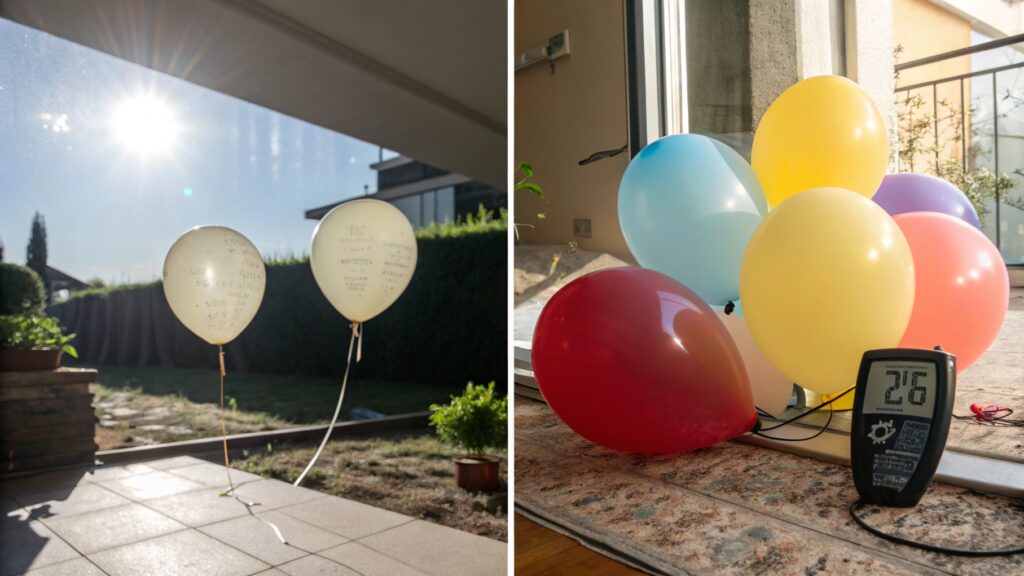
- Keep original images/video and observation times; do not substitute generated illustrations for evidence.
Commercial and safety boundaries
AIHUA can review an order-specific inflation record against the identified latex-balloon product and agreed buyer task. AIHUA does not publish one pressure, diameter, float time or breakage promise for every balloon. Standard nonprinted orders usually start at USD 5,000; printed balloons start at 50,000 pieces per design; custom packaging normally starts at USD 10,000; sample terms are decided case by case.
For US consumer labeling, the CPSC states that latex balloons and certain related toy/game advertising require choking-hazard labeling. Review the current CPSC seller guidance and the requirements for the destination market. Keep uninflated and broken balloon pieces away from children and discard broken pieces promptly.
- Diagnose latex balloon deflation
- Define a condition-controlled duration test
- Confirm product size and target diameter
- Define wholesale quality evidence
- Create a buyer sample/QC record
- Review the AIHUA latex balloon catalog
- Send AIHUA a traceable inflation case
Buyer FAQ
What counts as balloon overinflation?
Overinflation means exceeding the approved inflation target for the identified product and method. A visual shape can be a warning, but a target diameter or approved template is the more reproducible check.
Does overinflation prove that the balloon is poor quality?
No. First verify product identity, target diameter, equipment, nozzle contact, closure, environment and sample count. Product variation is one possible cause, not the only cause.
Does helium make a latex balloon last longer than air?
Helium is used when lift is required; air is used for non-floating displays. Float and acceptable shape retention are different endpoints, so compare them only with a defined product, method, conditions and endpoint.
What should a buyer send with an inflation complaint?
Send the order or batch reference, product and nominal size, gas, target diameter, equipment, closure, conditions, sample count, affected count, elapsed observations and clear images or video.