
How to Evaluate a Balloon Company Before Placing a Bulk Order
A balloon supplier should pass an evidence check from company identity through shipment release before a buyer compares final price. A useful evaluation does not ask whether a company is “good.” It asks whether the supplier can connect the legal entity, product scope, quotation, approved sample, bulk-production checks, packing file and shipment documents to the same order.
Buyer summary: Shortlist a supplier only when the evidence belongs to the quoted product and order. A factory photo cannot prove product compliance, a test report cannot prove every SKU, a sample cannot prove the mass-production batch, and a low unit price cannot prove packing or delivery readiness.
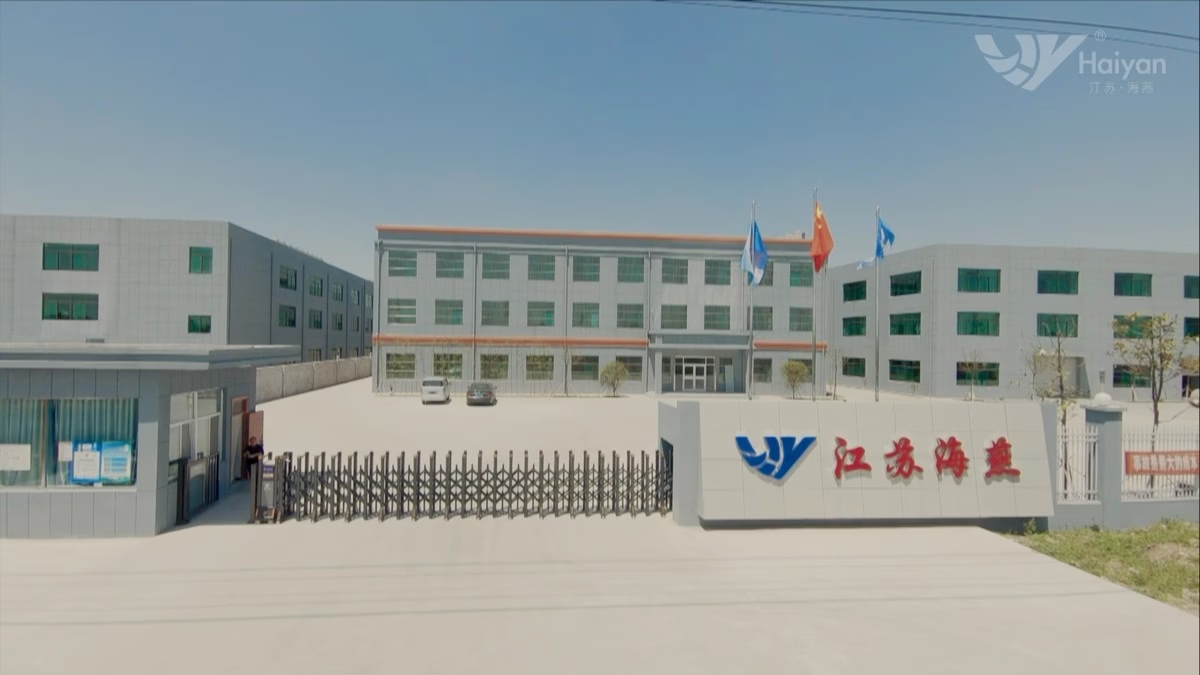
What should a buyer verify first?
Start with identity, product scope and the exact evidence available for the inquiry. Record the legal company name, factory or trading address, quotation entity, invoice entity, payment beneficiary and the person responsible for the order. If names differ, ask for a written explanation before sending funds. A brand name, website name and legal manufacturer name may be related, but the relationship should not be assumed.
Next, define the product being evaluated. “Latex balloons” is not enough for an order file. The quote should identify size, piece weight or agreed construction reference, color or finish, printing requirement, quantity, pack count, bag artwork, warning text, carton marks and destination market. Product names on samples, reports, invoices and packing files should be traceable to that definition.
| Gate | Evidence to request | Decision rule |
|---|---|---|
| Identity | Current quote, legal name, address, beneficiary and responsible contact. | Resolve every unexplained mismatch before payment. |
| Product scope | Product type, size, weight or construction reference, color, print and packing specification. | Do not extend proof from one product to a different product. |
| Document scope | Issuer, applicant, manufacturer, product description, method or standard, date, result and limitations. | Treat the document as relevant only when these fields match the order question. |
| Order control | Approved sample or specification version, QC plan, packing file and shipment-release evidence. | Release the order only against the approved version. |
How should certificates, reports and audits be checked?
Check document scope, date and status instead of accepting a logo or certificate name as universal proof. Product test reports, factory social-audit reports, management-system documents and sourcing-chain documents answer different questions. A report for one formula, product description or market does not automatically cover every size, finish, print ink, accessory, package or destination.
For EN 71, ASTM F963, CE-related or other market questions, ask which report applies to the quoted product and why. Record the laboratory or issuing body, report number, applicant or manufacturer, sample description, test method or standard edition, test date, result pages and any limitations. For a factory audit, record the audited site and audit date. For a sourcing document, confirm the material and chain-of-custody scope rather than treating it as a product-safety result.
AIHUA's dedicated balloon certificate-scope guide explains this document-matching step in detail. The current applicable file should be confirmed for each inquiry; an older document should not be presented as current merely because the factory expects to pass another review.
How should samples and quotations be compared?
A sample becomes useful evidence only when it has an identity and an approval record. Give the sample a product or artwork version, date, size, color, finish, print details and packing context. Photograph it under stated conditions, record what the buyer accepted or rejected, and keep the approved reference with the order file. If the sample changes, issue a new version rather than relying on chat history.
Sample availability, fee, freight, timing and whether any cost is credited are case specific for AIHUA and must be confirmed in the current quotation. Do not assume a free sample or a fixed dispatch time. The same rule applies to payment method, deposit structure, production schedule and freight: the signed commercial document for that order controls.
For AIHUA, the approved commercial boundaries are clear enough to screen an inquiry: regular goods start from a USD 5,000 order value, printed latex balloons start from 50,000 pieces per design, and custom packaging starts from a USD 10,000 order value. These are different scopes, not three interchangeable minimums. A quote should state which boundary applies.
What should be verified during production?
Translate the approved sample and quote into observable production and QC fields. The buyer and supplier should agree what will be checked, how the sample is selected, what counts as a failure, who reviews the result and what happens when the result is outside the agreed boundary. Avoid an unsupported universal “failure rate.” The method, sample count, product, inflation condition and defect definition must come first.
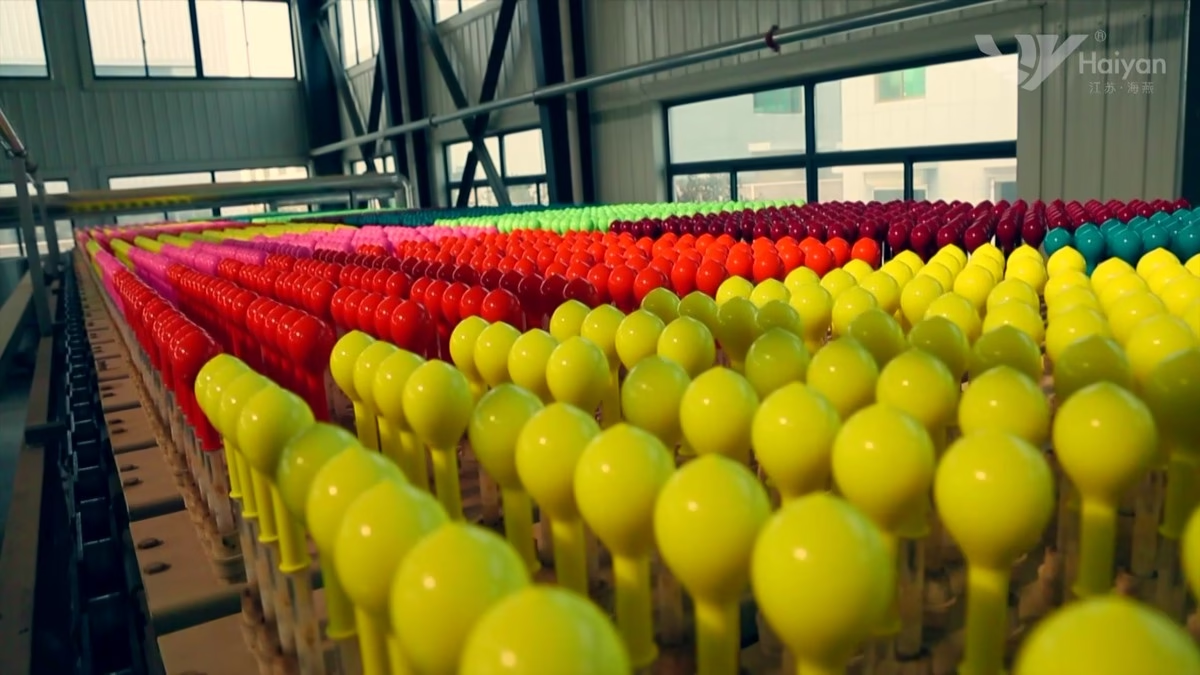
A practical QC file can include product and batch identifier, sample count, uninflated appearance, inflated size under a stated method, color or finish comparison, neck and surface observations, print position or rub checks when applicable, bag count, seal, label, carton mark and exception handling. The latex balloon shipment-QC guide shows how to turn these checks into a release decision.
What packing and shipment evidence should close the order?
The final evidence pack should let a buyer connect the approved product to the packed cartons and shipping documents. Request dated images or records for the actual order, not catalog images. Useful fields include inner-bag count, bag material and seal, artwork or barcode version, warning text, carton quantity, gross and net weight where relevant, carton dimensions, carton marks, pallet or loading arrangement, and document references.
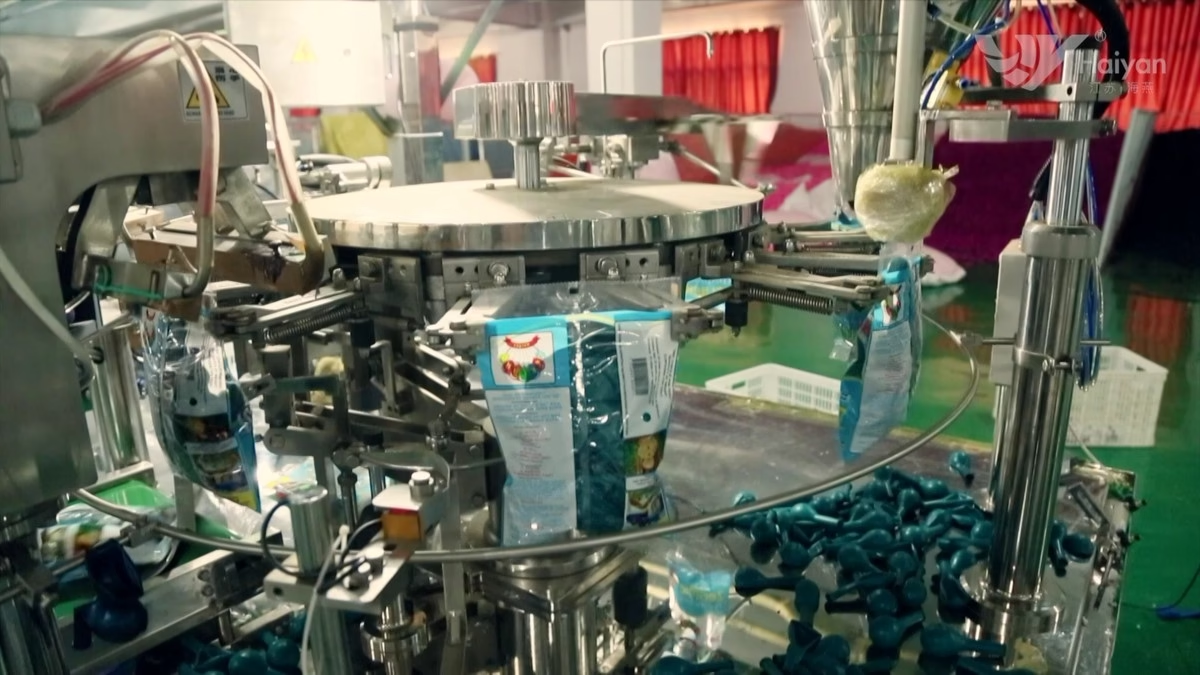
Compare the final packing file with the quote, approved artwork and purchase order. Any change in bag count, label, barcode, warning language or carton mark should be approved before shipment. Save the accepted file for receiving inspection, repeat orders and complaint diagnosis.
Where does this page sit in AIHUA's buying path?
This page is neutral evaluation support. It does not replace AIHUA's commercial and factory owners. Use the wholesale latex balloon buying guide to define the RFQ, the manufacturer evidence checklist to review factory and product proof, and the AIHUA balloon manufacturer page for the commercial factory route.
AIHUA should be evaluated for the latex-balloon scope stated in its current quote. This page does not promise foil balloons, accessories, every print effect, a fixed monthly capacity, a fixed lead time or a fixed payment structure. Ask for a current written answer when any of those points affects the order.
Supplier evaluation record
| Record field | What to save | Stop condition |
|---|---|---|
| Identity file | Quote entity, manufacturer, address, beneficiary and contact. | Unexplained entity or beneficiary mismatch. |
| Scope file | Product, market, report, standard, date and limitation mapping. | Report does not match the quoted product or question. |
| Approval file | Sample or specification version and written acceptance. | Production starts from an unapproved version. |
| Release file | QC result, exceptions, packing evidence and shipping references. | Unresolved failure or packing mismatch. |
Buyer FAQ
What is the fastest way to screen a balloon supplier?
Match the legal and payment identities, define the exact product, request a relevant document-scope table, and ask how the approved sample will connect to bulk QC and packing evidence.
Does a certificate prove every balloon product is compliant?
No. Check the applicant or manufacturer, product or material description, method or standard, sample, date, result and limitations against the quoted order.
Should a buyer accept catalog photos as shipment evidence?
No. Catalog and factory photos provide context. Shipment release should use dated evidence from the actual order and connect it to the approved product and packing file.
Are AIHUA samples, payment terms and lead times fixed?
No. Sample availability and cost, payment method, production timing and freight are confirmed case by case in the current quotation or order document.
What should a buyer save after approval?
Save the quote, product specification, applicable report list, approved sample or artwork version, QC record, exception decision, packing evidence and shipment references for receiving and repeat orders.